.webp)

The diamond cup wheel is the best choice for workers who work with concrete, stone, and masonry because it combines accuracy and longevity in industrial grinding tasks. These specialized superabrasive tools use industrial-grade synthetic diamonds and designed metal grids to remove more material quickly and effectively. They also solve important problems in the industry, such as surface lippage, coating removal that won't come off, and thermal substrate damage. Danyang Ebuy Tools makes professional-grade diamond grinding wheels that are made to meet the exact needs of metalworking shops, automakers, aerospace engineering firms, and people who make molds. This detailed book helps purchasing managers, engineers, and dealers understand product details, weigh their options, and make smart buying choices that boost productivity and lower long-term costs.
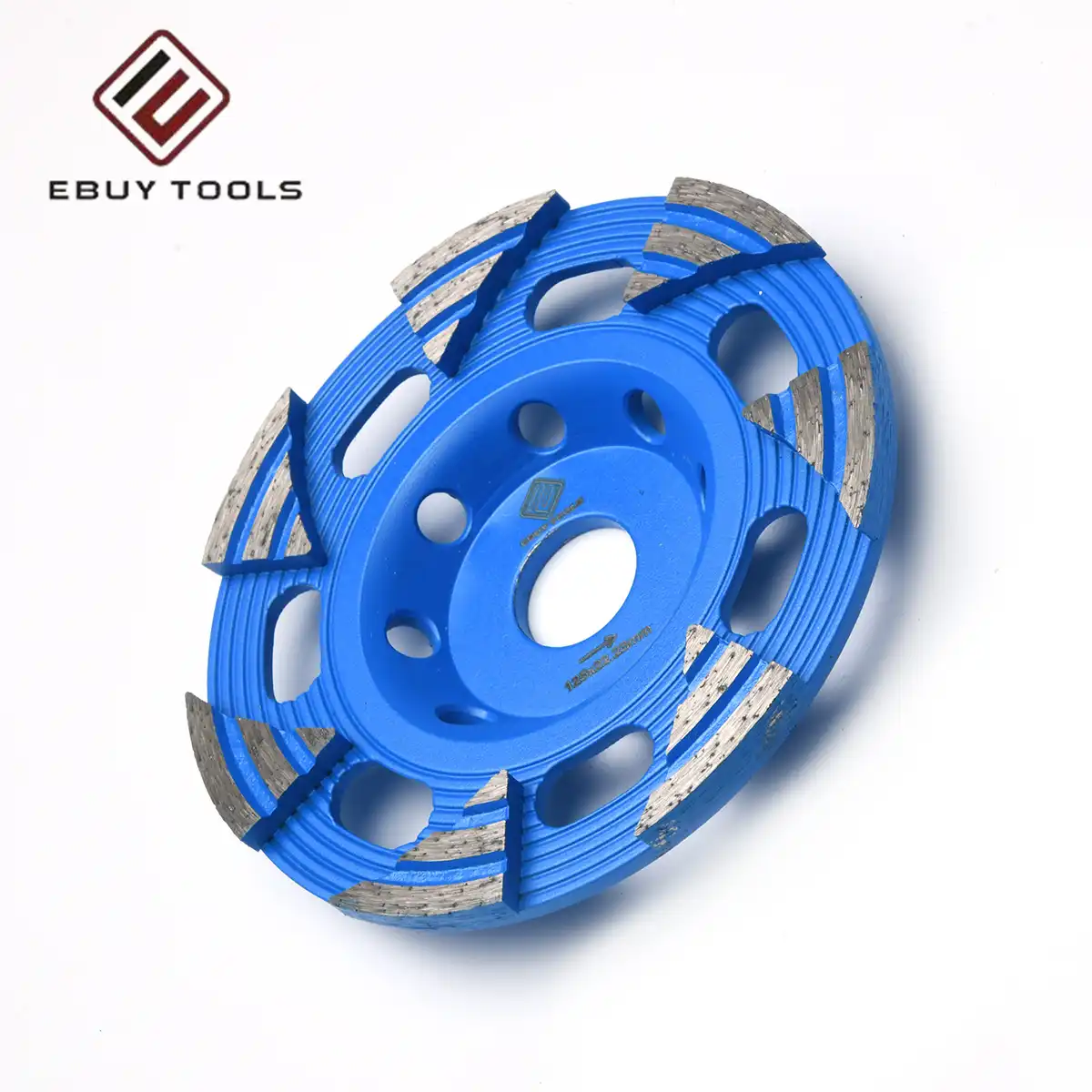
Understanding Diamond Cup Wheels: Types, Materials, and Uses
Today, diamond cup wheels are a big step forward in abrasive technology. They were made to do tough surface preparation jobs that regular abrasives can't do.
Core Construction and Material Composition
The cores of our diamond cup wheels are made of high-tensile steel that is designed to resist extreme operating pressures. Advanced welding techniques, such as high-frequency welding, laser welding, and cold pressing, are used to connect the diamond segments to this core. This keeps the segments intact even at the fastest spinning speeds. Matrix metallurgy uses metals made of cobalt, copper, or iron that keep diamonds in place while keeping wear rates low. This advanced bonding system creates a self-sharpening process in which the metal bond slowly wears away at a controlled rate, revealing new diamond cutting edges all the time while the tool is in use. Because our wheels have a lot of diamonds in them, they cut faster, and the quality of the fake diamonds makes the blade last a lot longer than with regular abrasives.
Primary Wheel Types and Their Applications
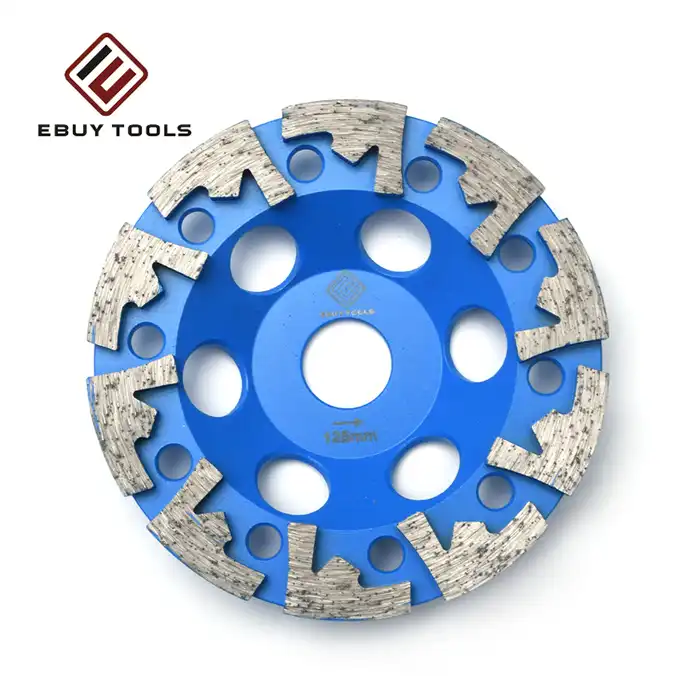
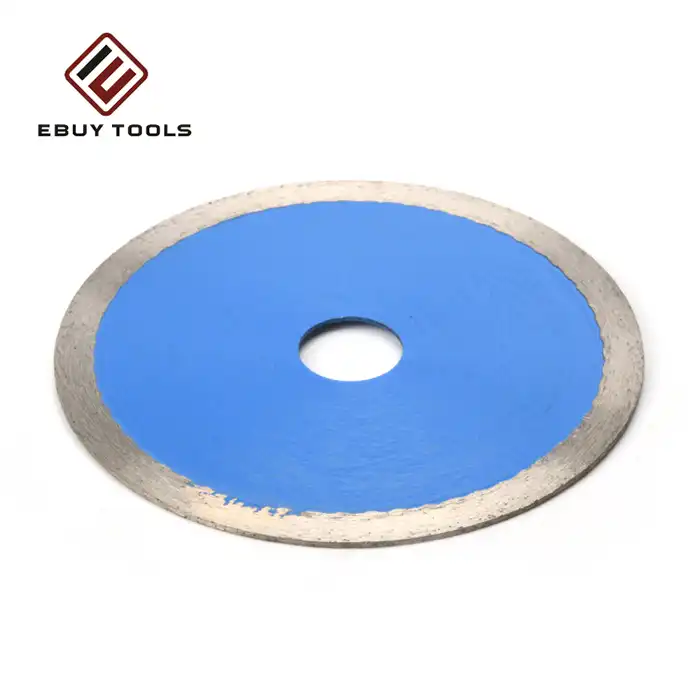
Different section combinations solve specific grinding problems in different fields. Turbo rim wheels have serrated sides that help garbage fall off faster. This makes them perfect for aggressive stock removal on concrete areas where speed is key. The segmented design keeps the wheels from getting too hot during dry grinding by letting air flow between the segments. The heat-treated steel bodies make the wheels more durable and last longer. Continuous rim shapes give natural stone and man-made materials smoother finishes, which is why they are chosen in building brickwork where the quality of the surface is what makes the project successful. Our double-row segment wheels are good for general-purpose grinding on marble, tile, concrete, and rock because they match how well they cut with how smooth the finish is.
Material Compatibility and Selection Criteria
Knowing the hardness of a material helps you choose the right wheel. When the concrete is harder than 4,000 PSI, it needs softer bond matrices that make it easier for diamonds to be seen. This keeps the cutting efficiency high and stops glazing. On the other hand, green concrete or asphalt needs stronger links to keep diamonds from wearing off too quickly. Different types of grit, from coarse 16/20# to fine 120/150#, are used for different types of surface finishes. Coarse grits remove material quickly and aggressively during the initial leveling process, while finer grits get surfaces ready for coatings or finished finishes. Our wheels work well with both normal grinding machines and angle grinders, so they can be used with a wide range of workplace tools.
Safety Protocols and Operational Best Practices
This means that all of our wheels are safe and meet EN 13236 safety standards for superabrasives. They all have balance grades of G6.3 or higher and run-out limits of less than 0.1mm in both the axial and rotational directions. These requirements reduce vibrations that wear out operators and damage equipment. Ventilation holes in our wheel designs make it easy to work quickly and safely whether the wheel is dry or wet. It is still important to wear the right safety gear, like face covers, breathing protection, and hearing protection. Before installing wheels, operators should make sure that the arbor hole width is compatible, which is usually 22.23mm or 5/8-11 threaded hubs. This will keep the wheels from slipping during operation, which could be dangerous.
Diamond Cup Wheel vs. Alternative Grinding Tools: Making the Right Choice
Choosing the right diamond cup grinding wheel has a direct effect on the speed of the job, the quality of the surface, and the total cost of running the business.
Performance Comparison with Traditional Abrasives
Aluminum oxide and silicon carbide grinding wheels are the most affordable options, but they have trouble with hard materials. When used on concrete, our diamond cup wheels remove material three to five times faster, which cuts down on project timelines by a large amount. On hard aggregates, traditional wheels wear out quickly and need to be replaced often, which costs more in work and delays the job. Diamond wheels have better thermal management because they use conductive metal link networks to get rid of heat during use. This stops surface burns and micro-cracking that damage the substrate's structure.
When to Choose Diamond Over Wire Brushes or Flap Discs
Wire cup brushes are great for getting rid of loose dirt and light rust, but they don't cut as deeply into concrete as other tools do, so they can't be used on thick layers or high spots. While flap discs are flexible enough to work on curved surfaces, they wear out quickly on hard materials, which means they can't be used for large-area grinding for cost reasons. Diamond wheels keep their shape even when they are under a lot of pressure from the side, which makes it possible to make exact angles without chipping the sides of the stone. This is a huge benefit for fabrication shops that make granite countertops or marble fixtures. Our wheels' segmented turbo rim design keeps them from getting clogged and smeared when cleaning epoxy coats, urethane glue, or mastic, which would cause regular abrasives to quickly load up and stop working.
Bond Type and Grit Selection for Application Optimization
The "Opposite Rule" is a good way to choose bonds: use soft bonds on hard materials and hard bonds on soft materials. A weak link on granite or firm concrete lets diamonds show up more quickly, keeping the cutting edge sharp for as long as the tool lasts. Hard bonds on asphalt or new concrete, which are softer, stop diamonds from wearing out too quickly, which makes the tool last longer. The shape of each segment has an equal effect on performance. For example, arrow and PCD (polycryscrystalline diamond) segments don't load when grinding coats, while turbo segments make it easier for chips to escape when heavy stock removal is needed. When purchasing managers understand these technical connections, they can choose wheels that work best for their production needs.
Procurement Insights: Where and How to Buy Diamond Cup Wheels?
Strategic procurement practices make sure that there is a steady supply of tools and that costs are kept low across all industry activities.
Evaluating Manufacturers and Brands
Global names like deWalt, Bosch, Makita, Hilti, 3M, and Metabo have a lot of different products, good guarantee programs, and large distribution networks. These companies do a good job of meeting the needs of the general market, but for specific uses, they may not have many customization choices. One of the things that Danyang Ebuy Tools' 77,000-square-meter factories makes every day is about 150,000 diamond saw blades. This shows that the company has the production ability to keep big customers satisfied. Our focused Research & Development department works with clients to create custom solutions that solve specific application problems, such as making bonds that stick better or creating segments with unique shapes.
Bulk Purchasing Advantages and Negotiation Strategies
Buying diamond cup wheel in bulk has big cost benefits that go beyond price by the unit. Manufacturers can improve production runs when they get a lot of orders. This lowers setup costs, which means buyers can get better prices. Suppliers can correctly predict demand when customers consistently buy from them, which lowers the costs of keeping inventory, which is good for both parties. Technical sellers shouldn't just talk about the initial purchase price when they're bargaining with suppliers; they should also talk about the total cost of ownership. More than upfront price, routine costs are affected by tool life, material removal rates, and machine compatibility. At Ebuy Tools, our team works with both wholesalers and end users to set up supply deals that offer reasonable prices, consistent quality, and reliable delivery times.
Customization Options for OEM and Project-Specific Needs
For specialized tasks, wheel specs that go beyond what's in a list are often needed. We can customize your order by changing the segment count, making special bond formulas for rare materials, and changing the size to fit a specific machine setup. For custom specs, the minimum order quantity changes based on how complicated the requirements are. Development and production wait times are usually between three and six weeks. We also offer branding services that let distributors and big builders add company names and packaging designs to wheels. This helps people recognize your brand in markets where competition is high. These customization options are especially helpful for mold and die makers who need exact specs for complex hole machining or for aircraft part makers who work with titanium and superalloys.
Understanding Total Cost of Ownership
A complete buying study looks at more than just the purchase price. It also looks at how long tools last, how much they are used, and how much they wear out. When you add up the costs of labor for tool changes and production downtime, a wheel that costs a little more but lasts twice as long is a better deal. Standardized concrete grade testing lets us measure the rate at which materials are removed, which lets us compare the performance of different goods in a fair way. As part of our quality control process, we test the dynamic balance and welding strength to make sure that the wheels protect the expensive hubs of grinders from shaking damage that can cause expensive repairs. These quality control measures support charging more and give professional fabricators and builders real-world practical benefits.
Diamond Cup Wheel Maintenance and Performance Optimization
Performing regular repair on a tool will get you the most out of your purchase and keep it working well for as long as it's useful.
Essential Maintenance Procedures
Material growth that makes cutting less effective can be avoided by cleaning a diamond cup grinding wheel regularly. When segments are used to grind sticky materials or soft metals, they may pick up dirt that coats the cutting surface. By grinding a rough block or soft brick into the wheel, you can reveal new diamonds and get the cutting action back. Our wheels don't need much care because they are designed to sharpen themselves. However, they should be stored properly, away from wetness and high temperatures, to protect the section bonding integrity. By checking the wheels for segment damage or core cracks before each use, you can keep them from breaking down completely while they're being used.
Troubleshooting Common Operational Issues
When bond hardness is higher than material hardness, diamonds can't be seen, this is called wheel glaze. This problem can be fixed by switching to a softer bond standard or smoothing out the wheel. Overheating during dry grinding means that there is too much pressure or not enough dust clearance. Lowering the feed pressure and making sure there is enough air flow will protect both the tool and the material from thermal damage. Most of the time, segment loss is caused by bad mounting or going faster than the stated operating speeds. These types of failure can be avoided by checking the wheel's balance and making sure the RPM rates match the grinder's specs. Heavy vibrations generally mean that the wheels aren't balanced or that the grinder shafts are bent. Our wheels go through a lot of dynamic balance testing and run-out tolerance testing to make sure they work perfectly. They meet G6.3 balance grades, which reduce problems caused by vibrations.
Optimizing Performance Through Technique Adjustment
Changes in grinding angle, pressure, and speed have a big effect on the finish on the surface and the life of the tool. Keeping the angle between the wheel and the ground between 15 and 30 degrees maximizes the touch area for effective material removal. Too much pressure shortens the life of a tool without increasing the rate at which material is removed. Usually, the best results come from letting the wheel's weight plus a small amount of extra pressure. Working within the manufacturer's recommended RPM ranges keeps segments from coming loose and increases the cutting efficiency. Wet grinding with only a light mist of water stops silica dust from forming and lowers friction heat, which makes tools last a lot longer than when they are dry ground. These improvements to the method help operators get uniform, high-quality results when grinding a variety of materials.
Emerging Technology in Diamond Grinding Tools
New developments in the process of making diamonds make the crystal sizes more similar, which makes cutting more consistent. Laser welding technology makes the connection between segments stronger while reducing the number of heat-affected areas in the steel core. This makes the tool last longer in harsh circumstances. Advanced matrix metallurgy research creates bond formulas that are better at transferring heat, which lowers the grinding heat that hurts delicate surfaces even more. At Ebuy Tools, our research and development team (R&D) is always looking at these new technologies and adding proven improvements to our product line to keep our clients ahead of the competition. These improvements give B2B buyers ways to improve accuracy and longevity in industrial grinding tasks. This is especially helpful in aircraft machining and high-precision mold making, where tolerances measured in microns determine whether a part can be used.
Conclusion
For businesses that need accuracy, efficiency, and dependability in surface grinding, diamond cup wheels are important tools. This guide has looked at important selection factors, such as segment types, bond hardness, grit specs, and material compatibility, that have a direct effect on how well operations go. When procurement managers understand these technical factors, they can choose the right tools for the job, whether it's removing coats from industrial concrete floors, making parts out of stone for architecture, or getting precision mold surfaces ready. Maintenance methods and skill improvement make tools last longer and work better every time, which increases their value. Our production know-how and dedication to quality at Danyang Ebuy Tools allow us to provide grinding solutions that meet the exact needs of professional fabricators and builders all over the world. These solutions are backed by full quality assurance and dedicated customer support.
FAQ
How do I select the right diamond cup wheel for my specific material?
The "Opposite Rule" tells us which bond is best for each material based on its hardness: soft bonds for granite or high-PSI concrete let diamonds be exposed more quickly, while hard bonds for asphalt and other soft materials keep diamonds from wearing off too quickly. Choosing the right grit size depends on the finish you want. Coarse 16/20# grits are best for aggressively removing stock, while fine 120/150# grits are best for smooth finishes before finishing.
What causes my diamond wheel to stop cutting effectively?
Wheel glazing usually means that the bond hardness is higher than the material hardness, which keeps the diamond from being exposed. Cutting action can be restored by changing to a softer bond standard or treating the wheel by grinding an abrasive block on it. Material loading from resinous coatings also lowers efficiency. To avoid clogging in coating removal uses, choose turbo or PCD section designs.
Can I use diamond cup wheels on both dry and wet grinding operations?
In both situations, our professional-grade wheels work well. Wet grinding with only a light mist of water stops silica dust dangers and lowers friction heat, which makes tools last a lot longer. It's important to have good dust drainage systems for dry grinding because it usually shortens the life of tools compared to wet grinding. However, the air holes in our wheel designs make them cooler for dry uses.
Partner with Ebuy Tools for Superior Diamond Cup Grinding Wheel Solutions
Danyang Ebuy Tools mixes large-scale production with custom solution creation. Our 77,000-square-meter facility, which is managed by 319 skilled workers, makes about 150,000 diamond saw blade pieces every day. Our diamond cup wheel provider can do more than just offer standard products. They can also customize products to meet the special needs of metalworking, automobile manufacturing, aerospace engineering, and mold production. Our wheels are made with a lot of diamonds to cut faster, segmented turbo rims to remove material quickly, and heat-treated steel bodies to make sure they last a very long time. Get in touch with our expert team at [email protected] to talk about your unique grinding needs, ask for samples, or look into bulk buying options that give you a competitive edge through better tool performance. You can look through our full product list at ebuy-tools.com and learn how our precision-engineered diamond grinding solutions make demanding industrial uses more efficient.
References
Jackson, M.J. and Robinson, G.M. (2018). Machining with Nanomaterials: Diamond Grinding Technology. New York: Springer Publishing.
Marinescu, I.D., Hitchiner, M., Uhlmann, E., Rowe, W.B., and Inasaki, I. (2016). Handbook of Machining with Grinding Wheels. Boca Raton: CRC Press.
Salmon, S.C. (2012). Modern Grinding Process Technology. Materials Park: ASM International.
Construction Specifications Institute (2020). Concrete Surface Preparation: Standards and Best Practices for Industrial Applications. Alexandria: CSI Technical Documents.
Webster, J.A. and Zhao, M. (2019). "Advanced Diamond Abrasive Technology for Precision Manufacturing," International Journal of Abrasive Technology, Volume 9, Issue 3, pp. 187-214.
National Institute for Occupational Safety and Health (2021). Protecting Workers from Crystalline Silica Exposure During Construction Operations. Cincinnati: NIOSH Publications.
_1732239824901.webp)