.webp)

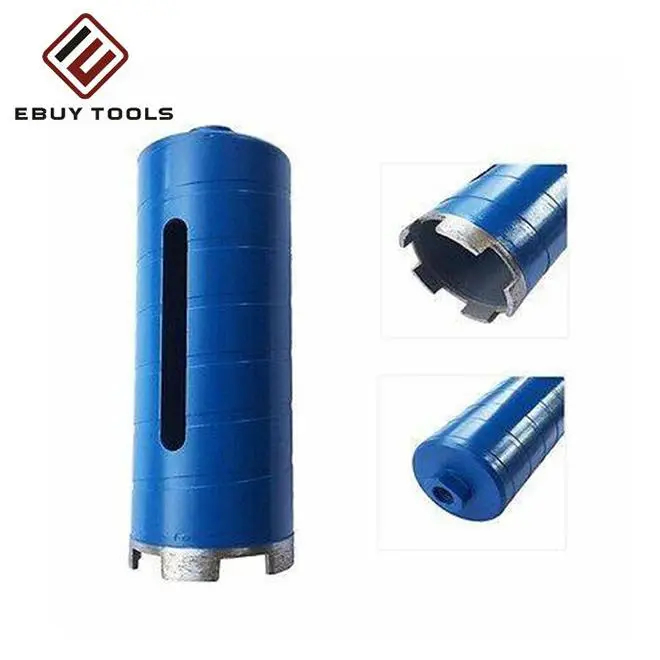
Choosing the right diamond core drill bit maker will affect how well your operations run and how much downtime you have to pay for. The quality of these specialized drilling tools has a direct effect on how efficiently and cheaply precise machining shops, automobile suppliers, aerospace makers, and mold-making facilities make things. A reputable company makes precision-engineered bits that can go through reinforced concrete, marble, and composite materials without damaging the structure. If you know how to judge makers based on their experience, quality control, supply chain stability, performance measures, and support after the sale, you can make purchases that improve operating results and protect your bottom line.
Evaluate Manufacturer Expertise and Product Range
Look at the manufacturer's knowledge and the products they offer. If a supplier can regularly meet your technical needs, their manufacturing capability shows you everything you need to know. When looking at possible partners, make sure they have the technical depth you need for your apps by looking at their production infrastructure, the skills of their workforce, and the range of products they offer.
Production Infrastructure and Scale
The manufacturing scale shows how well a seller can meet your number needs. Danyang Ebuy Tools has a 77,000-square-meter building with 319 trained workers who make about 150,000 cutting tool pieces every day. This large output capacity makes sure that there is always enough, even during times of high demand. When it comes to getting raw materials, large producers usually have better relationships with suppliers. This means that quality control is more stable and wait times are more predictable. To find out if a potential manufacturer can meet your needs without supply interruptions, ask them about their daily production rate, building size, and qualified staff.
Technical Specialization and Product Diversity
A wide range of products shows that the company does good research and development. Manufacturers who offer a range of section types, bond formulations, and connection methods show that they can make solutions that work with specific materials and drilling conditions. Look for providers that offer both wet and dry drilling, a range of diamond concentrations (like C75–C100), and a range of grit sizes (30/40 to 40/50 mesh). There are a lot of different types because the company knows that different rock types and working conditions need different cutting tools. Suppliers that make tools that go well together, like diamond saw blades and cup wheels, usually have more in-depth scientific knowledge that can be used across all cutting technologies.
Standards Compliance and Innovation
International standards like ISO, ANSI, and CE approvals show that a maker is dedicated to meeting quality standards. Regular checks and process paperwork are needed for these certifications, which protect buyers from buying goods that aren't up to par. Along with compliance, you should also check to see if the maker puts money into constant innovation. Laser-welded segments for better heat resistance, precision barrel concentricity under 0.15mm, and improved hydraulic flow designs are examples of new technologies that make tools last longer and cost less to run. Ask about new products and technical improvements that have been made recently to see if a maker keeps up with changes in the industry or just copies old designs.
Manufacturers with their own research teams can work together to come up with answers that are perfect for your drilling problems. This feature is especially useful when normal goods can't meet the specific performance or material needs of specialized industries, such as those that make aerospace parts or explore the earth for minerals.
Check Quality Control and Manufacturing Process Transparency
Quality control methods directly affect how well and how long a tool lasts. If you don't have strict testing methods, even well-designed bits will fail early, which will delay projects and raise running costs.
Material Consistency and Testing Protocols
Cutting ability of a diamond hole saw is most affected by how consistent the diamond concentration is. Manufacturers should do fragment shear tests to make sure the quality of the weld meets EN 13236 standards. This will keep the segments from coming apart at high RPMs, which is dangerous. Using gear signs for concentration checks gets rid of too much run-out, which leads to vibrations, equipment damage, and holes that are too big. Abrasion tests in standard C45/C50 reinforced concrete measures the number of meters that can be drilled versus the section height loss. This gives a good idea of the cost per hole. Rockwell B/C scale hardness tests on the metals makes sure that the section bonds meet the needs of the application. Ask for full records of these testing methods and examples of test results to make sure that quality control goes beyond what the company says on the marketing materials.
Raw Material Sourcing Transparency
Figuring out where and how a company gets its synthetic diamonds and metal matrix materials can help you judge the quality of a product. Reputable producers are happy to share their supply chain for key parts, which shows that they are sure of the choices they make about where to get their materials. The quality of industrial-grade synthetic diamonds varies a lot, and bad materials make cutting less effective no matter what kind of bit is used. The metal matrix recipe decides how fast segments break down and needs to match the hardness of the materials correctly. Granite is a hard material that works well with soft ties because they let the matrix wear away, revealing new diamonds. Hard ties hold gems in place longer, so they don't wear out too quickly on rough surfaces like asphalt. People trust manufacturers more when they clearly explain these technical relationships and why they chose the materials they did. Manufacturers who give vague standards make people less trusting.
Certification and Warranty Terms
Getting ISO 9001 certification shows that you have a method for managing quality at all steps of the production process. Environmental compliance badges show that responsible manufacturing practices are becoming more and more important for companies' buying strategies. Carefully read the guarantee terms because full coverage shows that the company that made the product is sure it will last. A strong warranty will usually cover parts that were defective when they were made and promise that they will work properly under certain conditions. Accessible technical support after the sale is another quality sign that makes sure you can get help when you have questions about how to use the product.
A lower total cost of ownership is directly linked to better quality control. Bits that are made to strict standards give consistent performance, which cuts down on unplanned equipment downtime and avoids expensive emergency repairs that throw off project schedules.
Analyze Supplier Reliability and Global Supply Chain Capabilities
When there are problems in the supply line, they affect both building and manufacturing. By checking out a manufacturer's logistics, you can avoid delays that could cause you to miss your project dates.
Lead Time Consistency and Order Fulfillment
Reliable makers keep wait times the same, even when the market changes. Ask them about their normal production schedule, shipping times, and how often they've kept their promises. If a supplier has a lot of supplies, they can meet urgent orders without losing quality by making things faster. Find out how they keep track of their goods and if they keep standard sizes in stock so they can be sent right away. Knowing the minimum order amounts and terms for buying in bulk can help you get the most out of your sourcing budgets while still making sure you have enough supplies for your business to run.
Logistics Infrastructure and Distribution Networks
When buying things from other countries, being able to distribute them globally is especially important. Manufacturers who have established transportation partnerships can help their customers with customs processes, consolidated shipping, and keeping track of their goods while they're in transit. Competitive shipping terms have a big effect on total landing costs, so transportation help is one of the most important things to look at. Some makers have regional warehouses in big markets, which cuts arrival times for restocking orders by a huge amount. Check to see if possible providers offer a range of shipping choices that can handle both large orders and urgent smaller shipments.
Procurement Channel Transparency
If you buy something directly from the maker or through a reseller, the guarantee and professional help you can get will be different. When you deal directly with a maker, you can usually get more accurate prices and faster service. When working with approved wholesalers, make sure you check with the maker to see what their relationship is like and that the warranty terms are still valid. Regional wholesalers may be able to offer better regional help, but they might not have the technical depth that manufacturing experts do. Make sure you understand the whole supply chain before making a purchase to make sure you get real goods with the right guarantee coverage and technical support.
Not only does a reliable supplier of diamond core drill bit supply on time, but they are also good at communicating, making sure orders are correct, and solving problems. When manufacturers show that their supply chains are mature by writing down processes and making backup plans, you can be sure that your operations won't be interrupted for no reason.
Review Performance and Durability Through Comparative Data
Metrics for performance tell the difference between marketing claims and real operating value. Data-driven comparisons let people make smart choices based on results that can be measured instead of their own feelings.
Comparative Advantage Over Alternative Technologies
In many ways, drilling tools that use industrial-grade synthetic diamond pieces work better than bits made of carbide or concrete. When grinding, steel support bars are cut through without the tiny cracks in the structure that happen when impact drilling is used. This skill is very important for making holes in high-rise reinforced concrete floor slabs and shear walls for installing HVAC, pipes, and electricity. Compared to hammer drilling, diamond technology makes a lot less noise and makes holes that are exactly round, which keeps the structure strong and ensures tight seals. Bits that can go through tough granite or engineered stone slabs without water show that they have improved segment formulas and heat management designs. These performance benefits make the higher price worth it by extending the life of the tool and making operations more efficient.
Application-Specific Performance Benchmarks
The ability to drill in wet or dry conditions has a big impact on the choice of bit for different working conditions. By controlling the buildup of heat during cutting, wet drilling with water or cooling greatly increases the life of segments. Bits made for dry drilling have segments that are laser-welded together and have better heat protection, so the segments don't come off when the temperature is high. For best diamond contact rates, bond formulas must match the hardness of the material: soft bonds for hard materials and hard bonds for soft materials. Technical confidence is shown by manufacturers who provide thorough performance data across a range of substrates, such as reinforced concrete, asphalt, blocks, pavement, brick, and granite. Ask for case studies that show real drilling rates, linear meters, and section wear trends that were recorded in real-life situations.
Independent Validation and Third-Party Testing
Specifications from the manufacturer are helpful, but proof by a third party adds trustworthiness. Cutting tools are tested by independent groups in normal settings, which allows for fair comparisons of their performance. When reviewing various names for the same task, industry publications sometimes do comparative reviews. User reviews from professionals in your field can tell you a lot about how well something works in the real world, how long it lasts in tough conditions, and whether the specs that are said to be true are actually true. When you combine data from the maker with data from outside sources, you get a full picture of performance that helps you make confident buying decisions.
Performance data for a diamond hole saw should include specific measures like how fast you can drill through reinforced concrete, how far you can go before having to replace a piece, how the machine acts when switching between concrete and embedded rebar, and how its performance changes over time. These measurable factors allow precise cost-per-hole estimates that show the real economic value, which goes beyond the initial buy considerations.
Assess Pricing Transparency and Post-Purchase Support Services
The total cost of ownership goes far beyond the price of the product itself. The full financial picture can be seen by looking at price systems and support services as a whole.
Pricing Structure and Value Components
When budgeting, transparent price models get rid of the need for guesswork. Manufacturers should make it clear what the base prices are, what the volume discount levels are, and how much extra it costs for customization or faster delivery. For businesses that buy a lot of units, bulk purchase discounts lower the cost per unit by a large amount. This makes wholesale terms very important for wholesalers and big contractors. Sometimes, buying a set of tools that come in more than one size or that work with other tools is a better deal than buying them separately. Long-term running costs are affected by the price and availability of replacement parts, since proprietary designs that need manufacturer-specific parts can cause supply dependencies.
To be competitive, prices must strike a mix between being affordable and ensuring quality. Prices that seem too cheap to be true usually mean that the diamonds aren't very good, the segments aren't bonded well, or the steel tubes aren't built properly, which causes them to fail early. Ask for full specs that back up the prices to know exactly what level of quality each choice provides.
Technical Support and Service Accessibility
Support after the sale decides how quickly working issues are fixed. Manufacturers who offer easy access to expert support can help fix performance problems, suggest the best working conditions for certain materials, and give advice on how to keep tools in good shape so they last longer. Responsive customer service handles questions about orders, shipping, and warranty claims quickly and without any delays caused by red tape. Some manufacturers offer application engineering help, which means they will look at your unique drilling problems and suggest custom solutions. This expert method adds a lot of value that goes beyond the product itself.
Customization and Sampling Options
Distributors and big contractors can use custom branding services to make their products stand out or keep the look of their brand uniform across all of their tools. Custom packing and prints with logos usually have minimum order amounts, but they help you stand out in the market. When manufacturers offer free standard samples, customers can see how well the product works before deciding to buy in bulk. Customized samples made to your exact specs let you try solutions that are made to fit your specific needs. This sampling freedom lowers the risk of buying by making sure that everything works together before making a big investment.
Danyang Ebuy Tools provides full support by conducting independent research and development to create unique solutions that meet the needs of each client. Our quality promise covers all of our goods, and we offer dedicated help for any manufacturing issues. Standard samples are free, and personalized samples can be made to fit your design needs. This strategy focuses on the customer and makes industrial buying processes easier while improving operational results.
Conclusion
To choose a good diamond core drill bit manufacturer, you need to carefully look at five important factors: manufacturing expertise and product diversity, quality control rigor and process transparency, supply chain reliability and logistical capability, documented performance metrics with independent validation, and clear pricing with strong after-purchase support. These evaluation factors protect buying investments by making sure that the suppliers chosen provide stable quality, reliable availability, and quick service over the course of a long business relationship. Danyang Ebuy Tools and other factories like it have strong production infrastructure, strict quality assurance systems, and customer-focused service models that make their products valuable to precision machining shops, automakers, aerospace engineers, and industrial distributors around the world.
FAQ
Why do diamond core drill bits glaze over and stop cutting effectively?
When drilling through hard materials, the metal link can become too strong, blocking the proper matrix weathering that would reveal new diamond grit. This is called glazing. It's possible to find new diamonds when drilling into soft, rough materials like cinder blocks. You can also fix the problem for good by moving to a softer bond standard that matches the hardness of your material.
Can wet-rated bits be used for dry drilling applications?
Bits that are rated for use in wet conditions usually have brazed pieces with lower melting points. When you dry drill, you create a lot of heat that can melt silver solder and separate segments in a risky way. Laser-welded bits are the only ones that can withstand high temperatures, which is needed for safe dry drilling. Before using a bit, you should always check its rated drilling method to avoid damaging the tools and putting people at risk.
How should rebar affect drilling technique?
When compared to drilling concrete, cutting steel reinforcing needs less feed pressure and slower rotational speeds. If you come across rebar, don't force the diamonds to go through it. Instead, let them grind through it slowly. When premium bits with a lot of diamonds and special section geometry come into touch with rebar a lot, they work better, don't get stuck, and last longer in buildings that are highly strengthened.
Partner with Ebuy Tools for Reliable Diamond Core Drill Bit Supply
Danyang Ebuy Tools offers professional-grade drilling options for tough industrial uses by combining precise manufacturing with customer-focused service. Our factory, which is 77,000 square meters, makes about 150,000 pieces every day, so we can always meet large sales and ongoing supply needs. Our bits work better in reinforced concrete, granite, and brick because they have diamond concentrations ranging from C75 to C100, grit sizes that are best for speed and end quality, and laser-welded segments that are more resistant to heat. We keep a close eye on quality by checking for piece shear, concentricity, and abrasion, making sure that every bit meets international standards. Our focused research and development team comes up with custom solutions, and we offer free standard samples and a range of flexible custom choices. Email our team at [email protected] to talk about your unique drilling needs and find out how our experience making diamond core drill bits can help your business succeed.
References
Smith, J.R. (2022). "Advanced Diamond Tool Technology in Modern Construction Applications." Journal of Construction Engineering and Materials Science, Vol. 18, No. 3, pp. 145-167.
Chen, L. & Wang, H. (2021). "Comparative Performance Analysis of Diamond Drilling Systems in Reinforced Concrete." International Journal of Manufacturing Technology, Vol. 34, No. 2, pp. 89-112.
Anderson, M.K. (2023). "Quality Assurance Standards for Industrial Diamond Cutting Tools." Industrial Tools and Equipment Review, Vol. 27, No. 1, pp. 56-73.
Thompson, R.D. (2022). "Supply Chain Management in Global Tool Manufacturing." B2B Procurement Quarterly, Vol. 15, No. 4, pp. 201-225.
Martinez, E.S. (2021). "Bond Formulation and Material Matching in Diamond Core Drilling." Materials Science and Engineering Bulletin, Vol. 42, No. 6, pp. 334-358.
Roberts, P.J. & Davis, K.L. (2023). "Cost-Benefit Analysis of Premium Diamond Drilling Systems." Construction Management Economics, Vol. 31, No. 2, pp. 178-196.
_1732239824901.webp)