.webp)

When you walk into any metalworking shop, you'll notice angle grinders fitted with different types of abrasive discs. The fundamental difference between a cutting disc and a flap disc lies in their design and intended purpose. Cutting discs are thin, rigid wheels engineered specifically for slicing through metal with precision, while flap discs feature overlapping abrasive flaps bonded to a backing plate, making them versatile tools for grinding, blending, and finishing surfaces. Understanding this distinction helps you select the right tool for your specific metalworking task, whether you're making clean cuts through steel or preparing surfaces for welding and painting.
Understanding Cutting Discs and Flap Discs
Cutting Disc Construction and Design
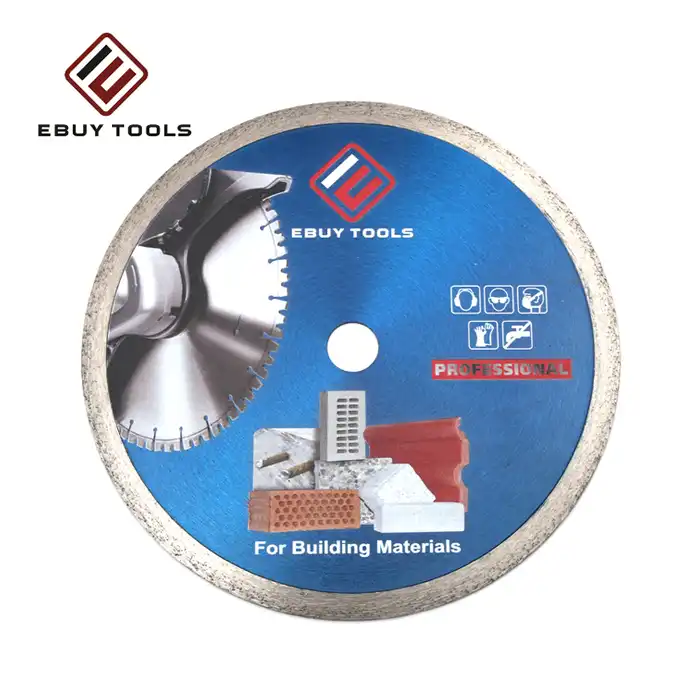
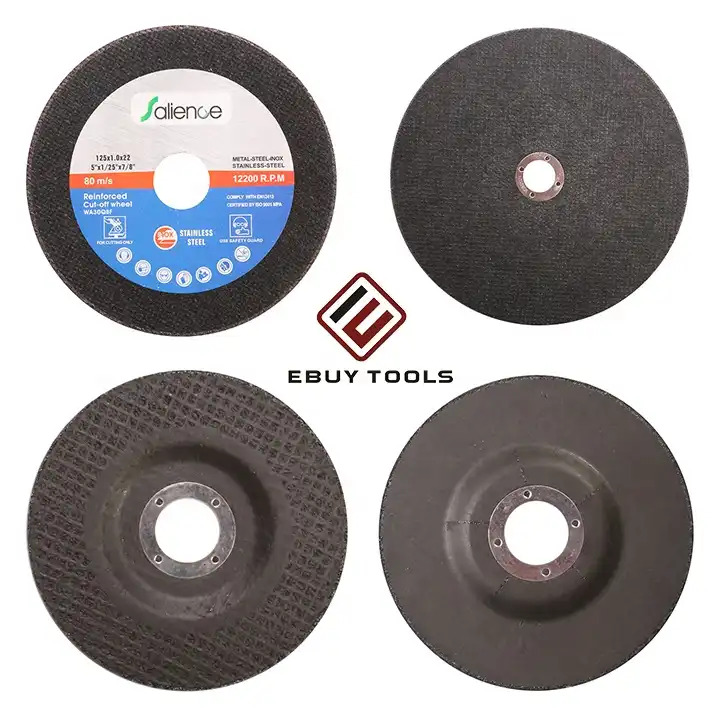
Cutting discs are rough wheels that are stiff and thin. They are between 0.045 and 0.125 inches across. Sharp pieces (normally silicon carbide, zirconia alumina, or aluminum oxide) are glued together to make them, and fiberglass mesh is added to make them tougher. Wheels with this form are strong and last a long time. They can handle the side forces that are made when cutting. They can cut through metal quickly and without taking off too much because these discs are so thin. This means that they can cut metal faster and with less loss.
Cutting discs are made to spin quickly, in a range of speeds from 10,000 to 13,300 RPM, depending on their width. It keeps cutting even until the disc is completely worn down because the bound matrix spreads out the rough grains. These discs don't break fully while they're being used because they have support layers, but they are still not very flexible compared to other cutting tools.
Flap Disc Structure and Composition
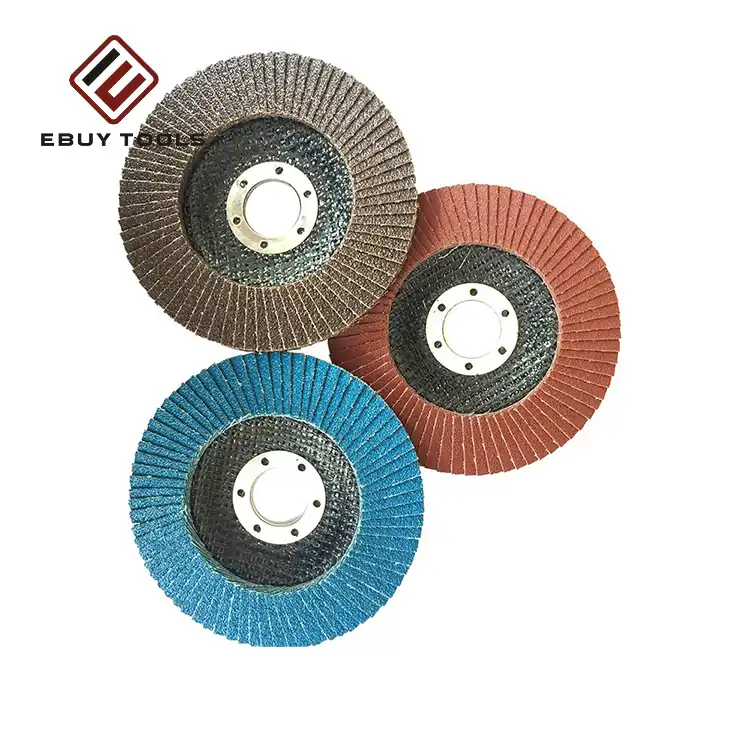
Flap discs represent a totally different way to build things. These tools are made up of many rough cloth pieces that meet and are arranged radially around a central hub. These pieces are connected to a fiberglass or plastic backing plate. The flaps are made of treated abrasive cloth, which is the same kind of cloth that comes on grinding belts. They range from 36-grit (thick) to 120-grit (fine).
At Danyang Ebuy Tools, we make high-performance products with coated flaps that overlap and are put radially on backing plates that are stronger. When these are used, they always make cuts go smoothly. It's like a cushion, keeping the operator from getting tired during long grinding sessions thanks to the overlapped design. As the disc is used, new rough material keeps coming out as the top layers wear away. This keeps the disc cutting well.
Type 27 backing plates are flat, and Type 29 backing plates are shaped like a cone. Type 27 edges should be kept at shallow angles between 0 and 15 degrees for work on flat surfaces and closing jobs. There are 15 to 25 degrees of slope on the flaps of Type 29, which makes the most of surface contact for strong stock removal and shaping work on curvy surfaces. Our factory makes three kinds of abrasives that are used for different tasks. Ceramic alumina grains use micro-fracturing technology to sharpen themselves on materials that are easily damaged by heat. Zirconia alumina is the best mix for heavy-duty carbon steel fabrication, and aluminum oxide formulations are best for general maintenance jobs and softer metals.
Comparing Cutting Discs vs Flap Discs
Primary Function and Application Scope
Cutting disks, unlike flap discs, are only used to cut metal stock, rebar, pipe, and structural parts cleanly and precisely. Because they are small, they don't remove much material, so workers can make straight cuts with little kerf loss. Cutting discs come in handy when you need to make parts that are a certain size or when you need to cut expensive materials with as little waste as possible.
On the other hand, flap discs can do more, like getting rid of surface rust, weld beads, and burrs on edges, and mixing finishes. They are useful for complex forms where fixed grinding wheels would leave marks or an uneven finish because they can bend to fit curved surfaces. The stacked flap structure can remove stock quickly or finish it finely, depending on the grit chosen and the amount of pressure used.
Material Composition and Abrasive Technology
Cutting discs have rough grains that are tightly glued to a plastic center. The frame is strong and won't bend because of this. Even though this is the best way to cut, you can't change it once it's been made. When the rough parts wear out, the disc stops working right and needs to be changed.
The abrasives that are used in current grinding and finishing wheels are better. Our goods are made of zirconia alumina materials that last longer and are stronger than normal alumina abrasives. In other words, they will last longer and hold up better against wear. The glass fiber and glue stick together well and won't damage your work surface when you mix them. The fiberglass pad also does a good job of absorbing shocks, which makes grinding more stable and efficient.
Performance Characteristics and Tool Life
Cutting discs don't change how thick or deep they cut until their sizes get too small to be safe. They are so hard that they either cut well or don't work at all. There isn't much room for doubt. They need to keep a close eye on the disc width and switch out the wheels before they get too small to use safely.
Rough flap wheels that are made well last longer because they can clean themselves. The flaps keep getting new sharp material as the top layers wear away. This keeps the product on the cutting edge for as long as it lasts. When used to prepare the surface or mix welds, these flexible discs often last longer than multiple cutting discs because of this. The fiberglass pad absorbs vibrations, which makes cutting more stable and effective. It also keeps workers from getting tired during long sets of work.
Safety Considerations and Operational Limits
It is important to follow the RPM limits that are written on the covers of both kinds of discs. Going faster than these speeds can damage discs badly, which could lead to serious injuries. Cutting discs can break if they are loaded from the side. You should never load them from the side while they are cutting. To stay safe, workers must keep cuts straight and up and down.
Because they are more flexible, flap discs can handle curved approaches better, but you should still keep an eye on how fast they can go. Their slow wear pattern lets you see how much life is still in the disc. Cutting discs, on the other hand, stop working quickly if they are used past their safe working width. A safer way to use grinding and finishing wheels is to make them easier to handle. This lowers the risk of hand-arm shaking syndrome that can happen from using the machine for long periods of time.
Selecting the Right Disc for Your Application
Material Type and Hardness Considerations
Abrasives change how different metals behave when they are cut or ground with flap discs. An important thing to know about carbon steel is that it works well with both cutting discs and regular aluminum oxide or zirconia flap discs. It is very important to keep the heat from building up when working with stainless steel, especially in places like pharmacies or food processing plants. So that heat-induced rust zones don't form, high-density zirconia is mixed with TIG welds. This saves the ability to fight corrosion, which is important for uses in the bathroom.
To make aircraft parts out of Inconel superalloys or titanium alloys, they need special ceramic alumina grinding wheels that can keep cutting away stock quickly while under pressure and not lose flaps. To cut these materials quickly without adding too much heating energy, which could change the metal's features or make stress points that weaken the structure, you need tools that are gentle on them.
Desired Finish Quality and Surface Requirements
The discs you choose will depend a lot on what you want to do with them. Cutting discs are very accurate and help you make clean cuts that separate parts so that you can later join or put them together. When you lose just a little material, you get edges that don't need much extra work to join.
You need to use a different way to get an area ready. When you need to quickly remove something and then smooth the surface, like with paint, weld spatter, or rust, flap discs are great. If you pick the right grit steps, you can get finishes that are ready to paint without having to use different finishing tools. You could start with a coarse 36 or 40-grit to get rid of a lot of stock and finish with an 80 or 120-grit to smooth out the surface. When it comes to odd forms, the overlapping flap design works well to make sure that the surface is even and ready for paint bonding while still staying within physical limits.
Production Volume and Cost-Efficiency Analysis
People in charge of big projects who buy B2B tools need to think about more than just how well each one works. They should also check how much the whole thing costs. Bulk price lets you save money when you buy a lot of abrasive discs from a trustworthy seller. You can also be sure that the quality of the goods will stay the same during production runs. If you run out of stock at the wrong time, it can stop production lines and cost a lot of money in lost time. Make sure your supply chain works well.
You can tell how solid a source is by how much they can produce, how they check for quality, and how well they ship. Our 77,000-square-meter building and 319 trained workers make about 150,000 cutting tools every day. This way, we can keep our inventory level steady and meet the dates for your projects. Standard items are sent out within 10 to 15 days, and solutions that are made just for you are sent out based on how hard they need to be. That way, you'll always have the tools you need when the job calls for them.
How to Use Cutting Discs and Flap Discs Effectively?
Installation and Equipment Compatibility
Before you put the flap discs on your angle grinder, make sure it fits perfectly. The disc diameter should fit your grinder's guard. Check the arbor size and thread (5/8"-11 or M14 in European markets) to make sure. Don't take off the guards on a grinder to make room for discs that are too big. Taking away important safety features in a business setting is against OSHA rules.
Before you put the discs in, check to see if they have any chips, cracks, or other damage from being shipped or stored. Hold the cutting discs in the air and lightly tap them with something that isn't metal to do a ring test. There is no damage to the discs if you hear a clear ringing sound. If you hear a dull thud, you should throw them away. Follow the manufacturer's instructions for mounting the discs and make sure they fit snugly against the backing lip. Also, make sure the arbor nut is tight enough.
Operating Techniques for Cutting Discs
You need to know how to use cutting tools properly and with control in order to make clean, straight cuts. Set up the grinder so that the cutting disc hits the piece of work at a right angle and stays that way while the cut is being made. Don't push the rough disc; let it cut at its own pace. There is a chance that the disc will stick if there is too much pressure on it. It will also get too hot.
Instead of staying in one place, slowly move the grinder along the cut line. Staying still makes holes that aren't even and heats up the rough material too much. To make sure you're cutting at the right speed, keep an eye on the sparks. If there are a lot of sparks, the disc is sharp. If there aren't many sparks, you're not providing enough pressure. You should never twist or bend cutting discs while they are in use. When you load something from the side, stress builds up, which can cause it to break quickly and dangerously.
Grinding and Finishing Techniques for Flap Discs
For flap discs to work well, you need to focus on evenly mixing the surface and removing material in a controlled way. To get rid of weld beads or heavy stock, place Type 29 cylinder forms 15 to 30 degrees off of the top of the workpiece. The curled flaps will be able to touch more material because of this. This makes the cutting more violent and speeds up the process. Keep the pressure light and steady. It's not faster to clear things when you use too much force, and the flaps wear out faster than they need to.
To finish and mix things, switch to Type 27 flat configurations and work at angles that are 5 to 15 degrees less steep. To get even scratch patterns, make broad passes that intersect and don't leave clear lines between areas that have been worked on and areas that have not. Flexibility makes these tools easy to move along curved surfaces. But you need to pay attention to where the edges meet so you don't slice or puncture.
To make sure that the gaps wear evenly across the disc face, move around and change the angle at which you work. When the wings are used a lot in one spot, they wear down unevenly. This makes the tool last less long and the finish less even on the surface. Because they self-dress, good grinding wheels keep cutting well while you work. But as the wings wear down toward the backing plate, efficiency will slowly go down. You should get new discs if the wings wear down to the glue line. It is dangerous and bad for the workpieces to try to grind with the backing plate itself.
Conclusion
Whether you should use cutting discs or flap discs will depend on the type of work you need to do. When cutting metal stock, cutting discs are great because they make clean cuts that separate and lose little material. Because they are hard and thin, they must be used for all cutting jobs that need to be done accurately. The most useful tools for getting surfaces ready, mixing welds, getting rid of rust, and finishing are grinding and finishing wheels. The fact that they are flexible and can fix themselves means that they last longer and keep workers from getting tired during long grinding jobs. When B2B buying managers know these basic differences, they can pick the best grinding tools for their businesses by balancing performance needs with cost concerns. This will keep workers safe and production running smoothly.
FAQ
Can a cutting disc be used to grind?
No, you should never grind with a cutting tool. These thin, stiff wheels are only good for making straight cuts. They aren't strong enough to handle the side loading forces that happen when you grind. When you try to grind with a cutting disc, you put too much stress on it, which can make it break quickly and hurt the person using it badly. You should always use the right grinding wheels or flap discs to get a surface ready.
What size grit should I use for my flap disc application?
You should choose the right grit based on the finish you want and how much material you need to remove. If you need to grind heavy weld beads or get rid of rust, coarse sizes (36–40) get rid of stock quickly, but they leave visible scratch marks. Medium sizes (60–80) clean material well and leave a smoother surface. They work well for simple jobs like grinding and mixing. Its fine sizes (100–120) make surfaces smooth, ready to paint, and scratch-free. A lot of builders use a series of grits, beginning with coarse grits to remove stock and ending with smaller grits to smooth the surface.
How do Type 27 and Type 29 flap discs differ in application?
Because they keep working angles low, Type 27 flat sets are best for finishing and mixing tasks that are done on flat surfaces. This is because they make scratch patterns that are smooth and even. These Type 29 cone-shaped designs have angled flaps that make the most of surface contact to remove stock strongly and shape curved surfaces. Which one you pick will depend on the shape of your job and whether you care more about how quickly you can remove material or how well the surface looks.
Contact Ebuy Tools for Premium Flap Disc Solutions
Danyang Ebuy Tools manufactures professional-grade abrasive tools designed specifically for demanding industrial metalworking applications. Our product technology eliminates workflow interruptions by combining aggressive stock removal with precision finishing in one step. As an established flap discs manufacturer operating a 77,000 square meter facility with 319 skilled employees, we produce approximately 150,000 cutting tools daily, ensuring reliable supply chains for your operations. Our stringent quality control systems and dedicated Research & Development department continuously innovate to meet evolving industry demands while maintaining competitive bulk order advantages. Contact our procurement specialists at [email protected] to request technical specifications, customized samples, or volume quotations tailored to your specific metalworking requirements.
References
Anderson, T. (2021). Abrasive Technology and Applications in Modern Manufacturing. Industrial Press.
Machinery's Handbook, 31st Edition. (2020). Grinding and Abrasive Processes. Industrial Press.
Miller, R. & Thompson, J. (2019). Metalworking Safety Practices: Abrasive Tool Selection and Operation. American Society of Safety Professionals.
National Association of Manufacturers. (2022). Cost Optimization Strategies in Metal Fabrication Operations. NAM Publications.
Peterson, L. (2020). Surface Preparation Standards for Industrial Coating Applications. SSPC: The Society for Protective Coatings.
Wilson, D. (2018). Comparative Analysis of Bonded Abrasives versus Coated Abrasives in Production Environments. Society of Manufacturing Engineers Technical Paper.