.webp)

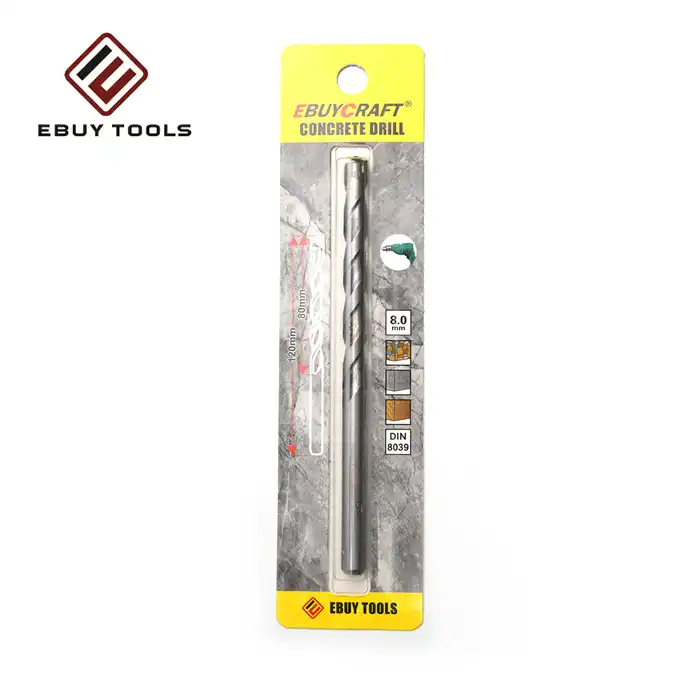
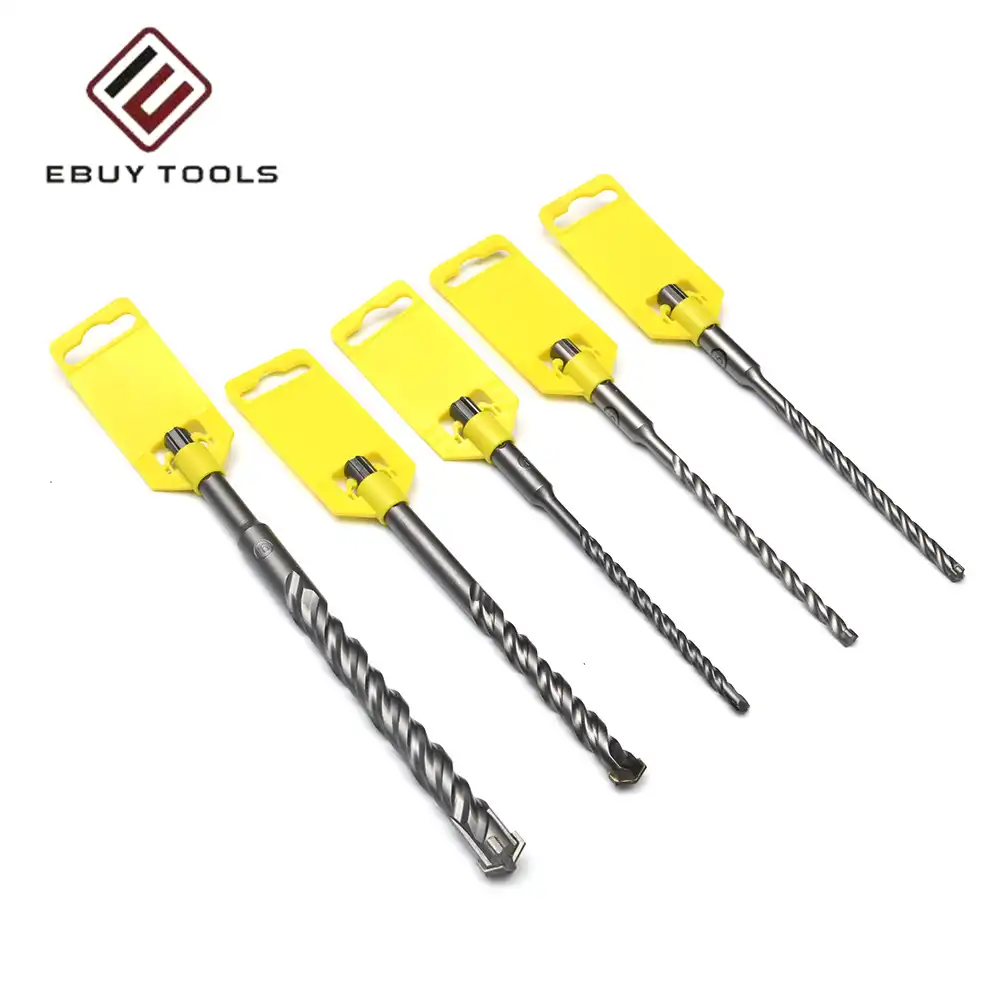
A masonry drill bit is a special kind of cutting tool that is made to go through hard building materials like granite, brick, stone, concrete, and brick. These tools are different from regular bits because they use a fracture-and-crush method with hardened carbide cores brazed to heat-treated steel shanks. Professional tungsten carbide rotary percussion bits are made by Danyang Ebuy Tools. These bits have HRA 88–91 hardness values, so they will work reliably in tough structure uses. This detailed guide is for procurement managers, engineers, dealers, and original equipment manufacturers (OEMs) who want to learn about technical basics, best practices for applications, and smart ways to buy things. We talk about important selection criteria, operational methods, and bulk purchasing issues that have a direct effect on the efficiency and long-term cost-effectiveness of projects in the automobile, aerospace, metalworking, and industrial equipment manufacturing sectors.
Understanding Masonry Drill Bits: Definition & Key Features
Masonry drilling tools are a special kind of percussion-driven cutting devices that were made for materials with a high compression strength. A tungsten carbide piece is attached to a forged Chrome-Vanadium steel body using high-temperature brazing. This is the basic form. This hybrid structure solves long-standing problems in the industry, such as low entry rates in reinforced concrete, cutting edges that break down too quickly in hot conditions, and the buildup of debris during long drilling cycles.
Core Design Elements
The cutting shape has a chisel edge that is angled 130 degrees so that it breaks up material instead of slicing it. Our advanced 4-cutter cross-head designs keep them from getting stuck when they hit embedded steel support bars. This keeps the holes perfectly centered, which is important for anchor stability. It is very hard for silica particles, which are often found in concrete, to wear down the carbide grade YG8C makeup.
Flute Architecture and Dust Management
Double U-flute and L-flute shapes make it easy for debris to leave the cutting zone quickly. This designed shape keeps friction from building up heat that can weaken carbide brazing joins. Better dust-removal skills are especially important for deep-hole operations in two-layer brick walls, where bit seizure and inaccurate measurements can happen if the walls aren't cleared properly. In our 77,000-square-meter factory, we make bits with lengths between 110mm and 1000mm and concentricity tolerances of ±0.05mm. This makes sure that they work with the precise pin systems used in structural engineering projects.
Shank System Compatibility
For light-duty uses with 3-jaw drill chucks, standard round shanks work well. For heavy-duty rotary hammers, SDS-Plus and SDS-Max versions offer non-slip torque transmission. The slotted drive mechanism lets the bit move axially, which sends the most impact energy straight to the carbide tip. This makes drilling in C50/60 grade concrete up to 40% more efficient than with fixed-shank designs.
How to Use Masonry Drill Bits Effectively?
Professional drilling operations need organized ways to deal with different types of materials, make sure that the equipment works well together, and improve the skill. If you choose the wrong bit or set the wrong operating settings, it will speed up wear patterns, change the shape of the holes, and raise the cost of the project by replacing tools too soon.
Material Assessment and Bit Selection
Masonry drill bits concrete need to be a certain way on different media. Standard 2-cutter designs work well with unreinforced brick and cinder block, but reinforced concrete needs 4-cutter designs to get around the rebar without breaking at the tips. When installing natural stone, less impact energy is needed to keep the viewing areas from getting tiny cracks. When drilling ceramic tiles, it's best to make test holes at lower RPMs to protect the glazing before going through the base backing.
Equipment Configuration and Operational Parameters
Hammer drills have the pounding action that is needed to break through concrete. Standard rotor drills don't work well for brick jobs because they produce too much heat without removing enough material. We suggest speeds between 800 and 1200 RPM for holes with diameters less than 12 mm and 400 to 600 RPM for holes with diameters greater than 12 mm. Too much pressure speeds up carbide wear without increasing penetration rates. The best results come from letting the shape of the tool do the cutting.
During deep drilling, pulling the bit out every 15 to 20 seconds clears the flute channels of dust that has built up. This method stops the buildup of heat that weakens the brazing and, in comparison field tests, increases tool life by about 60%. When drilling through ceramic tile, where long-term heat causes the base to crack regardless of mechanical stress, cooling times become even more significant.
Maintenance Protocols and Service Life Extension
By checking the quality of the carbide tip on a regular basis, wear patterns can be found before they affect the accuracy of the hole. A lot of professional-grade bits have wear markers along the flute helix. When these marks can't be seen, the bit has lost gauge width and doesn't meet the requirements for installing an anchor. If you try to resharpen carbide tips without the right tools, you'll probably damage the cutting shape. For most industrial uses, replacement is cheaper than reworking.
How to Choose the Best Masonry Drill Bit: A Decision Support Approach?
When making strategic buying choices, it's important to weigh the short-term cost of an item against its long-term performance needs, operational efficiency, and total ownership costs. Material make-up, coating methods, and production accuracy all have a direct effect on how much drilling is done and how much consumables cost over their entire lifetime.
Durability Factors and Material Science
Chrome-Vanadium steel shanks that have been heated to HRC 48–52 standards offer the best resistance to torque and shock absorption without becoming weak, which would lead to a catastrophic failure. Different types of tungsten carbide have different amounts of cobalt and different-sized grains. YG8C compositions are the best mix of hardness and impact toughness for use with rebar. When it comes to rough natural stone, diamond-coated versions last longer, but they are more expensive and need to be used a lot to be worth it.
Application-Specific Compatibility Requirements
SDS-Max bits with long lengths that can cut through thick industrial slabs are useful for automotive factories that need to drill holes in concrete floors for fastener mounting. When aerospace component makers install vibration-isolated equipment, they need to use bits with very tight tolerances to make sure that the anchor pull-out strength meets the standards for seismic approval. Standard carbide-tipped bits, not specialized industrial types, are more cost-effective for mold and die shops that do some brick work during building changes.
Corded drill support is different from cordless platform requirements. Battery-powered tools have limited peak torque, so they need sharper carbide shapes and better flute designs to make up for the lower driving force. For maximum working efficiency across a wide range of project needs, procurement managers should define bit traits that match their main equipment inventory.
Comparative Brand Analysis and Value Assessment
Established makers of masonry drill bit follow strict quality control procedures that make sure that each batch is the same, which is very important in production settings. Bosch and DEWALT both have large product lines with good warranties. Milwaukee, on the other hand, focuses on heavy-duty building uses. Hilti has a leading place because its anchor systems are designed to work with others and it offers full expert support. Cheap brands might work for occasional use, but they often have faster wear patterns and dimensional changes that make anchors less effective in structure uses. At Danyang Ebuy Tools, we can make more than 150,000 units every day. This is possible because we combine the benefits of mass production with strict multi-stage inspection processes. This means that we can offer professional-grade performance at competitive buying prices for large buyers.
Bulk Purchasing and Procurement Considerations for B2B Clients
Large-scale acquisition plans have big economic benefits because they offer bulk discounts, a consistent supply chain, and customized product lines that meet organizational needs. Structured buying methods that help with inventory management, quality assurance, and building relationships with suppliers are helpful for industrial resellers, original equipment makers, and contract machining operations.
Economic Advantages of Volume Purchasing
When you buy in bulk, you can usually get tiered pricing, which lowers the price per unit by 25–40% compared to buying in stores. When you combine orders, you save money on freight costs and make sure you have enough product to cover supply disruptions. Negotiated payment terms make it easier for manufacturing businesses that need a lot of capital to handle their cash flow. Customized bit sets made to fit specific material shapes get rid of extra stock of sizes that aren't being used and make sure that commonly used sizes are always available.
Supplier Evaluation and Quality Verification
Material certifications from reputable makers include details about the carbide grade, the results of hardness tests, and measures of how accurately the parts are sized. Third-party quality checks make sure that the brazing is solid by testing the damaging shear strength and using metallurgical analysis to prove that the right heat treatment cycles were used. Before signing large-volume contracts, people who work in procurement should ask for sample batches to be tested in the field under real working conditions. Performance benchmarking against present providers sets concrete comparison standards for tool life, penetration rates, and the uniformity of hole geometry.
Our dedicated Research & Development department works with industry clients to create custom geometries for uses that are hard to get to or have special substrates. This engineering support feature sets manufacturing partnerships apart from transactional source relationships. It creates long-term value by continuously optimizing products to meet changing project needs.
Warranty Coverage and Risk Mitigation Strategies
Full guarantee plans protect against carbide detachment before it's supposed to, shank fracture, and manufacturing flaws that affect how well the tool works. When tools break, clear replacement methods keep output running as smoothly as possible. Aftermarket technical support helps fix drilling problems that are caused by improving the method, making the parameters work better, or having questions about how to use a certain material. Contracts for buying things should say how many defects will cause a lot to be replaced automatically. This way, everyone in the supply chain is responsible for quality.
Conclusion
To buy professional masonry drill bit tools successfully, you need to balance technical requirements with practical needs and cost concerns. Knowing about carbide grades, flute shapes, and joint system compatibility lets you make a smart choice that fits your application needs. Using the right percussion equipment, following the right repair procedures, and making sure the operating conditions are just right will make your tools last longer and drill more accurately. When you buy in bulk from reliable manufacturers, you save money and get uniform quality, which is important in production settings. The technical information and buying guidelines in this article help industrial buyers, engineering teams, and distribution partners get the most out of the money they spend on cutting tools. This leads to higher productivity and more reliable structural results in a wide range of manufacturing and construction tasks.
FAQ
Can masonry drill bits be used on metal or wood materials?
Metal or wood shouldn't be used as a base for these specialized tools. The acute angle and negative rake shapes that are meant to crush stone don't work well with materials that need to be sheared. Drilling into wood causes too much burning and tear-out, while using metal causes fast heat buildup without cutting. The carbide makeup that is best for abrasion protection doesn't have the cutting edge sharpness that other materials need to form fibers or chips.
What size bit should I use for specific wall anchors?
Anchor makers define exact hole sizes to make sure the anchor can expand and hold its weight. Using bits that are too big weakens the pull-out strength, and holes that are too small stop the full anchor from being inserted. Anchors made of standard plastic usually need holes that are 1-2 mm bigger than the anchor body width. For accurate drilling measurements, refer to the anchor's technical specs. Professional mechanical anchors need tighter tolerances. Bits with clear signs of wear should be thrown away because they no longer have the correct gauge width for anchor performance.
What distinguishes concrete bits from standard masonry bits?
The terms are often used interchangeably, but bits made for concrete usually have more sharp carbide shapes and stronger shank construction for heavy-duty jobs. Standard masonry drill bits work well with softer materials like brick and cinder block. But when cutting into reinforced concrete, you need bits that can handle more pressure and heat. The 4-cutter cross-head design is different from basic 2-cutter masonry designs because it is designed to deal with rebar contacts that are common in structure concrete applications.
Partner with a Trusted Masonry Drill Bit Manufacturer
Danyang Ebuy Tools blends advanced manufacturing with quick, helpful customer service for masonry drill bit that is geared to the needs of industrial buyers. With 319 employees, our company makes professional-grade carbide-tipped bits that meet strict tolerance requirements and are needed for precise installation and grounding work on structures. We can make custom programs for buying in bulk that offer low volume prices, full technical support, and reliable supply chain management to help you keep your business running. Email our team at [email protected] to talk about your unique application needs, get full product specifications, or get a quote made just for your next project. Visit ebuy-tools.com to see our full selection of cutting tools designed for precise making and high-quality building.
References
Portland Cement Association. (2019). Concrete Technology Handbook: Properties, Testing, and Specifications for Structural Applications. PCA Engineering Publications.
American Concrete Institute. (2020). ACI 318-19: Building Code Requirements for Structural Concrete and Commentary. Farmington Hills, MI: ACI Publications.
Machinery's Handbook, 31st Edition. (2020). Industrial Press Inc. Section on Drilling Technology and Carbide Tool Materials.
Krar, S.F., & Gill, A. (2018). Technology of Machine Tools, 8th Edition. McGraw-Hill Education. Chapter 15: Drilling Operations and Tool Selection.
International Standards Organization. (2021). ISO 5468: Rotary Tools for Construction - Technical Requirements for Masonry Drill Bits.
Society of Manufacturing Engineers. (2019). Tool and Manufacturing Engineers Handbook, Volume 1: Machining Processes and Carbide Cutting Tool Technology.