.webp)

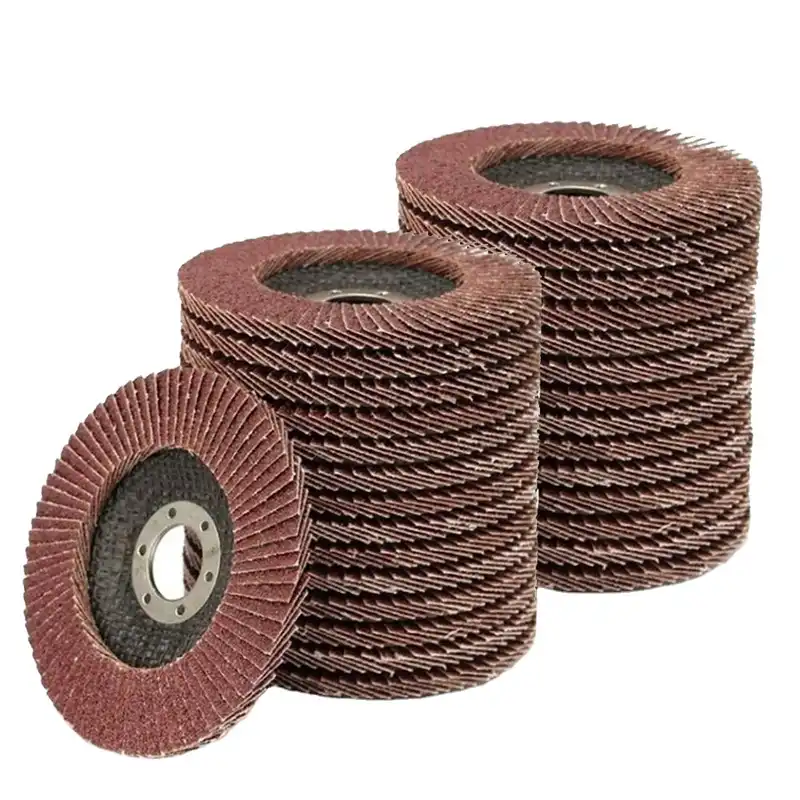
Flap discs are the tool you need if you want to do hard grinding and finish with a clean surface. These special abrasive tools have covered flaps that overlap and are arranged radially around a backing plate. This makes a design that keeps exposing new abrasive grains as the upper layers wear away. Because they cut themselves, they are very useful in places like car plants, metalworking shops, and precision fabrication shops where quality of surface and speed must not be compromised.
Understanding Flap Discs – Types, Materials & Sizes Explained
The way flap discs are made has a direct effect on how well they work and what tasks they can be used for. Flap-style abrasives have flexible cloth flaps attached to a central support structure. This is different from hard grinding wheels, which keep the same shape throughout their life. Once procurement managers and shop floor leaders understand how these differences in basic design work, they quickly see how they create a number of practical benefits.
What Makes Flap Discs Different from Traditional Abrasives?
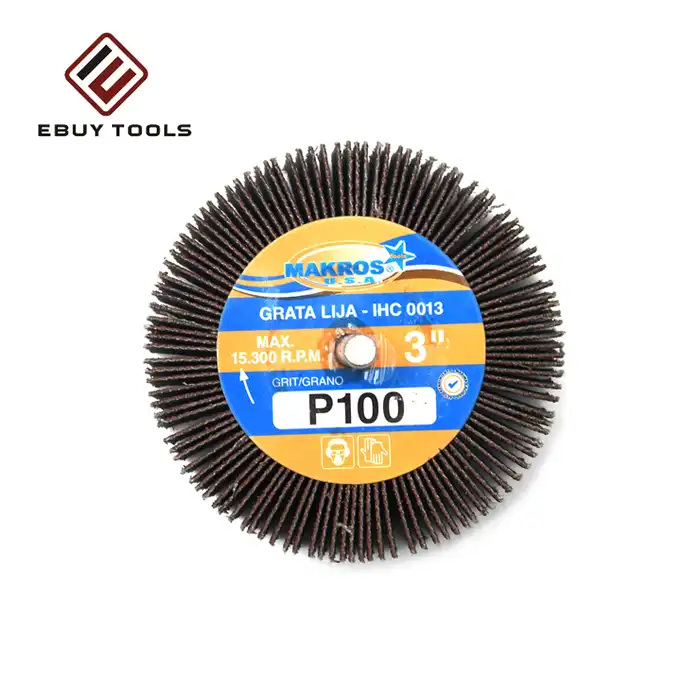
Because they are built in layers, these tools are different from regular cutting wheels and fiber discs. Each flap of rough cloth has thousands of tiny grains glued to a backing material. The flaps meet in a way that looks like a fan. As the machine works, the edges that touch the object wear away slowly, showing sharp, unused abrasive material below. This controlled wear pattern keeps the cutting rate steady, and solid grinding wheels don't have the loading or coating issues that happen when working with some metals. Because the cloth backing is flexible, the tool can slightly mold to the shape of the surface. This lowers the risk of cutting and makes it easier for people who aren't very skilled to use.
Core Abrasive Materials and Their Industrial Applications
There are three main types of gritty grains on the market. Each one is designed to remove different kinds of materials. When buying teams know these differences, they can choose the right tool for their tasks instead of using general-purpose choices that don't work as well.
Aluminum Oxide Grains: These cheap abrasives are good for carbon steel, iron, and bronze, which are all soft metals. Because they are friable, when they are put under pressure, individual grains break apart, revealing new cutting edges. Shops that do general upkeep, light manufacturing, or work with metals that aren't iron or steel find that aluminum oxide formulations work well enough at lower costs.
Zirconia Alumina Formulations: Zirconia is tougher than regular aluminum oxide when longevity is more important than cost at first. The structure of the grains keeps them from breaking too soon, which makes it perfect for working with heavy-duty carbon steel where pressure is kept on for a long time while welding is removed and edges are beveled. Our company, Danyang Ebuy Tools, makes high-performance solutions with zirconia alumina materials that are tougher than regular abrasives. These materials also last longer, so they don't need to be changed as often in high-volume production settings.
Ceramic Alumina Technology: Materials that can't handle heat, like titanium alloys and stainless steel, need ceramic grain formulas. Micro-fracturing technology is used in these high-tech abrasives to make sure that each grain stays sharp by breaking into smaller, sharper pieces instead of becoming dull. This keeps the cutting action strong while making less heat. This stops discoloration and changes in the metal's structure that could make it less resistant to corrosion in stainless steel uses or in aerospace components.
Configuration Types: Flat Versus Conical Designs
Geometry is a very important factor in figuring out how well these tools do certain jobs. Industrial uses mostly use two standard setups. Which one you choose depends on whether you want to aggressively remove stock or finely blend the surface.
The flap angles on Type 27 flat patterns of flap discs stay between 0 and 15 degrees with respect to the backing plate. When the tool is held flat against the workpiece, this setup makes a larger contact patch. This makes it ideal for mixing finishes, getting rid of minor surface flaws, and making even scratch patterns before coating. This shape is helpful for both getting paint ready on car panels and polishing food-grade stainless steel tanks.
The flaps on Type 29 conical shapes are tilted 15 to 25 degrees, making them push more forcefully against the workpiece. This shape works really well for heavy weld removal, edge chamfering, and shaping tasks that need to remove the most material quickly. For the first step of grinding, structural steel makers who work with thick-section I-beams and pipeline welding processes like this shape. For the end work, they switch to flatter profiles.
Sizing Parameters That Impact Performance
Choices of diameter and size have a direct effect on cutting speed, surface finish, and tool life. Diameters usually range from 4 inches to 7 inches. Smaller diameters are easier to move around in tight areas, while larger diameters make better touch with open workpieces and cover them faster. The backing materials, which are usually fiberglass or strengthened nylon, have to be strong enough to handle the rotational forces that are created at the fastest speeds. Our factory makes tools with highest RPM ratings of 13,300 for 4-inch models and 8,600 for 7-inch models. This makes sure that they can be used safely on normal angle grinder platforms.
The grit size sets the mix between how fast and how well the surface is finished. Fine grits, like 36 and 40, remove material fast but leave deeper scratches. This makes them good for heavy metal grinding and stock removal, where the surface will be smoothed out in later steps. Grits between 60 and 80 are considered medium and work well for most welding tasks. Fine grits, like 120, give smooth finishes that are good for tasks like pre-painting preparation and mixing that need to keep the surface as smooth as possible.
When setting up purchase requirements, these size issues become even more important. Instead of ordering generic tools, you should specify the diameter you need based on the geometry of a typical workpiece and the grit ranges you need for each stage of the operation. This way, your shop floor will get tools that are optimized for productivity instead of tools that force operators to change how they do things to fit the wrong specifications.
Applications and Benefits of Flap Discs in Metalworking
It's less important to understand the academic details of how flap discs work than to understand how they solve real business problems. The right abrasive technology cuts down on cycle times and improves finish accuracy in heavy fabrication shops, precision machining operations, and high-volume production lines. These useful advantages lead directly to measured gains in throughput and cost saves.
Heavy Fabrication and Structural Steel Operations
When structural steel components are welded together, the conditions are just right for grinding wheels to have trouble. Heavy weld beads on I-beams, pipeline sections, and pressure tank systems need to be removed aggressively and then the surface needs to be blended. This is a process that usually requires changing tools more than once. Our specialized abrasive tools have coated flaps that overlap and are placed radially on strengthened backing plates. This gives them uniform cutting action over the course of their useful life. This design doesn't stop work because it removes stock aggressively and finishes precisely all in one step.
Ceramic grain technology keeps removal rates high even when pressure is applied for a long time. It also stops flap shedding, which could dirty the work area or pose a safety risk. These tools work reliably, so production plans stay on track, whether you're working with I-beams for building construction or pipeline sections for oil and gas infrastructure. The glass fiber and glue work together to make a strong bond that doesn't come apart, even when heated up for long grinding sessions.
Stainless Steel Processing for Sanitary and Corrosive Environments
Stainless steel surfaces must be finished to a certain level of roughness for food processing equipment, medicine manufacturing vessels, and chemical storage tanks. Discoloration and surface flaws caused by TIG welding must be taken care of without creating heat-induced rust zones that weaken the material's ability to fight corrosion. When using flap discs, weld gaps are made more uniform with high-density zirconia formulations, and controlled heat production keeps the passive chromium oxide layer that makes stainless steel resistant to corrosion.
Another difficult part of making precise tanks is keeping geometric limits. When grinding softer steel metals, rigid wheels tend to dig into them, leaving low spots that need a lot of work to fix. Because overlapping flaps are flexible, they soften the cutting action. This lets workers keep the pressure on the part without risking it deforming. This trait is especially useful for finishing complexly curved surfaces on mixing tanks and reactor vessels, where accurate measurements affect how well they seal and clean.
Automotive Component Finishing and Surface Preparation
To prepare body panels, you need tools that can get rid of flaws without changing the shape of the panels. Automakers who use stamped steel and metal parts are always under pressure to cut cycle times while keeping the quality of the paint bonding. The design of the covering flap works well with irregular shapes, making sure that the surface is uniformly prepared for coating bonding while keeping the geometric limits that affect the quality of the fit and assembly.
These tools' controlled aggression makes them good for getting rid of spot weld marks, cleaning out panel joints, and fixing damage from transport. Instead of leaving marks or distorting panels like hard abrasives do, the flexible design lets workers smooth out edges and fix areas without any noticeable gaps. Surface preparation that goes from multiple steps using different types of abrasives to efficient single-tool operations has a measurable effect on the number of paint defects.
Aerospace and Precision Engineering Applications
The work-hardening properties and poor heat conductivity of titanium alloys and nickel-based superalloys make them very hard to machine. Manufacturers of aerospace components need tools that can cut through these tough metals without creating too much heat, which would change their mechanical properties or cause stress buildup on the surface. Ceramic alumina grains use micro-fracturing technology to sharpen themselves on heat-sensitive materials, so the cutting edges stay sharp for the life of the tool.
Refurbishing turbine blades, fixing parts of landing gear, and making changes to engine cases all require dealing with things that quickly wear down regular abrasives. When compared to rigid wheels that glaze over and need to be dressed often, the constant grain renewal system makes tools last a lot longer. Because it lasts longer, it costs less to replace parts and keeps the tight specs and high-quality finishes that aircraft quality standards require.
Measurable Performance Advantages
When you switch to optimized abrasive technology, you can see changes in a number of performance measures. It takes less time to switch between tools because each unit can do both grinding and finishing work, so there is no need to waste time moving between large grinding wheels and fine fiber discs. Less vibration means less operator tiredness. The fiberglass pad successfully absorbs vibration and makes grinding more stable and effective, which lowers the risk of hand-arm vibration syndrome during long periods of use.
When workers can better control stock removal and take out only the necessary material instead of overgrinding because they can't control their tools, material waste goes down. The regularity of the surface quality gets better because the self-renewing abrasive keeps cutting at the same rate instead of slowly breaking down like bonded wheels do. Over time, these benefits add up to big cost saves that make it worth it to specify high-end tools even in places where prices are tight.
Safety Tips and Best Practices for Using Flap Discs
When cutting things for industry with flap discs, there are many risks that need to be managed in a planned way. Abrasive rotating tools can go faster than 250 feet per second around their edges. This creates a lot of kinetic energy that can hurt people badly if parts break or users lose control. Setting up thorough safety rules saves workers and lowers the risk of harm and workers' compensation costs.
Pre-Operation Inspection Procedures
Before being used, every sharp tool needs to be looked at visually. Look for cracks, delamination, or fiber showing on the backing plate that show the structure is weak. Check the flaps for damage that could have happened from not being stored properly. Crushed or bent flaps cause an uneven spin that causes too much sound and raises the risk of failure. Check that the highest RPM rating on the backing plate meets or beats the speed at which your grinder works. Putting tools that are rated for slower speeds on a grinder that works at a higher speed will cause catastrophic failure.
For safe installation, thread matching is very important. Our products have standard 5/8"-11 and M14 thread types that work with most industrial angle grinders. Making sure they are compatible before installing them stops cross-threading, which weakens the mechanical connection between the tool and machine. If the tool or grinder spindle threads are damaged, you should replace the parts right away instead of trying to force them together.
Proper Mounting and Balance Verification
Before putting on new tools, clean the grinder spindle and backing flange very well. Runout is caused by metal particles, old adhesive residue, or corrosion on the mounting surfaces, which leads to vibration and early wear. Thread the tool onto the spindle by hand until it seats firmly against the backing flange, then use the right spanner wrench to tighten the retaining nut securely. Tightening it too much can damage the backing plate, while not tightening it enough lets the tool come loose during use.
Before you start working, do a balance test. Turn on the grinder and let it reach full speed while keeping it away from any surface. If there is too much vibration, it means that there are problems with the mounting or the tools that need to be fixed before you can move on to production work safely.
Operational Safety Protocols
If you're using a Type 27 flat configuration of flap discs, hold the grinder 10 to 15 degrees off the surface of the workpiece. For a Type 29 conical configuration, hold it at 25 to 35 degrees, which puts the angled flaps in the best position for maximum contact. If you go beyond these angles, the tool is more likely to catch on the edges of the workpiece and create sudden rotational forces that can pull the grinder out of your hands.
Instead of forcing the tool, use moderate, consistent pressure. Too much pressure causes heat that breaks down both the abrasive grains and the glue that holds them to the backing cloth. This makes operators want to use even more pressure, which speeds up wear and raises the risk of failure. Let the abrasive do the work—the right choice of grains and configuration should remove material efficiently with moderate pressure.
When removing heavy stock, make sure you wear the right safety gear, like safety glasses with side shields, hearing protection, and grinding face shields. Flying sparks and abrasive particles can hurt your eyes, and being exposed to noise for long periods of time during long grinding sessions can damage your hearing permanently. Leather gloves protect your hands from heat and provide grip, but some precise tasks may need thinner gloves that keep your tactile feedback.
Service Life Management
If you keep working with the tools after the abrasive flaps wear down to within a quarter inch of the backing plate, you will be grinding with the backing material instead of the abrasive flaps, which causes heat, vibration, and could cause the structure to fail. If you use the backing plate correctly, it won't pollute the work surface, but too much wear takes away this benefit.
If you see uneven flap wear, it means that the pressure isn't being applied evenly or there are flaws in the workpiece that need to be fixed with a different technique. If you see rapid wear in certain sections, it means that the mounting isn't balanced or there are mechanical problems with the grinder that need to be fixed before you can continue using it.
Conclusion
The different types of abrasive tools, such as flap discs, have changed metalworking by combining grinding and finishing into streamlined single-tool processes. Knowing the differences between aluminum oxide, zirconia, and ceramic formulations helps procurement teams choose the best solutions for their material processing needs. The choice of flat or conical designs, along with the right grit selection, has a direct effect on productivity and finish quality across fabrication, automotive, aerospace, and precision manufacturing applications. Safety rules for inspection, mounting, and operational practices protect workers while maximizing tool performance and longevity. Strategic procurement approaches that judge suppliers based on manufacturing quality, supply reliability, and technical support capabilities deliver better overall value than buying decisions that are only based on price.
FAQ
What grit size works best for stainless steel finishing?
The best grits for stainless steel are between 60 and 120. Coarse grits remove material quickly, but they may also produce too much heat that discolors the steel. Fine grits, on the other hand, give the steel a better surface finish for blending welds and getting surfaces ready for coating applications without affecting its corrosion-resistant properties, which make it useful in chemical and sanitary processing environments.
Can these abrasive tools replace traditional grinding wheels completely?
Additionally, they are good at most grinding and finishing tasks, especially those that need smooth surfaces and contour following. Dedicated grinding wheels may still be needed for heavy stock removal on thick-section materials during the initial roughing stages. Many shops use a mix of grinding wheels and flap technology for finish work, which increases productivity across all stages of the operation.
How should I store unused abrasive tools to maximize shelf life?
Keep them in climate-controlled spaces with temperatures between 60°F and 75°F and 45–65% relative humidity. Too much moisture softens backing and adhesive materials, and too little humidity makes cloth brittle. Keep items in their original packaging, out of direct sunlight, and away from chemical vapors. Tools that are stored properly will keep working at full capacity for about three years, but aging-related wear and tear can be avoided by rotating inventory on a first-in, first-out basis.
Partner with Ebuy Tools for Your Abrasive Tool Requirements
Danyang Ebuy Tools makes precision abrasive solutions for tough industrial metalworking tasks. Our factory uses cutting-edge technology and strict quality control to make flap discs that work well for heavy fabrication, precise finishing, and everything in between. Whether you need standard specifications for general metalworking or customized formulations optimized for specialized applications, our technical team can help you choose the right product for your needs. We keep a large inventory to support both regular production schedules and urgent project demands, and we offer fast delivery to keep your operations running smoothly. Contact our team at [email protected] to talk about your specific needs with experienced flap discs suppliers who understand your problems and can help you find solutions that boost productivity.
References
Marinescu, I.D., Hitchiner, M., Uhlmann, E., Rowe, W.B., and Inasaki, I. (2006). Handbook of Machining with Grinding Wheels. CRC Press, Boca Raton, Florida.
Salmon, Stuart C. (1992). "Modern Grinding Process Technology." Society of Manufacturing Engineers, Dearborn, Michigan.
Kalpakjian, Serope and Schmid, Steven R. (2013). Manufacturing Engineering and Technology, 7th Edition. Pearson Education, Upper Saddle River, New Jersey.
Unified Abrasives Manufacturers' Association (2018). Abrasives Safety Standards and Best Practices Guide. Cleveland, Ohio.
Webster, John A. (1995). "Selection of Coolant Type and Application Techniques in Grinding." Superabrasives '95 Conference Proceedings, Chicago, Illinois.
Malkin, Stephen and Guo, Changsheng (2008). Grinding Technology: Theory and Application of Machining with Abrasives, 2nd Edition. Industrial Press, New York.