.webp)

Picking between flap discs and flap wheels can have a big impact on how fast and well your business works. In machining, manufacturing, and finishing, each abrasive tool is used for a different task. When working on flat to slightly curved surfaces, flap discs are great for aggressively removing stock and blending it in, while flap wheels are better for thorough work on complex curves, tight corners, and internal surfaces where access is most important. Knowing how they are built, how well they work, and what their best uses are helps procurement professionals choose the right tool for each job. This cuts down on switching time and increases cost efficiency in a wide range of production settings.
Introduction to Flap Discs and Flap Wheels
What Are Flap Discs?
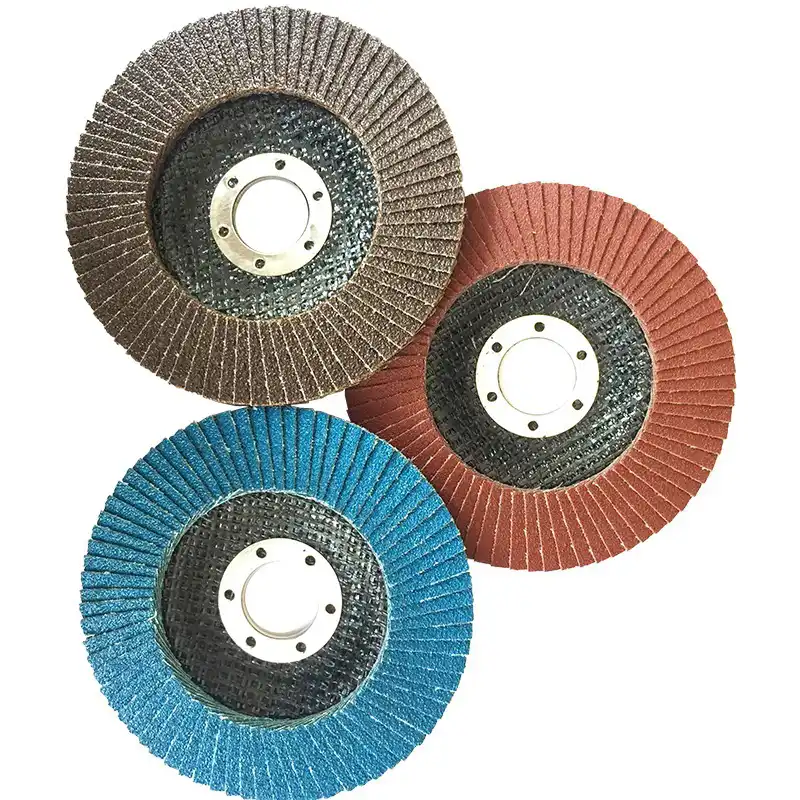
Flap discs are special abrasive tools that have coated abrasive cloth flaps that overlap and are organized radially around a strengthened backing plate that is usually made of high-impact plastic or fiberglass. Unlike bound grinding wheels, which use stiff, set abrasive structures, flap discs can grind and polish all at the same time. As the tool is used, the top layers wear away, revealing new sharp grains. This keeps the cutting action constant over the tool's lifetime. This controlled wear system fixes one of the biggest problems with regular grinding wheels: they tend to damage workpieces and make too much sound.
Understanding Flap Wheels
Flap wheels have a similar stacked abrasive flap structure, but they attach to rotating tools in different ways. These wheels don't usually connect to angle grinders like disc wheels do. Instead, they use mandrels or arbors to put on bench grinders, drill presses, or die grinders. The rough surface can get into holes, grooves, and complicated shapes that flat discs can't reach because they are shaped like cylinders or curved cones. The flexible flap arrangement can adapt to odd shapes, which makes these tools essential for cleaning up casts, polishing welded joints in tight areas, and getting mold holes ready for complex shapes.
Why Industrial Environments Need Both Tools?
Every day, shops that work with metal, make parts for cars, and make parts for spacecraft all have different surface preparation problems to solve. In order to quickly remove the weld bead from big, flat areas during welding operations on structural steel beams, flap discs are the best option. On the other hand, cleaning die-cast metal housings with ribs and openings inside them needs the ease of access that flap wheels offer. Having both types of tools in stock makes sure that workers can match the abrasive tool to the shape of the item. This cuts down on the number of times that the work needs to be redone and protects precision-machined features.
Key Differences Between Flap Discs and Flap Wheels
Structural and Mounting Configurations
How these tools connect to power tools is what makes them different. Using threaded hubs (usually 5/8"-11 or M14 threads), flap discs can be attached directly to angle grinders. This makes the rough surface face straight forward from the motor axis of the tool. This set-up makes horizontal grinding forces that work well on flat or slightly curved surfaces. On the other hand, flap wheels are mounted on mandrels parallel to the motor shaft. This makes a rotating grinding action that goes around edges and into recesses. While flap wheel cores are made of softer materials that allow for radial flexibility, the backing plate on flap discs is made of stiff fiberglass and can handle the side-to-side stress of grinding.
Performance Characteristics Across Materials
When using ceramic alumina flap discs on carbon steel plate, they keep removing stock quickly, even when under a lot of pressure. This is because their grain structure breaks down to show sharp edges, which sharpens itself over time. Zirconia alumina formulations find a good balance between toughness and heat transfer, which keeps stainless steel parts that are important for food preparation equipment from turning colors during the work process. Flap wheels with aluminum oxide abrasives are great for finishing small details on aluminum castings and other soft materials where too much force would take too much material or change the limits for size. Knowing how these materials work together will keep your tools from wearing out too quickly and help you reach the desired surface hardness levels.
Selecting Based on Job Requirements
Buying choices should be in line with what your main work requires. Job shops that do a lot of different kinds of contract work should keep a lot of both types of tools in a variety of grit levels. Automotive providers that do a lot of repeated weld cleanup work may want to buy a lot of Type 29 conical flap discs in the 40–60 grit range. For progressive polishing processes, mold makers who need cavity areas with a mirror finish need fine-grit flap wheels (120–240 grit). Looking at how much abrasive you use each month by application type can help you find buying trends that lower the cost of keeping supplies and keep production from being held up.
How to Choose the Right Flap Disc for Your Application?
Size and Grit Selection for Metalworking Operations
Choice of diameter affects both straight surface speed and ease of entry. 7-inch flap discs are bigger and cover more surface area per pass, which makes work faster on large, flat surfaces like those used to build tanks. The 4.5-inch versions are smaller and can fit into tighter areas around fixtures and complicated systems. Maximum RPM rates go down as the width goes up. For example, 7-inch discs usually have a top speed of 8,600 RPM, while 4-inch discs can safely run at 13,300 RPM. The choice of grit depends on how much material needs to be removed. To get rid of heavy weld seams on structural steel, 36–40 grit ceramic formulations are used first, then 60–80 grit zirconia for mixing, and finally 120 grit aluminum oxide for final surface preparation before painting.
Abrasive Grain Engineering for Different Materials
At Danyang Ebuy Tools, our production team comes up with three different types of abrasives for different uses. Ceramic alumina grains use micro-fracturing technology, in which small crystals break apart when they are ground, leaving behind sharp cutting edges all the time. This ability to sharpen itself keeps working well on heat-sensitive materials like titanium metals used in aircraft parts. Zirconia alumina is very tough and can be used to make heavy-duty carbon steel parts that don't flake off when side pressure is applied. Standard aluminum oxide formulas are inexpensive ways to do basic repair on non-ferrous and softer metals where long-lasting performance isn't necessary.
Safety and Speed Rating Compliance
When you use flap discs faster than their stated speed, they can fail in terrible ways. Each flap disc has a maximum RPM that should never be surpassed. Before mounting, make sure that the no-load speed of your grinder meets the disc rate. It is not recommended to use Type 27 flat discs that are made for working angles between 0 and 15 degrees for severe side grinding, as this puts too much stress on the backing plate and goes beyond what was intended. Type 29 conical discs can handle slopes that are 15 to 25 degrees steeper, which makes them good for outline work. When you use industrial-grade adhesives and a glass fiber backing, the flaps stay tightly attached during operation. This keeps the workpiece surfaces from getting dirty, which is very important when making medicinal equipment because material purity affects regulatory compliance.
Comparing Flap Discs to Other Abrasive Tools: Making Informed Procurement Decisions
Flap Discs Versus Bonded Grinding Wheels
Traditional connected grinding wheels are the best at getting rid of stock, but they can't finish the job. Their hard structure works great for rough grinding at first, but for later mixing tasks, you'll need to switch to resin fiber discs or flap discs. This change of tools loses time that could be used for work and makes labor more expensive. By removing aggressively unwanted stock and precisely finishing in one step, our technology eliminates breaks in the work flow. The flexible flap design also reduces vibrations a lot compared to grinding wheels, which keeps the operator from getting tired after long hours of use. However, joined wheels are still cheaper for heavy grinding tasks where the finish doesn't matter, like taking off casting gates or cutting through thick weld beads.
Durability and Finish Quality Considerations
Resin fiber discs are cheaper to buy at first, but they wear out quickly when they're used all the time, so they need to be replaced more often, which raises the total cost of operation. Due to their stacked design, flap discs have a lot more abrasive material—up to 40% more in high-density jumbo versions. This longer service life means that fewer tool changes are needed per shift, and in high-volume production settings, the cost of grit used per part is cheaper. In contrast to fiber discs, which get rougher as the backing goes away, the progressive wear pattern keeps the surface finish the same over the disc's lifetime. Premium flap disc lines from top names like 3M, Norton, and Bosch have better grain binding systems and stronger backing plates that make them last longer.
Bulk Procurement Strategies for Cost Efficiency
When you buy flap discs in bulk from makers like Danyang Ebuy Tools, you save a lot of money compared to buying through dealer networks. Our 77,000-square-meter factory makes about 150,000 cutting tools every day, which lets us offer low prices on full container orders. Using fewer SKUs across all of your activities makes managing your inventory easier and improves the number of orders per part number, which lets you use higher pricing levels. Setting up vendor-managed inventory deals makes sure that there is always stock without tying up working capital in large amounts of stock. When looking at providers, you should check if they have quality approval (ISO 9001), if they can do research and development for special formulations, and if their wait times are consistent. These are all things that directly affect your production continuity.
Best Practices for Using Flap Discs and Flap Wheels Safely and Efficiently
Proper Mounting and Speed Adjustment Techniques
The strength of the thread engagement has a big impact on working safety. Before installing, clean the grinder's spindle threads very well to get rid of any dirt or old glue that might stop the threads from fully engaging. Tighten the disc onto the spindle by hand, then use the right spanner wrench to keep it in place. Do not use an impact wrench, as it can over-torque and stress the backing plate. Make sure that the speed setting on your grinder matches the rating of the disc. Variable-speed grinders should be used at 80 to 90 percent of the disc's highest RPM for the best mix of cutting material and disc life. Higher speeds create too much heat, which can coat the rough grains and make cutting less effective. This can also damage base materials that are sensitive to heat.
Maintenance Protocols That Extend Service Life
The way an abrasive is stored directly affects how well it works and how long it lasts. Keep flap discs that aren't being used in climate-controlled spaces that stay between 18 and 22°C and have a relative humidity of 45 to 65%. Too much wetness makes fiberglass backing plates soft and breaks adhesive bonds, which can be dangerous when running at high speeds. Do not put heavy things on top of boxed goods, as this can cause the disc shape to become distorted. Maintain the right grinding angles while in use to avoid loading. When grit grains get jammed with material, they stop cutting effectively and produce too much heat. To stop filling, rub the disc against a smooth surface every once in a while or use cleaning sticks made specifically for rough tools.
Recognizing Replacement Indicators
When the wings wear down to the glue line on the backing plate, stop using it right away. When you grind with the covering material out in the open, sparks fly, the surface gets dirty, and the disc could break. Keep an eye out for strange sound patterns that could mean uneven wear or damage to the backing plate. Discoloration or burning smells during use are signs of too much heat production, which is usually caused by wrong grinding angles or not enough pressure, which stops the grains from breaking apart properly. If you can see cracks in the fiberglass backing or separation between the flap layers and backing plate, you should get new discs. These ways of failing weaken the structure and make it very likely that someone will get hurt if the disc breaks during use.
Conclusion
Choosing the right grinding tools has a big effect on how well your operations run, how well the finished product looks, and how much it costs to make everything. Flap discs are very flexible and can be used for a wide range of flat to fairly curved metalworking tasks. They can remove a lot of stock and mix the finish all in one operation. Flap wheels can handle tricky shapes and issues with mobility that flat discs can't. Procurement pros can make smart choices that meet the needs of specific production processes when they understand the changes in structure, the engineering of abrasive grains, and the best application factors. Working with skilled manufacturers that offer customization options, dependable supply lines, and expert support will help your business stay productive and meet quality standards.
FAQ
What grit should I choose for stainless steel welding applications?
Starting with zirconia or ceramic flap discs with a grit of 40 to 60 removes TIG weld beads effectively without building up too much heat, which causes discoloration. Move on to 80–120 grit for the final mixing step to get a smooth finish. Ceramic mixtures stop heat-induced oxidation zones that are necessary to keep food-grade and medicinal equipment resistant to rust.
How do flap discs compare to sanding discs in production environments?
Because they are made of multiple layers, flap discs have a lot more coarse material inside them and last 3–5 times longer than regular resin fiber sanding discs. Cutting action stays the same because new abrasive grains are always coming in contact with the disc. Fiber discs, on the other hand, become more aggressive as the backing goes away, which could damage the object.
Where can I source reliable bulk suppliers with fast delivery?
When you work directly with manufacturers, you can get the best prices and supply stability. Check out providers based on their ability to produce, their quality certifications, their ability to make changes, and how well they meet wait times. By forming relationships with makers that keep up a steady flow of goods, you can be sure that your inventory will be available during times of high demand without having to pay extra for faster delivery.
Partner With Ebuy Tools for Your Abrasive Tooling Needs
Danyang Ebuy Tools has everything that purchasing managers looking for a reliable flap discs provider could need. Our factory makes high-performance abrasive tools that are designed to work in tough metalworking conditions, like high-volume car fabrication or aircraft titanium machining. We give you a lot of ways to customize your order, such as branded packages and custom grain mixtures made by our dedicated research and development department. With a daily production capacity of more than 150,000 units and strict quality control systems, we keep enough supplies on hand to meet all of your project deadlines. You can email our buying experts at [email protected] to talk about your specific needs, get full technical specs, or set up sample evaluation programs that show how much better our products work.
References
Machinery's Handbook, 31st Edition. Industrial Press Inc., 2020. Section on Abrasive Tools and Grinding Operations.
Kalpakjian, S. and Schmid, S.R. Manufacturing Engineering and Technology, 7th Edition. Pearson Education, 2013. Chapter 26: Abrasive Machining and Finishing Operations.
American National Standards Institute. ANSI B7.1-2017: Safety Requirements for the Use, Care, and Protection of Abrasive Wheels. American National Standards Institute, 2017.
Unified Abrasives Manufacturers' Association. Guidelines for Selection and Application of Coated Abrasives in Industrial Metalworking. UAMA Technical Publication, 2019.
SME Manufacturing Engineering Handbook. Society of Manufacturing Engineers, 2018. Volume on Material Removal Processes.
Industrial Finishing Magazine. Best Practices in Abrasive Tool Selection for Metal Fabrication Environments. Gardner Business Media, March 2022 Technical Report.