.webp)

Having the right masonry drill bit is very important for tough jobs that need to drill through brick, concrete, or stone. The hardened carbide tips on these specialized tools are designed to cut through thick materials where regular bits would fail. Unlike regular drill bits, which cut through soft materials by shearing, masonry drill bits break down tough surfaces by crushing and splitting them. Because of this basic difference in how the blades cut, builders, machinists, and industrial operators can make exact holes for anchoring systems, installing electrical cabling, and fastening structures in the manufacturing and building industries.
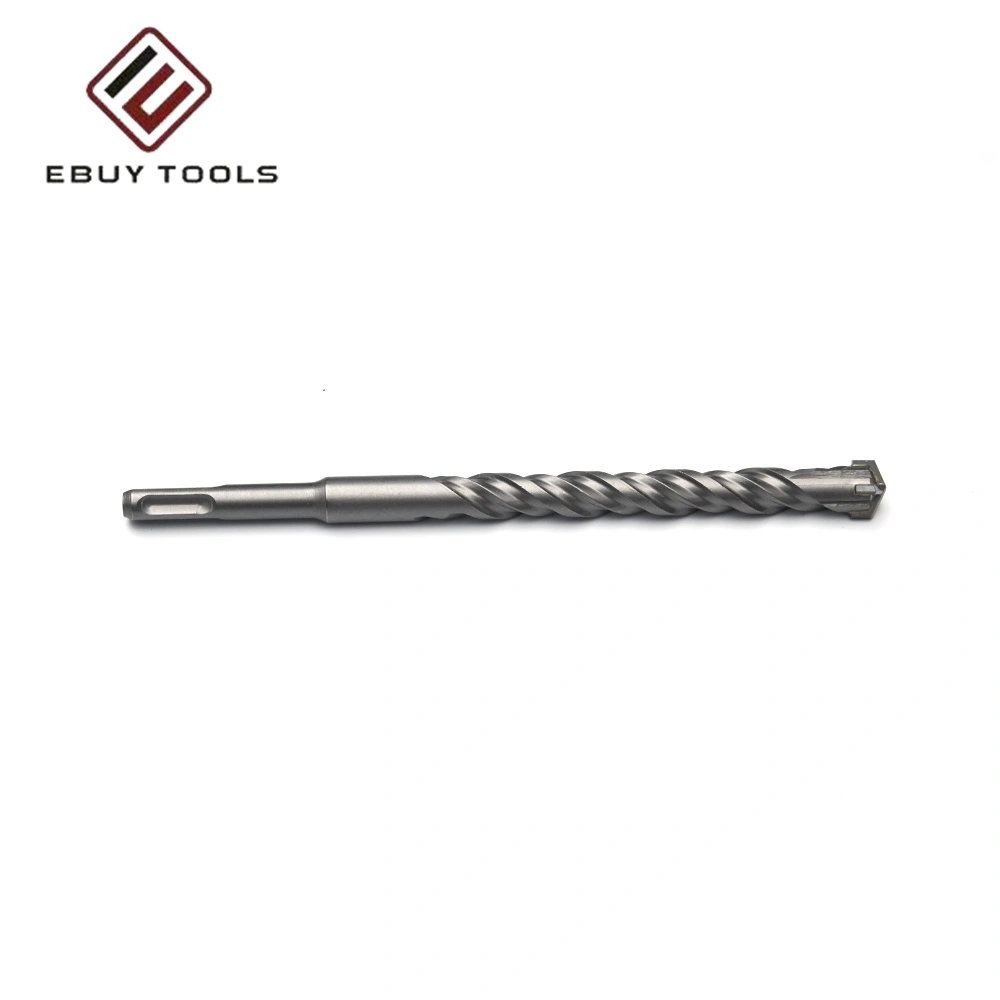
Understanding Masonry Drill Bits and Their Applications
What Makes Masonry Drill Bits Different?
The way these specific drilling tools are made makes them different from other choices. A normal masonry drill bit has a Chrome-Vanadium steel shank that has been heated and a tungsten carbide insert that is brazed to the tip. This combined design takes into account the huge crushing forces that are present when drilling into stone and concrete. The carbide material has a hardness value of HRA 88–91, which means it can handle rough silica pebbles without wearing down too quickly.
Standard HSS bits use their cutting edges to cut through metal or wood. Masonry drill bits, on the other hand, use an odd 130-degree tip angle. This shape makes a percussion sound when it rotates, chipping away material instead of making bits that keep coming out. It's easy to tell the difference when drilling into granite or reinforced concrete, where regular bits get too hot and break in seconds.
Core Types and Configurations
For most concrete and brick work, carbide-tipped versions are still the norm. These bits are both cheap and durable enough to be used by professionals on a variety of job sites. When making test holes for tapcon anchors, electrical boxes, and water penetrations, the tungsten carbide grade—usually YG8C in high-end products—works reliably.
Diamond-tipped choices are used for specific tasks that need to be done on very hard stone, ceramic tiles, or glass blocks. Even though it costs more at first, the electroplated or sintered diamond finish lasts longer in rough materials. When procurement teams look at the total cost of ownership, they often find that diamond bits are a cheap way to put a lot of tiles or make natural stone.
Configurations for the shank have a direct effect on speed and compatibility. Straight-shank bits can be used with standard three-jaw chucks on both corded and wireless drills for light brick work. The SDS-Plus system is the most popular choice for professional uses. It has a slotted device that lets it move in one direction while sending spinning force to another. This arrangement makes the best use of contact energy in hammer drills. Different types of SDS-Max can handle the toughest removal jobs and big holes in structure concrete.
Industrial and Commercial Applications
Construction workers use these tools to attach structural parts to concrete blocks and brick walls. Premium bits have a 4-flute design that makes it easier to remove dust from the hole quickly. This keeps the dimensions accurate and stops the bit from sticking. This feature is very important when placing mechanical clamps because the tolerances have a direct effect on the load-bearing capacity.
MEP workers face special problems when they have to run wiring through buildings that are already there. With bits that are 400 mm to 1000 mm long, you can drill all the way through hole walls without having to get in from both sides. The improved flute shape keeps debris from building up during deep penetrations, which cuts down on cycle times and tool wear.
Mold and die makers need to make exact holes in clay or hardened steel parts every once in a while. Specialized masonry drill bits that only work with rotary tools and have well-tuned tip shapes can do these jobs if they are used with the right cutting fluids and at slower speeds.
How to Use and Maintain Masonry Drill Bits for Optimal Performance?
Proper Drilling Techniques
Picking the right operating mode for masonry drill bits concrete is the first step to getting the best results. You can set a rotary hammer drill to rotate only, rotate with percussion, or percussion only. The rotation-with-percussion mode is needed for hard materials like concrete and stone because the beating action breaks up the material while the movement clears away the debris. Brick and cinder block that are softer tend to react better to lower impact settings, which keeps the base from cracking.
Another very important issue is keeping the right pressure. Too much force doesn't speed up entry; instead, it makes friction heat that wears down the carbide tip. Service life is greatly increased by letting the bit's weight and the tool's contact mechanism do the work. During deep holes, operators should pull the bit out every so often to clear out the dust and keep it from seizure.
The speed choice depends on the width and material. For drilling small holes in brick, speeds between 1200 and 1500 RPM work well. For drilling big holes in reinforced concrete, speeds between 400 and 600 RPM are better. As the bit diameter goes up, the link between speed and heat production becomes more important because cutting areas that are bigger cause more friction.
Recognizing Wear and Maintenance Needs
Overlooking wear signs can lead to failure before they should. The carbide tip should keep its shape and have sharp cutting edges that can be seen under a microscope. If the tips are rounded or glossy, they need to be replaced because continued use causes them to get too hot and make holes that are too big, which makes the anchor less effective.
A lot of professional-grade masonry drill bits have wear marks on the mouth area that were made there. When these lines go away, the bit's gauge width is gone, and it no longer meets the tight tolerances needed for approved anchor placements. This is very important in structure uses where accurate hole geometry is needed for safety reasons.
Regular checks should be done on the brazing quality. There shouldn't be any cracks or discoloration in the part where the carbide and steel meet that would show heat stress. Detachment usually happens because the tool gets too hot from not clearing away enough dust or digging too fast in thick materials.
Storage and Handling Best Practices
The right way to store tools keeps them accurate and extends their life. Bits should rest in tool rolls or safe cases that keep the carbide tips from touching each other. Even small chips can make cutting less effective and cause holes that aren't straight.
Steel shank rust happens faster when it's exposed to water, especially near the coast or in places with a lot of humidity. A thin layer of rust-preventative oil on the shanks keeps them from breaking down while they are being stored for a long time. The carbide tip doesn't need to be oiled because oils attract dust that makes cutting less effective.
Over time, temperature changes can damage brazing joints. Keeping bits in climate-controlled spaces stops the temperature changes that weaken the bond between the carbide and steel. The boxes used for storage on the job site should be able to keep out strong sunlight and cold weather.
Top-Rated Masonry Drill Bits in 2026: Performance and Value Analysis
Evaluating Current Market Leaders
The market for expert tools is always changing as companies compete on price, quality, and longevity. With its advanced production skills and low prices, Ebuy Tools has built a strong place for itself in the market. Our factory makes more than 150,000 units every day, and we stick to strict quality standards by inspecting each one several times. The tungsten carbide tips are hard enough to meet HRA 88–91 standards, and the Chrome–Vanadium shanks are hard enough to meet HRC 48–52 standards after being heated.
Performance tests show that masonry drill bits with 4-flute designs are always better at removing dust than bits with 2-flute designs. In deep-hole uses, this means faster digging speeds and longer tool life. The hexagonal drive interface makes sure that sleeve drive tools, which are popular in masonry fastening systems, connect positively. This stops the slippage problems that happen with round-shank designs.
When a masonry drill bit product is being evaluated, it is important to pay close attention to the concentration limits. Bits with a runout of ±0.05 mm make holes that are exact and meet the anchor manufacturer's requirements. When there is too much runout, oval-shaped holes appear that weaken the pull-out strength and threaten the structure's stability.
Carbide versus Diamond-Tipped Options
The choice between these tools is based on the needs of the application. Carbide-tipped masonry drill bits work best on concrete, brick, and cinder block surfaces where there is some wear and tear. Because they are cheaper, they are perfect for general building and MEP setups where bit replacement costs are low compared to labor costs.
Diamond-tipped versions are worth the extra money in certain situations. Diamond technology helps tile workers who work with porcelain or natural stone tiles make holes that are cleaner and less likely to chip. When making hundreds of holes in similar substrates, the longer service life of rough materials gives a good return on investment.
When working with granite, marble, or artificial stone cladding systems, facade workers like diamond bits. The lower percussion needs keep drilling speed steady while reducing base breaking. This mixture keeps the look of surfaces that people can see where fixing damage would be too expensive.
Identifying Cost-Effective Professional Solutions
Value assessment looks at more than just the buying price; it also looks at the total cost of ownership. By counting the number of holes made by each masonry drill bit before it needs to be replaced, you can compare names and prices in a standard way. Depending on the thickness and depth, professional-grade bits can usually drill 200 to 500 holes in C30/37 concrete before they need to be replaced.
In brick and softer brickwork, the service life is much longer and can often hit 800 to 1200 holes under the same conditions. This variety shows how important it is to match bit specs to the most common substrate materials in certain processes.
Instead of mixing high-end and low-cost options, procurement teams that are in charge of a wide range of projects would be better off sticking to flexible mid-range choices. Simplifying the inventory cuts down on misunderstanding, cuts down on the need to stock, and sets clear quality standards for all work teams.
Procurement Guide: Sourcing Quality Masonry Drill Bits for Professional Applications
Evaluating Supply Channel Options
Direct ties with manufacturers are helpful for businesses that need to buy large amounts. When you buy from the factory, you don't have to pay the distributor's markup, and you can also ask for customizations like private marking or different length specs. Businesses that can predict demand and have enough storage space can meet the need for bigger order sizes and longer wait times.
Regional wholesalers give you more options because they let you place smaller orders and serve quickly. In addition to transportation, they are useful for professional help, helping you choose the right product, and managing your warranty. Creating relationships with distributors who understand your application's needs makes buying easier and speeds up the resolution of problems.
Online platforms give suppliers more ways to reach customers, but they need to be carefully checked out. Checking the manufacturer's qualifications, looking at quality badges, and reading return policies are all ways to avoid buying low-quality items. Since samples can't be seen before a promise is made, the risk is higher. This makes the reputation of the supplier and how well they respond to contact important evaluation factors.
Selecting Appropriate Bit Sets and Configurations
When processes need more than one diameter choice, pre-assembled masonry drill bits concrete sets save money and time. Kits made for contractors usually come in standard sizes ranging from 4 mm to 12 mm, with graduated sizes that cover most anchor and bolt needs. The protected case is useful because it keeps the pieces organized and stops damage while they're being shipped.
OEM makers and high-volume operations often do better when they buy specific sizes in bulk instead of taking assortments that have already been set. This method keeps you from having to pay for sizes that you don't need while still making sure you have enough of the specs that are used most often. By looking at how things were used in the past, you can find the best amounts to order and find ways to save money by buying in bulk.
Sometimes, the needs of an application call for odd lengths or specific tip combinations. When enough are made, custom production becomes cost-effective, letting businesses make masonry drill bits that work best for their specific needs. Custom production usually takes between four and eight weeks, but this depends on how busy the maker is and how complicated the order is.
Supplier Vetting and Quality Assurance
Setting standards for quality starts when the provider is chosen. Asking for technical datasheets that list the carbide grade, shank material makeup, and heat treatment specs makes it possible to compare things in an objective way. Manufacturers with a good reputation are happy to share this information and keep it the same from one production run to the next.
Testing samples before committing to a large order keeps mistakes from being expensive. Checking for concentricity with dial indicators, looking at the quality of the brazing under a microscope, and comparing side-by-side performance with modern tools proves what the seller says. The small amount of money spent on samples guards against output delays caused by bad tools.
As ties grow, standards are kept up by ongoing quality checks. Testing the hardness of carbide tips on a regular basis and checking the dimensions of new orders can find production drift before it affects operations. By writing down performance measures like holes per bit, you can use them as standards when evaluating suppliers in the future.
After-Sales Support and Partnership Development
The ability to provide technical support sets special sellers apart from transactional vendors. Having access to application experts who know how to deal with drilling problems and can suggest changes to specifications is very helpful. This knowledge is especially helpful when going into new areas or working with things you don't normally work with.
Warranty management should be easy to understand and quick to respond. Having clear rules about what is normal wear and what is a manufacturing flaw stops arguments. Processing claims quickly cuts down on downtime and shows that the seller wants a long-term relationship, not just one-time sales.
Help with inventory management helps keep stocks at the right level and stops runs on supplies. Suppliers with vendor-managed inventory programs or automatic restocking systems make it easier for buyers to get the materials they need while also reducing the work they have to do. As businesses grow and offer more products, these services become more important.
Conclusion
Picking and taking care of the right masonry drill bits has a direct effect on how well projects run, how much they cost, and how well the work is done in both production and construction. Competitive benefits come from knowing the technical differences between carbide and diamond options, knowing the right way to use them, and building relationships with dependable providers. Productivity and total cost of ownership go up by a measured amount when the right tools are chosen, operations are run correctly, and purchases are made strategically. By making sure that bit specifications match the needs of the application and following preventative repair procedures, operations get uniform results while getting the most out of their tool investments.
FAQ
How long do professional masonry drill bits typically last?
Service life depends a lot on how hard the base is and how the person works. With the right impact drill settings and regular dust cleanup, quality carbide-tipped masonry drill bits can drill 200 to 500 holes in C30/37 concrete at standard anchor sizes (6 to 10 mm). This can go up to 800-1200 holes for softer brick and cinder block uses. Diamond-tipped versions can make 2000 to 3000 holes in rough materials like ceramic tile, where carbide would break too soon. By keeping an eye on the wear marks on skilled bits, you can avoid using tools past their useful life.
Can regular drill bits work on masonry materials?
Standard HSS bits aren't hard enough for masonry work, and they get dull very quickly when you try to drill into concrete or brick. Because contact makes heat, the steel loses its temper, which makes the bit useless. Using this method loses time and hurts materials by making holes that move around and are too big. Dedicated masonry drill bits have tungsten carbide tips that are specially made to handle the sharp and compression forces that are found in hard surfaces.
What size bit should I use for typical wall anchors?
In their assembly directions, anchor makers give exact hole diameters, and bits that match the anchor body diameter are usually needed. For #8–#10 screws, most plastic clamps need holes that are 6 mm (or 1/4 inch) in diameter. For bigger fasteners, the holes need to be 8–12 mm in diameter. Using bits that are too small keeps the anchor from fitting properly, and holes that are too big weaken the hold. Professional fitters keep whole sets in 1 mm chunks to make sure they are the right size for all anchor types and ground situations.
Partner with Ebuy Tools for Premium Masonry Drill Bit Solutions
Ebuy Tools has professional-grade carbide-tipped masonry drill bits ready to help you with your brick drilling needs. These bits are made for tough industrial uses. Our 77,000-square-meter factory uses cutting-edge tungsten carbide technology and strict quality control to make more than 150,000 cutting tools every day. As a seller of masonry drill bits with a lot of knowledge, we can make solutions that fit your needs, such as custom lengths, bulk packing, and expert advice. Our line of products includes hardened carbide plugs with HRA 88–91 grades, precision-engineered 4-flute designs that remove dust better, and tight specs that guarantee reliable anchor performance. Email our purchasing agents at [email protected] to talk about volume discounts, technical needs, and shipping times that are perfect for your business.
References
Portland Cement Association (2023). "Drilling and Fastening in Concrete: Technical Guidelines for Anchor Installation." Concrete Technology Reports, Volume 47, Issue 3, pp. 112-128.
International Association of Certified Home Inspectors (2024). "Masonry Anchoring Systems: Best Practices for Structural Applications." Professional Standards Manual, 8th Edition.
American Concrete Institute (2023). "ACI 355.2-19: Qualification of Post-Installed Mechanical Anchors in Concrete." Farmington Hills: American Concrete Institute Publications.
Construction Specifications Institute (2024). "MasterFormat Division 05: Metals - Fastening and Anchoring Systems." CSI Technical Documentation Series.
National Institute for Occupational Safety and Health (2023). "Crystalline Silica Exposure During Masonry Drilling Operations: Control Measures and Equipment Selection." NIOSH Publication No. 2023-147.
Machinery's Handbook, 31st Edition (2024). "Drilling Operations: Tool Selection and Application in Various Materials." Industrial Press, New York, pp. 2847-2891.