.webp)

When buying grinding tools, knowing how long a flap disc will last is very important for planning operations. A good flap disc can be used continuously for 15 to 45 minutes in most industrial grinding tasks, but this can be much longer or shorter depending on the abrasive material, the hardness of the workpiece, the operator's skill, and the strength of the task. When grinding carbon steel, zirconia alumina flap discs usually last 30 to 50 percent longer than aluminum oxide versions. Ceramic versions, on the other hand, work best in very heavy-duty situations and can last up to 70 percent longer. Tracking performance measures across production batches helps procurement managers plan replacements more efficiently and cut down on downtime as much as possible.
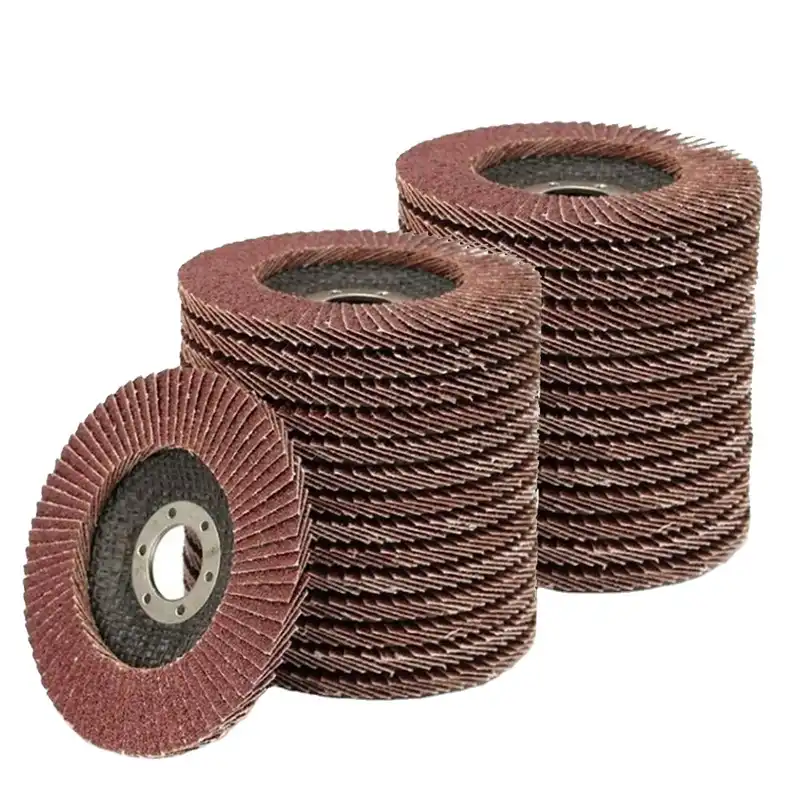
Understanding Flap Disc Longevity: Key Factors That Influence Durability
The life of grinding and finishing tools relies on many factors that are linked and must be considered by engineering teams when choosing a vendor and planning operations. In our 77,000-square-meter factory, Danyang Ebuy Tools has done a lot of production testing and found that longevity comes from finding the right mix between material science and application engineering.
Abrasive Material Composition
The type of grain affects the basic wear properties. Zirconia alumina materials are tougher than regular aluminum oxide abrasives. They also fight wear well because they sharpen themselves when they are ground down. During use, this material breaks down at micro-levels, revealing new cutting edges all the time instead of dulling evenly. Ceramic alumina grains use micro-fracturing technology to sharpen themselves on heat-sensitive materials. This increases the disc's useful life by keeping its level of aggression constant over time. Our production team comes up with three different types of abrasives to meet the needs of different uses. Each type has a different cost-to-performance ratio that is important for developing a procurement strategy.
Formulations based on aluminum oxide work well with soft metals and general maintenance jobs, but they wear out faster in high-pressure situations than engineered ceramic options. The chemical bond strength between grain particles also affects whether flaps shed too soon or keep their shape when they are ground on the side.
Grit Size and Material Removal Balance
Coarser grits, like 36 or 40, remove material more quickly, but the disc doesn't last as long because fewer abrasive bits are touching the object at the same time. Finer grits, between 80 and 120, spread the cutting forces over more touch points, which increases the work time and makes the result smoother. The relationship is shaped like a logarithmic slope, and doubling the size of the grit can make the tool last 40 to 60 percent longer while lowering the rate of stock removal by the same amount.
Overloading can be avoided by matching the grit choice to the application step. For heavy weld seam removal, coarse grits work best because they finish the job before they wear out too quickly. On the other hand, finer grits work better for mixing because they last longer and prepare the surface better for coating applications.
Application Variables and Environmental Conditions
The harder the workpiece material is, the more abrasives will be used. When the same conditions are used, grinding titanium metals or high-carbon tool steels speeds up wear compared to handling mild steel. The speed settings on a grinder must match the manufacturer's instructions. For example, the highest RPM for our Type 29 cylindrical designs is 13,300 for 4-inch models and 8,600 for 7-inch models. When these limits are crossed, too much heat is produced, which damages the fiberglass backing and the glue bonds that hold the flaps to the backing plate.
One important operator variable is the applied pressure. Too much force puts too much stress on rough grains, which leads to early breakage and fast flap erosion. When the pressure is just right, the overlapping flap design can absorb impact while keeping the level of violence in check. Performance is affected by things like the temperature and the amount of dust in the air. For example, places with a lot of heat soften resin binders, and metal particles building up in the grain space make cutting less effective.
Manufacturing Quality and Consistency Standards
If advertised performance matches real operating results for flap discs, it's called production consistency. Glass fiber and glue must stick together strongly so that they don't separate when the temperature and pressure change. Through a series of strict checking steps before shipping, our flap discs quality control methods make sure that every disc meets international standards. The fiberglass pad effectively absorbs vibration, making grinding more stable and effective compared to backing materials that aren't as good and let the tool chatter too much.
A brand's image shows how well it has been made over time. Established manufacturers keep tighter controls on flap density, glue cure profiles, and grain distribution uniformity—variables that can't be seen but are very important for getting the stated service life.
Comparison and Analysis: Flap Discs vs Alternative Abrasives Concerning Durability
When choosing abrasive technology, you should look at the total cost of ownership instead of just the cost of the original buy. There are different types of tools with different levels of longevity that are best for different types of work.
Performance Against Grinding Wheels
Bonded grinding wheels are good at aggressively removing stock, but they can't finish the job like flap discs can because they are made of layers. When you have rigid wheel design, you get more vibrations and hot spots that can change the color of heat-sensitive stainless steel. The coated flaps that meet and are organized radially on strengthened backing plates spread thermal energy over a larger surface area. This keeps the metal from being damaged and gives them a uniform cutting action over the course of their service life.
Grinding wheels need to be used up completely before they can be replaced, while abrasive polishing tools can be used until the edges wear down to the glue line. This progressive wear pattern lets workers do both heavy grinding and finish blending without moving tools. In normal manufacturing processes, this cuts changeover time by 30 to 40 percent.
Advantages Over Sanding Discs and Wire Brushes
Resin fiber polishing discs are great at aggressively removing stock, but they don't last as long and can't be shaped to fit curved surfaces. Even though wire brushes are good at getting rid of scale and rust, they can't get the surface smooth enough for finishing preparation. Because flap construction is flexible, the tool can curve around odd forms where rigid alternatives would bounce or chatter. This keeps the surface smooth and ensures even paint adhesion without changing the geometric limits.
Our specialized abrasive tools have protected flaps that meet and work together to remove stock quickly and precisely in one step, so there are no breaks in the work flow. The layered, fan-like radial design controls wear; as the flap edges wear away, new abrasive grain below is revealed, which keeps the cut rate constant over the span of the product. Better flap technology has a system called "controlled wear" that makes it different from others that wear out quickly and evenly.
Material-Specific Durability Profiles
Different types of ceramic and zirconia show different performance traits. When working with hard materials like hardened steel or cast iron, ceramic compounds tend to last longer than zirconia. In extreme cases, they can last 50–70% longer. When it comes to heavy-duty carbon steel fabrication, zirconia alumina strikes the right mix. It lasts longer than aluminum oxide and costs less than premium ceramic choices.
How long something lasts also depends on whether it is a Type 27 flat shape or a Type 29 spherical design. Type 29 has flaps that are slanted at 15 to 25 degrees, which makes the surface contact better for intense contouring work but wears the edges down faster. Type 27 keeps angles between 0 and 15 degrees, which makes it great for finishing and blending smoothly on flat surfaces with more even flap usage patterns.
Best Practices to Maximize Flap Disc Life in Industrial Applications
Discipline in operations of flap discs has a direct effect on how well tools work and how often they need to be replaced. Standardized processes help engineering teams use 25% to 35% less abrasive than operations that don't follow official rules.
Proper Grinding Technique and Angle Control
Keeping the recommended contact angles avoids premature wear and makes sure that the best rates of material loss are achieved. When used at 0 to 15 degree angles on flat workpieces, Type 27 setups work best because the pressure is spread evenly across the flap area. When doing edge work and outline grinding, Type 29 conical shapes work best at angles between 15 and 25 degrees.
Too much angle variation puts more force on the flap edges, which speeds up erosion and makes wear patterns that aren't even, which shortens the total operating time. Instead of staying in one place, which can lead to hot spots, lateral grinding should move in smooth, steady routes. Training programs that stress light to moderate pressure are good for operators because the grit does the cutting work and too much force just makes the tool hot and shortens its life.
Application-Specific Grit Selection
Matching the grain size to the needs of the job stops both wasteful material loss and premature tool wear. Weld seam grinding on structural steel works best with grits between 36 and 60, which removes stock quickly without putting too much stress on the disc. To prepare the surface before applying a coating, you need to choose grits between 80 and 120. These grits make the right anchor patterns and increase working time by spreading cutting forces out evenly.
When workers try to finish work with coarse grits, they lose abrasive capacity because they have to switch to finer options anyway. On the other hand, using fine grits to remove a lot of stock stresses out the grains, which leads to fast dulling and heat building. Based on our technical specs, we offer grit choices ranging from 36 to 120 and diameters from 4 to 7 inches. This way, you can choose the right tool for the job.
Safety Protocols and Inspection Standards
Visual inspections done on a regular basis find problems with structures before they become too big to fix. Operators should check flap discs for cracks in the backing plate, separation between flaps and base, or too much shaking during starting, which could mean the discs aren't balanced. Discs that show these signs need to be replaced right away, even if there is flap material left over.
Keeping things in the right way will extend their shelf life and keep their basic integrity. Standards in the industry say that places should be kept at 18–22°C and 45–65% relative humidity. When there is a lot of wetness in the air, fiberglass backings become soft and adhesive ties break down. This makes high-speed spinning dangerous. Although grit grains don't go bad, resin binders and backing materials do become damaged when exposed to high or low temperatures or humidity. Under controlled conditions, their useful shelf life is about three years.
Safety glasses, hearing protection, and respirators are still required pieces of personal protective equipment. When metal is ground, tiny particles are released that can be breathed in and can also be sent flying at dangerous speeds if the disc breaks at normal operating speeds.
When and How to Replace Flap Discs: Practical Guidelines for Procurement Managers?
Setting guidelines for replacement strikes a mix between safety concerns and the need to save money. If you wait until the flaps are completely worn away, the backing plate could come into touch with the workpieces, which could damage the grinder and make the surface dirty.
Visible Wear Indicators
For the main new trigger on flap discs, the flap height is lowered to the glue line, which is where the cloth material sticks to the backing plate. If you keep using it after this point, the fiberglass or plastic base will be exposed to the object, creating friction heat that gives off burning smells and black spots. This situation is an instant safety risk that requires taking the tool out of service.
When grinding performance goes down, less material is removed or more work has to be done to get the same results. When operators notice that the cutting action has decreased even though they are using the right method and pressure, the leftover abrasive grain is no longer useful. Surface finish wear and tear, such as scratch patterns that aren't uniform or heat coloring that you didn't expect on stainless steel, means that the material has been exposed to new abrasives and should be replaced.
Vibration and chatter caused by uneven flap wear hurt both the quality of the finish and the comfort of the user. Asymmetric weathering patterns are often made by grinding on edges instead of flat surfaces. Even though the disc can still be used in some situations, it should be replaced sooner rather than later in work settings that value speed.
Application-Based Lifespan Benchmarks
When working with heavy structural steel and removing continuous weld seams, 36-grit zirconia flap discs are usually worn out after 20 to 30 minutes of rough use. Using high-density zirconia mixtures to blend TIG welds without making heat-induced oxidation zones shortens the time it takes to make equipment out of stainless steel for food and medicinal use. This keeps the corrosion-resistance qualities that are important for clean uses.
Ceramic alumina technology is needed to make aerospace parts made of titanium alloys and superalloys. These tough uses get 25 to 40 minutes of service life while meeting strict tolerance standards and high standards for surface finish. Complexly curved surfaces need flexible solutions. The overlapping flap design works well with uneven shapes, making sure that the surface is prepared evenly for paint adhesion while still keeping geometric limits.
Tracking real usage rates across changes in production gives data-driven insights for planning purchases. Setting up standard measures makes it possible to find practical inefficiencies or differences in the quality of different batches of abrasive.
Cost-Benefit Analysis and Procurement Strategy
The starting cost of premium abrasive technology is higher, but the total cost of ownership is cheaper because it lasts longer and needs to be changed out less often. Our daily production capacity of about 150,000 cutting tools guarantees a steady supply for your operations. This supports just-in-time stocking strategies that lower storing costs and keep production running smoothly.
Getting things in bulk from makers who offer low prices, warranties, and unique solutions is the best way to get things. We know that the way you name your goods is important to you, so when you place a minimum order, our team can add your logo to products and make special formulas for specific uses. Standard goods are sent out within 10 to 15 days, and personalized solutions are sent out based on how complicated they need to be.
When choosing a vendor, you should put manufacturing stability and quality assurance skills at the top of your list. Our R&D group is always coming up with new ideas to keep up with changing industry needs. They make sure that performance specs are met by real-world results, not just claims on data sheets.
Conclusion
Knowing the factors that affect how long a grinding tool lasts helps purchasing managers and engineers run their businesses more efficiently while keeping costs low. Flap discs longevity depends on the choice of abrasive material, the right grit size, disciplined application technique, and consistent production quality. For most metal manufacturing tasks, zirconia alumina formulations strike a good mix between performance and cost-effectiveness. Ceramic technology, on the other hand, is best for very heavy-duty needs. Maintaining the grinding angle correctly, choosing the right grit for the job, and replacing the tool when obvious signs of wear appear will make it more useful and keep the user safe. Tracking usage measures across all production operations gives data-driven insights that help improve purchasing strategies and find ways to make processes better.
FAQ
What is the typical lifespan for heavy-duty metal grinding applications?
Good zirconia alumina flap discs can usually grind aggressively on carbon steel pieces for 20 to 35 minutes straight. Due to their better grain toughness, ceramic formulas make this last up to 30 to 45 minutes under the same conditions. The real results depend on the roughness of the material, the speed settings of the grinder, and the amount of pressure applied by the user.
How do I select the right grit size for my application?
Coarse sizes (36–40) are good for grinding weld seams and moving heavy stock. Medium grits (60–80) allow for a good mix between surface finish and material removal for general manufacturing work. Fine grits (80–120) are used for precise mixing and getting the surface ready for finishing. By matching the grit to the job stage, you can avoid premature wear and increase operating efficiency.
Can improper disc selection damage workpieces or equipment?
When Type 29 conical shapes are used on flat surfaces, they often leave gouging and uneven swirl lines. Going over the maximum RPM limits creates too much heat that damages backing materials and can lead to catastrophic disc failure. If you grind past the flap wear line, the backing plates will be exposed to the workpieces. This can cause contamination and damage to the equipment, so you need to take the tool off right away.
Partner with Ebuy Tools for Reliable Flap Disc Solutions
Danyang Ebuy Tools offers high-performance abrasive technology designed to meet the needs of challenging industrial uses in the aircraft, automotive, metalworking, and precision manufacturing fields. Our advanced grain formulations, which include tough zirconia alumina materials and ceramic choices for harsh environments, give your processes the wear protection and long service life they need. As a well-known company that makes flap discs, we have a large production facility that covers 77,000 square meters and 319 skilled workers who work together to make sure that our customers always get what they need. Our ability to customize meets specific needs, and our competitive bulk buying choices help you get the best deal on your purchases. Visit ebuy-tools.com or email our team at [email protected] to talk about your unique application needs and get custom solutions that boost output and lower the total cost of ownership.
References
Machinery's Handbook, 31st Edition. Industrial Press, 2020. Section on Abrasive Materials and Grinding Processes.
American National Standards Institute. ANSI B7.1-2017: Safety Requirements for the Use, Care, and Protection of Abrasive Wheels.
SME Manufacturing Engineering Handbook, Volume 1: Machining and Metalworking. Society of Manufacturing Engineers, 2019.
Klocke, F., Manufacturing Processes 2: Grinding, Honing, Lapping. Springer-Verlag Berlin Heidelberg, 2018.
Marinescu, I.D., et al., Handbook of Machining with Grinding Wheels, Second Edition. CRC Press, 2021.
ASM International Handbook Committee. ASM Handbook Volume 16: Machining. ASM International, 2019. Chapter on Abrasive Machining Processes.
_1775721785360.webp)