.webp)

One of the most important choices in metalworking buying is whether to buy flap discs or grinding wheels. Flap discs have rough edges that overlap and are glued to a backing plate. This makes them useful for both removing stock and finishing with just one tool. Grinding wheels use fused abrasive bits to remove material quickly and efficiently. Understanding the differences in how they are built, how they perform, and the benefits they offer in certain applications helps procurement professionals choose the best tools for each manufacturing job while keeping costs low and quality high.
Understanding Flap Discs and Grinding Wheels: Key Differences
The main difference between these sharp tools is how they were made and how well they work. This knowledge has a direct effect on purchasing choices in all manufacturing areas.
Construction and Material Composition
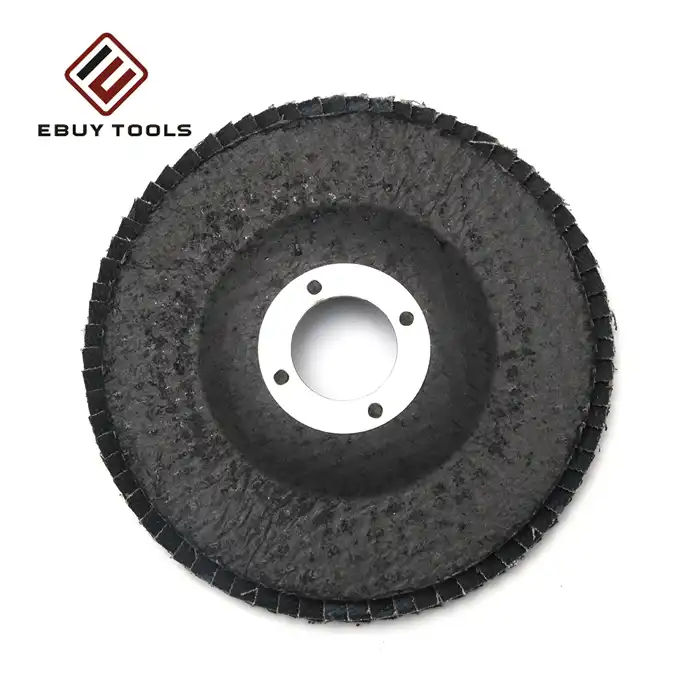
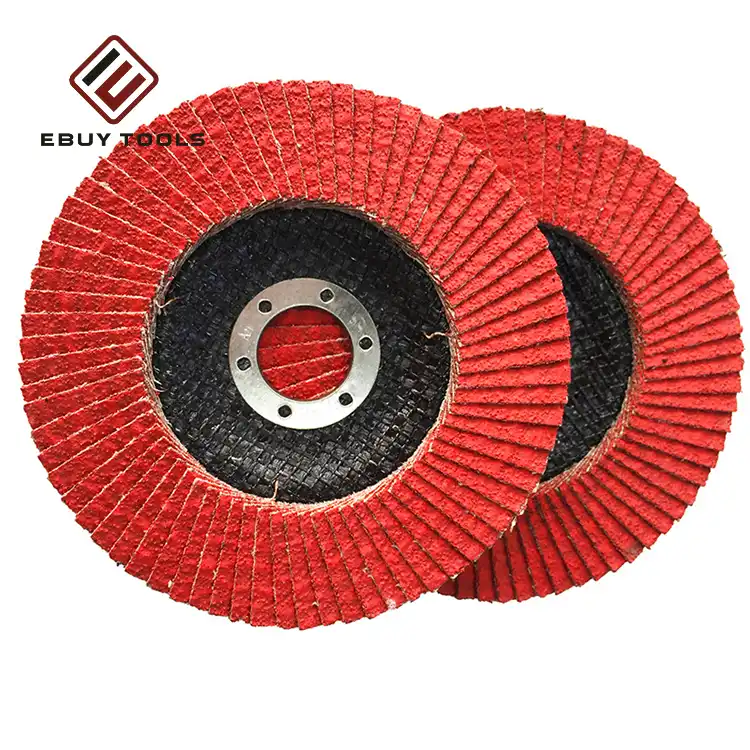
Flap discs are made up of abrasive cloth flaps that overlap and are placed radially around a central hub. They are usually attached to fiberglass or strengthened plastic backing plates. The design that overlaps makes a stacked structure where new sharp material is always showing itself while it's being used. This managed wear system keeps the cutting action constant over the life of the tool, which is a big problem with other abrasive methods that cause performance to drop over time.
The structure of grinding wheels is very different. A solid disc construction is made by bonding abrasive grains together with resin, vitrified ceramic, or rubber materials. The cutting properties of the wheel depend on the grain makeup. For general steel uses, aluminum oxide is used, silicon carbide is used for non-ferrous metals, and ceramic alumina is used for tough jobs. How easily worn grains come loose to reveal new cutting edges depends on the bond type and hardness grade.
Operational Performance Characteristics
There are a number of useful benefits to the stacked flap design in production settings. The bendable flaps naturally follow the shape of the workpiece, which makes them especially good for handling complicated geometries that are popular in mold making and aircraft parts. This conformability lowers the chance of gouging or making areas that aren't level, which would require expensive repair. The air holes between the flaps help heat escape more efficiently, protecting heat-sensitive materials like stainless steel from damage that would cause them to change color and lose their rust resistance.
Grinding wheels are great for jobs that need to remove a lot of material quickly. Because they are rigid, users can put a lot of pressure on them without them bending. This makes them perfect for heavy manufacturing jobs like removing welds from structural steel or quickly preparing edges. The strong cutting action quickly removes material, but it also makes more vibrations and heat than flap discs. Because of this, grinding wheels are the best choice when speed is more important than surface finish quality in the early stages of processing.
Application-Specific Selection Criteria
The type of metal directly affects the choice of tool. Flap disc technology is useful for working with stainless steel because it cuts more smoothly, stopping the formation of heat tints that weaken the chromium oxide layer that is needed to protect against rust. When making things out of carbon steel, grinding wheels are often used to get rid of the heavy stock first, and then flap discs are used to finish the surface to a certain level of sharpness.
The needs for a surface finish are another factor that affects the choice. When the requirements say that the surface should have an average roughness of less than 125 Ra, flap discs with 80-120 grit work better than grinding wheels. The smooth shift between abrasive flaps makes surfaces that are uniform and smooth, ready for covering. Grinding wheels make surface patterns that are more harsh, which is good for situations where mechanical contact is more important than how the surface looks.
How to Choose Between Flap Discs and Grinding Wheels for Industrial Procurement?
To make buying choices for flap discs, you need to carefully look at technical specs, the supplier's skills, and the total cost of ownership. This organized method makes sure that the right tools are chosen for each industrial need.
Technical Specification Matching
Material fit is the most important thing to think about. When working with titanium metals and superalloys, which are used in aircraft manufacturing and are harder than regular steel, ceramic alumina abrasives work better. For making carbon steel parts for cars, zirconia alumina formulations strike a good mix between longevity and cost-effectiveness. Different types of aluminum oxide can be used for a wide range of tasks and with different types of metal.
The stage of the process determines the grit size. In the beginning stages of shape and heavy metal grinding, coarse grits (36-40) quickly remove material. For middle processing, medium grits (60-80) combine stock removal with better surface finish. Fine grits (100-120) get areas ready to be coated or are used for the last few steps of finishing before putting something together.
The design of the backing plate has a big effect on how well the tool works. Type 27 flat designs put abrasive flaps at short angles (0-15 degrees) to the backing plate. This makes them best for finishing and mixing flat surfaces where keeping the shape the same is important. Type 29 conical configurations slope flaps more sharply (15 to 25 degrees), which increases the surface area that can be ground on shaped workpieces or when strong stock removal is needed.
Supplier Evaluation Criteria
Purchasing managers should check that the manufacturer's certificates show that they follow international safety standards. Products that meet ANSI B7.1 standards in the US or EN 13743 standards in Europe are guaranteed to meet basic quality and safety standards. OEM certificates show that the company has well-documented quality control systems that can make sure that batches of products are always the same, which is important for planning production.
How reliable the supply line is is directly affected by how much can be produced. Manufacturers with factories that can make tens of thousands of units every day can meet high-volume purchasing needs without having to wait longer for supplies. This ability is very important when production plans can't wait for supply interruptions or when methods for keeping inventory low are used.
Customers and wholesalers who want unique products can gain a competitive edge by being able to customize goods. When a manufacturer offers personalized branding, special abrasive formulas, or non-standard size configurations, buyers can come up with their own solutions that meet the specific needs of their applications. These features usually have minimum order numbers, but they're worth it because they improve product performance or market positioning.
Total Cost Analysis Framework
The price of buying a grinding tool is only one part of how much it really costs. A more true way to compare costs is to measure service life in terms of how much stuff is removed per dollar spent. Premium abrasives with advanced grain technology usually last 30 to 50 percent longer than economy-grade options. This means that tools don't need to be changed as often, which saves money on work costs.
Setup time, changeover needs, and the ability to do more than one thing are all factors that affect operational performance. When you use flap discs for both grinding and finishing, you don't have to change tools between tasks, which cuts down on time spent not working. In job shops that work with small batches, where setup time adds up to a lot of extra work, this benefit is especially useful.
Some secondary cost factors for flap discs are the number of rejected pieces, the need for rework, and the effects on later processes. Tools that keep thermal damage from happening or keep tighter limits on dimensions lower quality-related costs that may be much higher than the differences in the original prices of the tools.
Practical Guidelines: How to Use Flap Discs and Grinding Wheels Safely and Effectively?
Installing, using, and maintaining tools correctly will get the most out of them and keep the person safe. These rules should be a part of training classes for workers and standard working procedures.
Installation and Setup Procedures
Before mounting any abrasive tool, workers must make sure that the highest speed of the tool and the operating speed of the grinder are compatible. Running tools faster than their rated RPM increases the chance of catastrophic failure. Most 4-inch tools can only go up to 13,300 RPM, while most 7-inch tools can only go up to 8,600 RPM. Both the tool and the backing plate seem to have these specs written on them very clearly.
For thread alignment, the tool arbor and grinder shaft need to be checked against each other. 5/8-inch-11 threads are common in North America, while M14 threads are common in Europe. Cross-threading or using devices without the right locking systems can be dangerous and slow down performance.
Mounting methods are different for each type of tool. To make sure the backing plate fits flat against the mounting flange without being over-compressed, which could crack the fiberglass substrate, the arbor nut needs to be tightened with a reasonable amount of force. Grinding wheels need to be checked even more by ring testing. If you hang the wheel and tap it gently, you should hear a clear tone instead of a dull thud, which means there are cracks inside.
Operational Best Practices
The best performance is achieved at the right grinding angles. When using Type 27 flat designs, keeping 5-15 degree slopes between the tool face and the workpiece surface stops edge cutting and increases the area of contact. Type 29 conical configurations remove material more aggressively because they are bent and work best at 20 to 30 degree angles.
Using pressure has a big effect on how long tools last and how well they cut. Abrasive wear speeds up when there is too much pressure, but material removal rates don't go up at the same rate. This is especially true with flap disc technology, where the self-sharpening system needs reasonable pressure to work right. The tool can cut easily without being forced when the pressure is just right, which can be seen by the steady sound and low shaking.
Strategies for cooling keep sensitive materials from getting damaged by heat. When working with aluminum or stainless steel, workers should use grinding designs that go back and forth so that heat can escape between passes. Continuous grinding in one place focuses heat, which could change the qualities of metals or bend the item.
Maintenance and Storage Requirements
The environment in which sharp tools are stored can affect how well they work. When humidity levels are above 65%, resin bonds in flap discs and grinding wheels can become soft, which weakens their structure. Extremes of temperature also break down binding systems. For best keeping, keep the temperature between 18 and 22°C and the relative humidity between 45 and 65%. This will keep most abrasive goods fresh for up to three years.
Before each use, there should be a visual check procedure. Flap disc checks look at the backing plate's strength, looking for cracks that start in the center hole and spread outward, or edge damage that could get worse while the disc is running. Inspections of grinding wheels make sure that the structure isn't compromised by chips, cracks, or water damage. Any tools that don't seem right should be thrown away instead of being used.
Procurement Insights: Buying Flap Discs and Grinding Wheels in Bulk for Industrial Use
Strategic purchasing methods lower the cost of goods while keeping production going smoothly. These methods weigh the costs of moving goods against the benefits of volume prices and the dependability of the supply chain.
Bulk Purchasing Strategy Development
Manufacturers can use tiered pricing systems when you make a volume promise. Procurement teams can better organize orders when they know the minimum order numbers for both standard goods and custom solutions. Standard setups usually ship in smaller minimum amounts and with faster lead times. Custom formulations or branding, on the other hand, need bigger promises that are supported by the unique needs of the application.
How you handle your inventory should weigh the costs of keeping it in stock against the risk of running out of it. High-volume operations that need thousands of abrasive tools every month often use vendor-managed inventory programs. In these programs, suppliers keep agreed-upon stock amounts at customer sites, which cuts down on administrative work while still making sure tools are available. Users who don't buy as much can discuss blanket purchase orders with planned releases to get volume discounts and keep their cash flow in check.
To plan for lead times, you need to know about both normal and custom shipping dates for products. Standard items from well-known brands usually ship within 10 to 15 business days of proof of order. Customized solutions with unique abrasive mixes or private marking can make delivery times 4-8 weeks longer, based on how complicated the solution is and how busy production is at the moment.
Supplier Relationship Management
Consistency in quality across production batches has a huge effect on how manufacturing works. Before committing to long-term, high-volume relationships, procurement teams should set up lot testing methods for their first orders from new providers to make sure that the performance characteristics match the requirements. Material approvals, performance test results, and traceability information should all be required as documentation. This way, if problems happen, quality reviews can be done.
Communication methods for flap discs make sure that help is quick to respond to technical questions or problems with applications. Suppliers who give you direct access to technical experts add value beyond the price of the product by helping you optimize your application. This help is especially helpful when starting up new material processing programs or fixing problems that come up out of the blue.
Building a long-term relationship often has benefits that go beyond negotiating prices. When you have established relationships with other people, you can work together to make new products that meet new application needs. You can also get priority when supplies are low and open terms to accommodate changes in the business cycle.
Premium Flap Disc Solutions from Danyang Ebuy Tools
Our factory has a large production scale and specialized technical skills that allow us to provide rough solutions that meet the needs of a wide range of industries. With 319 trained workers working out of a 77,000-square-meter factory in Danyang City, we make about 150,000 cutting tools every day, making sure that customers can always get what they need in large quantities.
Advanced grain formulas are the building blocks of our goods' engineering. Our zirconia alumina materials are tougher than regular aluminum oxide abrasives. They also last longer and are less likely to wear down, which is especially helpful in production settings where changing tools often costs a lot of money in work. The structure of the grains stays sharp over time by breaking down in controlled ways that reveal new cutting edges as the outer layers wear away.
Backing plate engineering makes sure that structures stay strong even when they are being used in tough circumstances. Our fiberglass and glue bonding systems make strong mixtures that don't break down too soon and keep work areas clean, which is very important in processing food-grade stainless steel and making pharmaceutical equipment. The stronger construction effectively absorbs shaking, making grinding more stable and effective while also keeping operators from getting tired during long operations.
Different application needs can be met by configuration choices. When geometric correctness is important, Type 27 flat designs are best for blending and finishing surfaces. Type 29 conical configurations get rid of the most material quickly when grinding and contouring. Different grinder platforms can use diameters ranging from 4 to 7 inches, and grit choices from 36 to 120 supporting a wide range of tasks, from strong stock removal to fine finishing.
Our Research and Development department is always adding new features to our products to meet the changing needs of the business. Tough quality control systems make sure that every product meets international standards before it is sent out. These systems provide the stability that is needed to keep production quality high in settings that use precision manufacturing. When procurement plans call for unique solutions, customization lets you make custom formulations or branded goods, and the minimum order numbers can be changed to fit the needs of the project.
Conclusion
When deciding between flap discs and grinding wheels, you need to carefully consider the type of material, the finish you need, and your practical goals. Flap discs are great for jobs that need to be flexible because they can remove stock and finish well while making less heat and sound. For big manufacturing jobs, grinding wheels remove the most material at the fastest rate. The best way to make economic choices about purchases is to weigh technical requirements against the total cost of ownership, which includes things like tool life, operational efficiency, and quality effects. By learning about new technologies and building relationships with skilled makers, you can make sure you have access to cutting-edge solutions that can meet changing production needs and keep the supply chain reliable so your business can keep running.
FAQ
What distinguishes flap discs from grinding wheels in metalworking applications?
Flap discs have rough cloth flaps that overlap and are glued to backing plates. This gives them flexibility so they can fit the shape of the object while grinding and finishing at the same time. Grinding wheels use stiff, bonded abrasive structures that are best for aggressively removing material, but they need to be finished with different tools. The flap disc design makes less heat, which makes it better for stainless steel and other heat-sensitive materials. On the other hand, grinding wheels are great for removing a lot of stock from solid steel and getting ready to weld.
How does grit selection impact performance in industrial applications?
Coarse grits (36-40) quickly remove material during the first steps of processing. Medium grits (60-80) balance stock removal with better surface finish. Finally, fine grits (100-120) get areas ready for coating or final finishing. The choice is based on the material's hardness and the level of sharpness you want on the surface. Harder materials usually need ceramic abrasives, no matter what grit size they are, while softer metals work well with aluminum oxide mixtures of all grit sizes.
What safety considerations apply to abrasive tool procurement and use?
To keep catastrophic breakdowns from happening, the maximum rated RPM must match the operating speeds of the grinder. When stored properly (18-22°C, 45-65% humidity), the structure stays intact during the shelf life. Before each use, cracks, chips, or damage to the backing plate should be found through visual screening procedures. The right mounting torque keeps the connection stable while it's being used and stops the backing plates from being damaged by being over-tightened.
Partner with a Trusted Flap Discs Manufacturer for Your Metalworking Needs
Danyang Ebuy Tools offers tried-and-true abrasive solutions backed by a lot of production power and technical know-how. Our production system can handle both standard and custom goods, and we can make enough every day to make sure that high-volume businesses have a steady supply. Strict quality systems make sure that the fine manufacturing is always the same, and our expert team helps with application support so that the right tools are chosen for each job. Our production process is flexible enough to adapt to the needs of each project, whether it calls for standard configurations or custom formulations to solve specific material handling problems. Please email our purchasing agents at [email protected] to talk about your abrasive tool needs and find out how our flap discs for sale can help you work faster and save money by making your tools last longer and giving better results.
References
Machinery's Handbook, 31st Edition (2020). Industrial Press Inc. "Abrasive Materials and Grinding Wheels."
American National Standards Institute (2019). ANSI B7.1-2017: Safety Requirements for the Use, Care, and Protection of Abrasive Wheels.
Klocke, F. (2018). Manufacturing Processes 2: Grinding, Honing, Lapping. Springer-Verlag Berlin Heidelberg.
Society of Manufacturing Engineers (2021). "Abrasive Machining and Finishing Operations." Fundamentals of Tool Design, Sixth Edition.
Marinescu, I.D., Rowe, W.B., Dimitrov, B., and Inasaki, I. (2013). Tribology of Abrasive Machining Processes, Second Edition. William Andrew Publishing.
European Committee for Standardization (2018). EN 13743:2018: Abrasive Products - Coated Abrasives for Manual Metalworking - Requirements and Grain Size Designation.