.webp)

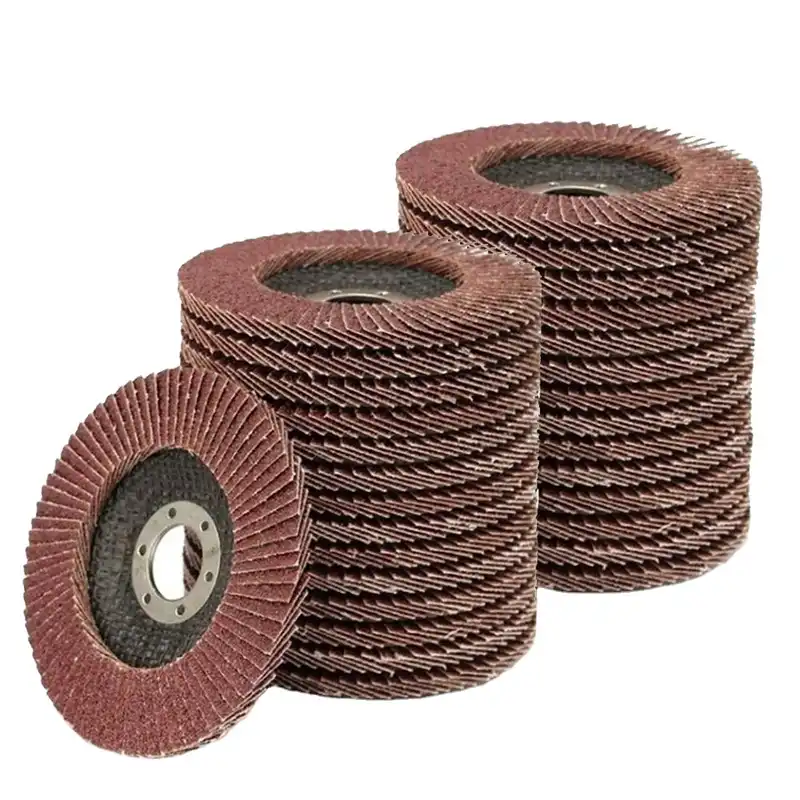
Flap discs are the best option for metalworking workers looking for multipurpose abrasive solutions that can be used for grinding, mixing, and finishing all in one device. These special abrasives have overlapping coated flaps placed radially on a strengthened backing plate. They remove material consistently while keeping heat buildup and surface discoloration to a minimum. Instead of changing tools several times like rigid grinding wheels do, flap discs speed up work by removing stock and finishing the surface at the same time. This makes them essential in industries like precision machining, automobile manufacturing, and construction.
Understanding Flap Discs – Overview and Key Features
What Makes Flap Discs Different from Conventional Abrasives?
These sharp tools are built in a way that is very different from the old ways of cutting. Each disc is made up of several layers of treated abrasive cloth that are glued to a central backing plate that is usually made of fiberglass or strengthened nylon. As the product is used, the top layer wears away, revealing new abrasive grains. This keeps the cutting action intense for the whole product's life. One big problem with connected grinding wheels is that they lose their cutting power as the grains wear down. This self-renewing feature fixes that problem. The shape of the backing plate is very important to how well flap discs perform.
Abrasive Material Types and Their Industrial Applications
Knowing the three main types of abrasives helps sourcing workers choose the right tools for each metalworking job:
- Zirconia Alumina Grain Technology: These materials are tougher than regular alumina abrasives and provide better wear protection and longer service life. Zirconia works really well in heavy-duty tasks that involve carbon steel, making structures out of steel, and getting ready for welding in pipelines. The grain structure can handle high grinding pressures without breaking down too soon. This makes it a cost-effective choice for high-volume production settings where the number of tool changes has a direct effect on how efficiently the business runs.
- Ceramic Alumina Formulations: Using micro-fracturing technology, ceramic grains keep themselves sharp while they're being used by constantly showing new cutting edges. This feature is very helpful when working with heat-sensitive materials like high-nickel superalloys, titanium alloys, and stainless steel. These materials are often used to make aircraft parts. The controlled fracturing mechanism keeps the grinding process quick and effective while avoiding thermal harm that could change the qualities of the material or require expensive repair.
- Aluminum Oxide Compositions: Aluminum oxide is the least expensive choice, and it works well on softer metals, general maintenance tasks, and finishing jobs that don't need to remove a lot of stock quickly. Job shops and contract makers often keep these on hand because they can be used in a variety of situations with different types of materials.
Besides the type of abrasive, the choice of grit affects both the surface finish and the rate of removal. The coarse grits (36–40) get rid of weld beads and heavy stock quickly, while the medium grits (60–80) get rid of things without affecting the quality of the surface. Fine sizes (120+) make finishes that are smooth and can be used for pre-painting and cosmetic purposes.
Configuration Types: Flat vs. Conical Designs
Performance qualities are greatly affected by geometry. The Type 27 flat design keeps the slope between 0 and 15 degrees, which gives flat workpieces the best surface contact. This design is great at making weld lines flat with the material around them and making sure that the surface of sheet metal parts is prepared evenly.
Flaps on the flap discs Type 29 conical design are angled between 15 and 25 degrees. This makes the tool more active for outline work, edge chamfering, and heavy stock removal on curved surfaces. Fabrication shops that work with pipe fittings, vessel heads, and complicated shapes can use this setup to keep consistent touch across profiles that aren't straight.
Flap Discs vs Alternatives – Comparative Insights for Informed Choices
Performance Comparison with Grinding Wheels
Bonded grinding wheels are best for rough grinding thick welds or cutting through heavy stock because they remove the most material quickly in heavy-duty situations. They do, however, produce a lot of heat, make rough surface patterns that need extra finishing steps, and are hard, which makes gouging more likely on thin materials or curved surfaces.
The layered design of flap discs options offers padding that molds to the shape of the workpiece, which lowers the risk of breaking through thin-gauge materials. The trade-off is a slightly lower removal rate than with grinding wheels of the same diameter, but this isn't a problem when you think about how much work is saved by not having to do any extra finishing. It has been found that these abrasives cut down on general work hours in shops that measure total cycle time instead of individual process speed.
Flap Discs versus Fiber Resin Discs
Fiber resin discs fit flat against backing pads and are great for quickly removing stock from flat surfaces. Their stiff design, on the other hand, makes them less flexible and shortens their useful life compared to layered flap options. Also, fiber resin discs need to be changed more often, which interrupts work flow and raises labor costs in high-volume production settings.
Comparative tests show that the overlapped flap design spreads wear across multiple layers, which increases working life by 300–500%. This advantage in durability directly translates to less downtime for tool changes and lower costs per part for consumables. This is especially helpful for car tier supplier operations that run continuous production plans.
Wire Brush Discs and Specialty Applications
Wire brush discs are different from abrasive flap options because they clean rust, paint, and other surface contaminants without taking away any material dimensions. Combining wire brushes for initial cleaning with flap discs for subsequent welding creates the best processes when surface preparation calls for rough cleaning followed by dimensional grinding and finishing.
Knowing these differences helps buying teams make complete tooling plans instead of looking for a single option that will work for all of their needs. Material compatibility also plays a role in the choice. For example, wire brushes can damage stainless steel by introducing ferrous particles, while non-woven abrasive options clean delicate metals safely.
How to Choose the Best Flap Discs for Your Business Needs?
Critical Selection Criteria for Procurement Professionals
It takes a lot of technical and business knowledge to match rough tools to the needs of an application. The main thing to think about is the makeup of the material. For general carbon steel fabrication, zirconia alumina materials offer the best mix between cost and performance. Companies that only work with stainless steel or rare metals can explain the higher cost of ceramic formulations by getting longer-lasting flap discs and better surface finishes that cut down on the need for extra work.
The disc diameter and grit size for flap discs must match the powers of the tools and the results that are wanted. Larger widths (7 inches) are good for removing a lot of stock, but they need angle grinders with enough power and the right guard designs. Smaller widths (4–4.5 inches) make it easier to move around in tight areas and keep operators from getting tired after long hours of use. Before standardizing inventory requirements, purchasing managers should talk to floor leaders and workers to find out how things really work.
The material of the backing plate affects both how well it works and how safe it is. Fiberglass-reinforced backings are very strong for their weight and don't change much when the temperature changes. Plastic or nylon options are more flexible and can be used in certain situations. Always make sure that the highest RPM ratings match or go beyond the grinder's working speeds to avoid a catastrophic failure while it's running.
Evaluating Supplier Reliability and Quality Standards
A supplier's skills have a big effect on the total cost of ownership, not just the product specs. Facilities that have their own research and development teams show that they are committed to always getting better and can create custom recipes for specific uses. Quality control systems that are approved to international standards make sure that each batch is the same. This cuts down on the differences between batches that lead to extra work and waste in precision machining processes.
The daily production capacity of a seller shows how well they can handle big orders without having to wait for long lead times. Businesses that make about 150,000 pieces of different products every day keep enough inventory on hand to support just-in-time manufacturing ideas without making customers hold too much stock. Delivery reliability is also affected by how close the delivery location is and how well the logistics system can handle it. This is especially true for wholesalers that serve area markets that expect quick response times.
When wholesalers and OEM partners need private labels or special formulations, the ability to customize is important. In crowded markets, suppliers who offer brand customization and custom abrasive compositions when minimum order numbers are met can help you stand out from the competition. These partnerships are more than just business deals; they also involve working together to make new products that meet the needs of new industries.
Maximizing Flap Disc Performance and Safety in Industrial Operations
Proper Installation and Operating Techniques
The right way to place flap discs has a direct effect on both safety and effectiveness. Before installing, you should always check the backing plates for cracks or other damage. If they are damaged, the structure could fail in a very bad way. Thread contact must go all the way to the full depth without cross-threading, and locking devices must fully engage before the equipment is turned on. Before touching the workpieces, running the tools for a short time with no load after installation makes sure they are securely mounted.
The operating angle has a big effect on how fast things are removed and how smooth the surface is. For Type 27 flat setups, keeping angles between 15 and 20 degrees improves flap contact and stops digging. When used at 25 to 35 degree angles, Type 29 conical shapes work best because the cutting action of the slanted flaps is at its strongest. Too much pressure doesn't speed up the removal of material—the right way to do it is to let the rough grains cut without pushing contact, which creates extra heat. Continuous motion stops burning in certain areas and smooths out the surface.
Personal Protective Equipment and Workplace Safety
There are many risks involved in grinding that need to be protected against in a thorough way. Safety glasses alone aren't enough to protect your face from particles; face shields should cover your whole face. When working with materials that make dangerous dust, like when grinding protected metals, galvanized surfaces, or rare alloys that contain harmful elements, you have to wear respirators. Hearing protection blocks out the 90 decibel or louder noise levels that are typical in grinding operations. This keeps your ears from getting damaged over time.
Leather gloves protect your hands from hot workpieces and sharp edges. Loose-fitting gloves, on the other hand, can get caught on things and should be avoided. Wearing clothes that are resistant to flames stops sparks from starting fires. This is especially important in places where there are burning materials or vapors. Organizing the work area reduces additional risks. Grinding sparks can travel long distances and light up materials that can catch fire.
Storage and Maintenance Best Practices
The environment affects how well abrasives work and how long they last. To keep the temperatures and humidity between 60°F and 75°F and the relative humidity between 45 and 65%, storage places should keep the backing plate from breaking down and the glue from sticking. Too much moisture weakens the structure of fiberglass backings by making them soft, while too little moisture makes them rigid. Rotation inventory based on the first-in, first-out rule makes sure that flap discs don't go past their suggested shelf life, which is usually 36 months from the date of manufacture if they are kept properly. Visual inspection before use identifies damage from handling or storage.
Conclusion
To choose the right abrasive options, you have to balance technical performance needs with business concerns like tool life, working efficiency, and the total cost of ownership. Flap discs have special benefits because they can aggressively remove stock and finish the work, which cuts down on steps in the process and improves surface quality. When procurement workers know about the different types of abrasive grains, the different setup choices, and the right way to use them, they can make the best decisions about which tools to use for different metalworking tasks. Working with manufacturers that can show they have the production scale, quality systems, and customization skills helps achieve operational excellence. Buying high-quality grinding tools is a good idea because it cuts down on work hours, improves product quality, and makes the workplace safer, all while still meeting tight production plans.
FAQ
What causes flap discs to wear unevenly during use?
Uneven wear is usually caused by grinding at different angles or using too much pressure. Wear is spread evenly across gaps by keeping the tool in the right place and letting the abrasive grains cut naturally instead of causing contact. Training operators on the right way to use flap discs greatly increases their longevity and makes the accuracy of the finish better.
Can I use the same flap disc for different metal types?
Even though it is scientifically possible, it is more efficient and cost-effective to match the abrasive grain type to the object being worked on. Zirconia works best on carbon steel, while ceramics work best on stainless steel and heat-sensitive metals. Cross-contamination is avoided by using separate tools for each material, which also leads to better performance.
How do I know when to replace a flap disc?
When the flaps wear down to the glue bond line on the backing plate, it's time to get new discs. After this point, using it again starts to grind with the backing plate, which can be dangerous and hurt workpieces. Less effective cutting and more shaking are also signs that the machine is getting close to its end of life and needs to be replaced.
Partner with Ebuy Tools for Premium Flap Disc Solutions
At Danyang Ebuy Tools, we make high-performance flap discs products that are designed to work well in tough welding situations. About 150,000 cutting tools are made every day in our 77,000-square-meter production plant by 319 skilled workers. This makes sure that we always have enough inventory for both big orders and long-term supply deals. Our advanced grain engineering gives us three different formulations: ceramic alumina, zirconia alumina, and aluminum oxide. Each one is best for a certain type of material use and performance need.
We want you to experience the Ebuy Tools difference, whether you're a precision machining shop that needs flexible finishing tools, an automotive tier supplier that needs consistent high-volume production, or a distributor that needs a reliable manufacturer with low prices and the ability to make changes. Email our technical team at [email protected] to talk about your unique application needs, ask for custom formulation creation, or get full price quotes for buying in bulk. We're dedicated to making sure that every abrasive solution we make is accurate, long-lasting, and new.
References
Marinescu, I.D., Hitchiner, M.P., Uhlmann, E., Rowe, W.B., & Inasaki, I. (2006). Handbook of Machining with Grinding Wheels. CRC Press.
Salmon, S.C. (1992). Modern Grinding Process Technology. McGraw-Hill Professional.
Machinery's Handbook, 31st Edition (2020). Abrasives and Grinding. Industrial Press.
American National Standards Institute (ANSI) B7.1-2017. Safety Requirements for the Use, Care, and Protection of Abrasive Wheels.
Occupational Safety and Health Administration (OSHA). Grinding and Abrasive Wheels Safety Standards 1910.215.
Krar, S.F., & Gill, A. (2003). Exploring Advanced Manufacturing Technologies. Industrial Press Inc.