.webp)

Picking the correct grinding tool can greatly affect how quickly and accurately you work with metal. Because they can do both rough grinding and smooth finishing in one step, flap discs have become important tools for precision cutting, manufacturing, and finishing. Instead of rigid grinding wheels that need to be changed often, these flexible abrasives have overlapping coated flaps placed radially on reinforced backing plates. They provide uniform performance over their lifetime while reducing operator tiredness and work interruptions.
Understanding Flap Discs and Their Applications
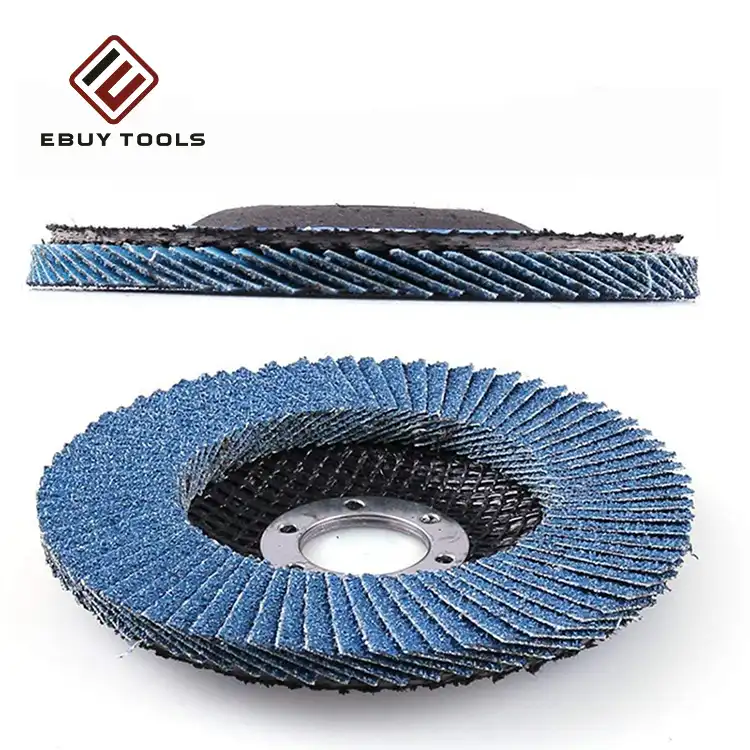
When compared to standard attached grinding wheels, flap discs are a big improvement. Their special tiered design is made up of many rough cloth pieces that are glued to a central backing plate, making a fan-like pattern. This design fixes some major problems with regular grinding tools, like the high risk of gouging the object, too much vibration, and the fact that moving between stock removal and finishing processes is slow and inefficient.
What Makes Flap Discs Different?
The overlapping flap design lets you control a "soft" entry into the material, which reduces vibrations while keeping the cutting action strong. As the flaps are used, the edges wear down, revealing new, sharp rough bits below. This managed wear system makes sure that the cut rate stays the same over the whole life of the product, so the performance doesn't drop like it does with regular grinding wheels.
At Danyang Ebuy Tools, we use modern grain engineering in our 77,000-square-meter factory to make our flap discs. Our production team has created three different abrasive formulas to meet the needs of different industrial uses. This way, we can guarantee the best performance in a wide range of metalworking situations.
Core Industrial Applications
Heavy manufacturing settings need tools that can handle a lot of work without losing their accuracy. When making ships, getting rid of heavy weld lines on curved hull parts means cutting away a lot of stock without cutting the base metal too much. Type 29 abrasive discs made of zirconia or ceramic grind down weld beads and mix surfaces all at once, so you don't have to switch between a grinding wheel and a fiber disc.
Processing stainless steel for food-grade and pharmaceutical tanks requires strict surface quality control. In these applications, surfaces must be smooth with low roughness to ensure hygiene while maintaining the material's mechanical and corrosion-resistant properties. Low-heat or cold grinding using ceramic abrasives is commonly used to remove TIG weld heat tint and surface imperfections without introducing additional thermal damage. This helps preserve the stainless steel’s corrosion resistance and overall performance.
The ability of these tools to bend around odd forms makes them useful in foundries that make cars and businesses that clean up casts. The overlapping flaps soften the effect on complicated cast iron engine parts. This makes the edges uniform and cuts down on the time needed for repair before coating or painting.
How to Choose the Right Flap Disc for Your Job?
To choose the best grinding tool, you need to carefully look at a number of performance factors. Material suitability, job requirements, and operating safety are all things that go into buying choices, which in turn affect how productive and cost-effective the business is.
Material-Specific Selection Criteria
The type of workpiece material affects which abrasive grain type works best for flap discs. Micro-fracturing technology is used by ceramic alumina grains to make heat-sensitive materials like titanium alloys and stainless steel that are used in aircraft uses self-sharpen. Under grinding pressure, the grain structure breaks apart, revealing sharp cutting edges that keep the stock removal rate steady without making too much heat.
Zirconia alumina is the right mix for making heavy-duty things out of carbon steel. This mixture is tougher than regular alumina abrasives, so it lasts longer and shows better resistance to wear when used in high-pressure grinding situations. The ability of zirconia to keep cutting steel efficiently over long production runs is useful for making carbon steel parts for cars and building structures out of steel.
Formulations with aluminum oxide work great with aluminum and other soft metals, as well as for general repair jobs. When longevity isn't the most important thing, these abrasives are a cheap way to remove burrs, prepare surfaces, and remove light stock.
Understanding Grit Size and Configuration
The choice of grit has a direct effect on the quality of the finish and the rate at which material is removed. Coarser sizes, which range from 36 to 60, remove stock quickly for grinding welds and heavy rust. When working with metal, medium grits (60 to 80) are good for general jobs because they combine the rate of removal with surface smoothing. Finer grits, between 80 and 120, allow for smooth mixing and finishing tasks that are good for getting ready to paint and final surface treatment.
Choosing between Type 27 flat and Type 29 conical designs has a big effect on how well grinding works. Type 29 conical discs have flaps that are angled at 15 to 25 degrees. This makes the surface contact better for strong shaping work on curved parts and edge chamfering. Type 27 flat configuration keeps angles between 0 and 15 degrees, which makes it great for finishing and blending flat surfaces smoothly, where it's important to keep the surface profiles uniform.
Backing Material Considerations
The material of the backing plate affects how long a tool lasts, how well it dampens vibrations, and how safe it is to use. When you mix quality glue with fiberglass backing plates, you get a strong bond that won't damage work surfaces or contaminate finished parts. The fiberglass design effectively absorbs energy, making grinding more stable and effective while also keeping operators from getting tired after long periods of use.
At Danyang Ebuy Tools, we make sure that the glass fiber and glue stick together securely so that they can resist the centrifugal forces that are created during high-RPM grinding. This feature of the design keeps the flaps from separating too soon, which would be bad for both safety and efficiency.
Safety and Compliance Factors
To keep the disc from breaking in a terrible way, the maximum RPM rates must match the specs of your angle grinder. Smaller discs with a diameter of 4 inches can safely work at speeds of up to 13,300 RPM, while bigger ones with a diameter of 7 inches need to be run at slower speeds of no more than 8,600 RPM. Thread compatibility, whether it's 5/8"-11 standard or M14 metric, makes sure that the part can be mounted correctly and work securely.
When you store things the right way, they last longer and keep up with safety standards. Abrasive grains don't go bad, but resin binders and fiberglass backings do. To keep them safe, the industry says to keep them dry between 18°C and 22°C with 45–65% relative humidity. If you follow these rules, the products should last three years.
Maximizing Flap Disc Performance and Durability
Understanding methods for improving the performance of flap discs directly leads to lower running costs and higher quality output. Good maintenance habits, the right way to grind, and smart operational changes can greatly extend the life of tools while increasing production.
Preventing Premature Wear and Glazing
Glazing happens when abrasive grains become dull but don't break apart to reveal new cutting edges. This creates a shiny surface that makes cutting impossible. This usually happens because too little pressure is applied or the wrong type of grit is used for the metal's hardness. For example, ceramic grain formulations give stainless steel the right amount of hardness to keep cutting. For softer metals, you may need to use coarser grits or more grinding pressure to start proper grain fracture.
We've seen in our many years of production experience that high-density flap configurations with 20–40% more abrasive cloth last longer but are less flexible. These jumbo-style discs work best for heavy, flat grinding jobs where the longer tool life makes up for the slightly less flexible shape compared to standard density options.
Optimal Grinding Techniques
Angle and pressure of the grinding have a big effect on both how well it works and how smooth the surface finish is. For Type 27 flat discs, keeping the angle between 15 and 20 degrees ensures good surface contact without gouging. For Type 29 conical discs, the best angle is 25 to 35 degrees, where the angled flaps can engage the workpiece effectively for aggressive stock removal.
Using steady, moderate pressure lets the abrasive grains cut effectively without producing too much heat. Using too much force doesn't increase the rate of material removal, but it does speed up wear and raises the risk of heat-induced workpiece discoloration. Making light, controlled passes and allowing enough time to cool down between grinding sessions protects both the tool and the workpiece.
Storage and Handling Best Practices
Cleaning properly after each use stops contamination from building up and affecting later operations. Removing metal particles and grinding residue from the flap surfaces keeps the cutting efficiency high and stops cross-contamination between different metal types. Keeping discs in their original packaging keeps them safe from humidity and physical damage that could weaken the backing plate or flap attachment.
Pay close attention to the mounting steps to make sure they are done safely. The disc should sit flush against the grinder backing pad and the threaded arbor should be tightened securely but not too much, as this could damage the fiberglass backing. Checking the disc for cracks, missing flaps, or damage to the backing plate before each use keeps it working properly and prevents accidents.
These operational guidelines, along with the advanced manufacturing quality at Danyang Ebuy Tools, where we make about 150,000 cutting tools every day, make sure that our products work reliably for their whole lives. Before they are sent to your facility, our strict quality control systems make sure that every abrasive tool meets international standards.
Comparing Leading Solutions in the Abrasives Market
In the metalworking abrasives market, there are a lot of choices for flap discs from well-known brands. Each has its own performance traits that make it better for different tasks. Knowing these differences helps purchasing teams make smart choices that meet their production needs.
Industry-Leading Performance Standards
Premium brands like 3M, Norton, and DeWalt are known for making products that work consistently and last a long time in tough industrial settings. These companies put a lot of money into researching grain technology and creating their own ceramic and zirconia formulations that show measurable performance benefits in controlled testing environments. Their products usually have precisely engineered backing plates and advanced adhesive systems that keep flap integrity under high-stress conditions.
Mid-tier manufacturers like Bosch and Makita make good products at more reasonable prices, which makes them good choices for businesses that need to balance performance needs with budget constraints. These products usually use tried-and-true abrasive technologies and reliable manufacturing standards that make them suitable for general metalworking tasks.
Our way of making things at Danyang Ebuy Tools combines advanced grain engineering with high-volume production. Our R&D department is always coming up with new ideas to keep up with changing industry needs, and our large daily production capacity makes sure that we always have inventory on hand. This lets us offer competitive solutions that meet international quality standards and support reliable supply chain needs.
Customization and Branding Capabilities
Many businesses need branded solutions that fit with their brand or the needs of a certain application. In niche markets, custom formulations that deal with specific metallurgical problems, specialized grit combinations, or proprietary backing materials can give businesses an edge. At Danyang Ebuy Tools, we can add client logos to products and create specialized formulations when minimum order quantities are met, which supports distributor branding strategies and end-user requirements.
Procurement Strategy Considerations
Buying in bulk has many benefits besides lowering the cost per unit. Manufacturers can better plan their production, cutting down on lead times and making sure that orders are filled quickly during times of high demand. Building relationships with suppliers who have large production capacities, like our facility, which can make 150,000 units per day, provides supply chain resilience that is essential for operations with tight project timelines.
It's important to look at a supplier's skills beyond just the specifications of their products. They should also be able to provide technical support, help with application engineering, and responsive customer service. Suppliers who understand your specific metalworking challenges can suggest the best product configurations, ways to improve the production process, and ways to fix performance problems that come up during production.
Conclusion
To choose the best flap discs, you need to balance technical specifications with operational needs and cost considerations. The right choice includes the right grain technology, configuration design, and grit selection for your metalworking applications. Knowing about material compatibility, performance factors, and the right way to operate equipment will help you get the most out of your purchases while keeping costs low. This article gives procurement managers, engineers, and distributors all the information they need to make data-driven buying decisions that improve operational efficiency and output quality in tough metalworking environments.
FAQ
What grit size should I choose for stainless steel applications?
Ceramic grain formulations in the 60–80 grit range work best on stainless steel because they balance the need to remove stock with the need for a smooth surface while producing as little heat as possible, which could weaken the steel's corrosion resistance. Finer 80–120 grits are best for final blending and finishing operations.
Can flap sanding discs effectively remove paint and rust?
Coarse 36–40 grit zirconia formulations are great at removing heavy rust and paint. The layered flap design keeps exposing new abrasive grains as the outer layers wear away, keeping the cutting action constant over the life of the product. This controlled wear makes performance more predictable than with rigid grinding wheels, which lose their effectiveness as the surface gets dull.
How do flap discs compare to traditional grinding wheels for safety?
The flexible flap design lowers vibrations that reach the operator, making long-term use less tiring. The softer contact with workpiece surfaces lowers the risk of catching or gouging, which can make rigid wheels kick back. To keep the machine safe, the disc should still be thrown away when the flaps wear down to the backing plate.
Partner with Ebuy Tools for Your Abrasive Solutions
Danyang Ebuy Tools offers precision-engineered flap disc solutions backed by a large manufacturing capacity and technical expertise. Our facility makes high-performance abrasive tools designed for demanding metalworking applications in precision machining, automotive manufacturing, aerospace engineering, and heavy fabrication. With three different grain formulations and a wide range of configuration options, we can make abrasive solutions that are exactly what you need for your job.
Get in touch with our technical team at [email protected] to talk about your specific grinding problems and look into the options for customization. As a well-known flap discs manufacturer, we offer competitive advantages through bulk purchasing, fast shipping, and application engineering support. Our dedication to quality and reliable supply makes us your ideal partner for maximizing abrasive tool acquisition and increasing metalworking productivity.
References
Anderson, M. (2022). Advanced Abrasive Technologies in Modern Metalworking. Industrial Fabrication Press.
Chen, L. & Rodriguez, P. (2023). "Comparative Performance Analysis of Ceramic and Zirconia Abrasive Grains," Journal of Manufacturing Processes, Vol. 89, pp. 234-251.
Industrial Abrasives Institute. (2023). Safety Standards and Best Practices for Coated Abrasives. Technical Bulletin IAI-2023-07.
Kimura, T. (2021). Precision Grinding Techniques for Aerospace Applications. Materials Engineering Publications.
Mitchell, R. (2023). "Optimizing Tool Life in High-Volume Metalworking Operations," Production Engineering Quarterly, Vol. 45, No. 3, pp. 112-129.
Walsh, K. & Stevens, D. (2022). The Complete Guide to Abrasive Selection for Metal Fabrication. Welding and Fabrication Publishing.