.webp)

When accurate cutting is needed for business purposes, it's important to know the right diamond cutting disc specs. A diamond cutting disc is a high-tech superabrasive tool made with man-made diamonds set in metal, resin, or ceramic layers. It is intended to cut through tough materials like reinforced concrete, granite, natural stone, and high-density brickwork. Unlike regular abrasive wheels that wear out quickly and make too much heat, diamond cutting discs keep their cutting performance by exposing new cutting edges through controlled matrix erosion. In addition to diameter measurements, other selection criteria include arbor compatibility, segment geometry, bond hardness relative to material Mohs scale, and operational speed limits. These are all important factors that have a direct effect on tool life, cutting accuracy, and operational safety in tough production environments.
Understanding Diamond Cutting Disc Basics
The basic structure of diamond cutting discs is very different from that of other cutting tools. Carbide or aluminum oxide wheels use abrasive particles that are easily broken when they are loaded, but diamond cutting discs use the strongest natural material joined in designed structures. This building method solves long-lasting problems in the industry, like tools breaking down too soon, uneven cut quality, and heat damage during long operations.
Wet Versus Dry Cutting Capabilities
The main difference between wet and dry cutting uses is the disc that is used. Using water as a coolant and lube during wet cutting lowers the heat caused by friction while also cleaning out cutting waste. This method is necessary when working with materials that easily crack at high temperatures or when workers need to cut for long periods of time without the blade breaking down. The steady flow of water keeps the diamonds exposed at the best rates and keeps the metal bond from icing, which happens when there is too much heat and the bonding matrix vitrifies, trapping diamond particles.
However, for dry cutting uses, you need special segment shapes that let air flow naturally and heat escape. Since there is no water cooling, the disc core and diamond pieces are under more temperature stress. This means that stronger bond formulations and better ventilation features are needed. Professional workers often choose dry cutting when working on sites where managing water would be hard or when working in places that are already occupied and slurry control would be hard.
Core Disc Types and Industrial Benefits
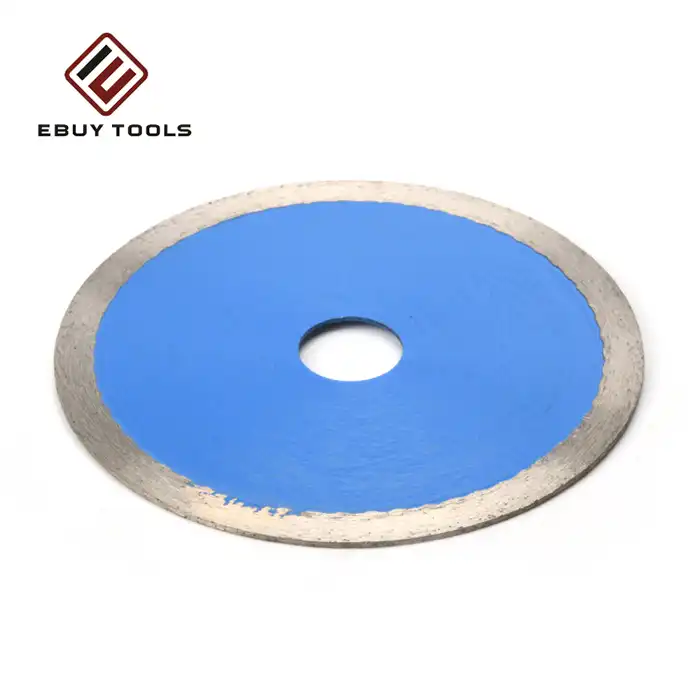
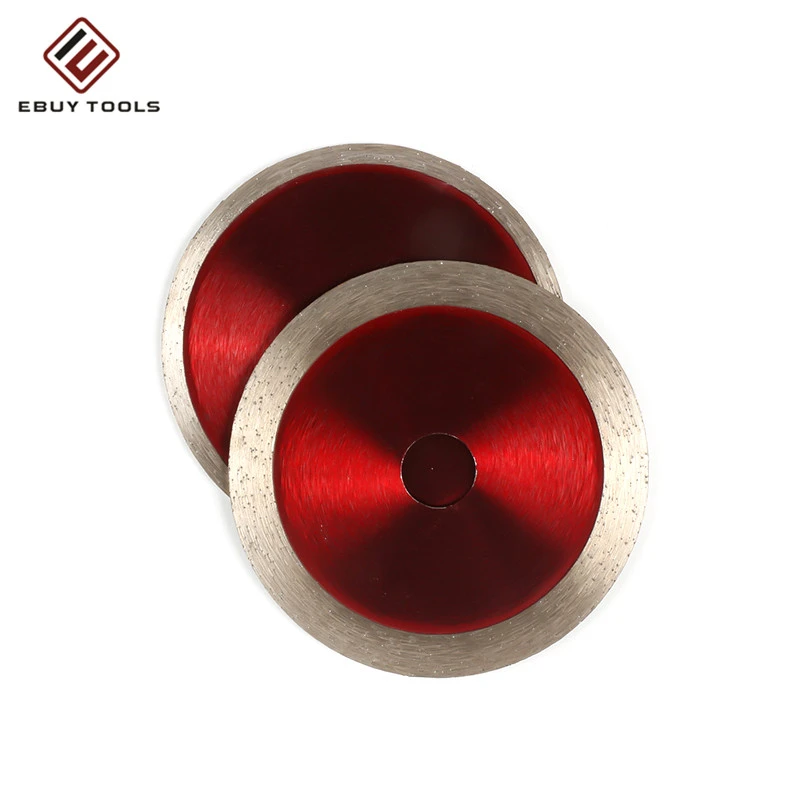
In workplace settings, there are three main types of rim designs, and each one is designed to perform better than the others. Because they have a diamond-embedded edge that doesn't break, continuous rim blades make the best cuts. This makes them perfect for installing tiles, cutting glass, and other tasks that need edges that don't chip. The full rim design, on the other hand, makes it harder for heat to escape and cuts more slowly, so they are mostly only useful for wet cutting.
Segmented rim discs have gaps between the diamond segments that are carefully placed to create paths that let more cool air flow and make it easier for trash to be swept away quickly. When cutting quickly is more important than getting a good edge finish, this design works great for cutting reinforced concrete, asphalt, and finished brickwork. The segmented design increases the operating lifetime by stopping the buildup of heat that speeds up bond wear.
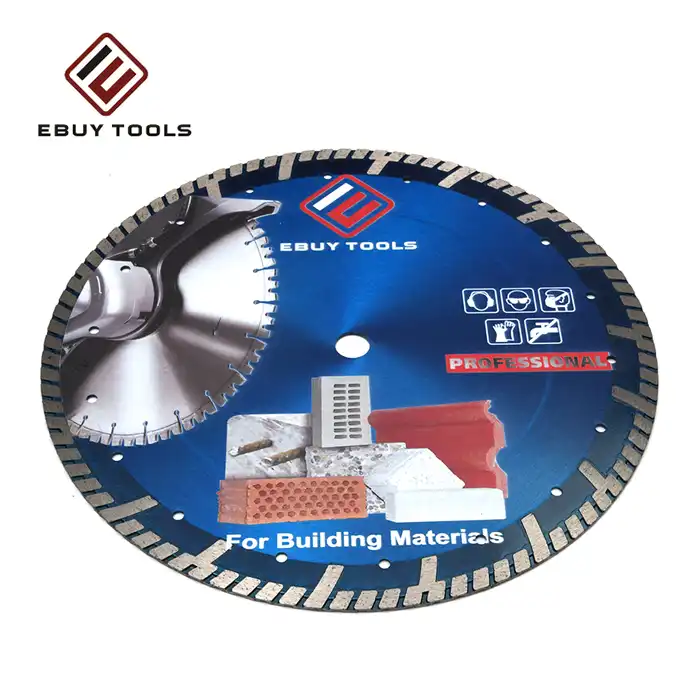
The form of the turbo rim is a technical compromise that works around the problems that come with both continuous and segmented versions. Because they have a constant serrated edge with built-in channels, turbo discs can cut more quickly than solid rims while still producing a better finish than divided options. This combined method eliminates the usual trade-off between speed and accuracy, which makes turbo designs especially useful for manufacturing shops that need to be able to work with a wide range of materials.
Diamond Cutting Disc Sizes and Dimensions Explained
Dimensional standards include a lot more than just diameter measures. They include a lot of interconnected factors that affect how well the machine works and how well it can cut. When procurement managers understand these connections, they can choose the best tools and avoid costly compatibility problems that cause output plans to slip. A high-quality diamond cutting disc ensures these standards are met for optimal performance.
Standard Diameter Ranges and Applications
The diameters of industrial cutting discs are usually between 4 and 14 inches, with each size group being best for a certain type of tools and job. Handheld angle grinders that use smaller 4-inch and 4.5-inch discs make it easier to move around and do tasks like cutting pipes and working in tight spaces. Because the width is small, the cutting depth is only about 1 inch. This means that these sizes are better for precise jobs than for cutting through structures.
Most building and manufacturing sites use 7-inch and 9-inch discs that are in the middle of the price range. These measurements give you enough cutting depth for most setups of concrete slabs, pavers, and tiles, and they still work with standard walk-behind saws and handheld cutoff tools. The right ratio of width to arbor size makes sure that the machine works steadily at normal cutting speeds without too much shaking.
Large 12-inch and 14-inch discs are good for heavy-duty removal, road building, and cutting solid concrete. When placed on concrete saws or walk-behind tools, these diameters can cut through material more than 4 inches thick. However, the higher spinning inertia means that the machine needs to be able to handle it safely, and the user needs to have a lot of experience.
Arbor Size and Mounting Compatibility
The arbor hole width is an important measurement that needs to be exact to fit the equipment spindle shaft. In North America, arbor standards are mostly 1 inch, 7/8 inch, and 5/8 inch. In Europe, machinery usually needs fixing holes that are 22.23 mm (about 7/8 inch) in diameter. When arbor sizes don't match, it can be dangerous to operate because discs can shake, vibrate too much, or fail completely while the machine is running.
Professional-grade disks have arbor holes that are precisely machined and have tight tolerances, usually within 0.002 inches of the stated diameter. This accuracy makes sure that the part fits correctly against the mounting lip of the equipment, applying equal tightening pressure around the hole's edges. It may look like cheaper options with looser specs will work, but they actually introduce runout mistakes that make uneven wear worse and lower the accuracy of the cut.
Effects of Segment Height and Rim Configuration
The segment height is directly related to the total lifespan of the disc because it shows how much diamond-impregnated material is available for cutting. Standard segment heights are between 7mm and 15mm. Naturally, segments that are taller will last longer before the steel core is revealed. Increasing the segment height, on the other hand, makes the disc heavier to rotate, so it needs relatively stronger bond formulas to keep the segments in place when centrifugal stress is applied.
The kerf width and cutting speed are both affected by the rim width, which is also called segment thickness. It is usually between 2mm and 4mm. Thinner rims make it easier to remove material, which lets you cut faster and puts less stress on the motors of your equipment. On the other hand, bigger pieces are better at transferring heat and keeping the structure stable. This is especially helpful when cutting rough materials that have a lot of friction.
How to Choose the Right Diamond Cutting Disc?
For strategic diamond cutting disc selection, you need to carefully look at a lot of different performance factors and practical needs. When purchasing something, if you don't think about compatibility factors or put cost over performance traits, the tool will often break down early, cause more loss, and cost more overall.
Material Type Assessment
The base material being cut determines the amount of diamonds needed and the bond hardness needs. For cured concrete with hard aggregate, you need softer bond formulas that help control matrix wear and keep revealing new diamond particles as the bond wears away. It's not possible for the matrix to wear down enough when cutting asphalt or green concrete with harder bonds because the diamonds get stuck under glazed surface layers that stop the cutting action.
Natural stone materials are hard to work with because they contain silica and are made up of crystals. Granite and quartzite, which are Class 4 and 5 hardness materials, need more diamonds and a special bond chemistry to keep the segments from wearing off too soon. Because marble and limestone are lighter and more easily broken, they need to be cut more carefully and with different segment designs that keep the material from breaking or the edges from chipping.
Wet or Dry Cutting Method Determination
The planned cutting method has a big impact on the disc selection criteria. For wet cutting, continuous rim or turbo designs that put cut quality and diamond exposure first are best, since water cooling keeps the bond matrix from getting damaged by heat. Cutting friction is cut by about 40% when the machine is constantly oiled compared to when it is not oiled. This lets the blades move faster and last longer.
For dry cutting, you need discs that are designed with better thermal control features. When you rotate a turbo rim with deep undercut guard teeth, airflow paths are made that move heat away through convective cooling. Since bond wear rates increase when there is no water cooling, dry-rated discs are necessary to keep working temperatures safe and stop thermal core warping that causes dangerous shaking.
Machine Compatibility Verification
The discs that can be played are limited by the equipment's specs. Because centrifugal forces grow exponentially with circular speed, you should never go over the RPM limits that are stamped on disc cores. When a 13,200 RPM disc is used on 15,000 RPM equipment, it experiences much higher tensile stress that can lead to severe section separation or core failure.
The motor's horsepower ability affects the choice of disc width. When motors are too small and discs are too big, the machine bogs down, vibrates too much, and wears out too quickly. In general, 4-inch to 4.5-inch discs work best with small angle grinders with 7-amp to 11-amp motors, while 7-inch discs work well with models with 13-amp to 15-amp motors. Heavy-duty cutting can be done with walk-behind saws that have engines ranging from 5 horsepower to 13 horsepower.
Safety Standards and Compliance Requirements
Regulatory compliance is an important part of buying discs that can't be skipped. Products sold in workplace settings in North America must comply with ANSI B7.1 safety standards, which spell out maximum working speeds, burst testing procedures, and marking requirements. For European markets, superabrasive cutting tools must be certified according to EN 13236, which sets safety standards that are similar across the board.
When a product has a certification mark, it means that the manufacturer has sent it to an independent lab for testing to make sure that it is structurally sound under rotational stress. Uncertified discs might not have the right way of heating the steel cores or might use low-quality gluing materials that make it more likely that they will break while they are being used. The small price increase for certified goods protects you from liability and ensures operating safety.
Conclusion
To get the best cutting performance and tool life, strategic diamond cutting disc selection looks at dimensional requirements, material fit, and operating needs. When procurement managers know how width, arbor size, segment design, and bond formulation are connected, they can perfectly match the disc's properties to the needs of the application. The differences between wet and dry cutting, along with following the right repair steps and safety rules, protect both the tools and the people who use it. It is important for buying strategies to weigh up the initial costs against the total costs of ownership. This is because premium discs with better engineering often have lower per-cut costs because they last longer and work more consistently. Industrial buyers build reliable supply relationships that keep production running smoothly by looking at a supplier's manufacturing capacity, quality systems, and expert support skills along with the product specs.
FAQ
What diameter disc should I use for cutting concrete slabs?
For normal home concrete blocks that are 4 inches thick, a 7-inch or 9-inch diameter diamond cutting disc gives you enough cutting depth and is easy to use. For commercial uses involving thicker structural concrete, walk-behind saws with 12-inch or 14-inch discs that can cut up to 5 inches deep in a single pass are needed.
Can I use wet-rated discs for dry cutting applications?
Wet-rated discs are technically possible, but they don't have the heat control features that are needed for safe dry cutting. When bond formulations and segment designs are designed for water cooling, they don't work well without constant greasing. They produce too much heat, which can lead to core warping, segment loss, or catastrophic failure. Always choose discs that are rated for the way you plan to cut them.
How can I tell when it's time to get a new diamond cutting disc?
Replacement is needed when the segment height drops to about 2 mm above the steel core, the cutting speed slows down noticeably even when the right method is used, or damage like cracks, missing segments, or heat coloring can be seen. If you keep operating past these points, you could damage the equipment or endanger the operators, and the cutting performance will get worse over time.
What makes the segments on my cutting discs wear out unevenly?
Most of the time, uneven wear patterns are caused by problems with the tools, not disc flaws. Some common reasons are equipment shafts that are bent and wobble when they rotate, mounting flanges that are broken and apply uneven tightening pressure, or incorrect cutting angles that load segments unevenly. Fixing these technical problems keeps the disc from failing too soon and makes the cuts better.
Partner with a Trusted Diamond Cutting Disc Manufacturer
Choosing the right production partner is the first step to getting good cutting results. Danyang Ebuy Tools makes diamond cutting discs for tough industrial uses by combining advanced engineering skills with production skills that have been used for a long time. When cutting reinforced concrete, natural stone, and high-density brickwork, our unique turbo design works better than standard setups. With a 77,000-square-meter facility that can make more than 150,000 pieces per day, we can provide the supply reliability that keeps your processes going smoothly. Our expert team is ready to help you choose the right discs for your needs and create a unique solution. Get in touch with our purchasing experts at [email protected] to talk about your diamond cutting disc needs and find out how our high-quality making can help your business succeed.
References
Smith, J. and Anderson, M. (2021). Industrial Diamond Tool Engineering: Design Principles and Performance Optimization. Technical Publishing International.
Chen, L., Rodriguez, P., and Williams, K. (2020). "Thermal Management in Superabrasive Cutting Tools: Comparative Analysis of Rim Configurations," Journal of Manufacturing Science and Engineering, 142(8), pp. 081005.
Morrison, R. (2022). Professional Concrete Cutting: Equipment Selection and Operational Best Practices. Construction Technology Press.
International Standards Organization (2019). ISO 16057-1: Diamond Tools - Rotating Diamond Tools - Part 1: Requirements and Testing Methods. ISO Standards Catalogue.
Thompson, D. and Zhang, W. (2021). "Diamond Concentration Effects on Cutting Performance and Tool Life in Concrete Applications," Diamond and Related Materials, 118, pp. 108513.
National Safety Council (2020). Safe Practices for Abrasive Wheel Operations: Compliance Guide for Industrial Applications. NSC Occupational Safety Division.