.webp)

The diamond core drill bit is the best tool for workers who need to make precise holes in reinforced concrete, granite, or brickwork. Instead of breaking down materials like percussion tools do, these precise instruments use industrial-grade diamond segments set in a metal matrix to cut through the toughest materials while keeping the structure intact. Knowing the right sizes, types, and selection criteria has a direct effect on project timelines, tool longevity, and cost-per-hole measures that are important to procurement managers and engineering teams in the building, automobile, aerospace, and metalworking industries.
Understanding Diamond Core Drill Bits: Basics and Applications
Core Structure and Engineering
At Ebuy Tools, our diamond core drill bits use man-made diamond bits that are joined inside carefully designed metal frameworks. Along the cutting edge, the cylinder-shaped barrel has portions with diamonds inserted in them, which makes the mechanism grind rather than chip. Because of this basic difference, the tool can cut through steel support bars that are buried in concrete without making the tiny cracks that happen when hammer drilling.
The linking matrix is what holds the diamond pieces together. As the digging goes on, the lighter metal wears away at a steady rate, revealing new cutting edges all the time. Our production process keeps diamond concentrations between C75 and C100, and grit sizes range from 30/40 to 40/50 mesh. These are the best settings for matching how fast you can cut with how long the segments last.
Wet vs. Dry Drilling Methods
Operating factors have a big effect on how well things work. Wet drilling adds water or cooling to the cutting zone, which has three important benefits: controlling the temperature stops segment degradation, removing slurry keeps the cutting efficient, and reducing dust makes the work area safer. Our laser-welded segments can handle the heat stress of wet environments, and our high-frequency brazed choices work well for normal activities that are cooled by moisture.
Dry drilling doesn't need water, which makes it easier to move around on job sites where plumbing access isn't possible. For this method to work, the bits must be made to withstand high heat. Ebuy Tools makes dry-capable units with laser-welded segment attachments that can drill through 1-3/8" granite countertops at installation sites without coolant systems. Operators should be aware that dry applications usually shorten the lifespan of segments by 40–50% compared to wet applications, but the operational flexibility often makes up for this trade-off in the field.
Industrial Applications Across Sectors
These tools are used by construction and MEP contractors to make pass-throughs in high-rise concrete floor slabs and shear walls. They keep cutting at the same speed when switching between cured concrete and embedded rebar, which keeps the work from stopping like carbide-based alternatives do. Civil engineering projects, especially bridge retrofitting programs, need anchor holes in old, high-PSI concrete or granite piers where regular drilling fails.
Special bits called impregnated-type bits are used in mining and geological exploration to get core samples out of hard rock formations that are still whole. These bits are very concentrical—our manufacturing standards hold barrel run-out below 0.15mm—so the samples are still whole at depth. This level of accuracy is important when geological surveys are used to make investment decisions worth millions of dollars in resource extraction projects.
Safety Protocols for Heavy-Duty Operations
When using core drilling equipment, strict safety rules must be followed. Personal protective equipment must include eye protection that can withstand impact, hearing protection that can handle long periods of machinery noise, and respiratory protection in case dust suppression isn't enough. Operators should properly secure workpieces and keep their feet stable, as rotational torque can create large reactive forces.
Electrical safety is very important when water coolant comes into contact with powered diamond hole saw equipment. Ground fault circuit interrupters protect against shock hazards. Power cords, drill motor housings, and coolant delivery systems should be checked regularly to avoid failures that put operators at risk during dangerous industrial drilling operations.
Sizes, Types & Specifications: How to Choose the Right Diamond Core Drill Bit
Understanding Size Standards
When purchasing diamond core drill bits, procurement pros use both metric and imperial measurement methods. Common diameters range from 6mm (1/4") for installing electrical conduit to 600mm (24") for building projects that need large-diameter holes. Most HVAC, plumbing, and structural needs in business building can be met by sizes in the 50mm to 150mm (2" to 6") range.
To choose the right width, you have to figure out how much space you need around pipes, ducts, or anchor hardware. As a general rule, you should add 12 to 20 mm to the diameter of the fixed part to account for fitting errors and sealing materials. Professional-grade bits come in lengths ranging from 150mm to 500mm for normal uses and can be made to order for specific infrastructure work. Length requirements must take into account both wall thickness and penetration depth.
Types and Their Performance Characteristics
Segmented rim bits have spaces between the diamond segments that make it easier to remove slurry and keep friction heat from building up. This design works great when drilling through highly strengthened concrete while it's wet, because it keeps the segments from getting loaded with debris. The irregular cutting edge makes hole edges a little rougher than continuous rim designs, but it cuts faster through rough materials.
With diamond pieces that don't break off, continuous rim bits cut most smoothly, making a full circle. These are good for finishing work where the quality of the holes is important, like installing marble countertops or using precise tools. In exchange, the cooling capacity is lower, which means that wet drilling is needed to stop section glazing.
Turbo rim designs have pieces with a wave or serrated pattern that combine cutting speed with finish quality. The design makes good use of coolant ducts while keeping strong rates of material removal. These choices are flexible enough to help contractors work on a variety of surfaces in the same job, such as cutting through concrete slabs and natural stone.
Material Hardness and Bond Selection
The selection method is based on the opposite bond rule, which says that hard bonds work best with soft substrates and soft bond formulations work best with hard materials. When drilling into hard, finished concrete or granite, soft bronze or cobalt-based matrices wear away at a rate that keeps revealing new diamond bits. However, materials that wear down quickly, such as asphalt or green concrete, need hard tungsten carbide or iron structures that don't wear down too quickly.
Ebuy Tools designs different levels of matrix strength in all of our products so that they can be used in a variety of situations. So that our expert staff can suggest the best bonding solutions, procurement teams should be clear about the properties of the substrates, like the crushing strength for concrete and the mineral makeup for stone. Compared to general specs, this precise matching makes tools last 30 to 60 percent longer.
Maintenance Considerations for Extended Service Life
After the drilling is done, proper care must begin right away. Concrete dust that dries and hides cutting surfaces can be removed by flushing segments with clean water. Visual inspection finds broken parts, wear patterns with too much damage, or weak weld joints before they fail completely. Steel barrels don't rust when they're stored in dry places, and diamond segments stay intact.
When diamond core drill bit stop working even though they still have enough diamond content, dressing glossy pieces brings back their cutting performance. When you drill for a short time into abrasive, soft material like cinder block or sandstone, the rigid matrix layer breaks away, revealing the diamond particles again. This field maintenance method restores cutting efficiency without having to buy new ones, which increases the total return on investment (ROI) for high-volume activities.
Diamond Core Drill Bits vs Other Drill Bits: Comparative Insights
Performance Metrics Against Carbide Alternatives
Rather than grinding, carbide-tipped brick bits break up material by impacting it, which is called percussion action. This system works well with soft to medium-density concrete, but not with high-strength aggregates or steel support. Diamond core drill bit technology can cut through rebar that is buried in 8,000 PSI concrete without deforming the tool or damaging it. Carbide can't do that.
When you compare speeds, you can see big changes in professional software. Under ideal conditions, a good diamond bit can drill through 150 mm of reinforced concrete in three to five minutes. On the other hand, carbide percussion drilling may take fifteen to twenty minutes if the bit needs to be changed often. Approximately 20 to 30 decibels less noise is made by the cutting action, which is important in occupied buildings or noise-sensitive urban areas.
Cost-per-hole estimates show that diamond technology is better, even though it costs more at first. Customers of Ebuy Tools who work in the car industry say that quality bits can be used to drill 30 to 60 linear meters before they need to be replaced. Carbide bits may need to be replaced after only 5–10 holes in similar materials. This raises the cost of consumables and causes more downtime during production runs as tools need to be changed.
Hole Saw Limitations in Industrial Contexts
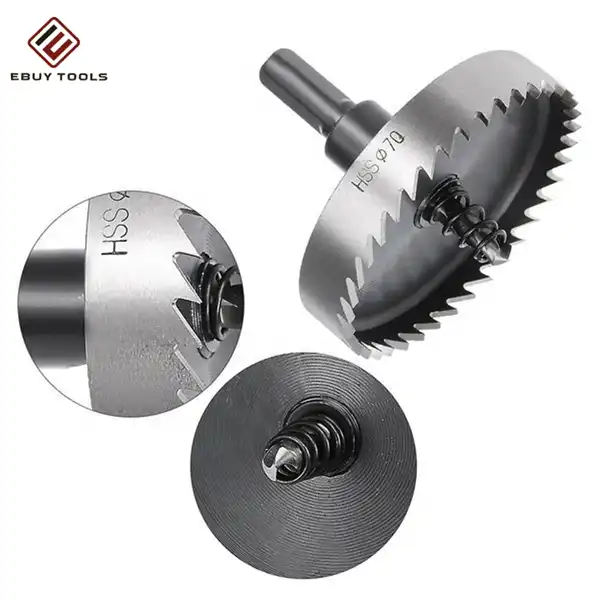
Hole saws are good for light work with wood, plastic, or thin metal, but they aren't strong enough for concrete or stone. The aggressive tooth shape and thin kerf make it hard to cut through thick materials, which often breaks the arbors or strips the pilot bits. These tools have no place in real industrial drilling jobs where accuracy and dependability are key to success.
Due to their rigid barrel design and even segment wear patterns, diamond core bits always have the right circular shape. Through precise production, Ebuy Tools keeps barrel concentricity below 0.15mm run-out. This stops the holes from being too big or too small, which can damage seals in plumbing and HVAC systems. When standards call for tight tolerances for structural or aesthetic reasons, this stability in dimensions is important.
Wet vs. Dry Capabilities Trade-offs
When compared to dry ways, wet drilling greatly increases the life of segments, often by twice or three times the number of linear meters bored. The cooling effect keeps the diamond bits from breaking down when heated, which would make cutting less effective. Using slurry to remove pieces keeps them clean and lets them cut through surfaces more easily than skating across them. Professional builders use wet methods more often when the conditions of the job spot allow it.
Dry drilling is easy to move around and convenient because it doesn't need hoses, pumps, or water sources. This is very important for works that happen in the field, like making countertops, putting HVAC systems into finished buildings, or working on infrastructure projects that are far away. Ebuy Tools makes laser-welded dry-capable bits that can handle temperatures above 600°C. This lets them work reliably in tough situations where water isn't an option.
Evaluating Diamond Quality and Bonding Methods
The quality of diamond grit from different producers changes a lot. Professional bits use synthetic industrial diamonds that are carefully checked for uniformity in size, crystal structure integrity, and the ability to break easily. Poor gems break easily when they are cut, shortening their useful life and necessitating frequent replacement. As part of our quality control, we check for tiny grit and use standard wear tests on C45/C50 reinforced concrete samples.
How segments are attached on a diamond hole saw has a direct effect on how safe and how well they fight heat. Laser welding makes strong metal bonds that can survive the high temperatures that come from dry drilling or heavy-duty wet uses. While high-frequency brazing works well for wet drilling, it uses silver solders that have lower melting points and could fail horribly in dry drilling heat. By knowing these differences, you can avoid dangerous section separation at high RPM, which is a failure mode that could cause major injuries.
Procurement Guide: Where and How to Buy Diamond Core Drill Bits?
Strategic Sourcing for Industrial Operations
Creating thorough specifications is the first step in effective buying. Engineering teams should write down information about the base, such as its compressive strength, aggregate makeup, and rebar density, as well as practical details, such as the required drilling depth, hole width, and production amounts. With this information, providers can suggest the best diamond concentrations, bond formulations, and section shapes for maximizing cost-per-hole economics.
When deciding how to spend money, you need to think about the total cost of ownership, not just the original buy price. When you buy premium diamond core drill bits up front, they usually pay for themselves over time because they last longer and don't need to be replaced as often. Value is calculated by the number of linear meters drilled per dollar spent, taking into account the cost of work for changing tools and the time lost from production due to mistakes that happen before they're supposed to.
Supplier Evaluation Criteria
The production capability, quality systems, and expert support skills of a manufacturer are all very important to their reputation. About 150,000 pieces of our cutting tool products are made every day in our 77,000-square-meter factory, which is managed by 319 trained professionals. This scale makes sure that the quality is always the same, that deliveries happen on time, and that there are enough items in stock so that supply chain problems don't cause project delays.
Warranty coverage and after-sales support protect buyers against problems with the way the product was made and help them fix problems that come up during use. Our quality guarantee covers all of our goods, and we have a specialized expert staff ready to figure out performance problems, suggest changes to parameters, or approve replacements when flaws in the manufacturing process show up. This support system lowers the risk for buyers who are in charge of important projects where tool mistakes can cost a lot of money.
Wholesale and Bulk Order Advantages
When wholesalers, contractors, and makers need to drill a lot of times, buying in bulk can save them a lot of money. Ebuy Tools sets its prices in a way that encourages customers to buy in bulk. This way, dealers can make more money or end users can save money on the cost of replacement parts. Minimum order numbers depend on the product specification. Standard configurations can be ordered in smaller quantities, but custom specs need pledges for larger quantities.
Instead of focusing on one-time deals, negotiation strategies should focus on building partnerships. If buyers give correct predictions of demand, production can be better planned, which could give sellers more price freedom. Long-term supply deals with guaranteed amounts allow for the purchase of custom tools for things like logo printing, special packing, or special formulas for specific segments that set distributor products apart in competitive regional markets.
International Procurement Logistics
Shipping factors affect the total cost of delivery and the time it takes to finish a job. Our location in Danyang City is close to both the Shanghai and Ningbo ports, which makes it easy to load containers quickly and get them to North American destinations at cheap ocean freight rates. Standard travel times for full containers are 25 to 35 days, and air freight is a choice for projects that need to be done quickly and can afford the higher shipping costs.
Checking for compatibility stops mistakes that cost a lot of money when looking for new parts or adding to current tool inventories. Different makers and types of tools have different thread requirements, arbor shaft sizes, and machine mounting needs. Before agreeing to large orders, buyers should ask for specific drawings or samples to make sure the fit is right. Ebuy Tools' expert staff helps with compatibility tests by looking over equipment specs to make sure they work well together.
Conclusion
If you choose the right diamond core drill bit, you can turn difficult drilling tasks into efficient, repeatable ones. Procurement workers can choose the best tools for their jobs by knowing how diamond concentration, grit size, bond formulation, and segment connection methods affect performance. It doesn't matter if you need to wet drill through reinforced concrete, dry cut granite countertops, or do precise boring in aircraft parts. The best cost-per-hole economics come from matching tool specs to material properties and working needs. Buying high-quality diamond core drilling equipment from well-known brands with tested quality systems and expert support pays off in the long run by increasing tool life, lowering downtime, and getting consistent results in tough industrial settings.
FAQ
Why do segments glaze and stop cutting effectively?
If the metal bond matrix is too hard for the object being drilled, glazing will happen. The matrix doesn't wear away quickly enough to reveal new diamond particles, which makes the surface smooth and stops cutting. Shortly drilling into soft, rough materials like cinder blocks cleans the bit and shows off new diamonds. If the problem keeps happening, you need to switch to softer bond specs that are matched to the hardness of your base.
Can wet-rated bits handle dry drilling conditions?
In most cases, no. Bits that are rated for use in wet conditions often have brazed sections with silver solders that melt at lower temperatures. When dry drilling, very high temperatures can melt these connection materials, separating pieces in a dangerous way at high RPM. Laser-welded diamond core drill bits made just for dry jobs are the only ones that can handle enough heat to be safe to use without cooling.
How do I figure out how much rebar I need to drill into strengthened concrete?
Compared to cutting concrete alone, cutting steel support needs more torque and slower turning speeds. Diamonds can successfully grind through steel by lowering the feed pressure when the bit hits rebar. Bits with a lot of diamonds and special segment shapes, like turbo or segmented designs, work better when they come into contact with rebar on a regular basis. This keeps them from getting stuck and extends their useful life in heavily strengthened applications.
Equip Your Operations with Professional Diamond Core Drilling Solutions from Ebuy Tools
At Ebuy Tools, we combine excellent manufacturing with in-depth knowledge of application. Our 77,000-square-meter plant makes precision-engineered core drilling solutions that are trusted by metalworking shops, automakers, and aerospace companies, among other demanding industries. Our diamond core drill bit stock ranges in size from 6mm to 600mm, and you can customize the diamond concentrations, bond formulas, and segment shapes to get the best results for your substrates and operations.
Our large production capacity—about 150,000 pieces per day—benefits buyers who buy in bulk. This ensures stable supply lines that keep your projects moving forward without delays. We offer free standard samples, the ability to create custom specifications through our specialized research and development department, and full expert help for problems with selection, operation, and troubleshooting. Whether you're a wholesaler looking for a reliable diamond core drill bit provider or an end-user needing specialized tools for hard materials, our team can help. We offer solutions backed by strict quality control and low wholesale prices.
Send an email to [email protected] to talk to one of our procurement experts about your drilling needs and get full specs that are perfect for your needs. Find out how working with Ebuy Tools can improve your drilling skills by giving you better tool performance, longer tool life, and the technical help that turns tough projects into finished wins.
References
Smith, J.R. and Thompson, M.K. (2021). Industrial Diamond Tooling: Engineering Principles and Manufacturing Applications. Technical Press International.
Chen, L., Wang, H., and Martinez, P. (2020). "Performance Analysis of Diamond Core Bits in Reinforced Concrete Drilling Operations." Journal of Construction Engineering and Materials Science, 45(3), 287-301.
National Drilling Association (2022). Best Practices for Core Drilling in Construction and Infrastructure Projects. NDA Technical Manual Series, 8th Edition.
Anderson, K.W. (2019). "Comparative Study of Diamond Grit Quality and Bond Matrix Formulations in Core Drilling Applications." International Journal of Abrasives Technology, 12(4), 412-428.
European Committee for Standardization (2020). EN 13236: Diamond Tools - Core Drill Bits for Reinforced and Unreinforced Concrete - Dimensions and Testing Methods. CEN Brussels.
Roberts, D.M. and Sullivan, T.E. (2023). Advanced Materials Cutting: Diamond Technology in Modern Manufacturing. Industrial Tooling Publishers.