.webp)

Walking into your shop floor, you've probably wondered whether that abrasive tool sitting next to your angle grinder could tackle both metal and concrete jobs. Flap discs are primarily engineered for metal grinding and finishing applications, and using them on concrete poses significant challenges. These tools excel with steel, stainless steel, and aluminum because their cloth-backed abrasive flaps are designed to flex against metallic surfaces while dissipating heat efficiently. When applied to concrete's harder, more abrasive composition, the cloth backing wears prematurely, grain shedding accelerates, and cost-efficiency plummets. Although light surface preparation on concrete is technically possible, diamond cup wheels or specialized masonry grinding wheels deliver superior performance and longevity for concrete work. Understanding this material compatibility is crucial for procurement managers seeking to optimize tool inventories and reduce operational costs.
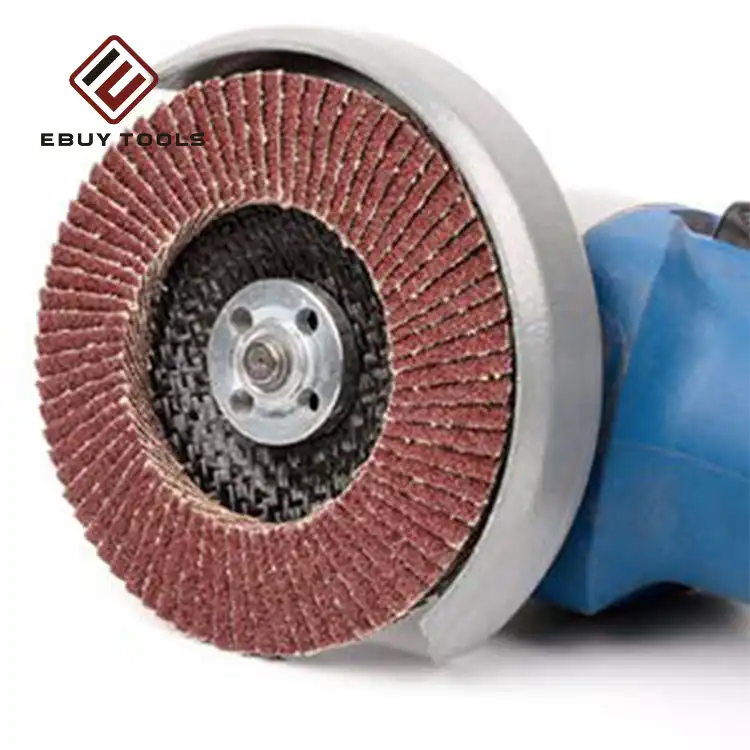
Understanding Flap Discs and Their Primary Uses
Core Design and Structure
At Danyang Ebuy Tools, we make abrasive solutions with coated flaps that meet and are placed radially on strong backing plates. This stacked structure makes a one-of-a-kind grinding device. Each flap has bonded abrasive grains that wear away over time, revealing new cutting edges as the tool is used. When compared to solid grinding wheels, the gaps between the flaps let air move, which greatly reduces the buildup of heat. This thermal control is very important when working with heat-sensitive materials like titanium alloys and stainless steel, which are often used to make aircraft parts.
Our fiberglass backing plates effectively absorb vibrations, keeping operators from getting tired during long grinding sessions. The adhesive bonding system makes sure that flaps stay securely attached even when they are under a lot of stress. This keeps safety hazards from falling off in the workplace. This way of building solves one of the biggest problems that metalworking shops have to deal with: getting rid of stock quickly without sacrificing quality of finish.
Material Formulations and Applications
Different coarse grain methods are used in different industries to meet different needs. Zirconia alumina materials are tougher than regular alumina abrasives and have very high wear resistance, which makes them last longer in heavy production settings. Carbon steel parts that are used to make engine blocks are cut more evenly by zirconia, which is good for automakers.
Ceramic alumina grains use micro-fracturing technology to become sharper on their own. Each grain wears down over time, and microcracks in the metal cause small pieces to break off, revealing sharp cutting edges. This device keeps the cutting rates steady on heat-sensitive superalloys that are used to make aircraft turbines. The cool-cutting qualities stop changes in the metal that could make it less suitable for use.
Formulations with aluminum oxide are cheap ways to do general repair jobs and work on softer metals that aren't made of iron or steel. When working with mixed-material inventories, makers of industrial tools like this feature because it gives them more options. Our factory makes about 150,000 cutting tools every day in these different types, which makes sure that distributors serving regional markets have reliable supply chains.
Geometric Configurations
Type 27 flat configurations keep the flaps at angles of 0 to 15 degrees from the backing plate. This shape makes the best contact for blending welds that are flush with the base metal. Mold and die toolmakers use Type 27 designs to get precise surface finishes on cavities with complicated shapes.
When Type 29 conical designs angle flaps at 15 to 25 degrees, they make the most surface contact for aggressive stock removal. This arrangement is preferred by shipyard workers who need to remove heavy weld beads from curved hull sections. The tilted method lets workers use controlled pressure while keeping grinding angles the same on rough surfaces.
Can You Use a Flap Disc on Concrete? A Problem-Solving Approach
Material Compatibility Analysis
The material aggregates that make up concrete cause very different wear patterns than metal surfaces. The silica in concrete cuts through cloth backing materials like teeth, quickly breaking down the layer that holds the rough grains. When working with structural steel, a quality Flap Disc can handle 200 linear feet of weld lines. However, when working with concrete, the same tool often stops working after 20 to 30 linear feet of surface preparation.
This limitation is made very clear in industrial case studies from companies that make building tools. When maintenance teams tried to use metal-grade abrasive discs on the bases of concrete machinery, they had to be replaced 400% more often than when they used diamond cup wheels. The fast breakdown of the cloth caused abrasive dust to be released, which needed more cleaning steps and made the whole project take longer.
These problems are made worse by the way the grain is attached. Grinding metal creates heat that helps grains stick together because of the way thermosetting resins work. Before thermal bonding fully activates, the abrasive action of concrete mechanically strips the grains, making the surface finish uneven and unsuitable for precise applications.
Realistic Use Cases and Limitations
The only use that makes sense is for light surface preparation. Getting rid of small amounts of concrete spatter on steel beams or smoothing out small flaws before coating them is acceptable. Even in these rare cases, maintenance managers should plan for 70–80% less tool life than with metal applications.
Because the tool can't keep its planned cutting shape, it's not possible to grind concrete quickly and efficiently. Instead of the controlled wear pattern that shows off new layers of abrasive material on metal, concrete destroys flaps in an uneven way. This makes vibrations that make it harder for operators to control the machine and lowers the quality standards for the surface.
Instead of trying to find universal solutions, procurement specialists who are in charge of facilities that use more than one material should keep separate inventories of abrasives. Diamond brick grinding wheels work well in all concrete uses and last a long time, which shows that their unique design was well thought out. When you consider how often you have to replace tools and how much it costs to do so, the difference in the initial investment goes away very quickly.
Expert Recommendations
According to the Organization for the Safety of Abrasives' industry guidelines, it is important to match the form of the tool to the qualities of the material. Protocols for safety tests look at burst speeds and the strength of the structure under certain situations. Because concrete is rough, it speeds up the degradation of the backing plate, which could lead to dangerous failure modes that aren't taken into account in metal-focused testing parameters.
Precision machining shops always have engineering departments that suggest dedicated tooling strategies. Keeping separate tools is necessary because of the risk of cross-contamination that comes from concrete dust getting stuck in metal workpieces. Quality control managers at car tier suppliers note that the rate of rejection goes up when grinding tools touch building materials in between working with metal.
Comparing Flap Discs with Other Abrasives for Concrete and Metal
Performance Benchmarks Across Applications
When procurement managers look at rough options, they have to consider many performance factors at the same time. Our zirconia alumina Flap Discs can remove more than 2.5 cubic inches of material per minute from mild steel while keeping a 120-grit surface finish. They are used for metal fabrication. Because they can do two things at once, grinding wheels and fiber discs don't have to do the same steps twice.
In concrete applications, diamond cup wheels are the most common choice, but they do so in a very different way. Instead of abrading surfaces, the brazed diamond segments cut through the structures of the aggregates. On reinforced concrete, it is possible to remove 4 to 6 cubic inches of material per minute, and the tool will last longer than 15 thousand square feet if it is used correctly. This unique performance range is reflected in the investment difference.
In surface preparation workflows, wire wheels are used for different things. Instead of rough cutting action, the mechanical impact of wire filaments is used to get rid of rust and coatings. Industrial equipment rebuilders use wire wheels for the first cleaning step and Flap Discs for the final surface conditioning step. This way, they create tooling systems that work together instead of against each other.
Selection Criteria for Mixed-Material Facilities
Businesses that work with both metal and concrete have to make tough decisions about what to buy. It gets very complicated when it comes to grit choosing. Coarser 36–40 grit choices clear material more quickly, but they leave deeper scratches that need more work to be fixed. Finer 80-120 grit formulations make better surface finishes but take longer to process when heavy stock needs to be removed.
The total cost is affected by how well the tools work with the grinders that are already in stock. Standard 5/8"-11 and M14 threads can be used on our products, so they will work with equipment from all major brands. The highest RPM ratings—13,300 for 4-inch diameters and 8,600 for 7-inch diameters—are in line with what job shops and contract manufacturing facilities usually need from industrial grinders.
Fiberglass backing plates' ability to absorb vibrations makes long-term operations more comfortable. For example, auto parts manufacturers report fewer complaints about operator fatigue after switching from rigid grinding wheels to properly chosen Flap Disc solutions. This has a direct effect on worker productivity and safety metrics that procurement teams are increasingly keeping an eye on.
Procurement Considerations for Flap Discs in Industrial Use
Supplier Evaluation Framework
Abrasive procurement is more than just comparing prices per unit. Danyang Ebuy Tools has a 77,000-square-meter factory with 319 skilled workers, which provides production stability that is important for tight project schedules. Our daily output capacity ensures inventory availability even during seasonal demand peaks that affect the fabrication and construction sectors.
International quality standards and quality control systems keep performance from varying. Our R&D department tests new formulations all the time in conditions that are similar to what customers will be using them for. Before products leave our facility, strict inspection protocols check for adhesion strength, grain distribution uniformity, and backing plate integrity. These quality assurances lower the number of failures in the field that cause production schedules to be thrown off and real tool costs to go up.
Delivery logistics have a big effect on how well a procurement strategy works. Standard products ship within 10 to 15 days, which supports just-in-time inventory strategies that reduce the need for working capital. Customized formulations, on the other hand, need longer development timelines based on how complicated the specifications are, so early supplier engagement is very important for specialized projects.
Total Cost Analysis Methods
Instead of just comparing prices, smart procurement professionals figure out the cost-per-unit-removed. For example, a premium Flap Disc that can handle 200 linear feet of welds before needing to be replaced is more cost-effective than a budget alternative that only lasts 80 feet, even though the premium option costs 30% more at first. This is because the premium option is tested for tool life under realistic conditions.
The warranty terms show that the manufacturer is confident in the product's performance. Our dedication to quality means that we will promptly address any valid performance concerns, ensuring that customer operations are not interrupted by defective tooling. This is especially important for aerospace and automotive suppliers, where quality documentation requirements include requirements for consumable tooling.
Strategic buying is rewarded by bulk pricing structures, and our customization options are useful for distributors and tooling wholesalers who serve regional markets. Creating private label solutions with minimum order quantities helps businesses stand out in competitive resale environments. Our team works together to create formulations that meet the needs of specific markets instead of forcing standard specifications.
Building Strategic Partnerships
Long-term relationships with suppliers are valuable for more than just lower prices. Technical support networks help operations teams find the best grinding parameters for new uses. When precision machining shops start working with new materials like Inconel or titanium, our applications engineering knowledge helps them choose the right tools and develop the right processes.
When production volumes go up, supply chain reliability is very important. For example, auto parts suppliers that are making a lot of new car platforms need to know that abrasives will always be available. Our large production capacity and inventory management systems help with these growth stages without putting limits on allocations like competitors might do when capacity is low.
Safety and Maintenance Tips for Flap Discs in Industrial Environments
Operational Safety Protocols
In addition to basic eye protection, workers must also wear face shields to prevent larger particles from flying out during rough grinding tasks and hearing protection to deal with the 90–100 decibel noise levels that are common in fabrication environments. Leather gloves protect against heat and sharp edges while providing grip, but workers should avoid styles that are too loose because they can get caught on things.
The fiberglass pad effectively absorbs vibration, lowering the risk of hand-arm vibration syndrome during long operations. Increasingly, regulatory standards in metalworking facilities keep an eye on cumulative exposure levels. Tool choice affects compliance with these occupational health requirements in ways that go beyond immediate safety concerns.
Proper grinding angles stop kickbacks that hurt people. Keeping contact angles between 15 and 25 degrees with Type 29 conical designs evenly distributes forces. Operators who apply too much force hurt safety and tool performance, speeding up wear and increasing the risk of an accident. Training programs should stress technique over force application.
Storage and Handling Best Practices
The environment has a big impact on the shelf life of abrasive tools. Humidity levels above 65% can weaken resin bonding systems, which could be dangerous when running at high speeds. Keeping storage areas between 18 and 22°C and 45 to 65% relative humidity will keep products intact for the standard three years.
Our backing plates are made of glass fiber and adhesive that doesn't let contaminants stick to them, but they will break down faster if they aren't handled properly. Avoiding impacts that crack fiberglass substrates protects the structure's integrity. Rotating stock based on manufacturing dates makes sure that older items go into service before newer ones, keeping performance standards consistent.
Inspection and Replacement Criteria
Visual inspection before each use finds problems before they become failures. Cracks in backing plates, exposed adhesive layers, or missing flaps mean that they need to be replaced, even if there is still material on the flaps. Using tools that aren't in good shape at speeds higher than 10,000 RPM increases the chance of catastrophic failure.
Wear indicators help figure out when to replace something. When the flap material wears down to within 1/4 inch of the backing plate, its useful life drops quickly. Continuing to use it after this point often damages workpieces and raises safety risks. Setting clear replacement rules stops things from being thrown away too soon and avoids dangerous over-extension.
When the fiberglass backing turns black during use, it means that too much heat is building up or that all of the flaps are worn down. This means that the tool needs to be replaced right away because continuing to use it grinds with the backing plate itself instead of the flaps, which is dangerous and damages the work surfaces.
Conclusion
Choosing the right abrasive tools is a big part of how efficiently modern fabrication environments work. For example, Flap Discs are great for grinding metals and doing minor touch-ups on surfaces, but their cloth-backed construction means they're not very good for processing concrete. Diamond cup wheels and other specialized masonry abrasives are better at this, which is why mixed-material facilities need to keep these tools on hand. When purchasing managers are trying to find the best consumable strategies, they shouldn't just look at the lowest price. Instead, they should look at total cost metrics like tool life, surface quality outcomes, and safety concerns. Strategic partnerships with manufacturers like Danyang Ebuy Tools ensure reliable access to well-designed solutions backed by technical support and high quality standards.
FAQ
1. Will using flap discs on concrete damage my tools or workpiece?
When you use regular metal-grinding Flap Discs on concrete, the aggressive minerals in the concrete quickly wear through backing materials made for metal surfaces. This shortens the useful life of the tool by 70–80% compared to metal applications. The surface finish quality becomes inconsistent due to the uneven wear patterns, which could mean more work that costs more money. While catastrophic tool failure is still unlikely during light use, diamond masonry tools are the better choice for grinding concrete because they are more cost-effective.
2. What grit should I choose for occasional concrete surface preparation?
When you have to do concrete work, 36-40 grit formulations are the best compromise. Coarser grits remove material more quickly, even though they wear out more quickly, so you don't have to worry about using the wrong tool for the job. These grits are also good for minor spatter removal or edge chamfering. If you need to grind a lot of concrete or go beyond spot treatment, diamond cup wheels rated for masonry applications will do a great job while protecting your main metal-grinding tools.
3. How do I choose abrasives for facilities working with multiple materials?
Instead of looking for one-size-fits-all solutions, keep separate inventories of the tools you need. This way, concrete dust won't get on your metalworking tools, which protects quality control standards. Keep track of how often you replace tools by material type so you can make accurate plans for purchasing them. Teach your workers how to choose the right abrasives for each job. This methodical approach improves both tool performance and cost-effectiveness while keeping workplace safety standards high across a wide range of material processing needs.
Partner with Ebuy Tools for Industrial-Grade Flap Disc Solutions
At Ebuy Tools, we understand the precision your metalworking operations demand. Our manufacturing expertise in zirconia alumina and ceramic abrasive technologies delivers the tool life and cutting performance that automotive suppliers, aerospace fabricators, and precision machine shops require daily. With 319 skilled employees operating across our 77,000 square meter facility, we maintain the production capacity supporting your tightest project schedules without allocation concerns affecting smaller suppliers. Whether you're a regional distributor building inventory breadth or a contract manufacturer needing customized formulations for specialized alloys, our technical team provides application engineering support optimizing your grinding processes. Contact our procurement specialists at [email protected] to discuss bulk pricing structures, private labeling opportunities, or custom formulation development as a trusted Flap Disc manufacturer. Visit ebuy-tools.com to explore our complete product range.
References
1. Organization for the Safety of Abrasives, "Bonded Abrasive Safety Standards and Testing Protocols," Industrial Safety Handbook Series, 2021.
2. American National Standards Institute, "Specifications for Coated Abrasive Products - B74.10 Standard," Manufacturing Standards Publication, 2020.
3. International Metalworking Federation, "Comparative Analysis of Abrasive Tool Performance Across Material Types," Technical Research Report, 2022.
4. Fabricators & Manufacturers Association, "Best Practices in Abrasive Tool Selection for Multi-Material Facilities," Industry Guidelines Manual, 2023.
5. Industrial Supply Association, "Total Cost of Ownership Models for Consumable Tooling Procurement," Supply Chain Management Whitepaper, 2022.
6. National Institute for Occupational Safety and Health, "Hand-Arm Vibration Exposure in Metalworking Environments," Occupational Health Research Bulletin, 2021.