.webp)

Flat wood drill bits are very popular in many industries because they are fast, cheap, and can be used in a lot of different ways. Unlike traditional twist drills or auger bits, these paddle-style tools remove material quickly with little force. This means that electric tool batteries last longer when they are being used a lot. Their titanium-coated versions now have 3–10 times longer service lives than regular bits, which meets the important need for toughness in tough industrial settings. As businesses focus on operational efficiency and lean purchasing strategies, the flat blade design has become necessary for rough-in work, electrical installs, and structural woodworking where speed and dependability are more important than perfect finishing.


Understanding Flat Wood Drill Bits: Features and Advantages
The engineering behind these cutting tools is the result of many years of improving technology for industrial drills. Modern spade bits are a well-thought-out mix of ease and speed improvement.
What Distinguishes This Tool from Conventional Options?
The typical flat blade shape has a guide point in the middle and two sharpened cutting lips on either side. In this setup, material is removed by cutting instead of grinding, which is how helix twist bits work. The pilot point keeps the bit exactly where it needs to be when it starts drilling. This keeps it from moving laterally during starting, which is very helpful when drilling multiple holes in structure frame and alignment errors are important.
Most industrial-grade versions are made of carbon steel, which has a hardness value of 45 to 52 HRC. This gives it the ability to keep its edge while still being flexible enough to handle pressure loads. The choice of material addresses a common way things fail: brittle fractures that happen when secret fasteners or thick knots in lumber are encountered. Advanced titanium coating methods create a difference in surface roughness that lowers friction and heat building, which are the main reasons why abrasive engineering woods get dull quickly.
Core Performance Advantages in Industrial Applications
These tools are valuable to factories because they improve operations in real ways that affect production measures. The biggest benefit is speed: the open blade design gets rid of chips faster than flute shapes that are closed off, which cuts cycle times by about 40% compared to regular twist bits in softwood applications. In high-volume production settings, this speed gain adds up over thousands of holes.
As electric power tools become more common on job sites, saving batteries becomes more important. Because spade-style bits have low torque, they use 25–30% less energy than auger bits of the same width. This means that they can run for longer on a single charge. When applied to a fleet of tools used in business building projects, this seemingly small technical detail saves a lot of time and money.
Being flexible with different types of materials makes buying more flexible. Even though they were made for wood, titanium-coated versions can drill through fiberglass, PVC, and soft aluminum alloys without having to change tools. This ability to handle multiple materials makes inventory easier for wholesalers who serve a wide range of customers.
Size Range Considerations for Procurement Planning
Standard diameters range from 6 mm to 40 mm, which is big enough to meet most structure drilling needs. The 1/4-inch hex shank design meets DIN 3126 standards, which means that it will work with all impact drivers and drill chucks from major tool companies. This uniformity gets rid of worries about compatibility that make buying things harder.
Managers in charge of buying things should know that choosing the right width affects more than just the size of the holes. When the diameter is above 25 mm, it creates more torque loads that need high-capacity power tools. When the diameter is below 12 mm, it may bend during deep boring operations. When you match the bit size to the power tool's specs, you keep both the tool and the person from getting tired after long use.
Comparing Flat Wood Drill Bits with Other Drill Bits: Making the Right Choice
Procurement workers can choose the right tools for the job by knowing how the different drilling technologies compare to each other.
Performance Analysis Against Traditional Alternatives
Because they have helical flutes that lift debris out of the cut automatically, auger bits are great at chip removal during deep hole digging. Flat drill bit for wood need more power and cost a lot more per unit—usually two to three times as much as similar spade bits. When holes need to be deeper than four times the width, auger technology is best. For rough-in work, flat blade designs are faster and more cost-effective.
Forstner bits make holes that are very clean, have flat bottoms, and have very little tear-out. This makes them perfect for precision carpentry and cabinets. Their cutting circle shape and multiple slicing edges give them a better finish, but it slows down the drilling process. There is a big difference in price—premium Forstner bits can be 5 to 8 times more expensive than industrial spade bits. Forstner technology should only be used in situations where the investment in a nice finish is worth it.
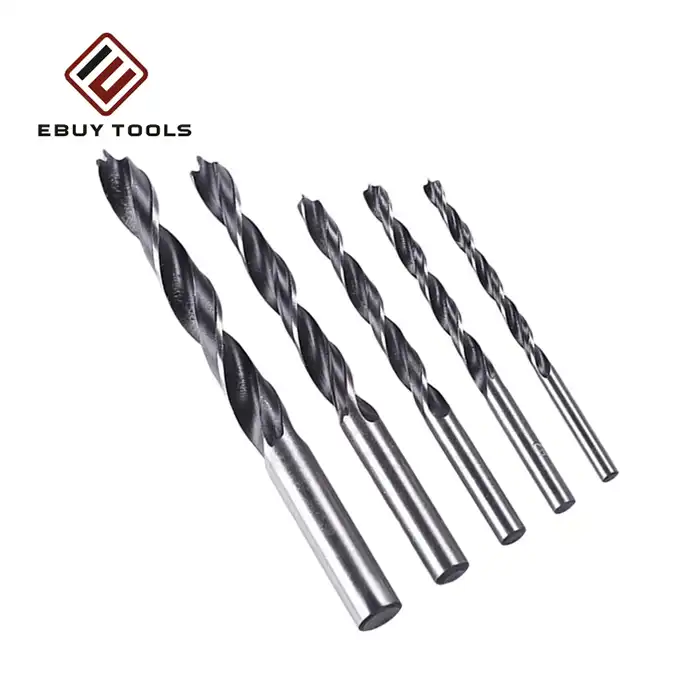
Brad point bits are a good compromise for precise work. They have two spurs that cut around the hole's edge before the center cutting lips remove material. This design works more slowly than flat blade options but prevents splintering more than regular twist bits. On jobsites that need a modest level of finish quality and an acceptable level of speed, brad point technology is often used for trim woodworking while spade bits are used for structural rough-in work.
Evaluating Major Manufacturers and Quality Standards
The professional-grade market is dominated by a few well-known names. Milwaukee Electric Tool Corporation focuses on impact-rated designs with shank geometries that are stronger and can handle the high-torque pulse forces from current brushless impact drivers. Because they trust mechanical methods, their warranties usually last for 24 months.
The DeWalt Industrial Tool Company specializes in finishes that last longer, especially titanium nitride ones that cut down on friction and heat production. Their product line has different versions for different wood thicknesses, which lets purchasing managers choose the best tools based on the most common properties of the materials they work with.
Bosch Power Tools puts a lot of money into improving spur technology. This fixes the problem of exit-hole splintering caused by vertical cutting edges that cut fibers before the main blade goes through. This new idea is especially useful when both sides of the item will be displayed when the assembly is finished.
When procurement managers compare these well-known names to new ones like Danyang Ebuy Tools, they should look at more than just how well each bit works. They should also look at how well the seller can do its job. In long-term supply agreements, production capacity, quality control infrastructure, and how quickly expert support can help customers are often just as important as product specifications.
Best Practices for Using and Maintaining Flat Wood Drill Bits
Following tried-and-true industrial practices that have been fine-tuned over decades of field experience is the only way to get the most out of tool life and operating safety.
Operational Guidelines for Optimal Performance
The choice of speed has a direct effect on both how well the tool cuts and how long it lasts. For sizes under 20 mm, softwoods like pine and fir work best at 1500–2000 RPM. Hardwoods like oak and maple, on the other hand, need slower speeds around 800–1200 RPM to keep them from getting too hot. When you run at speeds faster than what is suggested, the cutting edges lose their sharpness early because of the heat.
During the whole drilling process, the feed pressure should stay the same. Too much force bends the bit shaft and makes holes that are too big or too small, while not enough force causes rubbing instead of cutting, which creates heat without removing material. Skilled workers can tell when they are cutting correctly by the sound and feel of it. A steady, low-pitched hum that doesn't vibrate or squeal means they are doing it right.
Maintenance Protocols That Extend Service Life
Regular cleaning keeps resin and pitch from building up, which hurts the cutting performance. Mineral spirits can be used to wipe away sticky remains after each work session, before they harden. Hardened resin growth causes friction, which makes heat and speeds up dulling. This makes even premium-coated bits less useful over time.
To keep the original cutting shape, flat wood drill bit sharpening methods need to be very accurate. Using a diamond file or a special sharpening tool, file the main cutting edges at the angle recommended by the maker. This is usually 15 to 20 degrees from horizontal. When you over-sharpen, the edge becomes weak and easy to chip, but when you under-sharpen, it stops cutting as well. To make sure everything is the same, procurement managers who are in charge of big tool stocks might want to set up centralized sharpening stations with trained techs.
When sharpening, you need to pay close attention to the vertical spurs on more advanced designs. You should never file the outside of these edges, because that lowers the cutting width and makes the hole clearance less accurate. When the spurs are sharpened, only the inner faces should be touched. The spurs' height and upper dimensions should stay the same. This technical detail is often missed, which leads to bits that no longer make holes that match the printed diameter standard.
Material Compatibility and Limitation Awareness
Titanium-coated versions can cut through soft metals like aluminum, but they break right away when you try to use them on steel or harder alloys. The relatively soft carbon steel base can't handle the wear and heat that come from cutting metallic metals. Trying to do these things breaks guarantees and puts people at risk of getting hurt because bits could break.
Composite materials that have rough fillers in them, like fiberglass or cement board, wear out much faster. In these materials, even treated bits may need to be replaced after 50 to 100 holes, while raw wood can handle thousands of holes. When making purchases for uses that use a lot of composites, this shorter service life should be taken into account by allocating more inventory.
Temperature-sensitive materials, like PVC, need slower speeds to keep them from melting and chip welding to the ends of the blades. Drilling can create frictional heat that can soften plastics materials. This can lead to built-up edge conditions that hurt the quality of the hole and require frequent cleaning. When drilling manufactured materials instead of real wood, operators should slow down by about 30%.
Procurement Guide: How to Source High-Quality Flat Wood Drill Bits for Your Business?
Decisions about strategic sourcing affect both short-term prices and long-term business efficiency. Smart ways of buying things take into account more than just the unit price.
Evaluating Supply Chain Options
Direct ties with manufacturers have a lot of benefits for buyers who buy a lot. About 150,000 pieces of cutting tools are made every day by 319 skilled workers at Danyang Ebuy Tools' 77,000-square-meter production plant. Through integrated production processes, this scale makes it possible to offer affordable prices while still upholding high standards of quality control. In standard supply lines, markups from distributors can add 30 to 50 percent to the cost of delivery. Direct sourcing gets rid of these markups.
Regional wholesalers are useful because they keep local goods and can quickly meet urgent needs. Their lower order minimums are good for businesses whose tooling needs change often and don't warrant buying in bulk. There are higher costs per unit, but there are also lower costs to keep goods on hand and more buying options.
Online industrial markets bring together many sellers, making it easier to compare prices and find products that meet your needs. But it's hard to be sure of the quality when buying from unknown sources through third-party sites. Professionals in procurement should ask for material certifications, hardness test results, and dimensional inspection data from new sources they find online before committing to large orders.
Bulk Purchasing Strategies and Quality Assurance
Most of the time, volume price is based on tiers, with notable breaks at 500, 1000, and 5000 units. The amount of money you save at each level changes by maker, but it's usually between 15% and 25%. Procurement managers should look at how much something is used each year to figure out the best buy amount that balances bulk discounts, inventory carrying costs, and the risk of going out of style.
Quality assurance standards for flat drill bit for wood need to cover important details that have an effect on how well operations run. Concentricity limits below 0.3 mm stop vibration and holes that are too big. Asking for run-out test papers gives you concrete proof. Documentation from hardness tests shows that the cutting edges and joint areas were properly heated. Verification of the dimensions makes sure that the holes match the bolt clearance requirements. This is especially important in structure uses that need to follow engineering standards.
As quality standards get higher, the ability of suppliers to be audited becomes more important. Companies that have dedicated research and development teams and written quality control systems show that they are committed to always getting better. Danyang Ebuy Tools has strict testing procedures that include batch concentricity testing, HRC proof on cutting edges and shanks, and dimensional accuracy checks with +/-0.1mm limits. Procurement managers can trust these written methods enough to make long-term supply deals.
Balancing Cost and Performance Requirements
Titanium-coated bits that cost more are worth it in high-volume uses because they last longer and produce better results. If coating makes something last three to ten times longer than options that aren't coated, the higher cost at first usually pays for itself within 200 to 500 holes, based on how hard the material is. Instead of just comparing unit prices, procurement research should figure out cost-per-hole measures.
Application matching keeps you from providing too many tools for jobs that don't need the best performance. Titanium-coated bits aren't usually needed for rough building frames if the holes will be hidden and the quality of the finish doesn't matter. On the other hand, architectural woodwork with obvious joinery should invest in spur-enhanced designs that reduce tear-out. Organizing tools requirements by type of application saves money on the total purchase budget.
After-sales help includes expert advice, warranty fulfillment, and working together on new products. Suppliers who are ready to make custom shape changes and give application-specific advice add value to the product itself. When problems come up or needs change, having strategic benefits comes from having relationships with makers that hire expert sales staff and applications engineers.
Future Trends and Innovations in Flat Wood Drill Bits for B2B Procurement
Cutting tool design and buying tactics change over time based on new technologies and changes in the market.
Metallurgical Advances and Coating Technologies
When researchers look into powder metallurgy methods for flat wood drill bit, they find that they make microstructures that are more uniform and have better wear protection than traditional steelmaking. These new base materials stay hard even at high temperatures, which fixes the problem of abrasive materials breaking down at high temps. Commercial release is still limited to high-end product lines, but prices keep going down as production numbers rise.
When different materials are mixed in multilayer coating systems, they work better than single-layer uses. A common advanced covering might have a chromium nitride base layer to help it stick, an aluminum oxide middle layer to keep heat in, and a titanium nitride top layer to make it easier to move. These designed coating stacks make goods last longer than single-layer coatings do, but they cost more to make, so they can only be used on industrial-grade items for now.
Automation Integration and Industry 4.0 Considerations
More and more, automated wood working systems use current sense and acoustic analysis to keep an eye on tool wear. When bits are made with regular shape and material properties, wear prediction algorithms can work better. This means that unexpected tool failures that stop production are less likely to happen. As smart manufacturing becomes more popular, buyers will prefer to buy from companies that make goods that work well in automatic settings.
By combining RFID and barcodes, tool inventory management systems can keep track of how each bit has been used, its repair history, and how much service life it still has left. This clear data lets you plan ahead for replacements and look at usage patterns to find the best store levels. Forward-thinking suppliers are starting to put tracking technologies into shanks so that they can work with new platforms for managing tools.
Market Growth Drivers and Strategic Implications
Construction activity connection shows how much demand there is for tools. Drilling goods are used because of building permits for homes, spending on business construction, and investments in infrastructure. If purchasing managers keep an eye on these economic factors, they can predict changes in demand and make changes to their inventory plans to match.
As environmental laws get stricter and business responsibility programs grow, sustainability issues become more important when deciding what to buy. When companies are evaluated for purchases, those that show they responsibly source raw materials, use energy-efficient production methods, and recycle old tools are given more weight. This trend favors well-known companies with clear environmental management systems over cheap companies that don't have to worry about being watched.
The move toward portable power tools is still changing the objectives for bit design. Saving batteries by using less power and lighter bit weights has a direct effect on how productive the user is. As wireless technology moves into industrial settings that have traditionally used gas and corded electric tools, improvements that make runtimes longer per charge give companies a competitive edge.
Conclusion
Flat wood drill bits are becoming more and more popular because they can quickly remove material, have longer tool lives thanks to improved coatings, and save money on running costs in a wide range of industry settings. Because their design is simpler, they work better with battery-powered tools while still being compatible with traditional power tools. To be successful at procurement, you need to understand technical specs, compare options accurately, and build ties with manufacturers who can do the job. As metalworking and coating technologies keep getting better, these multipurpose tools will stay necessary for a wide range of woodworking tasks, from rough-in work in building to precise manufacturing. Strategic buying weighs up the short-term costs against the overall cost of ownership, taking into account things like the supplier's capacity, quality control infrastructure, and expert support skills that have an effect on how efficiently the business runs in the long run.
FAQ
Can spade-style bits drill through materials other than wood?
Titanium-coated versions can drill through fiberglass, PVC, and soft aluminum metals without any special changes. The layer lowers the friction and heat building that would otherwise wear down abrasive materials too quickly. But these bits aren't made to work with steel or harder alloys. The carbon steel base isn't hard enough to cut ferrous metals, and if it's pushed to, it will break quickly. Before you buy, you should check the material compatibility to make sure the bit you choose will work with your system.
How does coating technology extend service life?
Titanium nitride and other similar compounds make the surface harder so it doesn't wear away and the friction coefficient goes down. This mix lowers the buildup of heat during cutting, which is the main reason why edges become dull due to steel temper loss. As a thermal shield, the covering keeps the cutting edge hard even during long periods of high-speed activities. Coated bits have 3–10 times longer service lives than bare ones in rough engineered woods and composite materials, which means they perform better in terms of cost-per-hole.
What maintenance practices maximize bit longevity?
Cleaning regularly gets rid of the resin and pitch buildup that causes friction and speeds up the dulling process. If you clean your blade correctly, you can keep the original cutting angle without taking off too much material. When sharpening, only the inner sides should be touched to keep the cutting width the same. This is especially important for advanced designs with vertical spurs. Keeping things in dry places stops rust that weakens coatings. These easy steps can make quality bits last three times longer in commercial settings.
Partner with a Trusted Flat Wood Drill Bit Manufacturer
Industrial-grade drilling options are available from Ebuy Tools, which has a large manufacturing base and quality systems that have been used for a long time. Our 77,000-square-meter factory makes 150,000 pieces of cutting tools every day, so high-volume processes can always get what they need. To make sure they all work the same, each bit goes through a lot of tests, such as concentricity checks, hardness checks, and measurement accuracy checks. Our titanium-coated flat wood drill bits have precision score spurs, optimum metals, and impact-rated hex shanks that meet DIN 3126 standards. Our R&D team and expert sales staff are here to help you from the first time you ask for help all the way through ongoing supply, whether you need large quantities for distribution or specific measurements for unique uses. Get in touch with [email protected] to talk about your buying needs and find out how working with an experienced maker can save you money and make your operations more reliable.
References
Henderson, M. (2021). Industrial Drilling Technologies: Evolution and Applications in Modern Manufacturing. Technical Publishing Group.
Robertson, K. & Chen, L. (2022). "Comparative Analysis of Wood Boring Tool Geometries and Performance Metrics." Journal of Manufacturing Processes and Tooling, 45(3), 178-194.
National Association of Tool Manufacturers. (2023). Annual Cutting Tool Market Analysis and Industry Trends Report. NATM Research Division.
Williamson, D. (2020). Metallurgy and Surface Treatments for Industrial Cutting Tools. Cambridge Engineering Press.
Anderson, P. (2022). "Life Cycle Cost Analysis of Coated Versus Uncoated Drill Bits in High-Volume Production." Industrial Procurement Quarterly, 18(2), 67-82.
Sullivan, R. & Martinez, J. (2023). Strategic Sourcing in Manufacturing: Best Practices for Tool and Equipment Procurement. Supply Chain Management Institute.