.webp)

Choosing the right blade thickness for your TCT saw blade has a direct effect on how well it cuts, how quickly it works, and how long it lasts. The best blade thickness relies on a number of things, such as the material being cut, the machine's specs, the desired kerf width, and the amount of work that needs to be done. Thinner blades (1.8–2.4mm) are better for precise work because they waste less material, while thicker blades (2.8–3.6mm) are more stable for heavy-duty cutting. Knowing these specs helps purchasing teams make smart choices that balance performance and cost-effectiveness in a wide range of manufacturing fields, such as metalworking, automobile, aircraft, and general manufacturing.
Understanding TCT Saw Blade Thickness: Key Concepts and Industry Standards
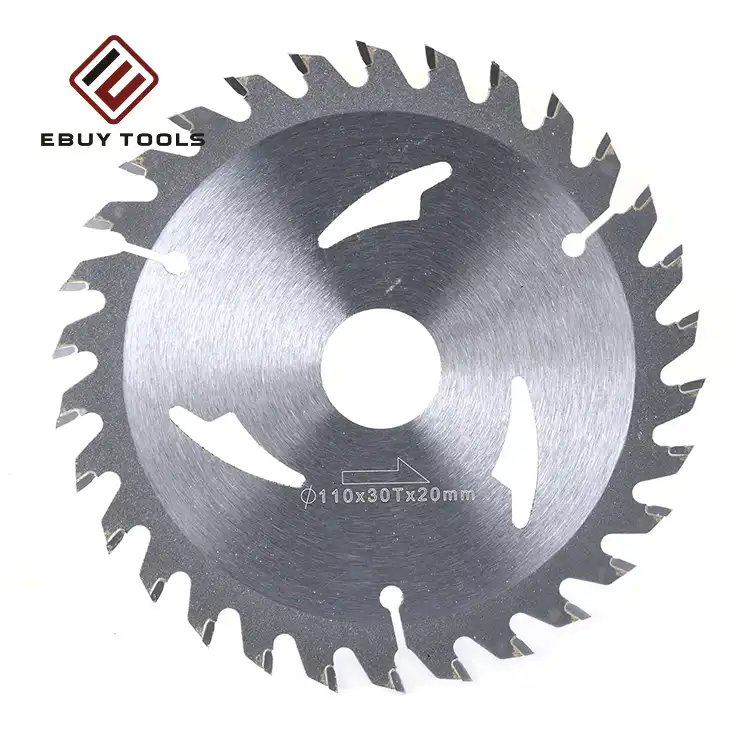
Blade thickness is the width of the steel body, measured at the body of the blade, without the carbide teeth. This number has a big effect on how well a TCT saw blade works in different situations.
How Blade Thickness is Measured and Standardized
In most industrial countries, industry standards say that blade thickness should be measured in millimeters. However, in some North American settings, inches are still used. Professional makers use accurate micrometers to measure the thickness at the blade body, making sure that the results are always within 0.02-0.05 mm of each other. International standards, such as DIN 8083 and ISO 9001, set minimum requirements that makers all over the world use when they make things. Our quality control methods at Danyang Ebuy Tools check each blade against these standards. They make sure that the horizontal and axial runout stays within a range of 0.05 to 0.1 mm so that the cutting performance is at its best.
During the standardization process, relationships between blade diameters are taken into account. Typically, blades with bigger diameters need proportionally greater thickness to keep their structure intact during high-speed spinning. Blades with a diameter of 250 mm are usually between 2.2 and 2.8 mm thick, while blades with a diameter of 450 mm are usually between 3.0 and 3.8 mm thick to handle higher cutting pressures and rotational forces.
Impact on Cutting Performance and Operational Efficiency
Several important performance factors that matter to production managers and machine workers are directly affected by thickness. When cutting laterally, thinner blade bodies don't bend as easily, so they make cleaner cuts with better standards. This is especially important when cutting metal extrusions for building uses or hardwood panels for making furniture, since the quality of the end product depends on how accurately the dimensions are met.
Different thicknesses have different heat absorption properties. When cutting for a long time, thicker blades are better because they can absorb more heat before they hit critical temperatures. But they also keep heat in longer, so they need enough time to cool down between rounds of heavy use. Our tungsten carbide technology keeps cutting edges sharp at temperatures up to 600°C, which is much better than normal carbon steel options that lose their edge around 200–250°C.
Vibration control is another factor that has to do with thickness. In some RPM ranges, thinner blades may vibrate more harmonically, which could leave chatter lines on finished surfaces. Engineered expansion holes filled with polymer resin help to dampen these movements. This is one of the features built into our advanced blade designs that makes sure they work smoothly at all speed settings.
Typical Thickness Ranges for Different Materials and Applications
The best width choice is based on the properties of the material. The best blade thickness for cutting MDF or particleboard is between 2.0 and 2.6 mm. This is the right amount of thickness—thin enough to cut down on material waste while thick enough to fight the harsh glue content that speeds up wear. When we use the right width and our Triple Chip Grind (TCG) shape, these tough jobs don't get dull quickly.
When cutting metal, different things need to be thought about. Fabrication shops that work with thin-walled extrusions can use smaller blades (1.8–2.2mm) with negative hook angles to cut them. This lowers the cutting forces that could damage delicate profiles. On the other hand, when cutting solid aluminum billets or thick steel sections, you need blades that are 3.0-3.6 mm thick and have tooth backing that is strengthened to handle higher chip loads and mechanical pressures.
Manufacturers of aerospace parts that use titanium alloys or superalloys need specific thickness requirements that are matched to the strength and power of their CNC machining tools. For these uses, it's common to need custom-engineered solutions that find the best combination of thickness, tooth shape, and carbide grade.
How to Choose the Optimal Blade Thickness for Different Cutting Applications?
To choose the right blade width for your TCT saw blade, you have to carefully look at the qualities of the material, the machine's capabilities, and the production needs. This method based on criteria helps people who work in buying find solutions that are both efficient and cost-effective for their TCT saw blade selection.
Material-Specific Thickness Requirements
When blade width changes, different surfaces react in their own way. For cutting softwoods like pine or cedar, smaller blades work best because they have lower cutting forces, which means they can have less body mass without losing rigidity. Oak and maple are examples of hardwoods that have a lot more resistance. This is because their stronger blade bodies keep the cutting accuracy over time even when they are used a lot.
Engineered wood goods have their own problems. The alternate grain structure of plywood creates cutting forces that can push smaller blades off the cut line. Thicknesses between 2.4 and 2.8 mm give enough strength while keeping the kerf width acceptable for fast production. When used with the right thickness choices, our High-Alternate Top Bevel (Hi-ATB) shapes make double-sided laminates less likely to chip.
When cutting non-ferrous metal, heat control needs to be thought about. Because aluminum is a good thermal conductor, heat moves quickly into the blade body. Choosing the right thickness is therefore very important for controlling temperature. Because they have less thermal mass, thinner blades lose heat faster, but they might not have the structural support needed at higher feed rates. Specialized designs with negative hook angles make up for limited thickness by controlling the formation of chips and the cutting forces.
Machine Compatibility and Power Considerations
The maximum thickness you can cut depends on the motor power and speed range of your saw. Thicker blades make machines that aren't strong enough shut down or stop working, which wastes time and could damage the machine. As a general rule, you should match the weight of the blade to the torque of the motor. Machines with less than 3 HP torque work best with blades that are less than 2.5 mm thick, while 5–10 HP industrial saws can handle blades that are 3.0-3.5 mm thick.
RPM rates have a big effect on choosing the width. When the spinning speed is higher, the centrifugal forces are stronger, which stresses the blade bodies and makes them need to be thick enough to stay stable in their dimensions. Following DIN 8083 standards, our blades go through strict tensioning processes that pre-stress the steel body to counteract operating forces across rated speed ranges. This engineering makes sure that blades stay flat even in tough situations, which is important for getting glue-line quality cuts in precision manufacturing.
Spindle shaft specs are also important. For clamping forces to be spread out equally, thicker blades need to have enough arbor space and the right flange width. If there isn't enough support, the blade could twist or shake during operation, which could be dangerous. Checking your machine's technical paperwork can help you make sure that the parts will work together before you buy them.
Kerf Width and Material Waste Trade-offs
The amount of material taken during cutting, called kerf width, grows as the blade gets thicker. This has a direct effect on how much raw material is used. In high-volume production environments processing expensive materials like exotic hardwoods or aerospace-grade aluminum, minimizing kerf waste delivers substantial cost savings. Cutting the thickness from 3.0 mm to 2.2 mm may not seem like a big deal, but when you do thousands of cuts a year, the money you save on materials adds up.
Thinner kerf widths are especially helpful for processes that size panels. When furniture makers cut sheet goods into parts, they increase output by cutting down on waste between parts. But lowering the width can't hurt the quality of the cut—blade misalignment that leads to wrong measurements costs more than the material saved. The improvement point is different for each application, so you need to carefully look at your output conditions.
Our factory makes more than 150,000 pieces every day, which lets us quickly meet both standard and special width requirements. Because of this, buying teams can order exactly matched blades that make the best use of their materials without lowering performance.
Vibration Control and Surface Finish Requirements
The harmonic properties that affect cut quality are affected by the thickness of a TCT saw blade. At some spinning speeds, thinner blades are more likely to resonate because their natural frequencies are lower. This shows up as chatter marks that can be seen on cut surfaces, which is not acceptable for uses that need smooth finishes, like furniture parts or architectural woodwork.
When blade bodies get thicker, they become more rigid and move resonant frequencies higher, often above the speed ranges that can be used. On the other hand, the kerf width gets bigger and more power is needed. Engineered solutions, such as laser-cut expansion holes and polymer-filled dampening chambers, make it possible for thin blades to have the same sound properties as bigger ones. These features are built into our advanced blade designs, which lets buying teams ask for thinner shapes without lowering the quality of the surface finish.
Applications that need a high-quality finish, like cutting double-sided melamine panels or pre-finished hardwood floors, benefit from width specs that are best for the machine and material used. By trying out different thickness choices during the initial setup, you can find the configuration that works best in your business situation.
Procuring TCT Saw Blades: Selecting Suppliers and Custom Thickness Options
Strategically choosing a provider and specifying the right blade thickness is an important part of buying that has a direct effect on how efficiently and cheaply products are made using a TCT saw blade.
Evaluating Manufacturers and Thickness Customization Capabilities
Manufacturers of good products keep a wide range of thicknesses in stock and can also make products to special requirements when production needs call for them. Danyang Ebuy Tools makes blades out of carbide and high-speed steel (HSS), and they can be coated in different ways to make them work with aluminum alloy, stainless steel, and other materials. The outside diameter, inside diameter, thickness, and tooth count are all included in our product standards. These are the basic factors that determine how well a blade works.
When used in specific ways, the ability to customize becomes very useful. When making aerospace parts, the width needs to be just right for certain titanium alloys or superalloys. On the other hand, when making a lot of cars, the blades need to be designed to fit the way the production line is set up. Our dedicated Research & Development staff and strict quality control system are great at coming up with custom solutions that meet the exact needs of each client, even when those needs involve thicknesses that standard goods can't meet.
When planning for buying a TCT saw blade, lead times are taken into account. When makers keep the right amount of stock on hand, stock items ship quickly. Custom thickness specs, on the other hand, usually take 15 days to produce. Having a mix of stock and custom blades in your collection helps you keep up production while still being able to get specialized solutions when you need them.
Technical Specifications and Quality Certifications
Checking technical specs keeps expensive mistakes from happening when blade capabilities don't match up with application needs. Specifications for blade thickness should be written down clearly, along with error ranges that show how precise the production was. Our quality control makes sure that measures stay within 0.02-0.05 mm of the stated thickness. This helps make sure that cutting performance is consistent across production runs.
Industry approvals give buyers even more peace of mind. Manufacturers who keep their ISO 9001 certification show that they have well-established quality control systems that make sure their goods always meet the written specifications. Following the rules set by DIN 8083 means that the blades are properly tensioned to get the best performance. This is especially important for bigger blades, where the way the stress is distributed inside has a big effect on how they work.
Material approvals list the types of steel and carbides that were used to make the blades. The bodies of our blades are made of hardened tool steel (75Cr1/SKS51), and the tips are made of ultra-hard tungsten carbide. The thickness choices and their specs directly affect how well they cut in different situations. Before agreeing to big orders, procurement teams should ask for these certifications to make sure that the product claims are true.
Bulk Purchasing and Long-term Supply Relationships
Buying in bulk can save you money and make sure you always have access to important tools. By building relationships with makers who can reliably deliver specific thickness choices, you can avoid production delays caused by blade shortages. Our daily production capacity of more than 150,000 diamond saw blades shows that we can make enough to meet the ongoing needs of big industry users.
Long-term supply deals are good for both sides. Customers get better terms and special access during times of high demand, and manufacturers can better plan their production. These connections also make it easier to build unique thicknesses, since companies are more likely to buy specialized tools when they know they will keep getting orders.
Beyond the price of the blade, logistics affect the total cost of purchase. Shipping costs for blade goods can be high because they are heavy and difficult to pack. Combining orders to get the most out of container loading cuts down on transportation costs per unit, but the costs of keeping supplies must be weighed against the savings from shipping. These things are easier to think about when you work with producers who know how to handle foreign logistics.
Conclusion
To choose the best blade thickness for a TCT saw blade, you have to weigh a lot of things, like the properties of the material, the machine's powers, the desired kerf width, and the amount of work that needs to be done. When it comes to power needs, thinner blades use less material and require less power, while thicker shapes are more stable and last longer in difficult situations. Understanding how thickness affects cutting performance, shaking, heat transfer, and upkeep needs helps buying teams choose blades that are the most cost-effective and efficient for their operations. Strategic supply ties with makers that offer both standard and custom thickness choices make it easy to get the right tools for a wide range of production needs.
FAQ
Can blade thickness affect the quality of my cut surface?
Of course. The width of the blade affects both how it vibrates and how much it bends, which are both important factors that determine the quality of the surface finish. At some spindle speeds, thinner blades may vibrate in a way that makes chatter lines on the objects they cut. When cutting, thicker blades are more stiff and don't bend as easily, so the finished product is smoother and fits the limits better. But engineering elements like expansion holes and polymer dampening can help thinner blades get a great surface quality if they are built correctly and used in the right way.
How does thickness selection impact my blade inventory costs?
Choosing the right thickness affects both the cost of buying it and the cost of running it in the long term. Because they are made of more material, thicker blades usually cost more at first, but they may be worth it in the long run because they last longer and need to be replaced less often. Thinner blades cost less up front and lose less material because their kerf width is smaller, but they may need to be replaced more often in tough situations. To find the best specs for your operations, you should do a full cost analysis that looks at the purchase price, expected service life, sharpening frequency, kerf waste, and production downtime.
What thickness should automotive manufacturers specify for aluminum components?
When cutting metal parts for cars, blades should be between 2.0 and 2.8 mm thick, but this depends on the thickness of the material and the machine's specs. Thin-walled extrusions and cast parts work well with smaller profiles (2.0–2.4mm) and negative hook angles that keep cutting forces in check and keep the material from deforming. For enough rigidity and chip clearance, solid billets and bigger parts may need a thickness of 2.6 to 2.8 mm. Getting advice from technical experts can help you find the best specs for your alloys, production numbers, and quality needs.
Partner with Ebuy Tools for Precision TCT Saw Blade Solutions
Danyang Ebuy Tools has been doing research and development for 15 years and has advanced manufacturing skills that allow them to provide tungsten carbide cutting solutions that are perfectly matched to your production needs. Our factory makes high-quality blades with a wide range of width options, following strict DIN 8083 guidelines and 0.05-0.1mm accuracy ranges. Whether you need stock configurations with short lead times or custom thickness choices designed for specific uses, our team is here to help you every step of the way during the buying process. Get in touch with our technology experts at [email protected] to talk about what cutting tools you need. As a reliable TCT saw blade maker, we offer top-notch performance at a reasonable price for industrial companies around the world that work with metal, cars, spacecraft, and other materials.
References
Kalpakjian, S. and Schmid, S.R. "Manufacturing Engineering and Technology," Seventh Edition, Prentice Hall, 2013.
Machinery's Handbook, 31st Edition, Industrial Press Inc., 2020.
Sandvik Coromant, "Modern Metal Cutting: A Practical Handbook," AB Sandvik Coromant, 2010.
American National Standards Institute, "ANSI B7.1 - Safety Requirements for the Use, Care, and Protection of Abrasive Wheels," 2017.
Deutsches Institut für Normung, "DIN 8083 - Circular Saw Blades - Technical Delivery Conditions," German Institute for Standardization, 2018.
Forest Products Laboratory, "Wood Handbook: Wood as an Engineering Material," U.S. Department of Agriculture, 2010.