.webp)

It is important for any production process that values accuracy and speed to know the difference between cross-cutting and rip-cutting tungsten carbide-tipped blades. A cross-cutting TCT saw blade has small gullets, tightly packed teeth (usually 60 to 80 teeth), and a negative or low hook angle. This makes clean, smooth cuts across the wood grain or material fibers. On the other hand, rip-cutting blades have fewer teeth—usually 24 to 40—but bigger gullets and more active positive hook angles, which lets them remove material quickly along the grain direction. This difference in tooth geometry has a direct effect on chip evacuation, cutting speed, and the quality of the surface finish. For workshops that want to maximize output while keeping product standards, choosing the right blade is an important purchase choice.
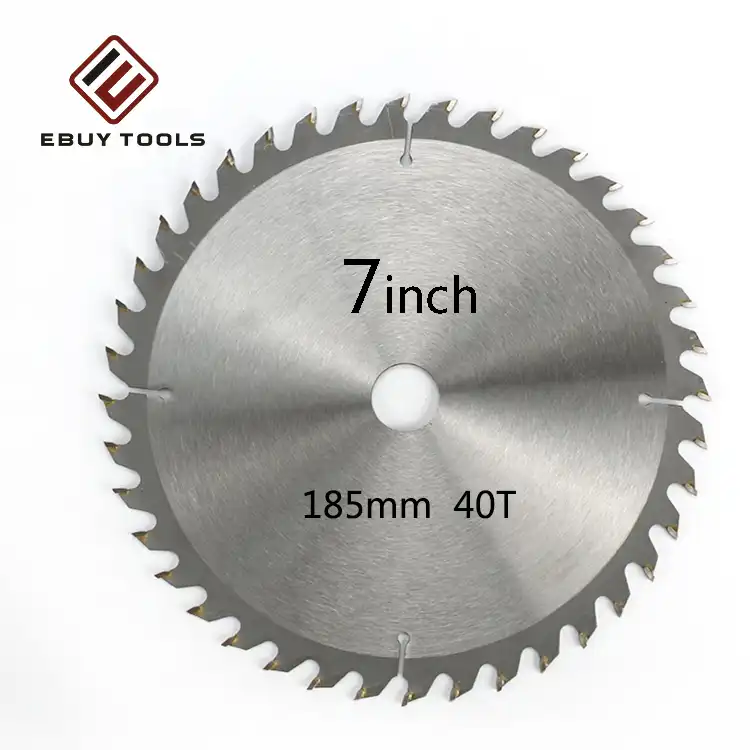
Understanding TCT Saw Blades: Core Concepts and Materials
Tungsten carbide tipped technology is based on its hybrid structure, which solves problems that keep coming up in industrial cutting tasks. At Danyang Ebuy Tools, we make blades with bodies made of hardened tool steel (75Cr1 or SKS51 grades) and cutting edges made of ultra-hard tungsten carbide tips that are brazed on. This different design solves a basic issue: regular high-speed steel blades lose their edge very quickly when working with rough materials like MDF, particleboard, or silicon-containing aluminum alloys.
Material Composition and Performance Benefits
Our blades' tungsten carbide tips stay sharp even when temperatures hit 600°C, which is a temperature level that is often reached during continuous high-speed operation. This heat resistance comes from the chemical structure of the carbide. In this structure, tungsten and carbon atoms form bonds that are very strong. The steel body gives it the flexibility and shock absorption it needs to keep from breaking in a catastrophic way when cutting through knots, nails, or quick changes in the density of the material.
The way we make things is in line with DIN 8083 standards, which keeps the horizontal and axial runout within a range of 0.05 to 0.1 mm. This level of accuracy is very important in automated production lines where consistent measurements affect the steps that come after assembly. For cutting wood, we use carbide grades from K10 to K20, and for cutting metal, we use grades from K01 to K40. Each grade has a hardness-to-toughness ratio that is best for that medium.
Cutting Mechanics and Tooth Geometry
Cutting action is largely determined by the shape of the teeth. How hard the blade cuts is determined by the rake angle, which is the angle between the tooth face and a line that runs opposite to the cutting direction. Hook angles affect the feed rate and the formation of chips, while clearing angles keep the body of the blade from rubbing against surfaces that have just been cut. To get the best results, these geometric factors must match both the object being worked on and the direction of the cut.
Knowing these technical ideas helps people who buy things look at details in more than one way, not just by counting the teeth. No matter how good the carbide is, a TCT saw blade with the wrong shape will either cut too slowly, make too much heat, or leave surfaces that aren't good enough. Our manufacturing team at Danyang Ebuy Tools uses 15 years of research and development knowledge in a wide range of industrial fields to make tooth profiles that are exactly what the job calls for.
Cross-Cutting vs Rip-Cutting: Fundamental Differences in TCT Saw Blades
Whether an action needs a cross-cutting or rip-cutting blade depends on how the cut is positioned in relation to the grain of the material. Cross-cutting means cutting threads across their length, which requires accuracy and a straight edge. When ripping, the material is cut along the grain, and speed and efficient waste removal are more important than a very fine finish. Because of these practical differences, the blades need to be designed in ways that solve completely different physical problems.
Cross-Cutting Blade Design Characteristics
Cross-cutting blades, such as the TCT saw blade, usually have between 60 and 80 teeth grouped around the edge of the blade, with very little room between teeth. This thick arrangement makes a lot of small chips instead of big shavings, which makes the cut surfaces smoother and less likely to split. The ATB tooth grind, in which the teeth switch between left and right bevels, cuts through wood fibers neatly, more like a knife than a chisel.
We engineer our cross-cutting blades with hook angles that range from -5° to 10°. This lets us control how hard the blade pulls into the cloth. When cutting harder materials or delicate tasks where control is more important than speed, hook angles that are lower or negative are best. The smaller gullet size between teeth is enough for the small chips that are made when cross-grain cutting. This keeps the gullet from getting clogged and keeps the structural strength of the teeth.
Rip-Cutting Blade Design Characteristics
Rip-cutting blades have 24 to 40 teeth and much bigger gullets (the bent spaces between the teeth) to fit the long, ribbon-like chips that are made when cutting across the grain. The Square-Edged Flat Top Grind (FTG) tooth design has teeth with sharp edges that cut through material quickly, putting removal rate over surface smoothness. Hook angles are usually between 15° and 25°, which makes for a strong cutting action that moves material quickly through the blade.
This mix of tooth spacing and geometry makes chip evacuation very effective. This keeps sawdust from building up in the gullets and blocking or kickbacking the blade, which is a risky situation. Our rip-cutting designs strike a balance between aggression and control. They include expansion holes filled with polymer resin to dampen vibration and cut noise levels by up to 10dB, which is an important factor to consider in industrial settings where safety rules apply.
Performance Impact on Production Operations
Choosing the right type of TCT saw blade has a direct effect on how fast and well the product is made. When a cross-cutting blade is used for rip-cutting, the feed rates are slow, there is a lot of heat buildup, and the motor could get overloaded because the teeth are too close together to clear large amounts of chip material. On the other hand, using a rip blade for cross-cutting results in rough, broken edges that need extra finishing steps that cost more and take longer to do.
We often talk to companies that make parts for cars and machines for spacecraft that have measured these effects. When one major car supplier switched from general-purpose blades to blades made just for their aluminum extrusion cutting tasks, the time it took to do the work went down by 40%. The right choice of blade got rid of the need for extra deburring steps and tripled the life of the blade, showing how technical specs can lead to real operational gains.
Selecting the Right TCT Saw Blade for Your Application: Decision Support for Procurement
To buy blades effectively, you need to carefully look at operational factors and output needs. Which blade specs will give you the best performance depends on the type of material, the direction of the grains, the quality of finish you want, the expected cutting speed, and how well the blade will work with your machinery. When procurement managers understand these choice factors, they can avoid making mistakes that cost a lot of money and hurt the quality or speed of production.
Material Type and Grain Orientation Assessment
Cutting through different materials is difficult in its own way and requires blades with certain properties. When compared to softwoods, hardwoods with thick grain structures do better with higher tooth numbers and sharper bevel angles. Engineered materials like MDF have rough glues that quickly dull regular steel, so tungsten carbide tips are necessary for blades to last a decent amount of time. Non-ferrous metals, like aluminum, need special tooth shape. The most common is the Triple Chip Grind (TCG) design, which has trapezoidal teeth cut the center of the kerf and flat teeth clean the sides.
The type of cut depends on the direction of the grain, but many tasks need both cross-cutting and ripping. Both types of cuts are used in panel sizing processes in the furniture industry, the auto interior trim industry, and the processing of building materials. When using a TCT saw blade, some operations keep different inventories of blades for each task, while others use general-purpose designs that aren't as good in every situation. Buyers who are watching their budgets have to weigh the costs of goods against the lost operating efficiency that comes from choosing the wrong blades.
Machinery Compatibility Considerations
The specifications of the blade must match the skills and limits of the tools. The size of the arbor, the highest RPM rate, and the availability of power all affect the choice of blade. Even if the teeth are the same shape, a 14-inch blade spinning at 4,000 RPM and a 10-inch blade spinning at 6,000 RPM cut very differently. The horsepower of a motor determines how strongly a blade can cut through material. Motors that are too small can't handle aggressive rip blades, and motors that are too big can damage or wear out cross-cutting blades too quickly.
At Danyang Ebuy Tools, our expert team helps customers match the specs of blades to the specs of their tools. We give you full technical datasheets for each blade model that list the minimum motor requirements, suggested RPM ranges, and saw types that work with it. This advice is especially helpful for contract makers who work with a lot of different industries and need flexible tools solutions that keep working well in all kinds of cutting jobs.
Comparing TCT Blades Against Other Technologies
Tungsten carbide-tipped blades are the most common type of TCT saw blade used in many situations, but other technologies should be thought about in some cases. High-speed steel blades are cheaper at first, but they wear down quickly when used on rough materials, so they are only cost-effective when used rarely or on soft materials. Diamond-tipped blades are great for cutting very rough materials like fiber cement or composite materials with ceramics, but they are more expensive and need to be sharpened in a certain way, so they are only used in a few specific situations.
Instead of just looking at the buying price, the total cost of ownership should be used to decide which technology to use. A blade that costs three times as much but lasts ten times longer is a better deal because it cuts down on downtime needed to change blades. Our factory at Danyang Ebuy Tools can make more than 150,000 pieces every day, which lets us offer reasonable prices without lowering the quality of our products. This means that customers can get high-quality tungsten carbide technology at prices usually associated with cheaper options.
Procurement Insights: How to Buy the Best TCT Saw Blade for Cross-Cutting and Rip-Cutting Needs?
To buy tungsten carbide-tipped blades strategically, you need to do more than just compare prices and place orders. To be successful at buying, you need to know your sourcing choices, look at the total cost of ownership, buy in bulk, and build trusting relationships with your suppliers. These things are especially important for contract makers, car suppliers, and industry distributors who have to handle complicated supply lines and meet the needs of a wide range of customers.
Evaluating Suppliers and Manufacturing Quality
Picking the right supplier has a big effect on the quality of the product, the dependability of delivery, and the value of the long-term relationship. Different providers have very different levels of manufacturing skills, such as how advanced their equipment is, how well they control quality, and how much scientific knowledge they have. Our 77,000-square-meter factory at Danyang Ebuy Tools has foreign precision equipment that is run by 319 skilled professionals. This gives us the ability to produce large amounts of goods while also being very strict about quality control, which is something that smaller suppliers can't do.
Quality certifications are a good way to make sure that manufacturing standards are met, but site audits and product tests give you a better idea of what the company can really do. For our TCT saw blade, we follow the DIN 8083 standards for tensioning and keep runout limits of 0.05 to 0.1 mm. This shows that we are disciplined in the way we make things, which leads to consistent blade performance. We encourage potential customers to ask for sample blades to test in their own specific situations. This will give them real-world performance data that they can use to make buying decisions.
Bulk Purchasing and Custom Order Capabilities
When you buy in bulk, you can usually get better prices and faster production schedules. With the right wait times, our production capacity lets us handle orders ranging from small custom batches to full container loads. Standard sizes that are in stock in our office are shipped within days. Custom sizes, which include specifics like outside diameter, inside diameter, thickness, and tooth count, take about 15 days to make and deliver.
Custom TCT saw blade development meets the needs of specific applications that regular goods can't. Mold and die makers who work with rare materials, military suppliers who work with titanium alloys, and custom furniture makers who use rare wood species can all benefit from engineered solutions that are tailored to their needs. Together with customers, our research and development team designs tooth shapes, chooses carbide grades, and sets up blade bodies that meet specific cutting needs.
Understanding Total Cost of Ownership
The price of the blade itself is only one part of its total cost. A full cost study looks at things like service life, resharpening prices, downtime for blade changes, and how the cost affects the quality of the product. If a blade costs 30% more but lasts 100% longer, it is a better deal because it saves time and money by not having to change tools as often. To help them make accurate cost estimates, we give our customers information on how long a product is expected to last based on the type of material, the cutting factors, and the operating conditions.
Warranty terms and help after the sale add a lot of value that is often missed when buying something. We care about our customers' success more than just delivering products. We also offer expert advice, help with troubleshooting, and quick contact to answer operational questions. We keep direct contact lines open, such as our technical support email at [email protected], so customers can get help quickly when problems happen.
Emerging Innovations in Blade Technology
Procurement workers can use changes in cutting efficiency, blade longevity, and environmental friendliness by staying up to date on new technologies. New developments include improved carbide formulations that are more resistant to wear, advanced covering technologies that lower friction and heat production, and better expansion hole designs that reduce vibrations. These improvements make a measured difference in performance without changing the way the business is run or the tech that is used.
We keep spending money on research and development to stay at the top of the cutting tool production technology field. Our 15 years of experience and continued work with customers in the automobile, aerospace, metalworking, and woodworking industries drive innovation that is in line with real-world production problems. This promise makes sure that buyers get cutting-edge technology backed by real-world experience in industry settings.
Conclusion
By telling the difference between cross-cutting and rip-cutting blade designs, factories can improve both productivity and the quality of their products. For finish work and accurate measurements, cross-cutting blades with dense tooth shapes make clean, exact cuts, while rip-cutting blades with aggressive geometry increase speed when handling large amounts of material. Understanding these differences in function, along with a thorough analysis of material types, machinery compatibility, and operating needs, gives procurement professionals the power to make smart tooling choices that cut costs while keeping production standards. When figuring out how much something is worth, the total cost of ownership, which includes how long the TCT saw blade lasts, how much upkeep it needs, and how consistently it works, is more accurate than just looking at the purchase price. Partnering with experienced makers that offer technical help and the ability to make changes further improves the success of tooling in a wide range of industry settings.
FAQ
Can I use a single blade for both cross-cutting and rip-cutting operations?
Combination blades, which usually have 40 to 50 teeth and a modified ATB shape, try to balance the needs of cross-cutting and ripping. These designs make some trade-offs for both uses; they cut more slowly than rip blades and make lines that are a little harder than cross-cutting blades. They are good for jobs that don't need to store many tools, when they will only be used occasionally, or when ease of use is more important than best performance. Keeping different inventories of blades for each process usually works better for factories that make a lot of things.
How do I determine when my blade needs sharpening?
Several signs show that the cutting performance has dropped and that the blade needs to be sharpened. Burn lines that can be seen on the cut surfaces, higher motor current draw or strange noises during operation, rough or fuzzy cut edges, and needing too much feed pressure are all signs that the teeth are worn down. Sharpening before it causes serious performance loss increases the number of successful resharpening rounds, which increases the TCT saw blade's general lifespan and lowers the cost of the tools used.
What tooth count should I select for cutting aluminum extrusions?
To keep the material from sticking, 60 to 80 teeth with Triple Chip Grind shape and negative hook angles of around -5° are usually needed when cutting aluminum. The TCG design, which has flat-top teeth and trapezoidal teeth that alternate, stops edge welding and makes clean cuts in metals that aren't made of iron. The ideal specs depend on the thickness of the material and the alloy it is made of. For example, parts that are thicker may benefit from slightly lower tooth counts to help chips escape.
Partner with a Trusted TCT Saw Blade Manufacturer for Your Precision Cutting Needs
Choosing the right cutting tool provider has a direct effect on how well your production runs and how much it costs you in the long run. Danyang Ebuy Tools runs a modern 77,000-square-meter factory that makes more than 150,000 pieces every day. They mix large-scale production with technical know-how. Our blades with tungsten carbide tips last 10 to 20 times longer than regular ones. This is because we've been researching and developing them for 15 years. Our team offers expert support and dependable supply chain services that industrial operations need, whether they need standard specifications with fast delivery or custom-engineered solutions for unique uses. You can email our engineering team at [email protected] to talk about your unique cutting needs and find out how choosing the right TCT saw blade can change the performance of your production.
References
Machinery's Handbook, 31st Edition. Industrial Press Inc., 2020. "Cutting Tool Materials and Applications."
Forest Products Laboratory. "Wood Handbook: Wood as an Engineering Material." U.S. Department of Agriculture, 2021.
American National Standards Institute. "Safety Requirements for Woodworking Machinery: Circular Saws." ANSI O1.1-2017.
Society of Manufacturing Engineers. "Fundamentals of Tool Design, Sixth Edition." 2019. Chapter 8: "Cutting Tool Geometry."
Deutsches Institut für Normung. "Circular Saw Blades—Technical Delivery Conditions." DIN 8083 Standards, 2018.
International Journal of Advanced Manufacturing Technology. "Effects of Cutting Parameters and Tool Geometry on Surface Quality in Wood Machining." Volume 98, 2019.