.webp)

The primary advantage of an HSS Step Drill Bit lies in its ability to drill multiple hole diameters using a single tool, which eliminates frequent tool changes and dramatically reduces setup time in production environments. Manufactured from High-Speed Steel with hardness ratings between 62 and 67 HRC, these conical cutting tools integrate drilling, chamfering, and deburring into one continuous operation. The stepped geometry ensures clean, burr-free holes in steel, stainless steel, non-ferrous metals, and plastics, making them indispensable for precision machining shops, automotive manufacturers, and electrical panel assembly operations seeking cost efficiency without compromising performance.
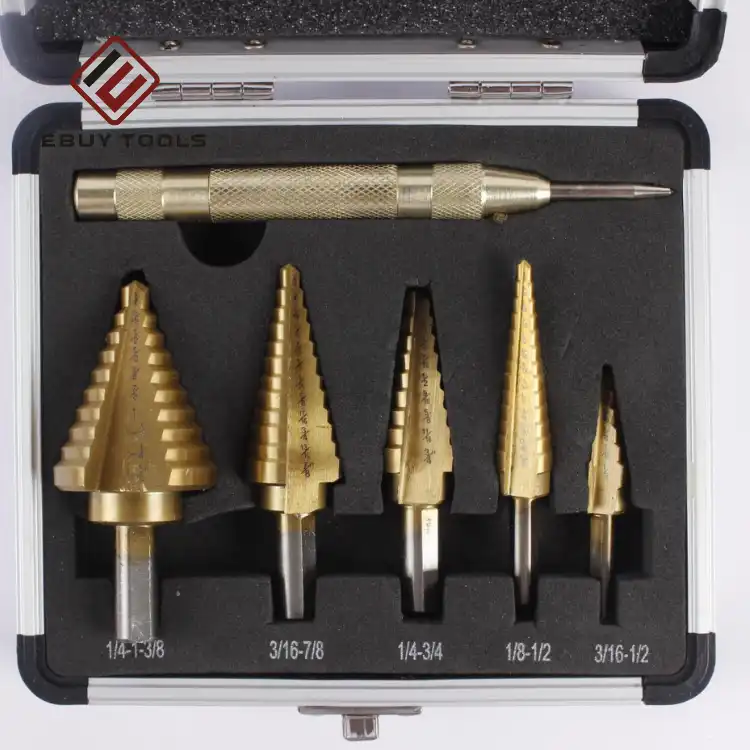
Understanding HSS Step Drill Bits: Features and Benefits
HSS Step Drill Bits are a major step forward in metalworking technology. They solve the problems that come with regular twist drills. The special stepped shape lets workers make holes from 4 mm to 32 mm in diameter without stopping the work in progress. The metallurgical qualities of HSS 4241 tool steel led to this new design. This steel keeps its shape under thermal stress and cuts through a wide range of materials with reliable performance.
Standard drill bits need to be center-punched first, but the self-centering 118° split-point design gets rid of that step. When the bit is put up against sheet metal or plate stock, it starts cutting right away without moving across the surface. This level of accuracy is very important when making electrical enclosures because misplaced holes make it harder to seal against the weather and follow regulations. The hexagonal shank design keeps the drill from slipping in drill chucks when applying a lot of torque. This ensures rotational stability, which directly leads to accurate measurements.
When you look at output cases, you can measure how much productivity has increased. Usually, an electrician would need six different twist drills to make knockout holes for conduit fittings because cable glands come in different sizes. With a 15-step HSS Step Drill Bit, the same operator can do the job with just one tool, cutting the number of bit changes per shift from dozens to zero. Studies of time spent making automotive parts show that not having to change tools can increase throughput by 30 to 40 percent in tasks that involve multiple hole sizes.
Cost-Effectiveness Compared to Premium Alternatives
Standard HSS Step Drill Bits are the best choice for most industrial tasks because they offer the best balance between initial cost and useful life. Cobalt-alloyed M35 variants and carbide-tipped bits are better at withstanding heat. When purchasing managers look at the total cost of ownership, they find that HSS Step Drill Bits perform 80% as well as premium tools but cost only 40% as much to buy. This makes them a great choice for job shops that work with a variety of materials and batch sizes.
Versatility Across Material Types
When drilling steel, including austenitic stainless grades that tend to work-harden under cutting pressure, the spiral flute design makes it easier for chips to be blown away. Metals that aren't iron, like aluminum and brass, don't stick to the cutting edges when they're machined. The stepped geometry spreads cutting forces out gradually instead of concentrating stress at one point. This means that even engineering plastics like polycarbonate and ABS keep their shape while drilling.
How to Use HSS Step Drill Bits for Optimal Performance
To get the best hole quality and longest tool life, you need to follow the drilling guidelines for the object you are drilling. When working with mild steel, sheet metal makers usually run their machines at 400 to 600 RPM and gentle feed pressure. This lets the cutting edges take off material in controlled chunks. For cutting stainless steel, speeds must be slowed down to between 300 and 450 RPM, and cutting fluid must be used to keep heat from building up and damaging the edge too quickly.
Selecting Appropriate Step Sizes
By matching the bit's step design to the needs of the job, you can avoid removing unnecessary material and cut faster. Most HVAC and electrical jobs can be done with a 15-step HSS Step Drill Bit that covers 4-32 mm. However, for specialized automotive work, the step spacing may need to be changed to accommodate sensor mounting holes. By looking over technical models before buying something, you can be sure that the powers of the tool will match the requirements for production.
Maintenance Strategies for Extended Service Life
Cutting edges show early signs of wear before they affect the quality of the hole when they are checked regularly. For minor edge dulling, professional resharpening services can help, but special tools are needed to keep the original shape. When the edge retention starts to fade, most industrial facilities throw these tools away and replace them with new bits to keep production standards. When tools are stored properly in protective cases, the edges don't get damaged by touching other tools in the drawer, so they stay sharp between uses.
Work-hardened materials won't damage other pieces of work until the flutes are cleaned of metal chips at the end of each shift. A simple metal brush can get rid of dirt and dust without hurting TiN or TiAlN coats, which lower the friction coefficient to less than 0.4. When drilling mild steel, an HSS Step Drill Bit should make 500 to 800 holes before it needs to be replaced. When drilling stainless steel, the bit should make 200 to 400 holes, based on the width and hardness of the material.
Comparing HSS Step Drill Bits to Alternative Drill Bits
Material choice has a direct effect on thermal efficiency and how well it works in a given situation. Standard HSS Step Drill Bits stay hard up to 600°C, which is enough for most ferrous and non-ferrous metals used in manufacturing. This temperature limit is raised to 650°C for the cobalt-enhanced M35 grade. This is important for drilling strain-hardened stainless steel because regular HSS would anneal and lose its cutting ability at that temperature.
Titanium nitride coatings give surfaces hardness levels above 2500 Vickers, making a barrier that doesn't wear down easily and greatly extending the time between service intervals. This golden layer makes the bit and object slide against each other less, which lowers the amount of heat they produce and lets them cut a little faster without damaging the material. Titanium aluminum nitride (TiAlN) coatings are even better at resisting heat, and they are perfect for aircraft uses that use Inconel or titanium metals.
Economic Considerations in Tool Selection
Carbide HSS Step Drill Bits are very accurate and last a long time when used on hardened materials, but they may cost 300–500% more than standard options. This extra cost is worth it for precision machining shops that work with titanium aircraft parts because the tools last longer and fit together more precisely. Contract makers who work with a variety of materials find that HSS Step Drill Bits work well enough for carbon steel, aluminum, and normal stainless grades, without the brittleness issues that make carbides break when loaded laterally.
Application-Specific Performance Differences
Spade bits are great for drilling large holes in wood, but they aren't very good at the precise geometry needed for working with metal. Standard twist drills are flexible, but they need full bit changes for each diameter, which causes downtime that HSS Step Drill Bits don't have. Stepped tools automatically chamfer the edges of holes because they grow in width in steps. This is a finishing job that would need extra tools and work without stepping tools.
How to Choose the Right HSS Step Drill Bit for Your Procurement Needs
The first step in strategic buying is to check that the materials you want to use are compatible with what you need to make. Standard HSS 4241 grade works best for operations that mostly drill mild steel and aluminum, balancing performance with budget constraints. Tier suppliers in the automotive industry that work with advanced high-strength steels should ask for M35 cobalt variants to make sure they can handle the heat of high production volumes.
Assessing Size Range Requirements
For all of your products, the diameter coverage must match the drawing specifications. For standard conduit fittings, bits that span 6–32 mm are useful for electrical workers, while HVAC makers need sizes that cover ductwork access holes. Custom step setups become cost-effective when enough tools are made to support their development. This lets makers cut down on cutting time by getting rid of diameter steps that aren't being used.
Evaluating Supplier Capabilities
Partnering with makers who have a lot of production equipment makes sure that the supply chain will work well during times of high demand. Danyang Ebuy Tools Co., Ltd. has a factory that is 77,000 square meters and has 319 skilled workers who make more than 150,000 cutting tools every day. This ability can handle both stock orders and the creation of custom tools with the help of specialized R&D resources.
When choosing industrial tools, quality assurance protocols are very important. Reliable providers use chemical analysis to check the makeup of the HSS grade, hardness tests on the shank and cutting edges to make sure the heat treatment is even, and concentricity checking to make sure the rotational run-out stays below 0.05mm. Coating adhesion testing stops TiN from delaminating too soon, which would lose some of its friction-reducing benefits.
A bulk purchasing agreement can save you money and protect your inventory against supply problems. When you work with manufacturers instead of distributors, you often get better technical support, faster development of custom tools, and better business terms. Logistics issues like lead times, minimum order quantities, and packaging requirements should be in line with how you manage your inventory so that you don't waste money on extra stock.
Conclusion
In conclusion, HSS Step Drill Bits are more than just convenient; they also improve production efficiency, tooling costs, and operating freedom in ways that can be measured. By combining several drilling tasks into a single workflow, these specialized cutters cut down on setup time, get rid of interruptions caused by tool changes, and make holes that are consistently clean in a wide range of materials. Its metallurgical qualities make it thermally stable enough for most industrial uses. You can add cobalt alloying and advanced finishes to make it work with harder materials like stainless steel and hardened metals if you want to. If procurement professionals know the technical differences between HSS grades, coating options, and geometric configurations, they can make the best use of their tooling investments to meet production needs precisely. This saves money without lowering the quality standards that customers expect.
FAQ
1. What kinds of things do HSS Step Drill Bits work well on?
Mild steel, aluminum, brass, copper, and industrial plastics can all be safely worked with in HSS 4241 grade. To keep stainless steel types from work-hardening and edges breaking too soon, M35 cobalt-enhanced versions are needed. Thickness of the material also affects how well it works. Sheet metal thinner than 3 mm works well on machines, but plate stock thicker than 6 mm needs slower speeds and cutting fluid to keep the heat from building up.
2. How often should HSS Step Drill Bits be changed in a production setting?
How often they need to be replaced depends on how hard the material is, how it is drilled, and quality standards. When drilling mild steel, operations usually get 500 to 800 holes in before edge wear starts to affect the quality of the holes. For use with stainless steel, each bit makes 200 to 400 holes. Monitoring the hole finish and the formation of burrs are useful replacement signs, as are higher drilling pressure needs that show the edge is becoming dull.
3. Are HSS Step Drill Bits good for CNC machines that do everything for you?
Even though HSS Step Drill Bits are mostly made for drilling by hand, they can be used in CNC systems for certain tasks. The hexagonal shank design needs tool holders that are compatible, and the programming has to take into account the fact that the diameter grows as the plunge cycle goes on. For tighter tolerances, most precision CNC operations prefer standard tools with diameter-specific drills. HSS Step Drill Bits are only used at manual stations.
Partner with Ebuy Tools for Your HSS Step Drill Bit Requirements
Ebuy Tools makes professional-grade HSS Step Drill Bits that are designed to work in tough industrial settings. Our 15-step bits are made of HSS 4241 tool steel, which is 62–64 HRC hard, and have spiral flute geometry for better chip evacuation and hexagonal shanks that keep the chuck from slipping during heavy-duty operations. As a well-known HSS Step Drill Bit manufacturer that can make more than 150,000 pieces every day, we can meet all of your purchasing needs. Get in touch with our technical team at [email protected] to talk about unique step configurations, large order arrangements, and shipping schedules that are made to fit your production needs. You can look at all of our cutting tools at ebuy-tools.com.
References
1. Machinery's Handbook, 31st Edition. Industrial Press Inc., 2020. "High-Speed Steel Cutting Tool Materials and Heat Treatment."
2. American Society for Metals. "Tool Steels: Properties and Selection." ASM Handbook Volume 1: Properties and Selection of Metals, 1990.
3. Society of Manufacturing Engineers. "Drilling and Hole Making Operations: Best Practices for Industrial Applications." SME Technical Paper Series, 2019.
4. International Organization for Standardization. "ISO 235: High-Speed Steel Tool Bits—Technical Specifications and Testing Methods." ISO Standards Catalogue, 2018.
5. National Institute of Standards and Technology. "Thermal Properties of High-Speed Steel Cutting Tools Under Production Conditions." NIST Technical Note 1875, 2017.
6. Manufacturing Engineering Journal. "Cost-Benefit Analysis of Step Drill Bits in Automotive Component Production." Volume 163, Issue 4, 2021, pp. 45-52.