.webp)

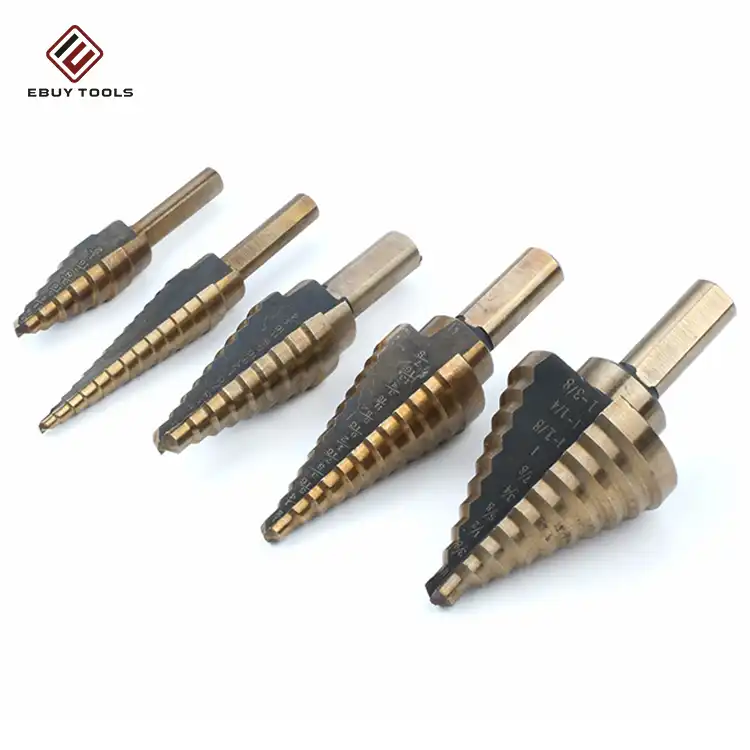
An HSS (High-Speed Steel) drill bit is a cutting tool forged from heat-resistant alloy steel, designed to maintain sharpness even at elevated temperatures encountered during metal drilling operations. High-speed steel bits can tackle materials ranging from mild steel to harder alloys with proper technique and lubrication. When you face projects requiring multiple hole diameters in sheet metal, electrical enclosures, or automotive fabrication, the HSS Step Drill Bit becomes particularly valuable. This specialized variant features a conical, staircase design allowing you to drill incrementally larger holes without switching tools. You use it when efficiency matters—eliminating downtime from bit changes while achieving clean, burr-free results in steel, stainless steel, non-ferrous metals, and plastics. Understanding when and how to deploy HSS tooling directly impacts your workshop's productivity and cost management.
Understanding HSS Step Drill Bits and Their Metallurgical Foundation
What Makes High-Speed Steel Unique
High-speed steel is a type of tool steel that has exact amounts of tungsten, molybdenum, chromium, and vanadium in it. Because of these alloying elements, HSS doesn't soften at temperatures up to 600°C, so the cutting edge stays strong during long drilling operations. Ebuy Tools makes a type of stepped drill out of HSS 4241 material, which is carefully heated to a hardness grade of between 62 and 64 HRC. This amount of sharpness makes sure that the cutting edges stay sharp even after thousands of holes are made in sheet metal.
High-speed steel (HSS) bits keep their "red hardness"—the ability to cut well even when the tool is glowing from heat production—while carbon steel bits lose their temper quickly under friction heat. The stepped shape adds to this benefit by spreading the cutting forces across several width changes. This keeps any one point from getting too hot.
Anatomy of a Stepped Design
The conical profile has 15 separate steps, each of which represents a different diameter increase from 4mm to 32mm. This gets rid of the usual process of drilling pilot holes and gradually making them bigger. The triangular shank design keeps the bit centered during the cutting process so that it doesn't slip in drill chucks when high power is applied.
Each step transition has a split-point geometry that centers itself, which is usually ground to 118° or 135°. This position makes it possible for the bit to start biting into the material right away, without "walking" like most twist drills do. The spiral flute design actively moves chips upward, stopping material buildup that leads to binding and early wear.
Material Compatibility and Performance Parameters
HSS Step Drill Bits are great for drilling through steel, even austenitic stainless steel grades that are often found in food processing equipment and marine uses. The tool works just as well with non-ferrous metals like aluminum and brass, but it cuts more quickly through these softer metals. When the right feed rates are used, plastics, especially polycarbonate electrical enclosures, can be drilled cleanly without cracking.
These bits are made by Ebuy Tools with TiN (Titanium Nitride) coatings that lower the friction coefficient to less than 0.4. This shiny surface process makes tools last a lot longer by keeping them from getting too hot during long production runs. The coating also lets you see when it's wearing off; when the gold finish wears through to the silver HSS substrate, the sharpness is clearly lessened.
Comparing HSS Step Drill Bits with Alternative Cutting Tools
Standard Twist Drills Versus Step Geometry
When using a traditional twist drill to make holes of different sizes, you have to change the tools several times. Six different bit sizes might be needed for a normal electrical panel installation, which would take a lot of time in a production setting. Based on time-motion studies done in production shops, the stepped method combines these into one tool, which cuts setup time by about 70%.
Also, twist drills don't have the automatic chamfering feature that comes with stepped designs. Each change in diameter makes a beveled edge that gets rid of sharp burrs, so there is no need for extra deburring. This is very important in industries like aerospace and medical devices that make sharp edges that could be dangerous.
Cobalt-Alloyed HSS Options
Different types of HSS-Co with 5% (M35) or 8% (M42) cobalt work better when working with hardened steel or long production runs. Red toughness is raised even more by cobalt, which lets the tool keep cutting at temperatures close to 650°C. For car makers who need to drill hardened chassis parts, Ebuy Tools has M35 Cobalt choices.
In exchange, cobalt bits become more fragile. They can resist heat, but they are more likely to break under horizontal stress or incorrect feed pressure. Standard HSS 4241 is tougher and better for general metalworking tasks where resistance to impact is more important than resistance to extreme heat.
Carbide and Titanium-Coated Alternatives
Solid carbide bits are harder and more resistant to wear than other types, but they are much more expensive to buy and can break easily. Carbide works great for rigid CNC drilling jobs, but it doesn't do well with hand-held drilling that is common in field installations.
Titanium coats (TiN, TiCN, and TiAlN) are a good compromise because they improve the performance of HSS without making it as fragile as carbide. The coatings raise the surface hardness to about 2500 Vickers while keeping the toughness of the HSS substrate the same. Physical Vapor Deposition (PVD) processes are used by Ebuy Tools to apply these coatings. These processes make sure that the thickness is uniform and the adhesion is excellent, which keeps the coating from failing too soon.
Selecting the Right HSS Step Drill Bit for Industrial Applications
Decoding Step Increments and Size Ranges
It is possible to find step bits by their diameter range and increment size. A 4-32mm bit with 15 steps gives you increments of about 2mm, which is good for normal electrical knockout sizes and HVAC pipe penetrations. To choose the right range, you need to make sure that the bit's smallest diameter fits your pilot hole needs and that the largest step is bigger than your largest needed diameter.
Ebuy Tools makes a 15-step design that fits most industrial hole sizes without having too many steps that weaken the core width of the tool. Fewer steps mean more stiffness and less deflection during drilling, which is especially important when working with steel containers with thick walls.
Material-Specific Selection Criteria
When drilling stainless steel, you need HSS bits with more cobalt and slower cutting speeds, usually between 300 and 500 RPM for hand-held tasks. Due to its work-hardening property, austenitic stainless steel needs to be cut continuously; stopping in the middle of a hole causes fast hardening, which wears down tools too quickly.
Aluminum and brass can handle higher speeds (800 to 1200 RPM), but uncoated HSS is better because it keeps materials from sticking. Softer metals can weld very closely to coated surfaces, making a built-up edge that lowers the quality of the hole. Care must also be taken to get rid of chips in non-ferrous applications, since aluminum chips are long and stringy and get stuck in flutes.
Maintenance Protocols for Extended Service Life
Edges don't get damaged between uses if they are stored properly. Putting bits away in protective sleeves or indexed cases keeps the cutting edge sharp and keeps the steps from getting chipped when they come into contact with other tools. Each bit that Ebuy Tools ships out comes with a protective covering that should stay on until it is used.
Because they have complicated shapes, HSS Step Drill Bits are hard to resharpen. Most factories treat them like disposable tools and keep track of the cost per hole instead of trying to sharpen them on the job site. When edge wear is obvious, like when drilling takes more force or there are burn lines on holes, replacing the tool ensures uniform quality and keeps expensive workpiece damage from happening.
The hexagonal shape of the shank makes it easy to quickly remove from overheated situations. If you see smoke or changes in color while drilling, pull the bit back right away, let it cool down, and then lower the RPM before drilling again. Thermal cycling affects the structure of HSS, so keeping tools from getting too hot for long periods of time makes them last a lot longer.
Procurement and Bulk Purchasing Strategies for Industrial Buyers
Evaluating Supplier Credentials and Manufacturing Capacity
When making sourcing decisions, companies with well-documented quality systems and large production volumes should be given priority. Danyang Ebuy Tools Co., Ltd. has a factory that is 77,000 square meters and has 319 skilled workers who make more than 150,000 cutting tools every day. This scale makes sure that the supply chain is reliable, which is very important for lean manufacturing operations that can't have tooling shortages.
When judging a supplier's manufacturing capabilities, you should look at their R&D department and see how much customization they can do. Ebuy Tools has a dedicated engineering staff that can make custom step setups for specific uses. This is helpful when standard store items don't exactly meet your needs.
Kit Sets Versus Individual Procurement
A lot of companies sell multi-bit kits that cover a range of sizes that work well together. By selling everything together, these kits save you money and make sure that technicians have the right tools for any job. Buying bits one at a time makes sense if your operations are limited to certain hole sizes. This way, you can avoid the costs of keeping extra sizes in stock.
Volume pricing systems usually start to work when a certain number of items are bought, usually around 100. By negotiating annual supply agreements, you can lock in good prices and make sure that supplies will be available when demand is high. Talk about minimum order quantities and lead times right away. Ebuy Tools keeps a large inventory of finished goods to meet quick-ship needs.
Quality Verification and Receiving Inspection
Set up protocols for incoming inspections that focus on checking critical dimensions and hardness. When the bit is turned in a precision chuck, runout should be less than 0.05 mm when dial indicators are used for concentricity testing. Too much runout leads to friction, bad hole quality, and wear that happens too soon.
Ask for papers of analysis that list the material's composition and the conditions for heat treatment. Manufacturers with a good reputation, like Ebuy Tools, offer batch tracking and inspection reports before shipping. The triangular shank's dimensions should exactly match the specs of your chuck. Shanks that are too small can slip, while shanks that are too big can make fitting difficult.
Practical Applications and Industrial Case Studies
HVAC System Installation Efficiency Gains
A regional HVAC worker who did more than 200 duct penetrations every month moved from standard twist drills to step bits and saw a 40% drop in the time it took to install each opening. The stepped geometry's ability to self-center was especially helpful when drilling through suspended ductwork, where staying straight is hard. When the edges were clean, there was no need for extra deburring, which used to take more time and effort.
The worker said that the 4-32mm range could handle 90% of normal electrical and gas line penetrations with no need to switch tools. By combining them, technicians didn't have to carry as many bits in their service vehicles. This made inventory management easier and cut down on loss incidents.
Automotive Manufacturing Quality Improvement
An automobile tier-one provider that makes transmission housings and uses HSS Step Drill Bits to drill holes in cast aluminum parts for mounting sensors. Sequential drilling was used in the earlier method, which led to uneven chamfers that needed extra work. Stepped bits built chamfering into the drilling process, which cut out a step and made the consistency of holes to holes better.
Not meeting quality standards chamfers were rejected 3.2% of the time before the tooling change, but only 0.4% of the time after. The harder HSS cutting edges stayed the same size across production runs, while older carbide tools changed sizes as they were worn down.
Electrical Panel Fabrication Throughput
A company that makes control panels and puts together industrial motor control centers does hundreds of cable entry knockouts every week. When they switched to HSS Step Drill Bits, they went from having 12 different kinds of twist drills to only having three step drill bits that covered all of their sizes. Technicians liked that they didn't have to make decisions about which bits to use, which cut down on mistakes and sped up work.
The maker said that the burr-free holes made by stepped geometry kept workers' hands from getting hurt by sharp edges during assembly. Along with the increased productivity, this improvement in safety made the case for upgrading the tools very strong.
Troubleshooting Common Drilling Challenges
Too much speed or not enough oil are usually the causes of premature wear. When digging in stainless steel, you should always use cutting fluid. Adding just a few drops on a regular basis will greatly increase the life of your tools by controlling heat and stopping them from becoming too hard. When you dry drill, the material ahead of the cutting edge gets harder, which makes it impossible for the tool to cut properly.
Chatter and vibration are generally caused by tools that stick out too far from the chuck or worn-out chuck jaws that can't hold the hexagonal shank tightly. Cut down on the space between the chuck and the workpiece to make it as hard as possible. If you don't replace worn chucks right away, the bit can spin inside the chuck and damage both the shank and the jaws.
Hole diameter changes between production runs are a sign of tool wear or expansion caused by temperature. During extended cutting, HSS slightly expands, making the hole size bigger for a short time. During high-volume production, give tools breaks to cool down. When holes regularly measure too big, the tool is no longer useful and needs to be replaced to keep control of the dimensions.
Conclusion
HSS Step Drill Bits, especially the stepped type, are necessary tools for metalworking tasks that need to be done quickly and in a variety of ways. Their high-speed steel metallurgy gives them the temperature stability they need to drill steel, stainless steel, and non-ferrous metals in a wide range of industrial settings. The stepped geometry combines multiple operations, like drilling, sizing, and deburring, into a single tool motion. This has a direct effect on how efficiently your operations run and how much labor costs. The best performance is guaranteed by making the right choice based on the material type, size needs, and application requirements. When you buy from companies like Ebuy Tools that have a history of producing high-quality tools and having reliable supply chains, you can be sure that your tools will always work as they should. When procurement specialists and engineers know what these tools can and can't do, they can make decisions that boost productivity while keeping tooling costs low in competitive manufacturing environments.
FAQ
1. How effective are HSS step bits on stainless steel materials?
When the right steps are taken, HSS Step Drill Bits can work well with austenitic stainless steel. Slow down the spindle to between 300 and 500 RPM and keep the feed pressure steady to keep the cutting edge moving all the time. Because stainless steel work-hardens quickly, stopping in the middle of a hole makes a hard area that quickly dulls tools. Use a lot of cutting fluid—even basic cutting oil will greatly extend the life of a tool by controlling the production of heat. For production settings that regularly work with stainless steel, HSS-Co 5% variants offer better performance.
2. What lifespan can industrial users expect under heavy use?
Tool life varies a lot depending on the material being drilled and how it is used. If you drill mild steel the right way, a good HSS Step Drill Bit should be able to make 300 to 500 holes in 3mm sheet material before it starts to look dull. This is cut down to about 150 to 200 holes in stainless steel. TiN-coated versions last 3–6 times longer than bare ones because they have less friction and heat buildup. Keep an eye on the cost per hole instead of the total tool life to figure out when to replace the bits. Bits should be replaced when the drilling force grows noticeably or the edge quality gets worse.
3. What drilling speeds maximize efficiency without damaging bits?
The best speed ranges depend on the type of material. For hand-held tasks, 500 to 800 RPM is best for mild steel, while 300 to 500 RPM is best for harder stainless steel. Aluminum and brass can handle higher speeds (800 to 1200 RPM), but chip evacuation is very important at these speeds. Watch how the bit cuts. If it makes small chips and cuts smoothly without using too much force, the speed is right. Too much speed is shown by smoking, staining, or needing a lot of feed pressure. Lower the RPM and make sure you keep the feed rate steady during the cutting process.
Partner with Ebuy Tools for Superior HSS Step Drill Bit Solutions
Adding professional-grade HSS Step Drill Bits to your drilling processes will have a direct effect on your costs and productivity. We make high-performance stepped drill bits at Danyang Ebuy Tools Co., Ltd. that are designed for tough metalworking settings. Our 77,000-square-meter factory makes these tools with strict quality control, so they work the same way on every production run. The 15-step configuration, hexagonal shank design, and optional TiN coating give your projects the longevity and accuracy they need. As a well-known maker of HSS Step Drill Bits that makes more than 150,000 pieces every day, we keep a large enough inventory to meet your needs for quick purchase. Email our team at [email protected] to talk about your unique drilling problems and get personalized suggestions that will help you get the most out of your tooling investment while also increasing output.
References
1. Roberts, G.A., Krauss, G., & Kennedy, R. (1998). Tool Steels: Properties and Selection. ASM International Materials Park.
2. Stephenson, D.A., & Agapiou, J.S. (2016). Metal Cutting Theory and Practice (3rd ed.). CRC Press.
3. Shaw, M.C. (2005). Metal Cutting Principles (2nd ed.). Oxford University Press.
4. Trent, E.M., & Wright, P.K. (2000). Metal Cutting and the Tribology of Seizure: Temperatures in Metal Cutting. Butterworth-Heinemann.
5. Boothroyd, G., & Knight, W.A. (2006). Fundamentals of Machining and Machine Tools (3rd ed.). CRC Press Taylor & Francis Group.
6. Davim, J.P. (2008). Machining: Fundamentals and Recent Advances. Springer-Verlag London Limited.