High-speed steel twist drill bits serve as essential rotary cutting tools in metalworking and industrial machining operations. These precision instruments excel at creating accurate holes in ferrous metals, aluminum alloys, engineered plastics, and composite materials. Their primary applications span automotive component fabrication, aerospace maintenance, structural steel construction, and precision mold making. The defining characteristic of these bits lies in their ability to maintain cutting-edge integrity at elevated temperatures—up to 600°C—while delivering consistent performance across diverse production environments. Understanding their usage parameters directly impacts tool selection, operational efficiency, and cost management in manufacturing workflows.
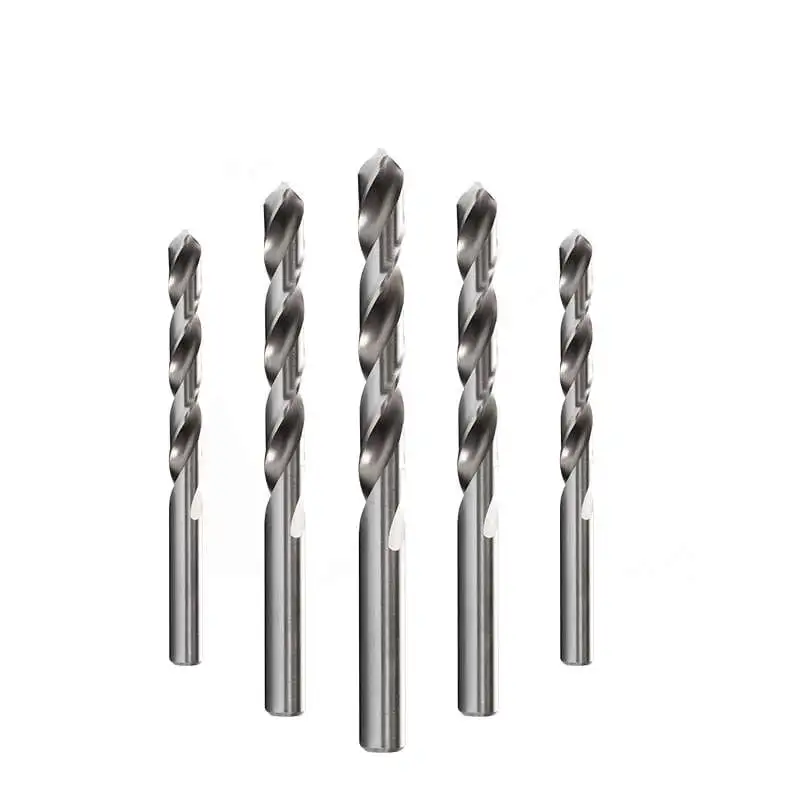
Understanding High-Speed Steel Twist Drill Bits
Material Composition and Metallurgical Properties
The performance of HSS drills is based on complex alloy engineering. The exact amounts of tungsten, molybdenum, chromium, and vanadium used in these cutting tools create what metallurgists call "red hardness." This means that the material can keep its Rockwell hardness of 63–66 HRC even when drilling processes create a lot of heat through friction. The tungsten-molybdenum matrix makes a balanced architecture that can withstand both wear and shock loading. This keeps the material from breaking in extreme situations.
A standard M2 grade HSS drill bit has about 6% tungsten and 5% molybdenum, making it solid for basic drilling tasks. When working with harder materials like titanium alloys or stainless steel, the M35 and M42 types add 5 to 8 percent cobalt to make the hot hardness even higher. This cobalt addition raises the temperature limit to 650°C and makes it easier to keep the edge when cutting materials that are being work-hardened.
Core Design Features and Geometry
Precision making determines how well professional-grade drill bits work. The chip evacuation efficiency is controlled by the helix angle, which is usually 30° in Type N configurations. If the flute shape is set up correctly, metal chips are pushed away from the cutting zone. This stops the need to recut and stops heat buildup, both of which speed up wear.
Point geometry has a big effect on how drilling works. Traditional 118° split point designs have been improved by the 135° split point design. This self-centering shape lowers the push force needed and gets rid of the need to center punch on surfaces that have been hardened. The split-point design keeps the bit from "walking" across the surface of the object when it first contacts it. This is a very important benefit for CNC machining and hand drilling tasks where positional accuracy is important.
The universal round handle design makes sure that it works with most tool-holding methods. The process of precision grinding produces smooth surfaces and accurate measurements, which makes it possible for drill chucks, collet holds, and magnetic base tools to clamp the workpiece securely. This standardization makes it easier to manage tools on a wide range of equipment platforms.
Hardness Ratings and Performance Correlation
Measuring hardness gives you a measurable idea of how well a drill might work. Tests on the Rockwell C scale make sure that finished bits are within certain hardness ranges. The M2 grade usually has a hardness of 63 to 65 HRC, and cobalt-enhanced versions have a hardness of 66 to 68 HRC. These numbers have a direct relationship with how well the material resists wear and how well the edges stay in place during continuous use.
Temperature stability is what sets HSS apart from other steels like carbon steel. Carbon steel tools lose their hardness above 200°C, but HSS that has been properly heat-treated stays strong at three times that temperature. This temperature stability lets you cut at faster speeds and for longer periods of time, which is useful in work settings where downtime has a direct effect on profits.
Maintenance and Sharpening Protocols
Unlike disposable carbide inserts, HSS bits can be resharpened to get them to cut as well as they did before. When the shape of a drill point changes because of wear, precision grinding equipment can fix it by restoring the right side angles and cutting lip symmetry. This ability to regrind cuts the total cost of ownership in high-volume manufacturing by a large amount.
When sharpened correctly, the difference in cutting lip height stays within the range of 0.02-0.05mm. When you go beyond this tolerance, the cutting forces become uneven, which leads to holes that are too big and faster wear on the longer cutting edge. Industrial repair teams usually keep track of resharpening cycles to make the best use of their tool collection and figure out when to replace tools based on real drilling hours rather than random intervals.
Benefits and Advantages of High-Speed Steel Drill Bits
Cost-Performance Balance in Industrial Operations
Across all manufacturing sectors, decisions about what to buy are based on budgets. High-speed steel twist drill bits are a good compromise between cheap carbon steel tools and more expensive carbide options. The cost of the materials stays low, and the performance is better than carbon steel. When working with mild steel, aluminum, and other industrial materials, HSS is a better choice than carbide solutions, which are three to five times more expensive.
The economic benefit goes beyond the price of the original buy. When drilling in conditions with vibration, broken cuts, or low rigidity, the toughness of HSS stops the brittle breaking that happens with carbide tools. If you hit a carbide bit and it breaks, you've lost it forever. But an HSS bit can handle shock loads and keep working. In places where building structures is done, this durability is especially useful because magnetic base drills often work on curved surfaces or in unstable fields.
Thermal Management and Extended Tool Life
Creating heat while cutting metal is one of the most difficult parts of machining. Friction changes mechanical energy into thermal energy as the cutting edge removes material. This heat builds up at the point where the tool meets the workpiece, making temperatures that can make cutting edges softer and wear them out faster.
This thermal problem is especially dealt with by the HSS makeup. The alloy stays hard at temperatures where other materials break. This benefit is increased by Titanium Nitride (TiN) coats, which make a gold-colored thermal shield that lets the blade cut 25–30% faster. Coatings made of titanium aluminum nitride (TiAlN) make the surface 3000 times harder while lowering the friction coefficient to less than 0.4. When drilling through sticky materials like austenitic stainless steel, these treatments stop edge buildup and galling.
In real life, this means that you have to change tools more often. Manufacturers keep track of tool life by the number of holes made per bit, not by the number of days on the calendar. Depending on the thickness and depth, good HSS bits can usually drill 200 to 500 holes in mild steel before they need to be replaced or resharpened. This consistency makes it possible to plan output and handle goods accurately.
Material Compatibility and Versatility
Production plants don't usually work with just one material. During the same shift, assembly work may require cutting holes in aluminum housings, steel brackets, and plastic parts. This range of materials can be drilled with HSS bits without having to switch tools. The balanced metallurgical properties work well with engineered plastics, non-ferrous alloys, and ferrous metals. This means that you don't need special tools for working with a mix of materials.
When drilling stainless steel, the way austenitic types harden over time makes things more difficult. Before the cutting edge, the material strain-hardens, which makes it harder during the drilling process. Normal carbide bits don't work well with this kind of dynamic strengthening because they aren't tough enough to handle the shock loads. Cobalt-enhanced M42 HSS bits keep their cutting edge during the hardening phase, which is why they are the best choice for 304, 316, and other similar stainless types.
When you compare different materials, you can see their clear application limits. When hard CNC tools are used to make a lot of holes that are all the same in the same material, carbide works best because it doesn't vibrate. Bits made of pure cobalt steel, not HSS with cobalt added, are very hard but not very tough. Standard HSS is somewhere in the middle between being flexible, being cost-effective, and working well enough.
Decision-Making Guide: Choosing the Right Drill Bit for Your Needs
Evaluating Material Grades for Specific Applications
When buying high-speed steel twist drill bits, cutting tools, procurement professionals have to choose from a number of different HSS types. Understanding differences in performance lets you make the best choice. M2 is the standard in the industry; it is a tungsten-molybdenum mix that can be used for drilling steels with a tensile strength of up to 900 MPa, aluminum alloys, and other engineering materials. This grade is the least expensive and can handle 80% of most cutting needs.
The M35 grade has 5% cobalt in it, which makes it harder when it's hot, which is useful for boring things that make a lot of heat. This update is good for uses that use stainless steel, high-tensile structural steels, and cast iron. The addition of cobalt raises the cost of the material by about 30 to 40 percent compared to M2, but the longer tool life in tough materials makes the cost worth it.
M42 raises the cobalt percentage to 8%, which makes it very resistant to heat for tough uses. When aerospace maintenance workers drill titanium alloys, Inconel, or other superalloys, they use M42 to deal with the roughness and heat-making properties of these materials. The higher price is because it is meant for specific applications rather than general use.
Surface Treatment Selection Criteria
Uncoated HSS has basic function, while surface processes make it possible to do more. The TiN coating adds a 3–5 micron layer that makes the surface harder and less slippery. Gold is a very noticeable color that makes it easy to recognize. This process is good for tasks that need to go faster or have tools last longer when drilling steel and aluminum for production.
The TiAlN layer improves efficiency by making it more resistant to high temperatures and better at resisting oxidation. It looks different from TiN because it is purple-gray. This high-tech finish is helpful for drilling activities that use stainless steel or materials that produce a lot of heat. The extra cost over TiN is usually between 15 and 20 percent, which is reasonable when heat problems make it hard for bare or TiN-coated tools to do their job.
The most basic surface treatment is black oxide, which mostly protects against corrosion without improving performance. This might be good enough for operations on a budget or uses with little heat stress. By comparing coating options to actual drilling conditions, you can avoid spending too much on features that aren't needed and still get good performance for the job.
Bulk Purchasing Strategies and Quality Considerations
While volume purchasing can help cut costs, it can also make quality control more difficult. Industrial buyers have to weigh the cost per unit against the consistency of performance. Reputable makers have strict quality control systems that check each production lot for hardness, accuracy in measurements, and mechanical integrity. These verification steps cost more, but they make sure that efficiency is always reliable.
Instead of just looking at the purchase price, people who are making buying choices should also think about the total cost of ownership. It costs more per hole to use a drill bit that is 20% cheaper but has a 40% shorter tool life. Tracking performance measures like the number of holes drilled per bit, cases of downtime, and resharpening cycles gives suppliers concrete data they can use to judge suppliers.
When drilling is an important part of the job, customized tool sets can be useful. Setting up sets around commonly used diameters cuts down on inventory waste and makes sure that important sizes are always available. Manufacturers that offer OEM customization can put bits in secure boxes with foam inserts that keep them from getting damaged while they are being stored or shipped. These features are important in production settings where the state of the tool has a direct effect on the quality of the holes and the machine's uptime.
Procurement Insights: Buying High-Speed Steel Drill Bits Online and Wholesale
Supplier Evaluation and Credibility Assessment
More and more, industrial buying is done digitally, which increases access while making high-speed steel twist drill bits proof harder. To judge a supplier's trustworthiness, you need to look at more than just price. Manufacturing capacity shows that a company can handle large orders. For example, factories that make 150,000 high pieces every day show that they have invested in infrastructure and can produce consistently, which is something that small businesses can't do.
Quality approvals give industrial standards an objective seal of approval. Following the rules set by DIN 338, DIN 340, and ASME/ANSI B94.11M guarantees that the dimensions are correct and the performance meets standards that are known around the world. Following the ISO 235 process for tool life testing shows a dedication to proving performance through measurements instead of making claims that can't be backed up.
Geographical factors affect choices about what to buy. Suppliers whose buildings are more than 77,000 square meters and who have more than 300 skilled workers have the size to ensure regular quality control and on-time deliveries. This operational scale allows for dedicated R&D departments that can create custom solutions for specific applications. This is what sets professional manufacturers apart from resellers.
Wholesale Advantages and Volume Discount Structures
Buying in bulk has real economic benefits that go beyond lowering unit prices. Consolidated shipping lowers the cost of handling per piece and makes getting easier. By building relationships with capable suppliers, you can get access to technical support resources that can help you fix problems with applications and make the best choices for tools.
When an OEM makes a volume promise, they can often customize the product. Manufacturers can put their own part numbers on the shanks with a laser, put tools in cases with their own logos, or change the technical specs to fit specific needs. These services turn buying basic things into partnerships that add value and make operations run more smoothly.
When it comes to storing tools and keeping them in good shape, packaging matters. Professional sellers put drill bits in protected tubes or molded trays that keep the cutting edge from getting damaged while they are being handled. Clear labels with lot numbers, material grade, and size help with keeping track of inventory, which is very important in quality-certified manufacturing environments.
After-Sales Support and Technical Assistance
When you buy cutting tools, the process doesn't end there. Suppliers with a good reputation offer expert advice to help with application problems. When drilling operations run into problems with premature wear, hole quality, or tools breaking down without warning, having access to application engineers who are knowledgeable in metals speeds up the process of fixing the issue.
The schedule for production is directly affected by how reliable deliveries are. Lead times are always the same because suppliers keep enough product on hand and have established logistics agreements. Understanding minimum order numbers, normal delivery windows, and expedite choices helps procurement teams keep the right amount of goods on hand while also keeping some extra on hand in case demand goes up without warning.
Ebuy Tools is a great example of how professional manufacturers handle the supply of industrial tools. The company is based in Danyang City and has all the necessary production facilities. It blends large-scale production with quality assurance systems to serve difficult industries like aircraft, automotive, and precision machining. They can make 150,000 diamond saw blades every day, which shows that they are able to operate on a large scale and provide a stable supply for people who buy a lot of drill bits and other cutting tools.
In addition to high-speed steel twist drill bits, the company sells diamond saw blades, TCT saw blades, cutting discs, and cup wheels. This makes it possible to buy all of your cutting tool needs at once. This variety makes managing suppliers easier and sets up a single point of responsibility for the performance of tools in a number of different categories. Customers can customize solutions with the help of dedicated research and development (R&D) teams, making sure that solutions fit their specific needs instead of forcing them to adapt to standard offerings.
Conclusion
To buy HSS drill bits professionally, you need to know a lot about material science, application needs, and what the supplier can do. When used correctly in drilling settings, these cutting tools can be used in a wide range of industries and still do a good job at a low cost. M2 grade is good for most uses, and cobalt-enhanced versions are better for harder materials and high temperatures. Surface treatments raise the limits of performance without going as high in price as carbides. The right way to choose a tool is to weigh the initial cost against the total costs of ownership, taking into account the tool's life, its ability to be sharpened, and its dependability in use. Building relationships with skilled manufacturers guarantees access to products with quality certification, technical support, and a stable supply chain. As the complexity of manufacturing rises, strategic buying from experienced suppliers becomes a competitive edge that affects metalworking operations' quality, efficiency, and bottom line.
FAQ
What materials can I drill with HSS twist drill bits?
You can drill through mild steel, alloy steel, stainless steel, aluminum, brass, copper, cast iron, and most manufactured plastics with these bits. The M2 grade can handle materials with a tensile strength of up to 900 MPa. The M35 and M42 grades, which are cobalt-enhanced, can handle harder alloys like titanium and Inconel. If you want to drill hardened steel above 50 HRC or masonry materials, you will need special tools for these jobs.
How long do HSS drill bits typically last?
How long a tool lasts depends on how hard the object is, how it is cut, and how well it is maintained. Good M2 bits can drill 200 to 500 holes in mild steel before they need to be sharpened again. When drilling harder materials, cobalt grades make this range bigger. Proper cutting speeds, enough coolant, and regular resharpening all extend the life of a blade. Tracking holes-per-bit measures lets you schedule replacements based on data.
Can I use HSS bits in CNC machining operations?
Of course. The 135° split point design stops walking, which makes sure that automated drilling cycles are accurate in terms of position. The h8 circle accuracy makes sure that the hole size stays the same from one production run to the next. CNC sets that are rigid reduce vibrations that could lead to chipping. A lot of job shops use HSS for prototypes and mixed-material production, then switch to carbide for making a lot of the same parts.
Partner with a Trusted High-Speed Steel Twist Drill Bits Manufacturer
Finding the right manufacturing partner is the first step to getting the best deals on cutting tools. Ebuy Tools focuses on selling high-quality high-speed steel twist drill bits that are made to strict DIN and ASME standards and come with a full set of quality control procedures. Our 77,000-square-meter production center has 319 skilled workers and modern manufacturing technology. This makes sure that we always meet the needs of aircraft, automotive, and precision machining. Our R&D team comes up with specs that are perfect for your drilling needs, whether you need standard jobber lengths or unique solutions.
Our daily production capacity of 150,000 pieces across all types of cutting tools helps large buyers by making sure that inventory is always available and that our bulk prices are competitive. Email our technical team at [email protected] to talk about your specific needs, get detailed technical data sheets, or set up testing samples. You can look through our full catalogue of high-speed steel twist drill bits at ebuy-tools.com. It includes M2, M35, and M42 types, as well as extra TiN and TiAlN coatings that are all made to make tools last longer and work more efficiently.
References
1. American Society of Mechanical Engineers. (2019). ANSI/ASME B94.11M: Twist Drills - Specifications for High-Speed Steel. ASME Technical Publications.
2. Deutsches Institut für Normung. (2017). DIN 338: Twist Drills for Metalworking—Technical Specifications and Performance Requirements. Beuth Verlag GmbH.
3. International Organization for Standardization. (2018). ISO 235: Twist Drills—Tool Life Testing and Performance Benchmarking Protocols. ISO Standards Catalogue.
4. Machinery's Handbook Editorial Staff. (2020). Machinery's Handbook 31st Edition: Guide to Metal Cutting and Tool Materials. Industrial Press Inc.
5. Roberts, G.A., Krauss, G., & Kennedy, R. (1998). Tool Steels: Metallurgy and Applications of High-Speed Steel Alloys. ASM International Materials Reference Series.
6. Trent, E.M. & Wright, P.K. (2000). Metal Cutting: Heat Generation and Tool Performance in Industrial Drilling Operations. Butterworth-Heinemann Manufacturing Engineering Series.