.webp)

When shopping for drilling tools for business use, it's important to know the difference between DIN and ANSI standards for high speed steel twist drill bits. There are rules about how drill bits should be made and what sizes they can be based on in the German DIN standard and the American ANSI standard. These rules affect how drill bits work in metalworking settings. For quality and regularity, both standards are important, but their different sizes, point shapes, and types of materials can change how well they work with modern tools, how much they cost, and how well they do their job. You can avoid mistakes that cost a lot of money and make sure that all of your machines work well together if you know which standard fits your production needs.
Overview of DIN and ANSI Standards for HSS Twist Drill Bits
Take a look at the DIN and ANSI standards for high speed steel twist drill bits. These are the two main sets of rules that are used all over the world to make and describe HSS twist drill bits. Since the middle of the 20th century, the DIN system has been used in many areas in Europe and Asia. It was created by the Deutsches Institut für Normung in Germany. ANSI was made by the American National Standards Institute and is used for most industry in North America. The American Society of Mechanical Engineers (ASME) and ANSI work together to have a big effect on supply lines all over the world.
Origins and Scope of DIN Standards
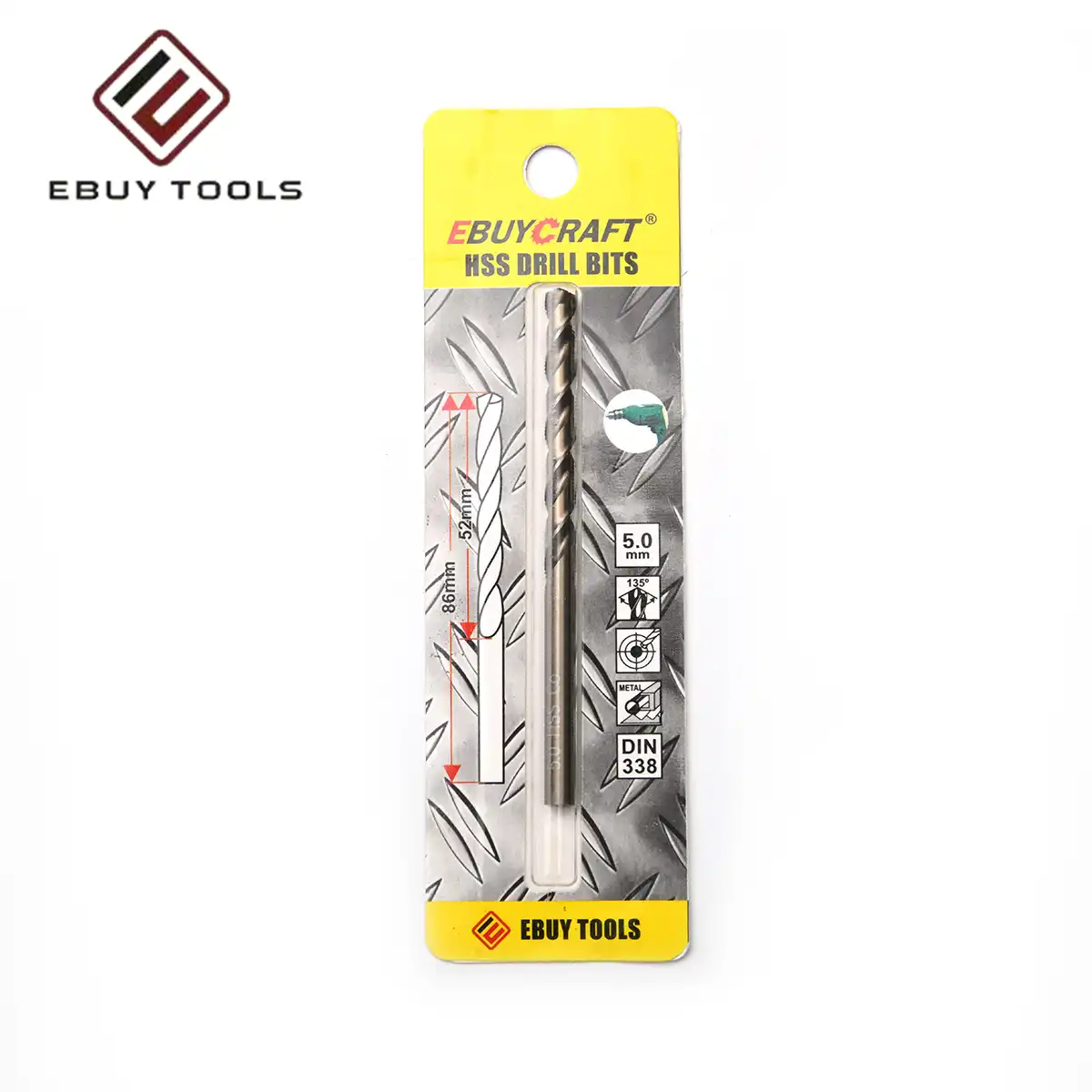
DIN standards come from Germany's past of making very precise products. DIN 338 is the most popular standard used for general-purpose twist drills. These rules describe the ranges of diameters, flute lengths, and overall lengths of cylinder-shaped shank drills. In DIN 1897, Morse taper shank drill bits are talked about. In DIN 340, longer drills that can be used for deep-hole drilling are talked about. Metric measurements and tight error classes, like h8 for circumference accuracy, are what the DIN system is all about. This makes sure that all of Europe's tools for making things can connect and work together.
Origins and Scope of ANSI Standards
In the US, ANSI standards, especially ASME/ANSI B94.11M, tell us how to make twist drills. This standard lists fractional-inch, number-size, and letter-size drills, along with their metric equivalents at length. Web width, chisel edge angles, and flute helix angles are all set by ANSI guidelines. These rules have a lot to do with how things are made in the United States. The method sometimes lets tolerance bands be a little bigger than DIN. Things have changed in what they are used for and how they are made.
Key Identification Markings
DIN-compliant drill bits have numbers on them that show they meet standards, tell you what kind of material they are made of, and tell you what size they are. Most bits that are ANSI-compliant show information about the material along with partial sizes or number/letter marks. If people who work in procurement know what these markings mean, they can quickly make sure that they are following the rules during getting reviews and make sure that all foreign buying channels have the right tools in stock.
Dimensional and Material Specifications in DIN vs ANSI for HSS Twist Drill Bits
The technical details that make DIN and ANSI standards different have a big impact on how well they work, how accurate they are, and what tasks they can be used for. Metric and British numbers are not the only ones that are different. Changes happen in forms, sizes, and types of things as well.
Diameter Tolerances and Measurement Systems
The DIN standard shows drill bit sizes in metric units with a class h8 error. For a 10mm bit, this means that the width is accurate to within +0/-0.014mm. ANSI standards use tolerance bands for fractional inches, number sizes (80–1), and letter sizes (A–Z). It is very important to take these changes in accuracy into account when making holes that need to fit together correctly, especially when using a high speed steel twist drill bit, whose wear and thermal expansion can further affect real-world fit. In precise engineering tasks, an ANSI 25/64-inch bit (9.92mm) might not be able to make holes that are the same size as a DIN-standard 10mm bit. This could change the gaps between parts in the assembly.
Point Angles and Cutting Geometry
Different point angles can be used for both cutting geometry and point angles. Like, 118° is good for all-purpose drills, and 135° split-point shapes make it easier to push through harder materials. If you look at DIN standards, the link between the chisel's edge thickness and point angle is usually more exact. But ANSI standards give makers more freedom within a wider range of parameters. The high speed steel twist drill bits made by Danyang Ebuy Tools have perfectly ground 135° split points that center themselves when they touch something. This means you don't have to walk around as much and can drill deeper with less force. Cutting down on cycle time has a direct effect on production costs, which is why this form is so useful for CNC grinding.
Material Grades and Alloy Compositions
To list the amounts of chromium, molybdenum, cobalt, and tungsten, DIN standards often use ISO material types such as M1, M2, M35, and M42. The names of ANSI standards are a lot like these, but they may also use names from the American Iron and Steel Institute (AISI). It's important to know these material specs so you can match drill bits to workpiece materials. Austenitic stainless steels need M35 or M42 types that are strengthened with cobalt to stay hard at high temperatures. Mild steels, on the other hand, can use standard M2 compositions. The high-quality tungsten-molybdenum-chromium alloy steels used by Ebuy Tools to make HSS twist drill bits stay hard (63–66 HRC) at temperatures up to 600°C. Cobalt grades M35 and M42 can reach 66 to 68 HRC and can be used in heat up to 650°C.
Flute Length and Overall Length Variations
When the drill diameter, flute length, and total length change, they must follow certain rates set by DIN 338. These amounts help chips get out while keeping the part stiff. The ANSI guidelines say the same thing, but their normal lengths for sizes that are similar are not the same. These changes in size affect how the machine is set up, especially in fixed tooling systems or turret-style tool changers where the Z-axis is placed by the length of the machine as a whole. Procurement teams have to make sure that new tool holds and clamp systems will work with the ones that are already in place so that things don't stop.
Comparative Analysis: DIN vs ANSI HSS Twist Drill Bits in Procurement Decisions
When making smart purchasing decisions, you need to think about how high speed steel twist drill bits that follow different standards work in real life, taking things like cost and source reliability into account. This study of comparisons helps purchasing managers make smart decisions that meet their needs for technology and their budgets.
Performance in Industrial Applications
Because European CNC machines are made to metric standards, DIN-standard drill bits usually work very well with them. This is because the spindle tapers, clamp systems, and tool presetting devices are all made to metric standards. This means that ANSI-compliant bits will work with American machine tools that are built around fractional-inch casting ways. When doing tasks that need to be almost perfect, like drilling for airplane parts, the difference in performance is most obvious. This is because the accuracy of the hole depth affects how well the parts fit together and how the load is spread. Both standards produce good results when they are properly matched to the needs of the application. But it can go wrong when different standards are used in the same tools system.
Cost Structures and Volume Discounts
Cobalt-enhanced HSS bits that meet either standard have the same tool life when cutting hardened steel. They can make more than 2,000 cuts before they need to be resharpened. This was tested on production lines for car engine parts. It's still more important to pick the right type of stuff than to follow the rules. People buy things, and the prices of those things rely on where the companies that make them are based, how much they make, and how they distribute their goods.
When it comes to metric sizes, European sellers of DIN-standard bits often have good deals, while North American sellers of fractional-inch ANSI bits may have better deals. When you buy more than 1,000 pieces, you'll be charged different amounts. When you buy in bulk, you usually save a lot of money. The factory that Ebuy Tools has is 77,000 square meters big and can make 150,000 pieces of tools every day. In other words, they can always give a lot of goods at fair prices that meet both DIN and ANSI standards. Most lead times are between two and six weeks, but if you need them faster, they can be shorter. It varies on what kind of finish you need and how difficult the specs are.
Supplier Reliability and Certification
To make sure that sellers follow the rules, check their quality licenses, testing methods, and systems for keeping track of their goods. The hardness test results and physical inspection records show what the alloy is made of and how well the heat treatment worked. Material test certificates from reputable makers show what the alloy is made of. There are 319 trained workers at Ebuy Tools who use different quality control methods.
Some of these are random sampling to use Rockwell C testers to check how hard the tools are, concentricity testing to make sure that differences in cutting lip height stay between 0.02mm and 0.05mm, metallographic analysis to make sure that carbides are spread out evenly, and performance testing to follow ISO 235 guidelines for life-cycle benchmarking, all of which are critical for validating the quality of a high speed steel twist drill bit. Before a package is sent out, these checks make sure that every item meets the standards.
How to Choose the Right Standard and Drill Bit for Your Project
To pick the right standard and high speed steel twist drill bit specs, you need to think about your project's needs, how well your tools will work together, and your work goals. This way of making choices walks people who work in buying through important things they should think about.
Analyzing Material Types and Drilling Requirements
To drill through different types of materials, you need drill bits with different features. Aluminum and other non-ferrous metals don't get too much material buildup because the cutting edges are sharp and the blades are smooth. Normal M2 HSS with a bright finish or TiN covering can do this. Cobalt must be added to certain kinds of stainless steel to keep them from work-hardening and to keep their cutting edge quality at high temperatures. To control how much heat they make, titanium metals need a certain amount of cobalt and certain point forms. There is a 135° split point on Ebuy Tools' drill bits that levels them automatically and lets you drill deeper with less force. This works really well with tough materials and lowers the force loads that can bend the item.
Equipment Compatibility Considerations
The way tools are set up these days has a big effect on the choices that are available. As per DIN norms, most European-made machine tools have chuck systems, metric spindle tapers (Morse, Jacobs), and ways to adjust the length of the tools. A lot of tools and equipment made in the United States use ANSI-based presetting standards and fractional-inch casting methods. It's harder to use tools, keep track of supplies, and program machines when there are different standards at work. It's easier to deal with these issues when everyone uses the same method. However, places that use a lot of different types of tools may need to keep a little of each standard on hand.
Regulatory and Industry-Specific Requirements
Some businesses have strict rules that employees must follow. Materials often need to be approved and able to be traced back to accepted standards when they are used to make things for aircraft. It's possible that OEM quality systems will tell car makers what tools they need to make for each customer. When making medical equipment, it's common to need very close limits on sizes. It is best to carefully pick the standards that are used in order to meet these needs. If you understand these rules before you buy something, you can escape needing to pay a lot of money to fix problems or wait for approval.
Trusted Supply Partnership
Having a trusted supply partnership with manufacturers whose products meet both DIN and ANSI standards gives you more choices for what to buy while keeping the quality high. Both DIN 338/340 and ASME/ANSI B94.11M standards can be met by high speed steel twist drill bits made by Ebuy Tools. There are strict steps that are taken on each bit to make sure it meets the h8 mistake bounds. Because they can work with two different standards, customers can work with fewer service providers. This makes it easy to check the quality of the work and keeps performance standards the same for all manufacturing needs.
Conclusion
Learn the difference between DIN and ANSI standards for high speed steel twist drill bits to help people who are buying make smart decisions that meet technical needs, work with other tools, and keep costs low. Both standards ensure good production and consistent sizes, but when you buy something, you need to carefully consider their different tolerance classes, measurement methods, and geometric requirements. It is possible to avoid compatibility issues and improve working performance by making sure that drill bit standards are in line with current tools, workpiece materials, and industry rules. You have more ways to buy things when you work with makers whose products have been allowed to meet both standards. The quality also stays high for a wide range of industrial uses.
FAQ
Can I use DIN drill bits in ANSI-standard tools?
What makes them work well together is how the machine tool stand is set up and the width of the handle. Bits with a metric shank can be used with metric collets and chucks, but tools with an imperial shank must be used with metric bits. There are extensions, but they might make the hole less good because they cause runout. Three eighths of an inch (9.525 mm) and ten millimeters (DIN) apart, these bits make holes that are not the same size. Before moving standards, make sure that the sizes are the same so that there are no issues with building in high-precision situations.
Do the prices change if you buy a lot of DIN or ANSI drill bits?
Prices are set by where the things are made and how demand changes in different places, not by normal differences. Prices for DIN metric sizes are often good from European sources. Prices for ANSI fractional sizes may be better from North American sellers. No matter what the norm is, the saves start around 500 to 1,000 pieces and get a lot bigger as the number of pieces goes up. The total landing cost is the best way to compare prices because taxes and shipping costs can cancel out any benefits from the unit price.
How can I be sure that the real level is being met?
Ask for material test certificates that show what the metal is made of, measurement inspection records that show how accurate the shape is, and hardness test results that show the heat treatment was done right. Manufacturers with a good name give you tracking paperwork that links products to specific batches of production. Standards are used to measure important things and Rockwell hardness tests are done for actual proof. The danger of getting fake goods is much lower when you buy from well-known sellers with quality control systems that have been cleared.
Partner with Ebuy Tools for Standards-Compliant HSS Twist Drill Bit Solutions
high speed steel twist drill bits made by Ebuy Tools are precisely designed to meet both DIN 338/340 and ASME/ANSI B94.11M standards. That way, you can buy them in more ways without lowering the grade. Our tungsten-molybdenum-chromium metal stays hard (63–66 HRC) at temperatures up to 600°C because of the way it is structured.
For tough jobs, grades with extra cobalt reached 66 to 68 HRC. We can safely give volume for machining processes in the car, aerospace, and general fields because we make 150,000 pieces every day and have strict quality controls. You can email our technical team at [email protected] to talk about your specific needs, get material certifications, or get prices. We are a trustworthy company that makes high speed steel twist drill bits.
References
1. Deutsches Institut für Normung, "DIN 338: Twist Drills with Cylindrical Shanks - Technical Specifications and Quality Standards," German Institute for Standardization Technical Committee, 2019.
2. American Society of Mechanical Engineers, "ASME B94.11M: Twist Drills - Dimensional Standards and Manufacturing Tolerances," ASME International Standards Publication, 2020.
3. Machinery's Handbook Editorial Staff, "Cutting Tools and Machining Practices: Comparative Analysis of International Standards," Industrial Press Inc., 31st Edition, 2022.
4. International Organization for Standardization, "ISO 235: High-Speed Steel Tool Bits - Material Specifications and Performance Testing Protocols," ISO Technical Committee on Cutting Tools, 2018.
5. Shaw, Milton C., "Metal Cutting Principles: Tool Material Selection and Standard Compliance in Industrial Applications," Oxford University Press, 3rd Edition, 2021.
6. Roberts, George A., "Tool Steels: Properties, Selection Standards, and International Classification Systems," ASM International Handbook Committee, 6th Edition, 2020.