.webp)

In precise machining and assembly, the key to success is picking the right cutting tool. A TCT saw blade, which has tungsten carbide tips brazed onto sharpened steel bodies, is the most durable and effective way to cut through wood, aluminum, and non-ferrous metals. These blades solve some of the most important problems in production, like too much downtime from changing tools too often, bad surface finish on rough materials, and blades that wear out too quickly in high-volume cutting settings. Unlike standard high-speed steel options, tungsten carbide keeps its sharp edges at temperatures above 600°C. This means it lasts 10 to 20 times longer and costs a lot less to run.
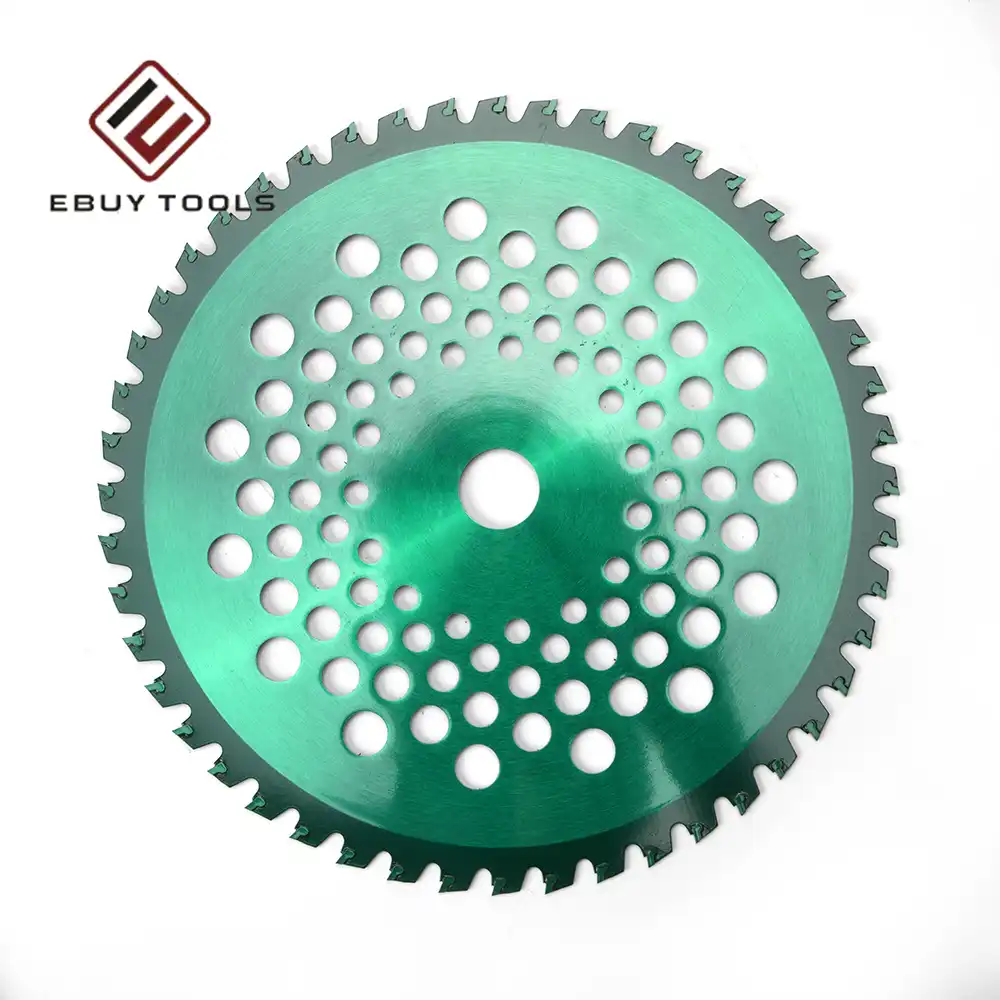
Understanding TCT Circular Saw Blades: Features and Benefits
Today's manufacturing needs tools that always work well when they're under a lot of stress. This need is met by TCT saw blades, which are made with smart material engineering and precise production methods.
Construction and Material Science
An important part of any good blade is its hybrid makeup. Hardened tool steel bodies (75Cr1 or SKS51 grade) are used to make our TCT saw blades. These bodies give the blades the flexibility they need to handle shock during cutting. The tungsten carbide tips are very hard because they are made up of micro-grain carbide particles that are bound together with cobalt. They are harder than HRC 88 on the Rockwell scale. This mixed-type design has both the toughness needed to keep the body from breaking and the high hardness needed at the cutting edge.
Using a silver-copper metal, the brazing process joins these carbide tips to the steel body. This makes bonds that can withstand both mechanical stress and heat expansion. During use, this connection must be able to withstand changes in temperature, lateral forces, and the steady pressure of materials touching each other without breaking.
Key Performance Advantages
The main benefit of carbide technology is that it is better at withstanding heat. Friction makes a lot of heat when cutting rough materials like MDF, plywood with a lot of glue, or aluminum alloys. When these things happen, traditional steel blades quickly lose their edge. Our tungsten carbide tips keep their shape and structure even when the edge temperature gets close to 600°C. This means that they can be used continuously without losing their effectiveness.
Longer service life directly leads to lower production costs. Shop managers always say that our blades make 10 to 20 times more cuts before they need to be sharpened than blades made of regular steel. This durability comes from carbide's resistance to sharp wear, which is what usually dulls cutting edges in industrial settings. The fact that each blade can be properly resharpened 5 to 10 times increases the return on investment even more.
With carbide tools, both cutting speed and surface quality get better at the same time. The ultra-hard tips keep their exact shape throughout their useful life, which makes the kerf sizes and cut surfaces uniform. This stability is especially useful when making furniture, architectural woodwork, or precision metals, where the value of the finished product depends on how well it fits together and looks.
Tooth Geometry and Cutting Mechanics
How well a TCT saw blade cuts through material depends on how its teeth are designed. We design three main combinations that can be used in different situations:
Teeth that are ground with alternate left and right angles, usually between 10 and 20 degrees, make up Alternate Top Bevel (ATB) shape. The angled teeth in this design make crosscutting solid wood and plywood very easy. They cut through fibers neatly, reducing tear-out on both the entry and exit sides of the cut. The shearing action makes surfaces that are smooth enough for furniture and cupboard parts that can be seen.
The shape of the Triple Chip Grind (TCG) on a TCT circular saw blade changes between chamfered teeth and flat-top raker teeth. The flat raker cleans up the sides, and the chamfered tooth cuts the kerf in the middle. This design makes the cutting forces more widely distributed and stops the edge chipping that happens a lot when working with layered panels, metals that aren't iron, and rough composites. TCG blades are the most common type used for cutting aluminum extrusions and handling double-sided laminating panels.
High-Alternate Top Bevel (Hi-ATB) setups use sharp bevel angles of more than 20 degrees, and sometimes even 30 degrees. These special blades keep veneered panels and melamine-coated boards from splitting, which is important because the quality of the surface determines the value of the finished product. Because the angles are so sharp, they slice through the surface fibers neatly before the tooth's body touches the underlying material.
How to Choose the Best TCT Saw Blade for Your Application?
When making choices about purchases, you have to match technical requirements with business needs. Understanding these factors is important for getting the best results and the lowest costs.
Critical Technical Specifications
The blade's width and the hole in the frame must be exactly the right size for your machine. Industrial table saws and miter saws usually have widths between 180 mm and 450 mm, and arbor holes are usually 25.4 mm or 30 mm in size. When you use a TCT saw blade outside of its intended width range, you risk safety and lose cutting power.
The number of teeth has a direct effect on how fast something cuts and how smooth the surface is. Lower tooth counts (24 to 40 teeth) remove material quickly, so they can be used for breaking solid lumber and dimensional wood when speed is more important than surface quality. Higher tooth counts (60 to 100 teeth) give smoother finishes at slower feed rates. This makes them perfect for crosscutting hardwoods, cutting plywood panels, and working with materials that don't need much cleaning on the outside.
Power needs and trash are both affected by kerf width, which is the amount of material removed during cutting. Thin-kerf blades (usually 2.2 to 2.8 mm) make less sawdust and use less motor power, which is good for businesses that have to deal with high-cost materials or limited machine power. Standard-kerf blades (3.0 to 3.5 mm) are better for heavy-duty industrial uses because they have a more stable blade body and can better get rid of heat.
RPM numbers tell you what speeds are safe to use. Each blade goes through tensioning steps that are set up for particular speeds of spinning. If you go over the recommended RPM, the machine could fail catastrophically. On the other hand, if you go below the optimal speed, it won't cut as well and may get too hot. Match the spinning speed of your saw to the range of recommended RPMs that are written on the blade body.
Material-Specific Selection Guidance
For example, woodworking tasks need different skills than metal cutting tasks. Choose TCT saw blades based on the density and abrasive qualities of the material you are working with, whether it is raw wood, manufactured wood goods, or composites. Because the glue in MDF and particleboard quickly dull regular blades, TCG shape with its spread-out cutting forces is the best choice. ATB designs that cut neatly through thick fiber structures are good for solid hardwoods.
When cutting aluminum, you need to take certain things into account. Because the material tends to weld onto cutting edges, negative rake angles (usually -5 degrees) are needed to stop chips from forming and keep the material from sticking to the edge. Tooth counts should stay modest (usually between 60 and 80 teeth on a 300 mm blade) so that there is enough gullet room for chips to move out quickly. We have blades with special finishes that make it even less likely for metal to stick to carbide surfaces.
Comparing Blade Technologies
Knowing about other options helps to explain investing in TCT saw blades. High-speed steel blades are cheaper at first, but they get dull quickly in production settings and need to be replaced or sharpened more often. Their sensitivity to heat slows them down, which makes them less productive. Diamond blades are great for cutting very rough materials like stone or fiber cement, but they are too expensive for cutting wood and soft metals. Abrasive wheels are good at cutting heavy metals, but they leave rough edges and make a lot of heat. TCT saw blades are the best of both worlds because they work better with a wide range of materials and don't cost as much to run.
Maintenance and Optimization for Maximum TCT Saw Blade Performance
To keep cutting efficiency high, you need to do routine repair and be aware of how things work. When you take care of your TCT saw blade the right way, it lasts longer, cuts better, and keeps you safe at work.
Sharpening and Reconditioning
When sharpened by a professional, dull blades work almost as well as they did when they were new. When properly cared for, carbide tips can be reground 5 to 10 times, but each time they are sharpened, a little bit of material is lost. To keep the original tooth shape, the process needs special diamond grinding wheels and careful angle control. We suggest keeping track of how many times the blades are sharpened and replacing them when the carbide height drops significantly.
Setting times for polishing stops blades from becoming too dull, which can damage the bodies of the blades. Increasing motor load, burning lines on cut surfaces, too much sawdust instead of clean chips, and more noise during operation are all signs that can be seen. Set standard performance measures for when the blades are brand new, and then keep an eye out for changes that mean the blades need to be sharpened soon.
Operational Best Practices
Vibration and early wear can be avoided by installing things correctly. Place the blades so that the arrows pointing in the same direction as the saw spindle's movement line up. Tighten arbor nuts to the manufacturer's specs. Too much force can bend blade bodies, and not enough tightening lets them slip. Check the edges to make sure they are clean and flat; damage or dirt can cause runout, which leads to bad cuts and faster wear.
Feed rate optimization strikes a balance between output and blade life. When you press on the object too hard, the tips get too hot, and shock loading can crack the carbide. Not enough feed rates lead to grinding instead of cutting, which creates too much heat without removing enough material. If you want to make sure you're using the right feed rates, look for chips that are shaped like ribbons and those that are finely divided and made of metal.
When cutting metal, cooling and lubricating the blades make them last longer. When working with wood, you usually don't need any oil, but when cutting metal, mist lubrication lowers the heat and keeps the material from sticking to the teeth. Even a small amount of oil greatly increases the time between sharpness.
Safety and Troubleshooting
Problems can be caught early on by inspecting things on a regular basis. Look for carbide tips that are broken or missing, body cracks that spread from mounting holes or growth slots, and bodies that are warped too much. In any of these situations, the TCT saw blade needs to be put away right away because continuing to use it could lead to a catastrophic failure with serious safety effects.
Too much shaking in a TCT circular saw blade means there are problems that need to be fixed. Damage to the blade, bad fitting, worn arbor bearings, or resonance between the blade design and the working RPM are all possible reasons. Take care of the shaking right away to avoid poor cut quality and possible safety risks.
Technical Specifications Deep Dive for Informed Procurement
Knowing the specs of a TCT saw blade makes it possible to match tools perfectly with the needs of an application. When it comes to cutting performance, working safety, and cost-effectiveness, these technical factors have a direct effect.
Dimensional Parameters and Their Impact
The highest cutting depth is set by the outside width of the blade. The TCT saw blade must be able to go through the material with enough room for the saw's guard and arbor assembly to fit. Figure out the needed diameter by adding the necessary clearance to the largest piece of work. Diameters of 250 mm, 300 mm, 350 mm, and 400 mm are common in industry.
Inside diameter (arbor hole) must match your saw's spindle precisely. Standard sizes are 25.4 mm (1 inch) and 30 mm, but some specialized tools may need different sizes. Using reduced bushings to change the holes in the blade arbor is unsafe and doesn't improve performance. Instead, make sure you get blades that are a perfect fit for your equipment.
Tooth Geometry Parameters
The hook angle (also called the rake angle) shows how hard the teeth bite into the object. Positive hook angles (5 to 20 degrees) pull material into the blade, which makes it possible to cut softwoods and non-ferrous metals quickly. Neutral hook angles (0 degrees) combine cutting speed and control, making them good for a wide range of tasks. Negative hook angles (-5 to -10 degrees) stop aggressive feeding, which is important when cutting metal or when using CNC tools to do climb-cutting.
The gullet level and tooth spacing must be able to handle the chip amount. To keep the teeth from packing together, materials that make big chips, like solid wood and thick metal, need deep gullets and wider tooth spacing. Fine-toothed blades work best with thin materials and tasks that care more about the finish than the speed of cutting.
Operational Parameters and Safety Ratings
The highest RPM rates take into account the rotational forces that act on the blade bodies as they spin. These forces get stronger as the speed goes up—quadrupling the RPM makes the stress on the blade parts four times higher. If you go faster than the stated speeds, something bad could happen. Based on the width, plate thickness, and expansion hole design of our blades, they tell you the safest RPM. Make sure that the saw's spinning speed when it's not loaded stays within the blade's grade.
Thermal growth is controlled by expansion slots. When you cut, you make heat that makes the blade bodies spread outward. Without expansion holes, this growth puts stress on the inside of the TCT saw blades, which can bend or break them. In our designs, there are laser-cut slots that are often filled with polymer materials that stop vibrations while letting heat expand. This tech cuts noise levels by up to 10 decibels while keeping the blades flat while they're working.
Conclusion
To choose the right TCT saw blades, you have to balance technical specs with the needs of the application and buying factors. Because carbide tips are harder and can handle more heat, they last longer and cut through both metal and wood with the same level of accuracy, which lowers the cost of tools and production downtime. Proper upkeep, such as cleaning the blades as needed, installing them correctly, and keeping an eye on how they're working, will extend their life and make sure they cut well. Strategic partnerships with suppliers based on technical support, quality testing, and on-time delivery help producers make the most of their cutting processes.
FAQ
What makes TCT blades superior to high-speed steel alternatives?
Tungsten carbide tips stay hard at temperatures above 600°C, while high-speed steel quickly loses its hardness and heat. Because they can handle heat better, TCT saw blades can cut rough materials like MDF, laminates, and aluminum alloys for 10 to 20 times longer before they need to be sharpened again. Even though it costs more at first, the longer lifespan lowers the cost of tools and output downtime.
How do I determine the correct tooth count for my application?
When speed is more important than finish, lower tooth numbers (24 to 40 teeth) are best for ripping and rough cutting. When you have between 60 and 100 teeth, the cuts are easier, which is great for crosscutting, working with plywood, and finishing. Selection is also affected by the thickness of the material and the power of the machine. Thicker materials do better with fewer teeth because they have bigger gullets for chip clearing.
Can TCT blades cut both wood and metal?
Blades made for cutting wood usually have positive hook angles and ATB tooth shape that is best for cutting fibers. Negative hook angles and TCG shape are used by metal-cutting TCT saw blades to control heat and keep materials from sticking together. Even though there are specialized combination designs, the best performance comes from choosing blades that are made for a specific job. We make combinations that are specifically made for working with wood, cutting metal, and working with multiple materials.
Partner with Ebuy Tools for Premium TCT Saw Blade Solutions
To make great products, you need to be able to rely on cutting tool makers who know how important accuracy is and how production works. Ebuy Tools has 15 years of experience in research and development, as well as a modern factory that is 77,000 square meters and is run by 319 trained workers. Our daily production capacity is more than 150,000 pieces, which makes sure that high-volume industrial processes always have what they need. We keep popular specs in stock, which lets us deliver quickly. For unique setups, the wait time is about 15 days. Whether you need carbide or HSS materials, special coatings to make them last longer, or tech help for tough jobs, our team can help you find the best options for your needs. Email our technical experts at [email protected] to talk about your cutting tool needs with a reputable TCT saw blade maker that cares about your business's success.
References
Machinery's Handbook, 31st Edition. Industrial Press, 2020. "Cutting Tools and Machining Practices."
Sandvik Coromant. "Modern Metal Cutting: A Practical Handbook." AB Sandvik Coromant Technical Editorial Department, 2018.
Kalpakjian, S. and Schmid, S.R. "Manufacturing Engineering and Technology." Pearson Education, 7th Edition, 2014.
Forest Products Laboratory. "Wood Handbook: Wood as an Engineering Material." U.S. Department of Agriculture, General Technical Report FPL-GTR-190, 2010.
American National Standards Institute. "ANSI B7.1: Safety Requirements for the Use, Care, and Protection of Abrasive Wheels." 2017.
Tool and Manufacturing Engineers Handbook Volume 1: Machining. Society of Manufacturing Engineers, 4th Edition, 2012.