.webp)

Using the extreme hardness of industrial-grade diamonds bound within a metal structure to break up and remove material at the microscopic level is what diamond cutting disc blade cutting is all about. Unlike most abrasives, which wear down through contact alone, a diamond cutting disc works by creating stress points on the workpiece surface through a controlled micro-fracturing process. This is how the diamond crystals are revealed. As the disc spins at very fast speeds—often up to 80 meters per second—these diamond particles go through hard materials like concrete, granite, or steel that has been strengthened. They break molecular bonds one by one while the metal bond slowly wears away, revealing new cutting edges. This self-sharpening system makes sure that the cutting performance stays the same throughout the tool's useful life. This solves the main problem in industry, which is how to keep precision and efficiency across different materials without having to change tools often.
Understanding Diamond Cutting Discs – Composition and Working Principle
We're really talking about molecular engineering when we talk about cutting through the toughest materials used in engineering today. The diamond cutting disc is the result of many years of work in the field of materials science that has been turned into a useful tool.
The Structural Foundation of Diamond Discs
A precision-tensioned steel core, usually between 0.8mm and 3.2mm thick, is at the heart of every professional-grade diamond blade. The thickness depends on the disc diameter and the application. This steel base is more than just a place to put things. It's also a carefully designed way to reduce vibrations and let heat escape. When Danyang Ebuy Tools makes tools, they put each steel core through heat stress release steps that get rid of internal tensions. This keeps the tools from warping, which happens with lower-quality goods and makes cutting less accurate. The core is laser-cut to make sure the dimensions are exact, and then it goes through precise balancing steps that keep vibrations within 0.02mm at working speeds.
The diamond pieces are made up of a complex mix of man-made industrial diamonds floating in a metal powder matrix. We get polycrystalline diamond particles that are sorted by micron size—usually 40/50 mesh for rough cutting and 60/80 mesh for finishing—so that the exposure rates are just right during operation. Different types of metal bonds are used for different types of materials. For example, cobalt-based bonds are used with hard aggregates like granite, copper alloys are used with abrasive concrete, and iron-based formulas are used for general building tasks. This bond chemistry directly affects the rate of wear, with harder bonds working better with softer materials and vice versa. This is because the bond needs to wear away at a rate that matches the diamond's exposure needs.
How Diamond Discs Actually Cut Material?
The way it cuts is very different from how regular grit wheels work. Instead of grinding by contact alone, diamond particles work like a huge number of small chisels. It causes localized stress densities that are higher than the material's compressive strength when a diamond crystal touches a workpiece that is under load. This leads to microfracturing, which is when tiny chips break off where chemical links break. As the disc spins, the process happens millions of times per second, making what looks like a smooth cut but is actually very carefully managed destruction at the tiny level.
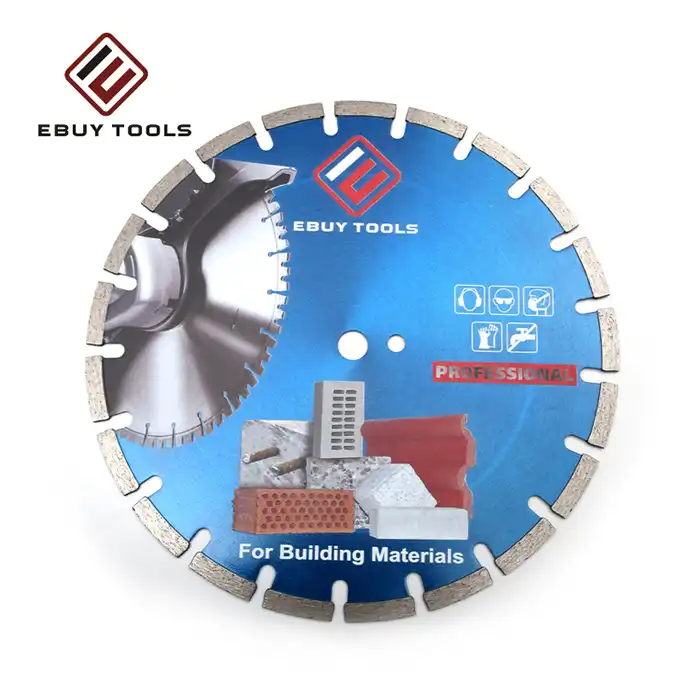
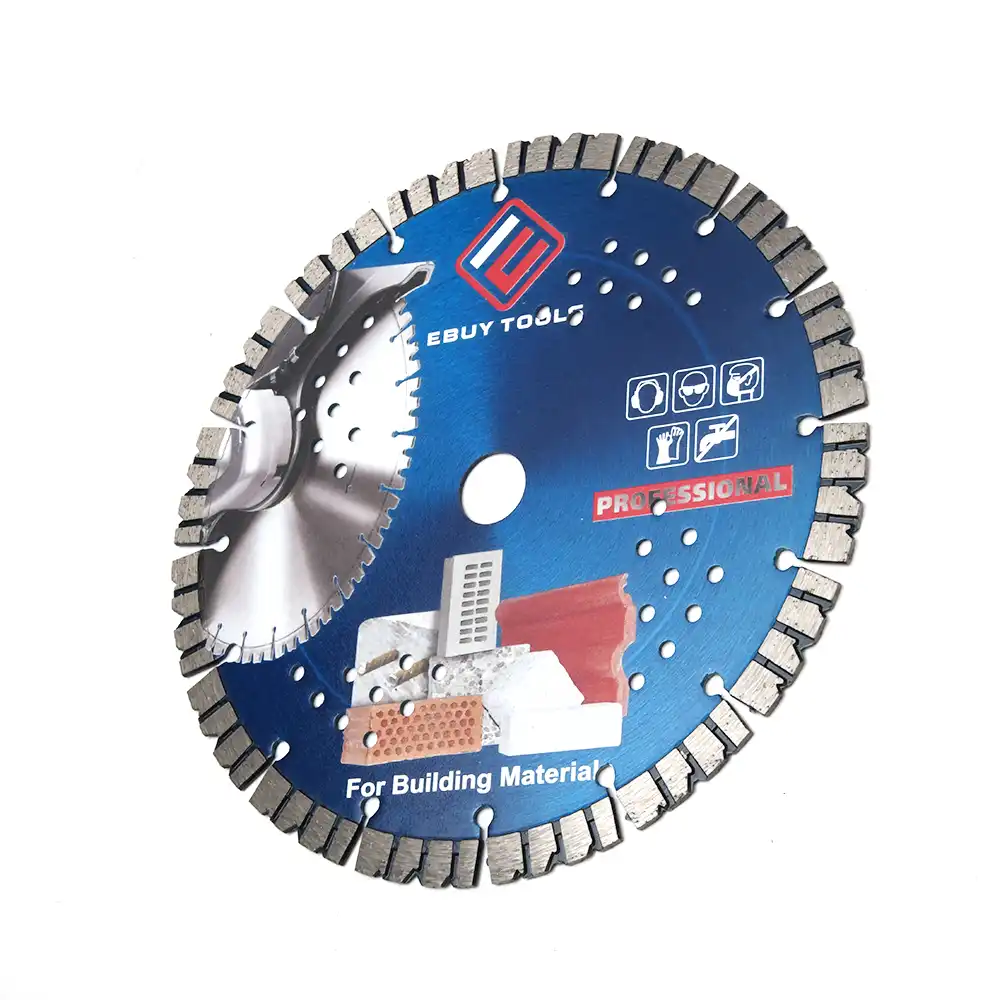
The constant serrated edge of our Turbo Diamond Cutting Disc shape makes this process better. The turbo teeth lower the contact area at any given time. This focuses the cutting forces and makes penetration rates 30–40% higher than with flat-rim designs. At the same time, the castellations make rough airflow patterns that move swarf away from the cutting zone. This gets rid of the debris that stops re-cutting, which happens when freed particles get stuck between the blade and the object, causing false loading that wastes time and energy and makes too much heat.
Managing the temperature for a diamond saw blade turns out to be very important for success. In oxygen-rich settings, diamond starts to graphitize, which means it loses its toughness, at about 700°C. The cooling ducts built into the turbo design move air from the outside through the cutting zone. This creates convective cooling that keeps the working temperature well below this level, even when dry cutting is done quickly and aggressively.
Performance Advantages Over Traditional Alternatives
Standard grit discs use aluminum oxide or silicon carbide bits that break apart and fall off all the time, so they need to be replaced often. These products also make a lot more heat because they don't conduct heat as well and cut more easily when they rub against each other. In real life, an abrasive disc might cut 50 to 80 linear feet of reinforced concrete before it needs to be replaced. A good diamond cutting disc, on the other hand, can usually cut 400 to 600 linear feet in the same conditions.
Blades with a carbide tip last a long time, but they aren't hard enough for very rough materials. The Mohs scale goes from 9 for carbide to 10 for diamond, which is the hardest known substance. When cutting materials above 7 on the Mohs scale, like granite, quartzite, or hardened concrete with silica grains, this difference, which at first glance seems small, leads to huge improvements in performance.
The effects on the economy go beyond just how often things need to be replaced. Cutting down on the time needed to change blades leads to real gains in production. Minimizing non-cutting time has a direct effect on throughput in high-volume manufacturing settings like making car parts or aircraft parts. When our precision machining clients add up all of their running costs, such as labor, machine time, and consumables, they find that moving to diamond tools cuts their cost-per-cut by 40–55%.
Choosing the Right Diamond Cutting Disc for Your Needs
To choose the right cutting tool, you need to match its technical specs to your specific operational needs. To do this, you need to know about both the materials you're cutting and the situations you'll be working in.
Material Compatibility and Segment Configuration
For each material, a different method is needed. For reinforced concrete with steel rebar, you need a blade that can cut both the cementitious material and the metal without losing any segments. This problem is solved by our Turbo diamond cutting disc, which has a special diamond matrix composition that keeps cutting action even when different materials are used. The continuous serrated edge stops the section snagging that leads to catastrophic failure when switching from concrete to steel.
Making things out of granite and real stone is not the same. Igneous rocks in Classes 4 and 5 have very hard crystalline structures that wear down blades very quickly. This is where diamond content, which is shown as a percentage by weight, is very important. For professional stone cutting, amounts of 30 to 40 percent are usually needed to make sure that the diamond has enough contact over the segment's wear life. Lower amounts might save money at first, but they hurt performance quickly because the bond goes away faster than the diamonds can be revealed.
The performance qualities are also affected by the section height. Taller segments (usually 10–12 mm) last longer, which is especially helpful in production settings where changing blades can slow down work. Shorter segments (6–8 mm) use less material at first and work well in situations where cutting depth clearance changes when the blade width is shrunk.
Technical Specifications and Operating Parameters
The diameter of the diamond cutting blade must match the specs of your tools and the cutting depth you need. Angle grinders that you hold in your hand are usually 4 inches (100mm) long, and walk-behind saws are usually 14 inches (350mm) long. On every disc we make, we laser-etch the safest working speed, which is given in RPM or surface meters per second. If you go beyond these limits, the disc could fail completely because the rotational forces would be too strong for the steel core to handle.
The arbor hole width, also known as the center fixing bore, needs to be exactly the same as the spindle on your equipment. The most common sizes are 20 mm, 22.23 mm (7/8 inch), and 1 inch. In professional settings, you should not use adapter bushings because they make the blade less stable.
The choice of bond hardness is inversely related to the hardness of the material. When cutting wet concrete or asphalt, which are both soft and rough, you should choose a hard bond that doesn't wear out quickly. On the other hand, hard materials like granite or finished high-strength concrete need weaker ties that wear away easily, revealing new diamond cutting edges all the time. "Glazing" happens when the bond wears too slowly, making diamonds shine instead of cut. This concept stops "glazing."
Strategic Procurement Considerations
Buying in bulk has big economic benefits that go beyond lowering unit costs. By building ties with makers like Danyang Ebuy Tools, you can get production schedules that work with your business cycles. This saves you money on inventory costs and guarantees a steady supply of goods. The fact that we can make 150,000 diamond saw blades every day means that we can handle both last-minute orders and planned large exports without having to rush.
Supplier dependability goes beyond just delivering on time. When optimizing cutting settings for new materials or troubleshooting performance problems, the ability to get technical help is very important. Our R&D department works directly with clients to create unique solutions for specific tasks. This could mean changing the shape of segments to fit certain aggregates or making changes to bond formulations to fit specific cutting conditions.
It's just as important that the quality of each output batch is the same. We use statistical process control measures to keep an eye on important variables and performance traits. This way, we can be sure that batch 10,000 works the same way batch 1 did. Because of this, you can set the best cutting settings, like feed rates, spindle speeds, and water flow, knowing that they'll still work for future orders.
Future Trends and Innovations in Diamond Blade Cutting Technology
The cutting tool business is always changing because people want better performance, longer life, and less damage to the environment. Procurement workers who are making long-term plans for tools should pay attention to a number of new trends.
Advanced Materials and Bond Chemistry
Nanotechnology is starting to have an effect on the making of diamond tools. Nano-structured metal links might be better at keeping diamonds together than regular ones, which means less section loss when the conditions are tough. Nano-phase cobalt or copper matrices have very small grain structures that make bonding surfaces more regular. In early tests, this could increase tool life by 20–30%.
The goal of hybrid bond systems that use both metal and resin is to provide the strength of metal ties and the ease of cutting that comes from resin formulations. When a good surface finish is needed without slowing down work, like when making precise stones or finishing building concrete, these combination methods look like they could work well.
Cubic boron nitride (CBN) is the main subject of research into other superabrasives for specific metal cutting tasks, complementing diamond saw blade. Diamond is better at cutting stone and concrete, but CBN is better at cutting harder steels and nickel-based superalloys, where diamond breaks down quickly because of chemical reactions. If it becomes cheaper to make CBN segments, more machining industries that use traditional tools might switch to using superabrasives.
Design Innovations for Specialized Applications
Customization features are becoming a bigger way for makers to stand out. Industrial customers with specific needs benefit from being able to make small batches of custom designs. We've made unique segment patterns for clients who need to cut composite materials with different substrates layered on top of each other, changed rim shapes for uses that need specific chip sizes, and changed core specs for machines that don't have standard mounting arrangements.
In high-end product lines, laser-welded segment attachment is still replacing standard sintering processes. Laser welding forms strong metal ties between segments and cores that can handle higher lateral stresses. This lets cores be thinner, which lowers the cutting kerf width, which is important for getting the most out of expensive materials like slabs of rare stone. The process also makes it possible for mixed-segment designs, in which different types of bonds are used in different spots on the same disc to get the best performance under a range of cutting conditions.
Features that reduce noise are needed because working rules are getting stricter. Because the decibel scale is logarithmic, segments with internal damping structures or cores with vibration-absorbing shapes can cut practical sound levels by 5 to 8 decibels, which is a big difference. It's great for contractors who work in noisy or occupied places because it has these benefits.
Digital Integration and Smart Tooling
Sensor-equipped cutting tools are the next big thing. Embedded accelerometers watch for sound patterns that show how wear is progressing. This lets you change the part before it stops working as well. Temperature monitors give real-time information about the cutting conditions, which lets factors like feed rate or coolant flow be changed automatically to keep the best thermal conditions.
RFID tags built into the cores of tools make inventory management and tracking usage automatic. Industrial operations can keep an eye on how tools are used with different materials and by different workers to find ways to improve skill or make the most of parameters. With this data-driven approach, tooling goes from being a cost that you have to pay for every time you use it to being a controlled resource with measurable success measures.
In the future, blockchain apps might be able to authenticate and track high-end cutting tools. In global markets, counterfeit equipment is both a safety risk and a quality issue. Digital records that can't be changed that connect specific tools to where they were made would make it possible to check that they are real and meet standards. This is especially helpful in regulated industries like aerospace where processing tools must also meet material tracking requirements.
Conclusion
The science behind cutting with a diamond blade is a complex mix of materials engineering, mechanical principles, and industrial accuracy. By knowing how diamond cutting disc use superabrasive hardness, controlled bond erosion, and temperature management, you can make smart choices about tools that have a direct effect on how efficiently and cost-effectively they work. Whether you're doing precision machining, making a lot of cars, or making specialized aircraft parts, choosing tools that are right for the material and the cutting conditions will give you real performance benefits. As new technologies keep improving bond chemicals, segment designs, and digital integration abilities, it's important to keep up with them. This way, you can make sure that your cutting processes stay competitive by using the best tools and building strong partnerships with reliable suppliers.
FAQ
What is the typical lifespan of a diamond cutting disc?
Depending on the purpose, the life of a diamond disc changes a lot. If the surface is dry, a professional-grade 7-inch turbo diamond cutting disc can usually cut 400 to 600 linear feet of reinforced concrete. This can be stretched to 800 to 1,000 linear feet by wet cutting with the right amount of cooling flow. Cutting softer materials like brick or asphalt gives even longer life—possibly 1,500 linear feet or more—while cutting very hard materials like granite or manufactured quartz shortens life to 200 to 400 linear feet, based on how fast the stock is removed and how deep the cuts are made.
Can diamond cutting discs effectively cut through metal materials?
Both ferrous and non-ferrous metals respond well to specialized diamond cutting discs made for metal cutting. Metal-cutting diamond discs use special bond formulas that can handle the unique thermal and mechanical loads of metalworking while keeping the loading problems that happen with abrasive wheels in soft metals like aluminum to a minimum. Our Turbo Diamond Cutting Disc cuts through rebar-embedded concrete without any problems. It can cut through both the steel support and the cementitious material without having to switch tools. General-purpose concrete blades are not good for welding uses. Instead, discs made just for that job work better.
What factors should I consider when purchasing diamond discs in bulk?
Aside from unit price, volume procurement requires paying attention to a number of other important factors. The production capacity of a supplier tells you if they can meet your order amounts and deadlines without lowering quality. For example, our daily output of 150,000 pieces guarantees a stable large-volume supply. It's very important that the quality of each production batch is the same. Statistical process controls make sure that performance standards stay the same. The technical support helps to improve cutting settings and fix problems with applications. Customization lets you make details fit your exact needs instead of settling for less-than-ideal options. Other things that should be looked at when looking for a long-term provider are payment terms, warranty support, and service after the sale.
Premium Diamond Cutting Disc Solutions from Ebuy Tools
We at Danyang Ebuy Tools are proud to offer a wide range of high-quality turbo diamond cutting disc that are designed to work in tough industrial settings. Our 77,000-square-meter factory makes 150,000 pieces every day, so any size business can count on a steady supply. Each disc has precision-tensioned steel cores and hot-pressed bonding technology that allows it to work safely at speeds of up to 80 meters per second. Our technical team can help you with anything from removing reinforced concrete to making precise stonework or high-volume manufacturing processes. They can create custom solutions that are backed by strict quality control. Get in touch with us at [email protected] to talk about your unique cutting problems with skilled engineers who know how important it is for businesses to buy things in bulk. As a top manufacturer of diamond cutting discs, we can offer you low prices for large orders, full expert support, and reliable shipping that will keep your business running smoothly.
References
Jackson, M.J. & Davim, J.P. (2011). Machining with Abrasives: Advanced Methods in Materials Processing. New York: Springer Science & Business Media.
Konstanty, J. (2005). Powder Metallurgy Diamond Tools. Oxford: Elsevier Advanced Technology Publications.
Marinescu, I.D., Hitchiner, M., Uhlmann, E., Rowe, W.B., & Inasaki, I. (2006). Handbook of Machining with Grinding Wheels. Boca Raton: CRC Press.
Xu, X., Li, Y., & Malkin, S. (2001). "Forces and Energy in Circular Sawing and Grinding of Granite." Journal of Manufacturing Science and Engineering, 123(1), 13-22.
Wright, D.N. & Cassapi, V.B. (1985). "Factors Affecting Stone Sawability." Industrial Diamond Review, 45(518), 84-87.
Tönshoff, H.K., Hillmann-Apmann, H., & Asche, J. (2002). "Diamond Tools in Stone and Civil Engineering Industry: Cutting Principles, Wear and Applications." Diamond and Related Materials, 11(3-6), 736-741.