.webp)

Diamond cutting disc have changed building and industrial machining because they are so precise and last a long time on tough materials. A diamond cutting disc has industrial-grade manufactured diamonds set in a metal matrix linked to a steel core. This makes it a very rough tool that can cut through granite, reinforced steel, concrete, and high-density brickwork. These discs are very important because they can keep cutting effectively even when regular abrasives fail. This is especially true in places that need tight standards, long hours of operation, and little downtime. Engineers and procurement managers in the metalworking, aerospace, automobile, and mold-making industries know that choosing the right diamond blade has a direct effect on how much work gets done, how much it costs to repair tools, and how safe the workplace is. When business leaders understand the tech behind these discs, they can improve their cutting processes and stay ahead of the competition in tough B2B markets.


Understanding Diamond Cutting Discs: Functionality and Benefits
When you use a diamond cutting disc, it grinds the material instead of cutting it. The man-made diamonds that stick out from the metal link work like thousands of tiny cutting edges. These diamond crystals break up the molecular structure of the workpiece material through abrasive friction as the disc spins at high speeds—often between 4,000 and 13,000 RPM, dependent on the tool.
The Mechanics Behind Superior Performance
Three things happen at the same time during the cutting process: the diamond crystals pierce the material's surface, creating controlled micro-fractures; and the spinning motion clears the cutting path of debris. This system works especially well with hard materials like stone and concrete, where normal steel blades would wear out quickly from compression forces. During use, the metal bond matrix around the diamonds wears away slowly, revealing new diamond edges in a self-sharpening cycle that keeps the blade's cutting speed constant for its entire life.
Wet Versus Dry Cutting Capabilities
These days, diamond cutting disc can be used for both wet and dry tasks, and each has its own benefits. During wet cutting, water is used as a coolant and lube. This keeps the blade from bending or losing segments by preventing frictional heat buildup. At the same time, the water stream stops the spread of silica dust in the air, which is an important safety factor for sealed workplaces that must follow OSHA rules. Dry cutting gets rid of the need to handle water, but it also makes the working temperature higher, which makes it good for outdoor use or cases where water contamination of the workpiece is not acceptable. When procurement teams know about these operating modes, they can choose the right blade configuration for the factory setting where they work.
Tangible Benefits for Industrial Operations
Diamond cutting disc technology has more benefits than just fast cutting. When compared to grinding wheels, these blades give better edge finishes, which cuts down on the need for extra finishing steps in precision manufacturing. Their longer service life—often 50 to 100 times longer than regular blades when cutting hard materials—means that they don't need to be changed as often and cost less per unit to cut. Being able to work with different types of material with a single blade inventory makes purchasing easier and cuts down on storage needs. This is especially helpful for contract makers who work with a wide range of clients in the automobile, aircraft, and general machining sectors.
Types and Specifications of Diamond Cutting Discs for Targeted Applications
To choose the right diamond saw blade setup, you have to match technical specs with the features of the material and the cutting tools' abilities. The diamond cutting disc business has come up with unique blade designs that work best for different types of applications. Each design was made to solve a different kind of cutting problem that professionals face.
Turbo Rim Design for Aggressive Material Removal
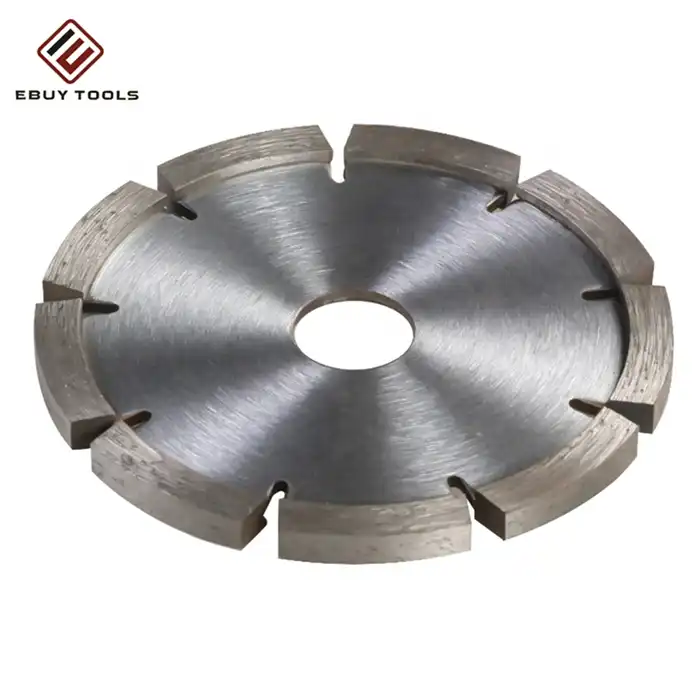
The diamond cutting disc is a hybrid option that strikes a good mix between speed and quality of finish. When looked at from the side, this design's jagged continuous borders along the cutting edge make a pattern that looks like turbine blades. As the serrations reduce the surface area of contact between the blade and the workpiece, the localized cutting pressure (in PSI) goes up. At the same time, the channels between the serrations improve airflow around the cutting zone by letting more air pass through them. This airflow gets rid of frictional heat better than flat continuous rim designs. It stops the thermal expansion that makes blades shake and cuts that aren't straight.
Danyang Ebuy Tools makes turbo rim discs with hot-pressed sintering technology, which fuses industrial-grade diamonds into a carefully designed metal framework. Our turbo blades work great in situations where you need to cut reinforced concrete with steel rebar. This is because standard segmented blades tend to get stuck or lose their cutting segments because the strength of the composite material varies. The jagged edge cuts through both the steel support and the concrete around it without sticking together like other designs do. Professional fabricators who work with natural stones from Classes 4 and 5—like black granite and quartzite—like these blades because they give edges that are chip-free like continuous rim wet blades while still allowing for fast feed rates needed for thick slab profiling and precise miter cutting.
Critical Technical Specifications for Procurement Decisions
By understanding the factors of a specification, procurement workers can fit the features of a blade to the needs of the business. The diamond particle size is determined by the grit size, which is given in mesh numbers. Coarser grits (30–50 mesh) remove material more quickly but leave a rougher finish on the surface, while finer grits (200–400 mesh) make lines that are smooth enough for building uses that can be seen. To keep the self-sharpening process that reveals new diamond edges at the best rate, bond hardness must be inversely related to the Mohs scale rating of the workpiece material. This means that hard bonds are needed for soft materials and soft bonds are needed for hard materials.
The width of the blade and the size of the frame must exactly match the power tool's requirements. Angle grinders usually work with blades that are 4 to 7 inches in diameter, while walk-behind concrete saws need blades that are 14 to 30 inches in diameter. The highest RPM number that is stamped on each blade is the rotational force level above which the steel core could break. Working within this limit makes sure that you follow EN 13236 safety rules and stops the blade from falling apart in a way that could seriously hurt the user. The blade's total cutting capacity before it needs to be replaced is based on segment height, which is the thickness of the diamond-impregnated cutting edge. Segment height usually ranges from 7mm to 15mm, depending on the strength of the application.
Protective Design Features for Enhanced Safety
New blade designs have protective teeth and anti-kickback features that make cutting more difficult safer for the user. Danyang Ebuy Tools puts safe pieces between the main cutting edges of our turbo discs. This makes mechanical guards that stop undercutting, which is a dangerous situation in which the blade catches and binds without warning. These features come in handy when cutting through materials with different densities or when operators find metal buried in concrete during removal projects. Our 77,000-square-meter factory makes precision-tensioned steel cores that go through strict side run-out tests to make sure they rotate evenly. This keeps vibrations to a minimum and keeps operators from getting tired during long cutting sessions.
Procurement Strategies for Diamond Cutting Discs in B2B Markets
When buying diamond cutting blade strategically, you have to weigh the needs of your current operations against the stability of your supply chain in the long run. Setting up structured buying systems that optimize both costs and operating continuity is helpful for large manufacturers and wholesalers that serve regional markets.
Bulk Purchasing and Volume Optimization
Contract makers who work multiple shifts on a variety of projects use cutting tools at rates that make it worth buying them in bulk. When you make a volume pledge, you can negotiate prices that are much lower per unit than when you buy on the spot market. In addition to lower prices, bulk orders make operations easier by lowering transaction costs. This is because there are fewer buy orders, packages are combined, and inventory reconciliation is made easier. All of these things lead to lower administrative costs.
Working directly with makers like Danyang Ebuy Tools cuts out markups from middlemen and makes sure you have access to production capacity during times of high demand. Our 77,000-square-meter factory keeps up a big enough production scale to handle large orders without having to wait long periods of time, which would interfere with the operations of our clients. Because of this direct connection, distributors and equipment sellers can keep their delivery promises to customers in different regions because they know they can always get what they need.
Quality Assurance and Supplier Verification
Professional makers are set apart from commodity producers in global markets by strict quality control systems. At our Danyang factories, every batch of diamond cutting disc goes through a series of strict tests, such as segment torque verification, diamond concentration analysis, and precise balance measures. These quality checks make sure that blades perform the same way throughout the whole production run. This gets rid of the performance variation that stops production without warning.
Procurement managers should ask for specifics like the size of the diamond mesh, the concentration in carats per cubic centimeter, information on how the bond is made, and proof of the production process. Suppliers who are willing to provide this level of technical detail show that they have faith in their ability to make things, which lets you compare different sources with confidence. If a provider has an R&D department, it shows that they are committed to always getting better and can adapt to changing application needs as clients' needs change over time.
Inventory Management for Operational Continuity
Carrying costs and the practical risk of running out of stock during key production times need to be balanced in order for stocking strategies to work well. Companies that know how often they will need to replace cutting tools can set up min-max stocking systems that will reorder when stock levels drop below certain levels. This method keeps operations running smoothly without tying up too much cash in idle goods.
Construction-related businesses are especially affected by changes in seasonal demand. For example, when the weather is nice in the spring and summer, more diamond cutting disc are needed. Setting up framework deals with makers that promise capacity allocation during busy seasons is good for distributors that serve these markets because it keeps them from having too much inventory during the slower winter months. Our production planning team works together with our biggest customers to predict trends of demand and plan production runs that meet their expected needs. This keeps the supply chain from being too unstable, which could otherwise mess up operations.
Conclusion
Diamond cutting disc represent necessary tools for industrial tasks that need to be precise, efficient, and reliable when working with tough materials. When procurement managers understand the physics behind turbo rim designs, bond formulations, and specification factors, they can choose the best tools for their unique needs. The performance benefits over traditional abrasives, such as longer service life, better finish quality, and the ability to work with a variety of materials, provide a clear return on investment (ROI), even though they cost more at first. When you focus on strategic sourcing methods like building relationships with suppliers, buying in bulk, and strict quality checks, you can be sure that your supply chain will always work well, giving you a competitive edge in tough B2B markets. Following strict upkeep and safety rules will make blades last longer and keep operators safe from the cutting dangers that come with high-speed material removal tasks.
FAQ
What materials can diamond cutting discs handle effectively?
diamond cutting disc can cut through almost any material that is softer than diamond on the Mohs scale. Cured concrete, reinforced concrete with steel rebar, natural stone (granite, marble, limestone), manufactured stone (quartz countertops), ceramic and porcelain tile, brick and brickwork, asphalt, and non-ferrous metals are all common uses. Different types of blades work best with different types of materials. For example, turbo rim designs work best with thick stone and reinforced concrete, while continuous rim blades give better results on tile and artistic projects.
How do I determine the correct RPM rating for my application?
Each diamond cutting disc has a maximum RPM rating stamped on the steel core. This rating tells you the fastest rotating speed that won't cause the structure to break because of centrifugal forces. Match this number to the specs of your power tool. For example, angle grinders usually run 4-inch blades at between 10,000 and 13,000 RPM, while fixed saws run bigger blades at slower speeds. Use this method to find the surface feet per minute (SFPM): SFPM = (blade diameter × π × RPM) ÷ 12. No matter what thickness they are, most diamond blades work best between 8,000 and 12,000 SFPM.
Can wet-cutting blades be used for dry applications?
When used for dry cutting, diamond cutting disc that were made for wet cutting don't have the better air features that are needed for dry cutting. Using dry blades that are only wet speeds up segment loss, causes core warping, and shortens blade life by a large amount. On the other hand, blades made for dry cutting work well with water cooling, but the extra cost of features made for dry cutting doesn't help in wet situations. Danyang Ebuy Tools' turbo rim designs are truly versatile; they work consistently in both wet and dry situations thanks to improved airflow channels that keep heat in check no matter what kind of coolant is present.
Partner with Ebuy Tools for Premium Diamond Cutting Disc Solutions
The industrial grade diamond cutting disc that Danyang Ebuy Tools sells are made to meet the tough needs of metalworking, car manufacturing, aircraft machining, and precision tooling. Our 77,000-square-meter factory makes 150,000 blades every day, so we can reliably meet the needs of large orders and just-in-time shipping plans. Our products use hot-pressed sintering technology and precision-tensioned steel cores that can work safely at speeds of up to 80m/s. The new turbo edge design balances strong material removal with a smooth finish. Our research and development team works directly with clients to find the best cutting solutions, whether they need unique specs for rare materials or standard setups for mass production. Get in touch with us at [email protected] to talk about your needs with our technical experts and find out why top diamond cutting disc makers choose Ebuy Tools for reliable quality and relationships.
References
Smith, J.R. & Anderson, M.K. (2021). Advanced Diamond Tool Technology: Engineering Principles and Industrial Applications. Manufacturing Press International, Boston.
Chen, L., Rodriguez, P. & Williams, D. (2020). "Comparative Performance Analysis of Superabrasive Cutting Tools in Precision Machining Environments," Journal of Manufacturing Science and Engineering, Vol. 142, No. 8, pp. 081004-1-081004-12.
Industrial Diamond Association of America. (2022). Diamond Tool Selection Guide for Professional Applications, 4th Edition. Columbus, Ohio.
Thompson, R.E. (2019). Materials Science of Synthetic Diamond Composites: Bond Matrices and Performance Optimization. Technical Publishing Group, London.
National Institute for Occupational Safety and Health. (2021). Crystalline Silica Exposure Control in Construction and Manufacturing: Best Practices for Diamond Cutting Operations. DHHS Publication No. 2021-116, Cincinnati.
Bergmann, K. & Zhang, Y. (2023). "Thermal Management in High-Speed Diamond Grinding: Design Innovations and Performance Metrics," International Journal of Advanced Manufacturing Technology, Vol. 125, pp. 3847-3862.