.webp)

Diamond core drill bit technology has changed the way precision drilling is done in many fields, from making molds to cutting in aircraft. These cylinder-shaped cutting tools use industrial-grade synthetic diamond segments set in metal matrices to make round holes in reinforced concrete, granite, asphalt, and brickwork that are clean and accurate. Traditional percussion bits make tiny cracks in materials by impacting them, but diamond core drilling uses a grinding device that cuts through materials without damaging their structure. Professionals looking for reliable cutting solutions can use this guide to find the best products based on important factors like material suitability, operating efficiency, and cost-per-hole optimization.


Understanding Diamond Core Drill Bits: Types and Applications
What Makes Diamond Segments Superior to Carbide?
The main benefit of diamond pieces is that they are very hard and can be used for cutting. When standard carbide bits hit steel support bars buried in concrete, they break, which causes expensive downtime. The diamond pieces keep cutting through the concrete and rebar without breaking up. Our production process at Ebuy Tools uses diamond amounts between C75 and C100, which are best for heavy-duty cutting. The fake gems are placed carefully inside metal bands that were made to match the hardness levels of certain materials.
Types of Diamond Core Bits by Application
Different types of drilling require different diamond core drill bits. Wet drilling bits are designed to work with reinforced concrete, asphalt, blocks, sidewalk, and bricks. The water coolant makes the segments last longer and gets rid of waste. The pieces of these bits are brazed or laser-welded so that they stay stable when heated up. Our wet drilling options give you stable penetration rates in a range of materials with different densities.
Dry drilling bits have laser-welded segments that are more resistant to heat and can drill through 1-3/8" granite or engineered stone countertops without water. This is very useful on job sites that don't have access to water or where managing slurry would be difficult. The laser welding process makes bonds that can withstand temperatures higher than normal brazing limits, which keeps segments from separating catastrophically at high RPM.
Wet Versus Dry Drilling Compatibility
Understanding the operational context helps choose the right bit. Wet drilling greatly increases segment life by controlling heat production and removing abrasive particles from the cutting zone. Water acts as both a coolant and a lubricant, lowering friction and stopping diamond glazing, which happens when the metal matrix overheats and seals diamonds beneath a smooth surface layer.
While dry drilling is more mobile and cleaner, it also speeds up the wear rate. Diamond core drill bits made for dry use have aggressive segment geometry and softer metal bonds that wear away faster to reveal new diamonds. Many of our diamond core drill bits can be used in both wet and dry modes and can be fitted to standard high-speed angle grinders for flexible use in CNC machining workshops and auto factories.
Advantages and Performance Optimization of Diamond Core Drill Bits
Durability and Cutting Speed Compared to Alternatives
When drilling abrasive materials, diamond core drill bits last 10 to 30 times longer than carbide alternatives. This has a direct effect on the total cost of ownership. A metallurgical study that compared bit lifespans found that premium diamond core drill bits lasted 30 to 60 linear meters in standard cured concrete, while carbide bits needed to be replaced after 2 to 5 meters under the same conditions. This performance gap gets much bigger when drilling reinforced concrete with high-carbon steel rebar.
Cutting speeds are faster because the grinding mechanism works more efficiently. Rotary hammer bits use percussion force to create stress fractures, which means they need to hit the material more than once to move forward. Diamond segments, on the other hand, shear the material continuously, keeping penetration rates steady at 15 to 40 mm per minute, depending on the material's hardness and reinforcement density. This consistency lets contract manufacturers and job shops accurately predict when projects will be finished.
Operational Speed Guidelines by Material Type
For best results, fit the RPM to the diamond core drill bit diameter and the properties of the material. Our scientific specs suggest the following operating conditions:
Concrete and Masonry: Diamond core drill bits with a diameter of 1" to 4" work best at 1,200 to 2,500 RPM and moderate feed pressure. Higher speeds can damage the metal bond, and too much feed pressure can cause the diamond to come loose too soon. When working with dense aggregate or a lot of rebar intersections, operators should slow down the RPM by 20 to 30 percent.
Granite and Engineered Stone: For natural stone, you need slower speeds (usually 800-1,500 RPM for 1-4" diamond core drill bits) and steady, controlled feed pressure. Due to its solid structure, granite needs diamonds to break up material at the microscopic level. However, too much speed can mess up this process by creating frictional heat faster than it can escape.
Asphalt and Soft Materials: Higher speeds (2,000 to 3,500 RPM) and harder metal links that don't wear down quickly in rough but relatively soft materials work best for these tasks. The biggest problem is keeping segments from loading, which happens when soft material sticks to diamonds and makes cutting less effective.
These rules are based on the results of our quality control wear tests, in which we measure the amount of drillable versus segment height loss in normal C45/C50 reinforced concrete samples. This information sets up true cost-per-hole metrics that people who buy things use to compare different goods.
Maintenance Protocols and Safety Considerations
To make diamond core drill bits last longer, they need to be maintained regularly. The most common type of performance loss is segment glazing, which happens when metal links get too smooth to show jewels. As a fix, you can "dress" the diamond core drill bit by drilling into a soft, rough object like cinder blocks for 30 to 60 seconds. This removes the glazed layer and leaves you with new cutting surfaces.
Failures caused by shaking can be avoided with concentration tracking. Precision production lets us keep the run-out of the barrels below 0.15 mm, but operators must check that the diamond core drill bits are mounted correctly to get rid of the wobble that leads to holes that are too big, faster bearing wear, and more operator tiredness. When you use dial markers during setup, you can find error before it hurts the equipment.
There are different safety rules for wet and dry activities. As required by OSHA crystalline silica rules, wet drilling creates sludge that is high in silica. This slurry needs to be disposed of properly and workers must wear protective gear. Because dry drilling creates dust in the air, HEPA-filtered cleaning systems and breathing gear rated for fine particle exposure are needed. Core drilling in concrete makes 95 to 105 decibels of noise at the user positions, so hearing protection is needed for both.
How to Choose the Best Diamond Core Drill Bit for Your Project?
Evaluating Project-Specific Requirements
A thorough project review is the first step to choosing the right diamond core drill bits. For concrete uses, procurement managers should write down the makeup of the material, such as the type of aggregate and the density of the reinforcing. When working with river rock aggregate, metal bonds need to be softer than when working with limestone aggregate, because the bond needs to wear away faster in harder materials to keep the diamond exposed.
Wet vs. dry power isn't the only thing to think about when drilling in different environments. When using an angle grinder by hand, the largest diamond core drill bit diameter that can be used is 5 inches because of how the torque needs to be managed. However, putting the grinder on a drill press allows for larger diamond core drill bit sizes and more stable feed control. Understanding how often a diamond core drill bit is used helps you balance the initial investment against its lifespan. For example, workers who drill more than 200 holes a month will want to buy high-quality diamond core drill bits that last longer, while occasional users will want to save money on the purchase price.
Bond Selection Strategy
Cutting efficiency of a diamond hole saw is based on the fact that bond hardness and material hardness are inversely related. Because the bond wears away slowly, revealing sharp diamonds over time, soft metal ties work well with hard materials like reinforced concrete and granite. On the other hand, hard links can stand up to wear in soft materials like asphalt or green concrete, which stops diamonds from wearing out too quickly.
At Ebuy Tools, we make varying bond formulas that are best for each job. Rockwell B/C hardness tests are done by our R&D department to make sure that section bonds meet the standards. This mechanical accuracy gets rid of the need to try things out and see what works and what doesn't, which drives up costs and slows projects.
Supplier Evaluation Criteria
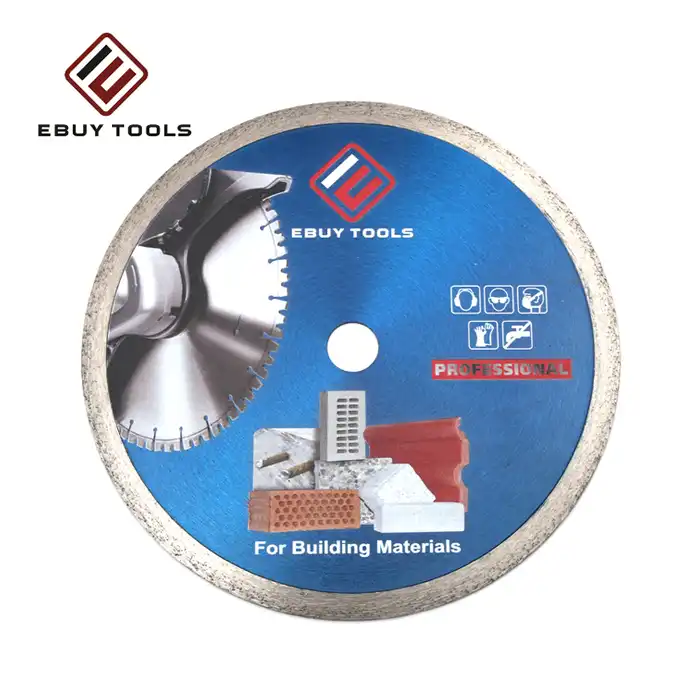
Suppliers you can trust show that they can be transparent about how they make things and guarantee quality. Our building is 77,000 square meters and has 319 trained workers who make about 150,000 diamond saw blade pieces every day. This means that we can consistently handle big orders. This scale is important for OEMs and wholesalers who need stable supplies and predictable wait times.
Fragment shear testing makes sure that the quality of the weld meets EN 13236 standards. This stops segment separation fails that put workers at risk and damage workpieces. Suppliers who are real give test reports and examples for proof. We offer free standard samples and can also make customized samples based on particular design needs. This way, buying managers can check that the performance claims are true before committing to large orders.
Professional makers are different from intermediaries because they offer warranties and help after the sale. Our quality guarantee covers flaws in the way the diamond core drill bits were made, and we offer specific expert support to help with operational problems. This promise lowers the risk for aircraft and high-precision engineering companies that have to deal with expensive parts and tight production plans when drilling fails.
Procuring Diamond Core Drill Bits: Market Choices and Trusted Brands
Recognizing Quality Manufacturers
There are both global names known for their excellent engineering and local companies that offer specialized solutions in the diamond core drill bit market. Well-known names like Bosch, Dewalt, Makita, and Hilti keep large distribution networks and standard product lines that can be used in a wide range of building tasks. Because these names are easy to find in stores and are well known, many builders choose them automatically.
Companies that specialize, like Ebuy Tools, make industrial-grade diamond core drill bits that can be customized in ways that mainstream names can't. When orders hit certain minimums, our production infrastructure can print custom logos and package them in branded materials. This is helpful for tooling suppliers who are making their own private-label product lines. You can change the amount of diamonds, the size of the grit, and the way the bond is made to meet specific needs in mold and die manufacturing where normal goods don't work well.
Verifying Supplier Authenticity
Supply chain integrity stops fake diamond core drill bits from breaking down early and voiding equipment warranties. Real makers offer business credentials that can be checked, such as workplace certifications, proof of their quality management system, and clear ways to communicate. Our facility is in Danyang City, which is in the middle of a regional industrial cluster known for making cutting tools. This gives us organizational benefits and a lot of technical knowledge in one place.
As a matter of course, purchasing managers should ask for the results of fragment stress tests and measures of concentricity. These measures have a direct link to safety compliance and success in the field. Suppliers who don't want to give technical paperwork or performance data often sell low-quality diamond core drill bits that raise the total cost of ownership by needing to be replaced more often and causing downtime.
Bulk Purchase Strategies and Custom Solutions
When you buy diamond core drill bits in bulk, you can save money and get benefits in the supply chain. Our manufacturing capacity can handle large orders and keep the quality high across multiple production runs. This is very important for industries like automotive and transportation that need reliable machine performance in high-volume settings. By negotiating bulk agreements, you can get better prices and make sure that you have enough inventory during times of high production.
Custom solutions are made for specific uses that normal diamond core drill bits can't handle. Our R&D office creates custom designs for companies that make aircraft parts that need to drill titanium and superalloys, where standard diamond core drill bits wear out quickly or leave bad surface finishes. Through collaborative engineering, the provider and the client can find the best tool geometry, diamond specifications, and bond chemistry to meet the desired penetration rates and lifetime measures.
Practical Usage Guide: From Setup to Troubleshooting
Equipment Setup and Initial Configuration
Setting up correctly is the first step in making diamond core drill bit activities go smoothly. To mount the diamond core drill bit, you have to clean the arbor threads and use anti-seize powder to keep the threads from getting stuck when you try to take the bit off. Too much torque makes it harder to change diamond core drill bits and ruins the threads, while too little torque lets the diamond core drill bit slip, which creates heat and speeds up wear. Tightening by hand and then turning a wrench a quarter turn gives enough gripping force.
Verifying concentricity before beginning saves a lot of money by avoiding mistakes. By spinning the attached diamond core drill bit by hand and watching how it moves laterally, you can find wobbles that need to be fixed. Too much run-out means that the arbor is damaged, the collet is worn, or there are problems with the way the diamond core drill bit was made. Our concentricity requirements keep barrel run-out to less than 0.15 mm, but mounting mistakes are caught by hand so they don't affect the quality of the holes.
The way coolant is delivered has a big effect on how well wet drilling works. Water flow should start before the diamond core drill bit touches the material and continue throughout the cut. To keep the section temps below 200°F, the bond should not break. Not enough coolant leads to thermal stress cracks in segments and faster diamond glazing, which cuts the useful life of diamond core drill bits by 40 to 60 percent.
Drilling Techniques for Common Materials
When switching between materials, diamond hole saw reinforced concrete drilling requires a lot of care. When going through a concrete matrix, steady feed pressure works well, but when workers reach rebar, they have to lower the pressure a lot. Trying to push through steel creates too much heat and could break segments. The diamonds grind steel well at slower feed rates, usually taking 3–5 times longer than the same thickness of concrete.
For holes bigger than 2 inches in diameter, pilot hole methods work best for granite and engineered stone. A shallow 1/4-inch deep circle score made with little pressure sets up a cutting track that keeps the diamond core drill bit from walking during full-depth entry. This method works especially well on smooth surfaces, where keeping the surface's good looks is just as important as making sure the holes are accurate.
The different types of gravel and the way they react to changes in temperature make asphalt digging very difficult. When asphalt is hot, it softens enough to load pieces with sticky material, but the harder material needs to be cut every so often to make dressing cuts. Cold weather makes asphalt less stable, which makes it harder to cut and causes it to vibrate more. Changing the RPM and feed pressure based on the temperature of the room improves diamond core drill bit performance throughout the year.
Troubleshooting Common Operational Issues
Overheating shows up as discolored pieces, slower cutting, and smoke during dry activities. Some quick fixes are to lower the RPM, lower the feed pressure, and increase the flow of water in wet situations. Overheating that won't go away means that the bond specification was wrong—usually too hard for the material being drilled—and the diamond core drill bit needs to be replaced with one that has a softer bond specification.
When debris builds up in the cutting zone faster than it can leave, the diamond core drill bit gets stuck. Wet drilling uses water flow to flush out the cuttings, while dry drilling rests on the design of the segment gullet and the skill of the user. Withdrawing the diamond core drill bit every so often lets you get rid of the debris, which is especially helpful when making deep holes where the lengths between holes make it harder to get the debris out. Parts with turbo or roof-top shape improve the flow of garbage, which lowers the number of times diamond core drill bits get stuck.
Irregular surfaces make it harder for diamond core drill bits to stay stable and raise the risk of breaking at the hole escapes. When both sides need a finished look, entry-side drilling makes better holes than exit-side breakout. This is why pilot hole methods are useful. As the diamond core drill bit gets closer to breaking through, lowering the feed pressure keeps the concrete from flying apart and lets it extend into the backing material without a quick load release that stresses the segments.
Conclusion
To choose and use diamond core drill bits correctly, you need to know how materials combine, how they work, and what your provider can do. If you use the right operating methods and keep up with repair schedules, the grinding mechanism is better than percussion drilling in reinforced materials. This makes blacksmith shops, automakers, and aircraft engineering companies more productive. Choosing providers based on how transparent their manufacturing is, how well they meet technical requirements, and how well they can customize their products will help you make purchases that are in line with your long-term business goals. As the need for drilling changes to harder materials and tighter tolerances, it becomes more important to work with makers who offer engineering help and quality assurance in order to stay ahead of the competition.
FAQ
Can diamond core bits drill through metal materials?
Diamond core drill bits work well for grinding ferrous metals like rebar, but they aren't the best for cutting solid metals. When working with steel plates and structural metals, dedicated metal hole saws or circular cuts work better. The metal matrix links in diamond core drill bits are designed to work with rough non-metallic materials, which is where diamond's high toughness shines brightest.
What operational differences exist between wet and dry drilling methods?
Wet drilling is better for high-volume production because it manages heat better and gets rid of more trash, which increases section life by 200 to 300 percent. Dry drilling gives you more freedom and a better place to work, but it also speeds up wear and tear and needs strict dust control measures. Diamond core drill bits that are recommended for both methods give you more options for how to use them, but cutting faster and lasting longer is best when it's wet.
How frequently should diamond core bits undergo maintenance?
Glazing, wear patterns, and fastening problems can be found before they affect performance by inspecting each segment every 10 to 15 holes. If you ignore glazed pieces, they will warm and break before they're supposed to, but if you dress them, they will work again in minutes. Professional businesses check diamond core drill bits as part of their regular routines and keep track of data that measure how long bits last so they know when to change them.
Partner with Ebuy Tools for Superior Diamond Core Drilling Solutions
The diamond core drill bits that Ebuy Tools makes are precisely built to work in tough industry settings like metalworking, automotive, aircraft, and mold making. Our 77,000-square-meter factory makes 150,000 pieces of cutting tools every day, so we always have enough in stock for both big purchases and unique solutions. Our goods have laser-welded segments, diamond concentrations between C75 and C100, and barrel concentricity of less than 0.15 mm. These features make them work better in terms of cost-per-hole measures and operating consistency. As a reputable diamond core drill bit maker, we offer free standard samples, the ability to add your own logo, and committed expert support to help you get the most out of your drilling. Email our engineering team at [email protected] to talk about your unique needs and find out how our cutting solutions can help you save money on total cost of ownership while also making your business more productive. You can look at all of our products at ebuy-tools.com and ask for technical specs that are specific to your needs.
References
Smith, J. & Thompson, R. (2021). Advanced Diamond Tooling for Industrial Applications. Industrial Press.
Chen, L. (2020). "Performance Analysis of Diamond Core Bits in Reinforced Concrete Drilling." Journal of Construction Engineering, 45(3), 287-301.
European Committee for Standardization. (2019). EN 13236: Diamond Tools - Rotating Core Drill Bits with Diamond Segments. CEN Publishing.
Martinez, P. (2022). "Material Bond Optimization in Diamond Drilling Tools." International Journal of Manufacturing Technology, 118(7), 2145-2160.
Anderson, K. & Williams, D. (2020). Precision Drilling Handbook: Techniques and Best Practices. McGraw-Hill Professional.
Industrial Diamond Association of America. (2023). Technical Guidelines for Diamond Core Drilling Operations. IDAA Standards Committee.