.webp)

When it comes to getting concrete floors ready for use in factories, the diamond cup wheel is the best and most cost-effective option. These specialized grinding tools use advanced technology and a high concentration of diamonds to remove more material than other tools while still being very durable. Whether you're leveling uneven concrete slabs in construction projects or removing stubborn coatings from factory floors, these wheels work better than traditional abrasives because they cut faster and last longer. This means that metalworking shops, auto manufacturers, and general contractors all save time and money on operational costs.
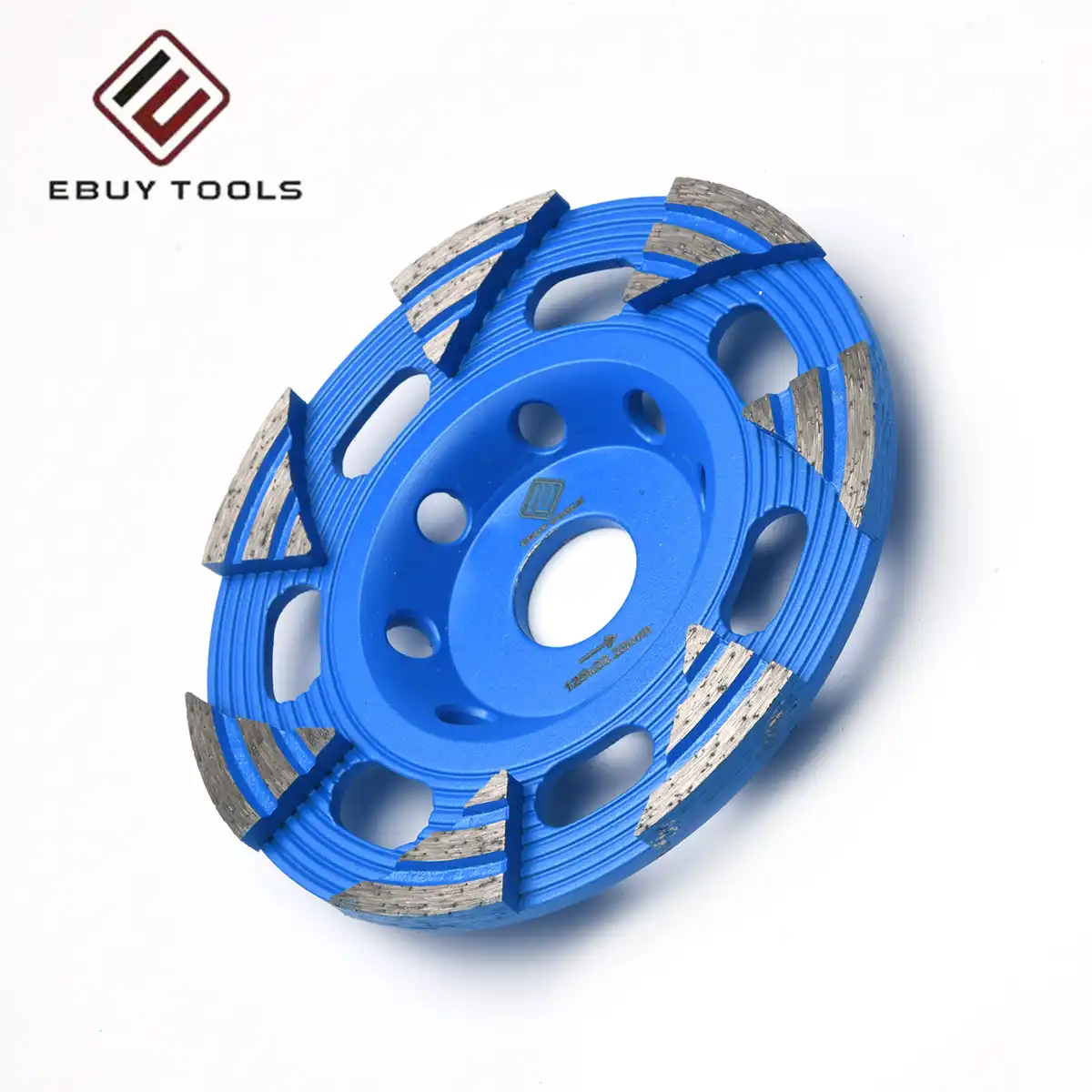
Understanding Diamond Cup Wheels and Their Role in Concrete Work
What Makes Diamond Cup Wheels Essential for Concrete Grinding
These cutting tools are made up of a body made of high-tensile steel that is filled with industrial-grade diamonds that are held together with cobalt, copper, or iron-based alloys. This tech makes a tool that can work on high-PSI concrete surfaces that regular silicon carbide abrasives would destroy very quickly. The diamonds work like tiny cutting edges to break up the concrete core, and the metal bond gives the structure strength and gets rid of heat. This mix solves the main problem in grinding concrete, which is keeping the cutting performance while keeping the tool and the material from getting damaged by heat.
Core Components and Their Functions
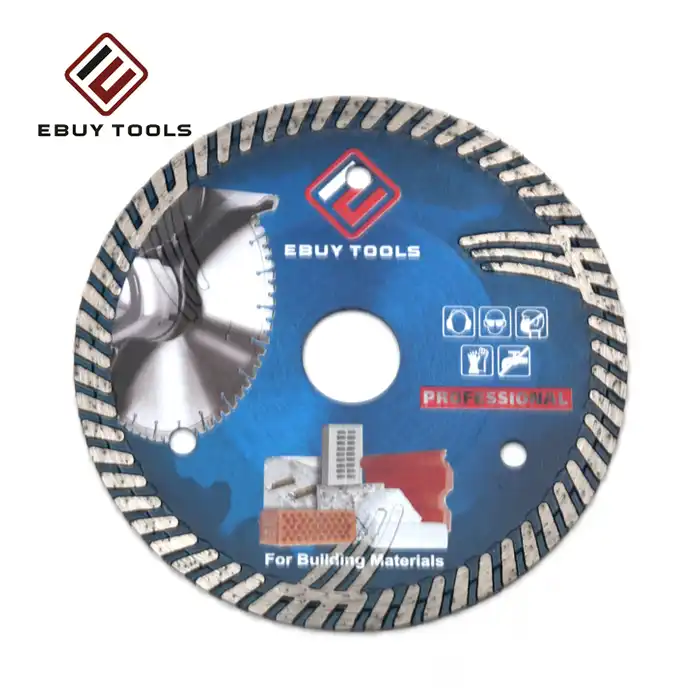
Procurement teams can make better decisions when they know how these tools work. The steel core keeps the bearing rigid and balanced while it spins at high speeds, meeting G6.3 balance standards to keep vibrations to a minimum. High-frequency welding or laser welding is used to connect the diamond pieces, which makes sure they can handle the rotational forces that are created during operation. Diamonds are carefully spread out in the pieces, and the concentrations can range from low to high density, based on the application. Venting holes put in key places throughout the design help move debris away and keep the tool cool. This makes it last much longer when grinding in both wet and dry conditions.
Types of Diamond Cup Wheels for Different Concrete Textures
Manufacturers offer different section layouts to meet the needs of different projects. They are great for removing heavy coatings and roughening up surfaces because their segmented turbo rim designs remove material quickly. For general grinding jobs where surface quality is important, double-row pieces give smoother finishes and last longer. Continuous rim wheels are great for fine finishing work because they leave few chatter marks on artistic concrete surfaces. When working with adhesive-covered surfaces, arrow or PCD segment wheels keep from getting clogged, so performance stays the same throughout the project's lifecycle.
Key Advantages for Procurement Professionals
You can measure the benefits of these tools, which have a direct effect on project costs and schedules. One big benefit is that they last a long time. The diamond cup wheels keep cutting well because they have self-sharpening processes that eat away the metal bond at a controlled rate, revealing new diamond edges all the time. Grinding is three to five times more efficient than using regular abrasives, which cuts down on the time needed to prepare the surface. Better surface finishing skills get rid of the need for extra steps in many situations, which speeds up work. When you figure out the total cost of ownership, you can see how cost-effective it is: the original investment is higher than with regular wheels, but the longer lifespan and higher efficiency mean lower processing costs per square foot.
Comparing Diamond Cup Wheels with Alternative Grinding Tools
Performance Differences from Conventional Grinding Wheels
Aluminum oxide or silicon carbide abrasives, which are used in most grinding wheels, wear out quickly when they come into contact with the rock structure of concrete. These common choices need to be replaced often, which results in high costs for consumables and breaks in operations. On the other hand, diamond cup wheel keep their cutting rates the same over time. Rates of material removal make this difference very clear: a regular abrasive might only be able to handle 200 square feet before it needs to be replaced, but a good diamond wheel can handle 1,500 square feet or more, based on the hardness of the concrete and the way the segments are arranged.
Economic Impact and Lifespan Analysis
Purchasing managers need to look at more than just unit price when they look at the economics of cutting tools. Diamond cup wheels cost more to buy at first, but they give you a better return on your investment because they last longer. Less frequent tool changes mean less machine downtime, which lets teams keep working hard throughout shifts. The ability to dissipate heat keeps the base from getting damaged, which could lead to expensive repairs. When it comes to large-scale concrete preparation jobs in factories that make cars or parts for airplanes, these factors add up to big saves that make the choice of premium tools worthwhile.
Angle Grinder Versus Floor Grinder Applications
Wheel selection is greatly affected by how well they work with other equipment. Angle grinder wheels with a smaller width work best for small fixes, edge work, and places that bigger tools can't reach. Most of the time, they have 5/8-11 threaded hubs or 22.23mm arbor holes that fit common grinder setups. Different types of floor grinders can be mounted on heavy-duty planetary grinding tools, which make it easy to grind big surfaces. Knowing these differences helps procurement teams choose the right tools for their jobs, whether it's helping with mold and die precision finishing or getting building floors ready for epoxy painting systems.
Market Overview of Leading Manufacturers
In the global market for cutting tools, there are a number of well-known names that are known for being reliable. Bosch consistently checks the quality of the wheels it makes, and its large distribution networks make them easy for wholesalers that serve area markets to get. With product lines made for job sites, DeWalt works on making tools that last for a long time in building settings. Makita focuses on performance that is fair across all price points, which appeals to buyers who want to get the best deal. Hilti stands out by offering full warranty plans and expert support services.
Hyundai has added more accessories for power tools that are cheap and appeal to tooling dealers who want a wide range of products. These companies keep the supply chain stable, which is important for business-to-business purchases. However, new companies like Danyang Ebuy Tools now offer similar technology specs and the ability to make both large orders and custom solutions.
Maximizing the Benefits: Usage, Maintenance, and Safety Best Practices
Operational Guidelines for Optimal Performance
The right method has a direct effect on how long a tool lasts and how well it grinds. When working against the concrete, operators should keep the angle between 15 and 25 degrees and use mild, steady pressure instead of pushing the tool too hard. Too much pressure creates heat that can coat the diamond pieces and make cutting less effective. Smooth, continuous passes should be used to grind so that cutting doesn't happen. When using angle grinders, keeping your hand steady reduces sound fatigue and makes sure that the material being removed is spread out evenly.
Maintenance Protocols That Extend Tool Life
Concrete dust that gets in the way of cooling and section exposure can be avoided by cleaning regularly. After each work session, operators should use compressed air or wire brushes to clean out the venting holes and section contacts of any debris that has built up. Keeping the steel body in a dry place keeps it from rusting, which could weaken the structure.
For the diamond cup grinding wheel, special attention to cleaning its segment gaps and cooling channels is critical, as trapped dust there directly reduces cutting efficiency and accelerates wear. Watching how segments wear over time can help you decide when to replace them. Segments that are worn down to less than 3 mm in height no longer give the diamond enough surface for cutting to work well. When replacements are made on time, damage to the steel core is avoided and output levels are kept up.
Safety Measures and Compliance Standards
When grinding concrete, you need to wear safety gear like masks to protect your lungs from silica dust, earplugs to block out noise, and eye shields to keep moving objects out of your eyes. Gloves with good grip help keep your hands from getting tired during long tasks. To show that they've been thoroughly tested for safety, all wheels should meet the EN 13236 approval standards for superabrasives. Guards for equipment must stay in place while it's being used, and operators must make sure that the wheel's highest RPM rate is the same as or faster than the grinder's working speed. These rules make sure that workers are safe and that all job places follow the rules.
Troubleshooting Common Performance Issues
When wheels wear out too quickly, it's likely because the bond stiffness doesn't match the properties of the concrete. The "Opposite Rule" tells us that soft bonds work best with hard concrete because they show diamonds more quickly, while hard bonds work best with soft or rough materials because they stop the matrix from wearing down too quickly. Overheating is usually a sign of not enough cooling or too much pressure. Most thermal problems can be fixed by lowering the feed rate and making sure there is enough water supply. Vibration problems are usually caused by wheels that aren't balanced or mounting gear that is broken. The equipment needs to be inspected right away to keep the user from getting hurt or damaging the equipment.
Procurement Insights: How to Choose and Buy the Right Diamond Cup Wheel
Critical Selection Factors for Purchasing Managers
The choice of wheel is based on its technical specs and the needs of the product. The surface finish is determined by the grit size. For example, coarse 16/20 grit removes material quickly and rough for initial preparation, while fine 120/150 grit makes surfaces smooth. Using the opposite rule concept we talked about earlier, bond type must match concrete hardness. The way segments are attached affects how long they last. For high-load uses, laser welding is stronger than cold pressing. Run-out tolerances of less than 0.1 mm make sure that tools make flat touch with work surfaces. This stops uneven wear patterns that shorten the life of tools.
Balancing Quality with Budget Constraints
To find the best price for buying in bulk, you need to look at the total cost of ownership instead of just unit prices. Figuring out the cost per square foot of finished concrete gives you useful information for comparing. Longer-lasting wheels are worth the extra money because they don't need to be replaced as often and cost less to repair. When distributors and big companies buy in bulk from makers, they can save money by taking advantage of economies of scale. Custom solutions made for specific uses may cost more up front, but they offer performance benefits that make operations much more efficient.
Evaluating Supplier Credentials and Capabilities
When choosing grinding wheel providers, there are a few things that set reliable partners apart from less-than-reliable ones. Manufacturing capacity shows the ability to regularly fill large orders; for example, factories that make 150,000 pieces per day show that they have the means to handle big projects. Welding strength tests, dynamic balance checks, and material removal rate checks on certain types of concrete should all be part of quality control systems. Having access to technical support helps program problems get fixed quickly. For just-in-time buying methods, inventory management is affected by shipping options and lead times. Support after the sale, such as help with fixing problems and guarantee coverage, adds value to the product beyond the actual item itself.
Custom Solutions and Replacement Part Availability
Manufacturers who offer customization services help projects that have special needs. Customized segment designs improve performance for odd types of concrete or coatings. Custom grit ratios match the need to remove material with the need for a smooth surface. For applications requiring precise shaping or finishing, the diamond cup grinding wheel becomes an essential tool, and its performance can be further enhanced through tailored specifications.
With branding choices, distributors can improve their market profile with private-label products. When tools need to be serviced or replaced on a regular basis, having reliable spare parts on hand keeps things running smoothly. This keeps projects from being held up, which cuts into profits.
Real-World Applications and Case Studies Demonstrating Benefits on Concrete Projects
Commercial Flooring Efficiency Improvements
A regional flooring builder that specializes in remodeling stores had a hard time getting the glue off of concrete slabs before they could apply polished concrete finishes. Classic grit wheels got clogged up quickly, so they had to be changed often, which added 30 to 40 percent to the time it took to finish a job. When I switched to turbo segment diamond cup wheels with anti-loading design, I cut my grinding time by 55% and didn't have to change tools in the middle of a shift. The wheels kept cutting the same amount of material across 2,500-square-foot pieces. This let the contractor finish jobs early and use the extra workers on other projects.
Infrastructure Project Cost Savings
The local infrastructure department that is in charge of maintaining bridge decks did a cost analysis to look at the different types of grinding tools that can be used to prepare the surface of concrete before protection coatings are applied. Over the course of a year and 85,000 square feet of bridge deck, diamond cup wheels had 68% lower consumable costs than the silicon carbide wheels that were originally chosen. Because there were fewer tool changes, 340 hours less work had to be done each year. This freed up skilled techs to do other important maintenance tasks. The better surface preparation also made the sealing system last longer, which meant less long-term upkeep was needed.
Actionable Insights for Procurement Teams
These case studies show a number of buying rules that improve practical results. You can tell you're saving money when you choose tools based on their total cost of ownership instead of their buying price. Knowing the exact needs of the job, like the type of finish and the grade of the concrete, lets you accurately specify the tool. Building ties with manufacturers who can offer technical advice can help you find the best options. Metrics for monitoring tool performance help people who are responsible for allocating budgets understand the benefits of purchasing a tool and support those choices.
Conclusion
Diamond cup wheels are a smart investment for businesses that need to prepare concrete surfaces quickly and effectively for a variety of industry uses. Total ownership cost analysis shows that their higher rates of material removal, longer operating life, and steady performance lead to cost savings that support their higher prices. There have been big steps forward in segment design, bond metallurgy, and thermal management that meet the strict needs of precision machining settings, car factories, and aircraft component production.
Procurement pros have to balance the need for quality with the need to stay within a budget. Knowing the technical specifications, the right way to apply them, and the criteria for judging suppliers—along with a clear understanding of when a diamond cup wheel outperforms conventional alternatives—helps them make choices that improve operational efficiency and lower long-term costs.
FAQ
How long does a diamond cup wheel typically last when grinding concrete?
Lifespan is affected by several factors, such as the strength of the concrete, the number of diamonds present, and the type of bond used. When cutting medium-hard concrete, a quality diamond cup wheel can handle between 1,500 and 3,000 square feet of work before they need to be replaced. This range is narrowed by harder concrete and widened by lighter materials. Using the right method has a big effect on how long something lasts; keeping the right pressure and angle improves efficiency.
Can diamond cup wheels grind materials other than concrete?
These tools are useful for working with a wide range of difficult materials. For stone production tasks, they work great on granite and marble because they make clean cuts when shaping edges and smoothing surfaces. Diamond grinding works well on tile, concrete, and natural stone. The wheels can also quickly and easily break down brick, block, and concrete materials. The best performance is achieved by choosing the right grit sizes and bond strength for each material.
What safety precautions are essential when using these wheels with angle grinders?
To avoid a catastrophic failure, operators must make sure that the wheel's highest RPM rate is higher than the grinder's working speed. When the bolts are properly torqued and mounted, the wheel won't come off during operation. Safety guards should stay in place to keep things from falling. It is required that people who are exposed to silica dust wear respirators, as well as hearing and eye protection. By keeping a strong grip and a stable footing, you can keep control of your grinding activities.
Partner with Ebuy Tools for Superior Diamond Cup Wheel Solutions
At Danyang Ebuy Tools, we make diamond cup wheels that are professional-grade and designed for tough concrete jobs in the automobile, aircraft, and metalworking industries. Our 77,000-square-meter factory makes about 150,000 pieces every day, so we can reliably meet the needs of both large sales and one-of-a-kind projects. The cores of each wheel are made of high-tensile steel, and the diamond pieces are precisely bonded to them. This gives you better material removal rates while still meeting EN 13236 safety standards.
Our R&D team creates unique setups that exactly match your needs, whether you're a precision machining shop looking for cost-effective grinding solutions or a distributor adding new products to your line. Get in touch with our purchasing experts at [email protected] to talk about your needs with a reputable diamond cup wheel maker that is dedicated to quality, innovation, and full customer service.
References
1. Smith, J. and Anderson, K. (2021). Advanced Superabrasive Tools for Industrial Applications. Manufacturing Technology Press.
2. Chen, L. (2020). "Diamond Tool Performance in Concrete Surface Preparation." Journal of Construction Engineering, 45(3), 234-249.
3. Rodriguez, M. (2022). Metalworking Tool Selection Guide for Precision Manufacturing. Industrial Engineering Publications.
4. Thompson, R. and Williams, P. (2019). "Comparative Analysis of Grinding Wheel Technologies." International Journal of Abrasive Technology, 12(4), 156-173.
5. National Safety Council (2023). Safety Standards for Superabrasive Grinding Operations. Occupational Safety Division.
6. European Committee for Standardization (2022). EN 13236: Machinery Safety Requirements for Diamond Tools. CEN Technical Standards.