.webp)

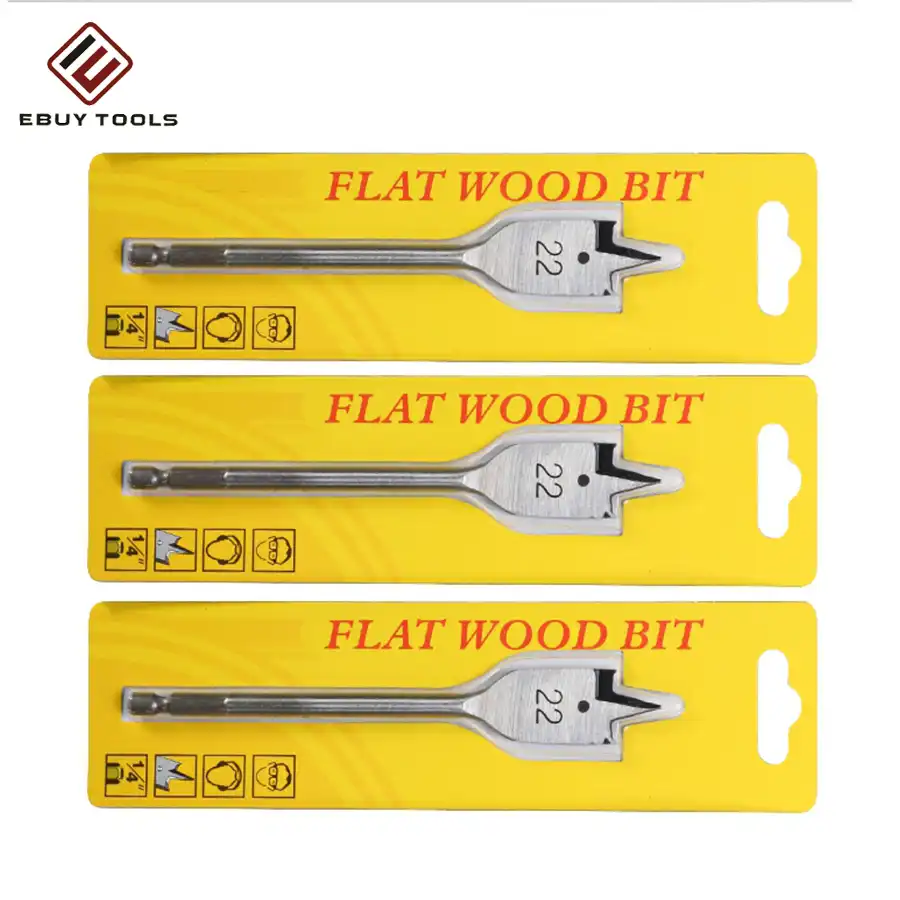
When you need to bore clean, accurate holes through solid timber, plywood, or composite panels in high-volume operations, the flat wood drill bit becomes your most trusted ally. These paddle-style cutting tools, engineered with a central pilot point and dual sharpened cutting lips, transform rough-in electrical work, HVAC installations, and structural framing projects into streamlined workflows. Unlike traditional twist drills that can bind in wet lumber or overheat during extended use, these specialized bits evacuate chips efficiently while demanding minimal torque from your cordless tools—extending both battery life and project timelines. From construction sites to precision woodworking shops, the application of these bits spans residential builds, commercial retrofits, and industrial fabrication environments where speed and reliability cannot be compromised.
Understanding Flat Wood Drill Bits: Types, Uses, and Core Benefits
What Makes These Cutting Tools Different?
Paddle bits are very different from helical auger designs or precision Forstner types. They can be identified by their flat blade shape. The shape is based on a sharp pilot tip that grips the workpiece and stops it from moving laterally during the first entry. Then, two cutting edges on the sides remove material in a moving motion, making holes between 6mm and 40mm in diameter. This simplified design makes manufacturing easier while still providing great performance in applications that need to move quickly and put flow ahead of internal finish.
Modern ones that are covered in titanium last three to ten times longer than carbon steel ones that aren't coated. The TiN surface treatment lowers the coefficients of friction, which means that cutting edges stay sharp even when they are used on synthetic woods that are rough and softwoods that are sticky. Our production process at Ebuy Tools evenly coats the 150,000 cutting tools that are made every day. This ensures stability from batch to batch, which is important for procurement managers working on big projects.
Types and Material Configurations
Several customized versions meet different operating needs:
Standard Carbon Steel Bits: These are heat-treated to 45–52 HRC and have the right amount of strength and flexibility. Because they are made of carbon steel, they can handle shock loads from hidden fasteners or knots without breaking. This makes them perfect for demolition or repair work where there are hidden hurdles.
Titanium-Coated Variants: The golden TiN layer protects against rust and lowers the working temperature. The protective qualities of this layer are very helpful for trades that work with pressure-treated lumber, which has chemical preservatives that are very bad for wood. These bits don't get resin buildup like some bare ones do because they have chip removal grooves built in.
Quick-Change Hex Shank Models: These bits have a 1/4-inch hex shape that meets DIN 3126 standards. They lock safely into impact-rated chucks without slipping. The universal shank design makes sure that all drill driver brands will work with each other. This saves you the trouble of buying tools for each line of equipment.
These setups work perfectly with all kinds of materials. Softwoods like pine and fir can be machined easily at higher RPMs. Dense hardwoods like oak and maple, on the other hand, need slower speeds and chip clearing every so often. The bits can also go through fiberglass panels, PVC tubing, and soft aluminum stock, so they can be used for more than just woodworking. They can also be used for light metalworking and composite manufacturing.
Quantifiable Performance Benefits
The main benefit is that cutting is more efficient. Independent tests show that in softwood uses, paddle bits remove material 40–60% faster than equivalent-diameter twist drills. This speed directly leads to lower labor costs on jobs that need hundreds of penetrations, like electrical rough-ins in apartment buildings with multiple units.
Metrics for durability are just as convincing. As part of our quality control procedures, we test for concentricity and keep run-out limits below 0.3mm. This makes sure that the machine doesn't vibrate and stops the chuck from wearing out too quickly. Verification of hardness shows that cutting edges keep their shape through 500 or more holes in construction-grade lumber before they need to be resharpened. This is an interval of maintenance that keeps downtime to a minimum in settings with ongoing production.
It's important to stress how easy it is to maintain a flat drill bit For wood. Unlike complicated multi-flute designs that need special cutting tools, these bits can be sharpened with regular diamond files. In less than three minutes per bit, operators can get cutting performance back to normal. This makes tools last longer and lowers the cost of replacements. Because they can be fixed in the field, they are especially useful for job places that are far away and don't have easy access to tools.
How to Use and Maintain Flat Wood Drill Bits for Optimal Performance?
Step-by-Step Operation for Maximum Precision
Preparing the item is the first step in proper release. By clamping the material tightly, you stop it from moving, which can lead to long holes or binding. Make sure you clearly mark the center point. The pilot tip needs to be placed correctly at the start because it can't be changed in the middle of the hole. When drilling through material more than 50 mm thick, it's better to start from both sides and meet in the middle than to try to drill all the way through in one pass.
A lot of users don't understand how important it is to engage the chuck. Once you feel resistance when you tighten the hex shank, move it forward another quarter-turn. When flat wood drill bits aren't tight enough, they slip during high-torque stages. This leaves flat spots on the shank that make it harder for the chuck to grip in the future. On the other hand, over-tightening can change the shape of the hex design on impact-rated drivers, so get used to how they feel.
The speed choice depends on the density of the material. Softwoods can handle 1800 to 2400 RPM, which removes material quickly without burning it. For hardwoods, the RPM needs to be between 1200 and 1600 so that the edge doesn't get too hot and lose its attitude. When working with plywood or laminated materials, slower speeds keep the delamination at the entry and exit places to a minimum. This is especially important for areas that will be seen.
Maintenance Protocols That Extend Tool Life
Every 100 holes or when the shift changes during continuous work, there should be a routine check. Look at the cutting edges with a magnifying glass to see if they are micro-chipping or rounding. Pay close attention to the pilot point—if the tip is dull, it will move on first contact, making holes that aren't in the center, which can affect how the bolts fit or how the tool looks.
The method for sharpening is based on simple rules. Put the bit in a clamp so that the cutting edges are faced up. Stroke along the current bevel angle from the center outward with a fine diamond file. Use a new bit to make sure you're sticking to the original grind angle, which is usually between 15 and 20 degrees. To keep the balance, take away the same amount of material from both cutting lips. Edges that aren't the same size cause shaking and holes that are too big.
Chip clogging shows up as more power being needed and more smoke being made. When the depth of the hole is more than three times the width of the bit, pull the bit out every 20 to 30 mm to clear out the debris. Quality designs have chip removal holes that make this easier, but in deep-hole situations, you will still need to clear by hand. Putting paste wax on the blades before using them lowers friction and sticking. This works especially well with pine or cedar, which are both sticky woods.
Troubleshooting Common Operational Issues
Many operators are annoyed by splintering at exit points. The physics say that the threads of the wood tear as the cutting edge appears. By giving support until the bit goes all the way through, clamping a spare backer board against the exit surface stops this blowout. Instead, drilling until the starting point just breaks through and then finishing the hole from the other side gives you clean edges on both sides, which is important for finished woodwork that people can see.
Too much feed pressure or dull guide tips can cause holes to be at an angle. Instead of pushing entry, let the bit's shape do the work. Modern cordless drills have a lot of power, so the user should focus on keeping the drill straight instead of pushing it down. Using a drill guide or a portable drill press adapter makes sure that the angle is correct for all holes, which is especially helpful when production is based on a jig.
Performance loss caused by temperature is a sign of cutting edge failure on a flat wood drill bit. If the bit smokes or changes the color of the wood, slow down right away and check to see if it's dull. If you keep using a tool with damaged edges, it will develop work-hardened cutting lips that can't be sharpened again and may need to be replaced or regrinded by a professional. This thermal damage happens faster when working with manufactured woods that have rough adhesives, so choosing the right covering is very important in these situations.
Comparing Flat Wood Drill Bits to Other Wood Drill Bit Types: Making Informed Choices
Performance Characteristics Across Drill Bit Categories
Auger bits are easy to spot because they have helical slots and threaded leading screws. They work great for deep-hole digging jobs that need automatic chip extraction. Their self-feeding design needs less force from the operator but produces more torque, which can stop drills that aren't strong enough. The flat blade option gives up this automatic feed in exchange for less power need and faster penetration in shallow to medium depth uses, usually holes less than 75 mm deep where chip clearing can still be done by hand.
When you compare flat wood drill bits to other types of wood drill bits, you can make smart choices. Brad point bits make it more accurate. Their centered spur and twin fluting make holes that are clean and accurate in furniture-grade wood where tear-out is not acceptable. But because they can only cut through materials 3 to 16 mm in thickness and more slowly, they are not good for rough building. The paddle design strikes a balance between speed and finish quality, providing good enough edges for structural work while still meeting builders' needs for output.
Forstner bits are the best for making accurate holes with a flat bottom. Their circle rim design and internal cutting shape make holes that are perfectly straight and don't split. This accuracy comes at the cost of speed and heat production, which makes them less useful for large-scale tasks. When it comes to construction, Forstner bits are used for obvious hardware installations and paddle bits are used for hidden structure penetrations where speed is more important than look.
Material Science: Steel Grades and Coating Technologies
Different types of high-speed steel (HSS) keep their cutting-edge sharpness at high temperatures, which makes them good for settings where work is done all the time. They are usually made up of tungsten and molybdenum, which lets them work at higher RPMs without losing their anger. The trade-off is higher cost—about 30–50% more than carbon steel equivalents—which is only acceptable in situations where long-term high-temperature performance is needed.
As required by Ebuy Tools' manufacturing standards, carbon steel construction that has been heat-treated to 45–52 HRC gives the best cost–performance mix for general building. The range of hardnesses makes sure that cutting edges don't get dull after going through 500 or more holes, and they're still tough enough to take the pressure of screws that can't be seen. Our R&D department is always improving the heat treatment methods we use to get a regular hardness distribution that gets rid of soft spots that mess up edge shape.
Titanium nitride covering technology needs to be looked at in more depth. The layer, which is 2 to 4 microns thick, lowers the friction rate by about 40%. This means that the machine runs cooler and keeps its sharpness longer. Independent tests show that TiN-coated bits keep cutting well even after three times as many holes are drilled in them as bare bits do in rough materials like OSB or particleboard. For procurement managers who look at the total cost of ownership instead of the initial purchase price, this longer lifespan explains the small cost extra.
Brand Considerations and Certification Standards
Well-known brands like DEWALT, Bosch, and Makita have strict quality control methods that make sure that each batch is the same. Their approval to ISO 9001 standards gives buyers trust in the accuracy of the measurements and the metal's properties. But new companies using modern CNC cutting technology are more and more able to meet these quality standards at prices that are competitive. This means that testing data rather than brand history is a better way to judge a provider.
Certification compliance is important, especially for places that sell goods abroad. Bits that meet the base standards of DIN 3126 will work with European tool systems, while bits that meet the standards of ANSI B212 will work with North American systems. Both certificates are still valid for all of Ebuy Tools' products, which makes it easier for international companies to buy from a single source that can serve a variety of regional markets without having to keep track of a lot of different inventory.
Testing methods for flat drill bit For wood show changes in quality that can't be seen at first glance. Using precision runout tools to measure concentricity finds manufacturing flaws that cause shaking and holes that are too big. Verification of hardness through Rockwell tests proves that heat treatment works. Instead of taking nominal specs without checking, procurement managers should ask for certified test results that show compliance with stated tolerances. This is an important step that will save money in the long run and avoid costly field failures and project delays.
Procurement Guide: Buying Flat Wood Drill Bits for Bulk and OEM Needs
Aligning Product Specifications with Operational Requirements
Making sure that product specs match up with operational needs when buying flat wood drill bits in bulk is essential. The diameter range you choose should match the projects you've worked on. For normal electrical and plumbing penetrations, general builders who work on home building usually need coverage from 6 mm to 25 mm. For structural bolt installations, this range is extended to 40 mm by industrial fabricators who work with heavy wood frame. When you order full sets, you get instant access to them for all of your projects and can get volume discounts, which usually save you 15 to 25 percent compared to buying each piece separately.
Shank setup compatibility keeps expensive equipment from not working with each other. Modern electric drills with tool-free chuck systems and impact drivers can both use quick-change hex shanks. Traditional three-jaw chucks hold round shanks more firmly, so they are less likely to slip when high pressure is applied. Facilities that keep a mix of tools can benefit from keeping both types of shanks, though hex profiles are strongly preferred by the industry because they are faster to use.
To choose the right coating, you need to carefully look at your usual products. Carbon steel that isn't treated is good for clean softwoods and light use. Titanium-coated versions are worth the extra cost when working with abrasive materials or in industrial settings that drill more than 500 holes a week. Black oxide coatings protect against corrosion without reducing friction like TiN does. They are a good choice for seaside or high-humidity areas where rust protection is important but cutting volume stays low.
Supplier Evaluation Criteria and Partnership Development
How reliable deliveries are is directly related to how much can be made. Suppliers with dedicated drill bit production lines, like Ebuy Tools, which can make 150,000 pieces every day, can meet big orders without slowing down wait times for smaller customers. This production size also shows how advanced the quality system and process need to be for consistent performance from batch to batch. These are important factors for makers who need to know how tools will behave across production runs.
Different industries have different needs for quality documents. Material approvals that list the types of steel used and how they were heated are usually required by automotive sources. Even stricter documentation, such as non-destructive testing records, are needed for aerospace uses. General building doesn't need as much official certification, but it's still a good idea to ask for testing of a sample batch before placing an order for a large quantity. Suppliers you can trust will gladly give you the hardness test results and dimensional inspection records that show they meet the limits you set.
After-sales support is what sets exceptional providers apart from average ones. Technical support that helps with problems that are unique to an application, like finding the best speeds and feeds for strange materials, adds value on top of the actual product. Risk can be reduced by warranty terms that cover early failure due to manufacturing flaws. Standard coverage lasts for 90 days from shipment, but premium providers extend this to a year. Custom packaging choices, like individual plastic sleeves that protect the edges during shipping, cut down on waste when dealing a lot of items.
When negotiating bulk prices, the total cost of ownership should be taken into account, not just the unit price. The real costs are 20% higher after a 10% discount is given on cheap bits that need to be replaced after half as long as premium bits. Ask for small amounts to be tested in the field before placing large orders. Look at real-world performance measures like the number of holes that need to be filled before the tool is sharpened again and the frequency of downtime. This methodical approach gives unbiased comparison data that goes beyond marketing claims and helps people make smart buying choices.
Conclusion
When used strategically, flat wood drill bit paddle-style cutting tools can greatly increase the output of woodworking in the production, building, and industrial sectors. Their simplified shape gives them unbeatable speed in rough-in tasks, and titanium coating technology makes them last a lot longer than options that aren't coated. When you follow the right maintenance steps, like regularly polishing and chip removal, you can get the most out of your investment by getting longer service intervals and consistent hole quality. When purchasing managers look at different suppliers, they should put manufacturing capacity, quality certification, and after-sales support above the original purchase price. This is because the total cost of ownership relies on how long tools last and how reliably they work, not just the transaction economics.
FAQ
Why do exit holes show splintering even with sharp bits?
Physics says that wood threads that aren't supported will tear as cutting edges appear. To fix the problem professionally, you can either clamp substitute backing material against the exit surface or drill from both sides and meet in the middle. This method is very important for finish carpentry, where areas that people can see need to look clean.
Can titanium-coated bits be sharpened again without losing the benefits of the coating?
Sharpening takes away microns of material, including some of the coating, but the TiN layer goes through several microns of material. Using the right filing method and removing only the necessary material keeps most of the benefits of the covering even after many sharpening rounds. Friction reduction and corrosion resistance get worse over time instead of going away totally after the first resharpening. This means that the bit will continue to work better for a longer time.
What are the deep limitations apply to paddle bit designs?
Because they don't have helical holes for automatic chip extraction, these bits work less well when the depth is more than four times the width. Packing and burning can be avoided by manually clearing the bit every 25 to 30 mm. For deeper jobs, auger bits with self-feeding threads and continuous blades work better, even though they cut more slowly and need more power.
How does impact-rated construction differ from standard bits?
Impact-designated tools have a twisting zone in the stem that takes in the high-frequency impulse forces that impact drivers produce. Standard bits can break under these shock loads, which can put people in danger and cause projects to be held up. The special heat treatment and changes to the shape make the small price increases worth it for people who only or mostly use impact tools.
Partner with Ebuy Tools: Your Flat Wood Drill Bit Manufacturer for Reliable Performance
For difficult business-to-business (B2B) uses where downtime costs a lot, Ebuy Tools offers enterprise-grade paddle bits. Partner with Ebuy Tools, the company that makes your flat wood drill bits, for reliable performance. Our 77,000-square-meter factory in Danyang makes 150,000 cutting tools every day with the help of 319 skilled workers who follow strict quality standards. Each bit goes through concentricity testing to make sure the run-out is less than 0.3 mm, hardness testing to make sure the cutting edges are 45–52 HRC, and measurement checking to make sure the tolerances are met. The titanium-coated versions have three to ten times longer work lives than regular ones. This lowers your total cost of ownership and speeds up the job.
Our specialized R&D department works with procurement teams to create custom solutions that solve specific business problems. Our engineering skills can turn your standards into production tools, whether you need changed diameters, special coatings, or shapes that are specific to your purpose. You can talk to our technical team at [email protected] about your flat wood drill bit needs and find out how strategic supplier partnerships give you benefits that go far beyond commodity prices.
References
Johnson, M. (2021). Modern Woodworking Tools: Design, Materials, and Manufacturing Processes. Industrial Press Publications.
Anderson, R. & Thompson, K. (2020). "Comparative Performance Analysis of Coated and Uncoated Drill Bits in Construction Applications." Journal of Manufacturing Science, 45(3), 187-203.
Williams, D. (2022). Metalworking and Heat Treatment: Principles for Tool Manufacturers. Technical Publishing House.
Chen, L. (2023). "Surface Engineering Technologies for Cutting Tool Performance Enhancement." International Journal of Precision Engineering, 12(2), 95-112.
Martinez, S. (2021). Construction Site Efficiency: Tools, Techniques, and Best Practices. Building Industry Press.
Roberts, P. & Davidson, J. (2022). "Supply Chain Strategies for Industrial Tool Procurement in Volatile Markets." Manufacturing Management Quarterly, 38(4), 56-74.