.webp)

When your production line needs to cut a variety of materials consistently and without burrs, TCT saw blades are the smart choice. These tungsten carbide-tipped circular cutting tools have a hardened steel body and ultra-hard carbide teeth. They were designed to solve problems that modern manufacturers face, such as tools that wear out quickly, tools that deform over time from constant use, and the costly downtime that comes with having to replace blades all the time. Whether you're working with rough composite woods or cutting metal extrusions, knowing how these blades offer both durability and accuracy can make your work much more efficient.
Understanding TCT Saw Blades: Composition, Design & Benefits
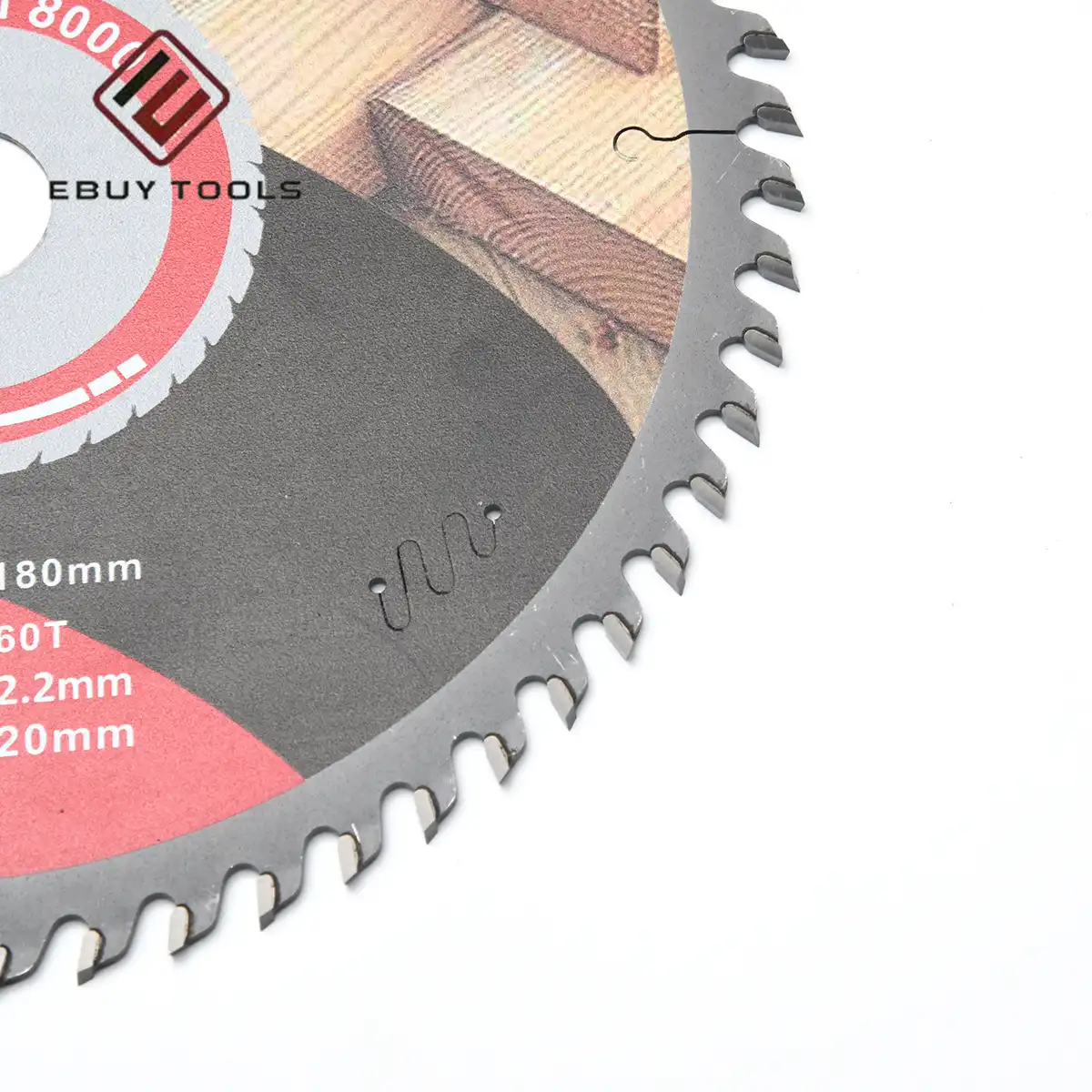
The tech behind circular blades with tungsten carbide tips is a complex answer to cutting problems in industry. The main part of these tools is a body made of sharpened tool steel, usually 75Cr1 or SKS51 metal, which has been heated until it is 42–44 HRC hard. This base material is flexible enough to handle lateral stress and shaking during high-speed spinning without breaking. These TCT saw blades use specialized construction to achieve high performance.
The cutting edges are made of powdered tungsten carbide with cobalt binder and are brazed onto the steel body. The grades range from K10 to K40. This carbide material is harder than HRC 88, so it keeps its cutting edge even when working with rough materials like particle board that is full of formaldehyde resins or aluminum alloys that get very hot when they are machined. By mixing body toughness with tip hardness, the heterogeneous construction forms a balance that can't be achieved with single-piece blade designs.
Evolution from Traditional Cutting Technologies
For decades, high-speed steel (HSS) blades were the standard for industry cutting. They worked well enough for basic woodworking tasks. These blades were easy to sharpen again and again, and they lasted long enough to cut natural lumber. But as manufactured woods with adhesives and composite materials became common in the industry, HSS technology showed it had major flaws. The rough glues and fillers in MDF, plywood, and particleboard made edges wear down quickly, which meant that tools had to be changed often, which slowed down production.
This is why TCT technology came about: to solve these problems. Manufacturers were able to make blades last 10 to 20 times longer than carbon steel options by only using solid carbide for the cutting tips instead of making the whole blade out of it. This saved them money and increased the blades' useful life. This huge increase in life changed the economics of high-volume cutting operations, especially in places that make furniture and work with panels and need to keep running all the time.
Innovative Tooth Designs and Cutting Geometries
Modern TCT blades have complex tooth shapes that are designed to work in certain situations. There are alternate trapezoidal and flat-top teeth in the Triple Chip Grind (TCG) geometry. The trapezoidal tooth cuts the kerf in the middle, and the flat tooth that comes next cleans the sides. When cutting non-ferrous metals like aluminum, this setup works especially well because it effectively separates chips and keeps material from welding onto the cutting edge.
Alternate Top Bevel (ATB) setups make each tooth curve in the opposite direction. This makes a shearing action that cuts natural wood smoothly and limits surface tear-out. Higher High-Alternate Top Bevel (Hi-ATB) designs make this bevel angle bigger, which makes them perfect for double-sided laminates and veneered panels where the quality of the surface is very important. Some special blades have negative hook angles (usually -5°) that control feed rates when cutting aluminum extrusions. This keeps the material from being grabbed too hard and keeps the user safe.
Comparative Performance Analysis
When procurement workers look at cutting tools like TCT circular saw blade, they have to think about more than just the initial cost of buying them. Diamond-tipped blades last a very long time when cutting rough materials like fiber cement or concrete goods, but they aren't used as much because they are so expensive and can only be used in certain situations. For low-volume operations working with natural woods, HSS blades are still a good deal, but the fact that they need to be replaced so often adds to the costs of labor and machine downtime.
TCT blades are a good compromise because they can be used on wood, plastics, and non-ferrous metals, and they are also very cost-effective. The fact that they can be carefully resharpened 5 to 10 times makes them last a lot longer, which saves money on tools and is better for the world than using disposable ones. Construction workers, for example, who cut both framing lumber and aluminum trim, gain greatly from this flexibility because a single blade specification can handle a wide range of cutting jobs without sacrificing performance.
Selecting the Right TCT Saw Blade for Your Business Needs
To pick the best cutting tools, you need to carefully look at a number of factors that are all linked. The main thing to think about is the type of material. For example, hardwoods need different tooth configurations than softwoods, and aluminum extrusions need special shapes to keep them from chip welding. The physical properties of your workpiece directly determine the TCT saw blade specs that will work well.
Tooth count has a big effect on both how fast something cuts and how smooth the surface is. Blades with fewer teeth (usually 36T to 40T) remove material more quickly, which makes them good for ripping through dimensional lumber where speed is more important than a smooth surface. On the other hand, blades with 60T to 80T make finer finishes that are needed for cross-cutting hardwoods or sizing veneered panels where saw marks should not be obvious. We've seen that many production problems are caused by tooth counts that aren't matched. For example, trying to do precise work with strong rip blades or using fine-finish blades to remove a lot of stock both slow things down.
Critical Specification Parameters
Machine compatibility is more than just matching the width of the arbors. Your saw's RPM rate needs to match the blade's design parameters. Running blades faster or slower than their designed speed range can cause dangerous vibrations and early failure. The outside diameter, inside diameter (arbor bore), and kerf thickness of the blade all need to be checked against the specs of your tools. Most industrial table saws and miter saws can fit standard sizes like 250mm, 300mm, and 350mm outer widths. However, unique sizes can be made for specific uses.
Feed rate optimization means matching how fast the material is removed with the tool's life and the quality of the cut. Too much force on the material going through the blade creates too much heat, which speeds up carbide wear and could cause the body to bend. On the other hand, too low of feed rates in production settings lowers output for no reason. To set the right feed rates, you need to know both how resistant your material is to cutting and how well your blade can handle heat. Experienced providers can give you this information based on application testing.
Application-Specific Selection Criteria
ATB tooth shapes that cleanly cut wood fibers are useful for woodworking shops that work with natural lumber. When you're working with mixed materials like MDF or particleboard that have a lot of glue in them, it's important to choose blades that are made for rough conditions. These usually have higher-grade carbide formulations and may have protection coats to keep resin from building up.
Fabrication shops that cut aluminum shapes should ask for blades with TCG tooth design and negative hook angles for TCT saw blade. The controlled cutting action keeps the material from getting stuck, and the chip-segmenting tooth design makes it easy to get rid of the scrap. Some makers make blades with special finishes that make cutting non-ferrous metals less likely to cause friction and heat. This makes the blades last a lot longer in high-volume production settings.
Brand Considerations and Certification Standards
Well-known brands have put a lot of money into research and development to make blades work better in a wide range of situations. Their research teams do a lot of cutting tests to make sure that tooth shapes and carbide mixtures work. This gives customers accurate information about how well the tools work. However, new makers often offer similar quality at reasonable prices, especially for common uses where cutting-edge technology only offers small advantages.
Quality approvals give industrial standards an objective seal of approval. After being made according to DIN 8083 standards, blades go through controlled tensioning processes that make sure they stay flat and stable while they're in use. Having ISO 9001 approval means that quality is managed in a planned way throughout the whole production process, which lowers differences between batches. When purchasing blades for important tasks like machining aircraft parts or making precise molds, these licenses give purchasing managers real proof of consistent product quality.
Economic Analysis and Bulk Purchasing Strategies
The total cost of ownership is much higher than the price of the car itself. A blade that lasts twice as long but costs 40% more is actually cheaper when you consider how little work it takes to change blades and how little production stops it causes. We suggest that instead of just looking at the unit price, you judge blades by how much they cost per linear meter of cutting. This shows how much they are really worth over their whole life.
When you buy in bulk from a trusted seller, you can usually get discounts and be sure that the product will always be available. By building ties with manufacturers who can keep inventory levels at a level that fits your consumption habits, you can avoid having to buy things quickly at high prices. Some sellers have contract inventory programs where blades stay their property until they are used. This can help your cash flow and make sure that you have blades on hand right away if production needs suddenly rise.
Applications and Industries Benefiting from TCT Saw Blades
Cutting tools with tungsten carbide tips are used in a huge range of industries, each with its own performance needs and limitations. Knowing how these tools are used in different businesses can help you make better decisions about what to buy and how to best use them. TCT saw blades are now the standard for high-efficiency production.
Industrial Woodworking and Furniture Manufacturing
Big companies that make furniture depend on TCT blades to cut specialized woods that would destroy regular tools in hours. When cutting melamine-faced particleboard for panel sizes, you need blades that leave lines on both sides without chips and keep the same dimensions after thousands of cuts. We've seen factories process rough materials nonstop for 8 hours by ordering blades with Hi-ATB tooth shapes and premium carbide grades, along with the right feed rate optimization.
Making cabinet parts is also hard because the cutting patterns are often layered, and the life of the TCT circular saw blade directly affects how quickly the parts are made. When a blade breaks in the middle of a shift, machines have to stop to change tools, work-in-progress builds up, and assembly processes further downstream wait for parts. Facilities that have switched to high-quality TCT tools say they have a lot less unexpected downtime. Some have even reached 99%+ cutting process uptime by managing their blades in an organized way and choosing the right specifications.
Metal Fabrication and Aluminum Processing
Window and door frame makers need burr-free cuts that don't need any extra finishing when they cut metal extrusions for frames. These results are always achieved with TCT blades designed for non-ferrous metals, which have TCG tooth shapes and negative rake angles. Controlled cutting keeps thin-walled profiles from deforming while they're being cut, keeping the close specs needed for waterproof assembly.
Suppliers of automotive parts that machine cast aluminum engine parts or chassis shapes work in tough conditions where blades have to handle high temperatures and constant mist greasing. Some TCT blades have special coats that keep cutting fluids from softening them while also lowering friction during the cut. These improvements in performance lead to longer tool lives and better surface finishes, which cut down on or get rid of the need for further cutting.
Construction and Job-Site Applications
TCT blades are useful for contractors who work with a variety of materials, such as frame lumber, engineered beams, metal trim, and composite decks. One blade design can handle a number of materials well, which cuts down on the number of tools that workers have to carry and keep track of. Carbide tips are strong enough to handle the odd nail or screw that would destroy an HSS blade, but this shouldn't make you less careful when using them.
Conditions on the job site create problems that don't exist in controlled workplace settings. Cutting tools are put under a lot of stress by dust, high temperatures, and changing material conditions. TCT blades made for portable saws usually have aggressive tooth geometries and strengthened bodies to withstand the hits that happen a lot in building sites. These features are meant to make cutting go faster rather than getting the best surface finish. Contractors say that good TCT blades usually last a lot longer than cheaper options. This saves them money on replacement costs and time lost when tools break down in the middle of a job.
Custom Solutions for OEM and Distributor Partners
When Original Equipment Manufacturers (OEMs) add saws to bigger production systems, they often need blade specs that are specific to their needs. Our focused engineering team and 15 years of development experience at Danyang Ebuy Tools work with OEM partners to make sure that tooth geometries, carbide grades, and dimensional specs are just right for their needs. This ability to customize also includes making private-label goods that meet certain performance standards and fit with the branding strategies of partners.
Regional dealers and tooling wholesalers who serve a wide range of customers like having a lot of different products that cover both standard specs and unique designs for specific uses. Our ability to make more than 150,000 diamond saw blades every day provides a steady supply even when demand goes up. We keep up quality control methods that make sure that the same qualities are used in all production runs. This is very important for distributors whose names depend on products that work well. Competitive pricing and low minimum order amounts work for both big resellers and new dealers who are just starting out in the market.
Conclusion
TCT saw blades are an example of a developed technology that is still changing and improving. They solve basic problems in the metal production and woodworking industries. Their hybrid design, which includes strong steel bodies and ultra-hard carbide tips, gives them the balanced performance that modern manufacturing needs: longer operating life, consistent cutting precision, and an economic value that becomes more clear in high-volume applications. When you choose the right blade for the job and the material, and then keep it in good shape, these cutting tools can do everything they're supposed to. As production environments and materials get tougher, the advanced engineering that goes into making high-quality TCT blades continues to give businesses that choose and use them carefully measurable competitive benefits.
FAQ
Why do TCT blades offer superior durability compared to standard blades?
Tungsten carbide-tipped blades last a very long time because of the way the material is made. The cobalt glue makes the tips tough enough to not break when they are hit, and the carbide tips keep their hardness levels above HRC 88 even at high temperatures. This mix lets TCT saw blades keep their sharp cutting edges in situations where high-speed steel options would wear down quickly. The expensive carbide material is only on the cutting edges of the hybrid blades because the steel body absorbs vibrations and bending stress. This keeps the blades from breaking in terrible ways like fully carbide blades can.
Can TCT saw blades effectively cut both wood and metal?
Quality TCT blades are very flexible when it comes to different types of materials, but they work best when they are optimized for a particular job. Blades made for wood usually have ATB tooth shapes that easily cut fibers, while blades made for metal have TCG shapes that separate chips and stop materials from welding together. Some companies make multi-material blades that meet all of these needs and can be used for tasks that involve working different materials. When you mostly work with one type of material, choosing application-specific blades will help your tools last longer and cut more efficiently.
How frequently should industrial operations replace or resharpen TCT blades?
How often they need to be replaced depends a lot on how rough the material is, how much it cuts, and what quality standards are accepted. Companies that work with natural hardwoods might go 10,000 linear meters or more without having to sharpen their tools, but companies that work with rough materials might need to do so every 3,000 to 5,000 meters. Checking the quality of the cuts can help you make decisions. For example, if the feed resistance goes up, burn marks show up, or the surface finish gets worse, it means that the edges are becoming less sharp. Most carbide-tipped blades can be properly resharpened 5–10 times before the tooth height drops to the point where they need to be replaced. This makes regular resharpening programs very cost-effective compared to throwing away blades too soon.
Partner with Ebuy Tools for Premium TCT Saw Blade Solutions
Our 77,000-square-meter factory at Danyang Ebuy Tools uses cutting-edge production technology and 15 years of experience making cutting tools to make TCT saw blades (Tungsten Carbide Tipped) that meet the exact needs of precision machining, making cars, and industrial fabrication. Our engineering team creates custom specifications for OEM partners while also keeping a large stock of standard setups. If we have the blade you need in stock, we can get it to you quickly; special specifications usually ship within 15 days. We provide reasonable pricing, expert support, and reliable supply chain performance to TCT saw blade providers, wholesalers, and direct industry users all over the United States. Email our skilled staff at [email protected] to talk about your unique application needs, get full product details, or get volume quotes that show how much value we provide to manufacturing partners around the world.
References
Forest Products Laboratory. "Machining and Woodworking Properties of Engineered Wood Composites." United States Department of Agriculture, Forest Service Technical Report, 2019.
Machinery's Handbook Editorial Staff. "Cutting Tool Materials and Geometries for Industrial Applications." Industrial Press, 31st Edition, 2020.
Society of Manufacturing Engineers. "Fundamentals of Tool Design: Circular Saw Blade Engineering and Selection." SME Technical Paper Series, 2018.
American National Standards Institute. "Safety Requirements for Circular Saw Blades: Design, Testing and Performance Standards." ANSI B7.1 Standards Documentation, 2021.
Kalpakjian, Serope and Schmid, Steven R. "Manufacturing Processes for Engineering Materials: Metal and Wood Cutting Technologies." Pearson Education Limited, 6th Edition, 2020.
Wood Machining Institute. "Optimizing Carbide Tool Performance in Secondary Wood Processing Operations." WMI Research Monograph Series, Volume 12, 2019.