.webp)

Step drill bits revolutionize drilling operations by enabling you to create multiple hole diameters with just one tool. An HSS Step Drill Bit is a specialized conical cutting tool crafted from High-Speed Steel, featuring a unique staircase profile that allows operators to drill incrementally larger holes without switching bits. This design dramatically reduces downtime in production environments while delivering clean, burr-free holes in sheet metal, stainless steel, aluminum, and plastic. The self-centering split-point geometry eliminates the need for center punching, making these tools indispensable for precision metalworking, automotive manufacturing, aerospace fabrication, and electrical installations.
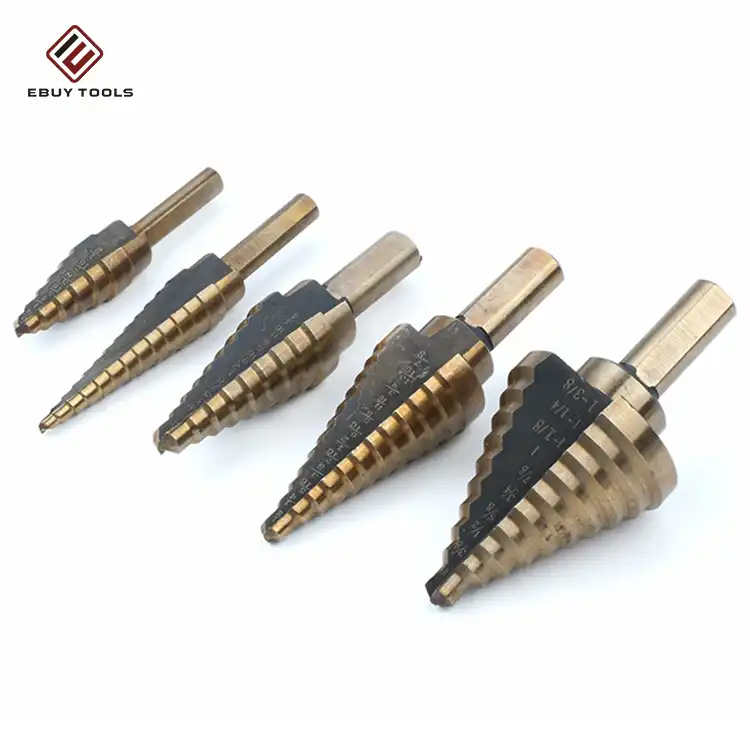
What Are HSS Step Drill Bits and Their Industrial Uses?
Understanding the Core Design
The development of HSS Step Drill Bits is a big step forward in the engineering of metal cutting. Instead of making a single diameter like most twist drills do, these tools have diameters that get bigger as they cut longer. Because the design is stepped, each level can work as its own cutting edge, combining several drilling processes into a single smooth motion.
The makeup of the material is very important. When hardened to 62–64 HRC, HSS 4241 tool steel has the thermal resistance needed to drill both ferrous and non-ferrous metals. When working with hardened alloys or stainless steel, the M35 Cobalt version offers better resistance to heat and keeps the cutting edge's integrity even when there is a lot of friction.
Key Industrial Applications
Numerous types of manufacturing environments depend on step drill bits to resolve specific operational issues. These tools let people in precision machine shops drill mounting holes in sheet metal frames without having to move the pieces or change the bits. The hexagonal shank design keeps chuck parts from slipping, so they stay centred even when there is a lot of pressure.
Step drill bits are used by HVAC makers to make holes in galvanised steel for pipe access. The spiral flute design makes it easier for chips to escape, which stops material growth that could damage the quality of the holes or the accuracy of the measurements. Automotive suppliers use these tools to drill holes for placing sensors in firewall panels and structural parts. The accuracy of the hole width has a direct effect on the tolerances of the assembly.
Manufacturers of aerospace parts like that the tool can drill through titanium and superalloy sheets without making the material around it harder. The 118° split-point geometry lowers cutting forces, which makes tools last longer while still meeting the tight standards needed for aircraft uses. Mould and die shops use step drill bits to make cooling channel access ports in hardened tool steel. The self-centering feature of the bit keeps it from moving around on curved surfaces.
Material Compatibility and Performance
Step drill bits can be used on a wide range of materials used in industrial manufacturing. When the right speeds and feeds are kept, HSS tools work well with steel materials, even stainless steel grades. Aluminium, brass, and copper are examples of non-ferrous metals that can be cut at higher speeds because they are not as hard. The stepped geometry is good for plastics and composites because it keeps the material from deforming when it's cut.
Standard bolt sizes and electrical connection specifications can be met by holes with diameters between 4 and 32 mm. With 15 clear steps, you can make exact diameter changes without needing drills of different sizes in between. The burr-free finish gets rid of the need for extra deburring, which saves money on labour and speeds up production.
Benefits and Advantages of Using HSS Step Drill Bits
Workflow Efficiency and Time Savings
The ability of HSS Step Drill Bit to drill in more than one width completely changes how drilling processes are set up. Instead of stopping work to switch drill bits for different hole sizes, operators use the same set of tools to make holes of different diameters. This feature is especially useful in high-mix, low-volume production settings where regular size changes would break up the flow of work otherwise.
When switching between part numbers, setup times are shorter for job shops and contract manufacturers. Since there are no more tool changes, setting mistakes and problems with concentricity are less likely to happen. Knowing that drilling activities won't be held up by delays in tool changes, production planners can set shorter cycle times.
Durability and Heat Resistance
The metallurgical qualities of high-speed steel make it stable at high temperatures, which is important for settings where production is ongoing. The 62–64 HRC hardness rating makes sure that cutting edges keep their shape even when drilling stainless steel, which makes a lot of heat because it works harder over time. Compared to regular carbon steel bits, HSS forging doesn't soften at high temperatures, which makes the tools last a lot longer.
When you choose the TiN coating choice, the friction coefficient drops below 0.4, which means that less heat is made at the cutting surface. This coating also raises the surface hardness above 2500 HV, which makes it harder to wear down when drilling through rough materials. Because of these performance traits, tools need to be replaced less often, and the cost of consumables goes down over time.
Cost-Effectiveness in Production Environments
The money you spend on good step drill bits pays off because they last longer and you don't have to keep as much inventory on hand. Your tool chest doesn't need to keep a lot of different drill sizes on hand; instead, it only needs a few step drill bits to cover the same diameter range. This consolidation of goods frees up capital that was previously stuck in tools and makes it easier to buy things and store them.
The prices of maintenance also go down. The strong design can handle the side forces that come up when drilling through sheet metal, where thin materials can bend under the cutting pressure. The hexagonal shank stops rotational slippage that wears out chuck assemblies too quickly. This makes the bit and the drilling equipment last longer.
How to Choose the Right HSS Step Drill Bit for Your Business Needs?
Material Considerations and Size Requirements
Your material specifications determine which tools to use. Cobalt-alloyed HSS is better at withstanding heat in stainless steel uses. Standard HSS 4241 tools works well with aluminium and mild steel. The circular flute design is better at moving chips out of deep holes, so chips don't build up and damage the cutting edge or stop the tool.
Size charts are very helpful for making sure that the specs of a tool fit the needs of an application. Common fastener clearance holes, electrical knockout sizes, and cable gland openings are all in the 4-32 mm range. So that they don't have to buy extra tools for different sizes, procurement teams should make sure that the step increments match their specific diameter needs.
Supplier Reliability and Quality Assurance
For business-to-business purchases, suppliers must be able to work together to ensure consistent quality and on-time delivery. Manufacturers with a long history, like Danyang Ebuy Tools Co., Ltd., combine the ability to make HSS Step Drill Bit tools with quality control systems that make sure that all of the tools in a production lot are the same size. Suppliers on this scale can meet big orders without sacrificing delivery times because their factories are 77,000 square meters and can make more than 150,000 pieces every day.
Quality certifications are important when tools have a direct effect on the results of production. Together, ISO-compliant production processes and checks before shipping make sure that tools will work as expected. Reliable suppliers give expert support to help customers find the best cutting parameters for their needs, which adds value beyond the product itself.
Wholesale and Direct Sourcing Options
Large-scale industrial buyers gain from buying directly from manufacturers because they don't have to pay markups to middlemen. When you buy in bulk, you can get better prices and make sure that the product specs are the same for all of your orders. Having direct relationships with manufacturers also lets you make changes for specific uses, like changing the way steps are set up or the way coatings are applied to fit specific combinations of materials.
Suppliers who keep a wide range of products in stock and stable inventory levels are valued by distributors and tooling wholesalers. Being able to combine orders for different types of tools makes the buying process easier and lowers the cost of administration. When looking at providers, you should think about how well their research and development (R&D) department can come up with custom answers to new production problems.
Maintenance and Performance Optimization of HSS Step Drill Bits
Sharpening Techniques and Maintenance Protocols
The life of a tool depends on how well it is maintained so that the cutting edge geometry stays the same. Even though specialised tools give the most accurate results, bench grinders with the right grinding wheels can be used to sharpen edges in-house between replacements. It's important to keep the tip position the same and make sure that all cutting edges remove material evenly.
How often you sharpen relies on how hard the material is and how much you're making. Wear patterns, like edges rounding or chipping, can be seen with the naked eye and show that the blade needs to be resharpened. Using piece counts or operational hours to plan repair stops tools from breaking down without warning, which could throw off production schedules.
Optimal Drilling Parameters
Cutting speeds and feed rates have a big effect on how well tools work and how well the item turns out. To keep stainless steel from work-hardening, it needs steady feed pressure and lower RPM settings, usually below 500 RPM. Aluminium can handle higher speeds, which lets cycle times be shorter without lowering the quality of the holes. Using cutting fluid lowers friction and gets rid of heat, which is especially important when boring materials that tend to expand when heated.
The self-centering split-point design reduces the thrust forces needed for the first penetration, but operators should still keep the downward pressure constant during the whole drilling process. Too much pressure can break or wear down the bit too quickly, while not enough pressure lets it rub instead of cut, which creates extra heat and speeds up wear.
Common Mistakes and Safety Protocols
When you store things wrong, the cutting edges of HSS Step Drill Bit get damaged, which slows things down. Tools should be kept in cases or boxes with compartments that keep the cutting edges from touching each other. In workshops with a lot of humidity, corrosion-prevention measures like light oil coatings are needed to keep HSS surfaces from rusting.
In B2B workshops, safety rules stress the importance of wearing the right safety gear, like safety glasses and gloves. Securely holding the part stops the material from moving during drilling, which could bend or break the bit. Chuck wear or spindle runout problems can be found and fixed before they damage tools or make holes that don't meet specifications by inspecting the equipment on a regular basis.
Leading Brands and Suppliers for High-Quality HSS Step Drill Bits
Evaluating Market Leaders
There are well-known names in the cutting tool business that are known for their excellent engineering and precise manufacturing. Both DeWalt and Milwaukee Tools have strong places in the North American market. They have a wide range of products and offer warranty programs and expert support networks to back them up. Bosch and Makita both make tools of about the same quality, and they both have world marketing networks that make sure their products are available everywhere.
For professional procurement, you need to look at more than just the brand name. You also need to look at the actual product specifications. When manufacturers release detailed technical information like hardness values, concentricity tolerances, and coating specifications, they show transparency, which helps customers make smart buying decisions. Third-party tests and user reviews are two more ways to back up claims about speed.
Quality Certifications and After-Sales Support
A company's dedication to quality control systems can be seen in its certifications. ISO 9001 certification means that there are written procedures in place for maintaining quality and making improvements all the time. When suppliers test the chemical makeup and hardness of production batches, they make sure that all of the batches are the same, which lowers the variation in how the machines work.
When technical questions come up or advice that is special to an application is needed, after-sales help is very important. Manufacturers with helpful technical support teams help customers find the best cutting settings, fix problems with performance, and choose the right tools for tough jobs. This partnership-based method adds value that goes beyond the original purchase.
Ebuy Tools Manufacturing Excellence
Danyang Ebuy Tools Co., Ltd. blends large-scale production with precise manufacturing skills gained from years of experience in the field. Our R&D department is always working to make tool geometries and coating technologies better so that they can meet the changing needs of our customers. A strict quality control system makes sure that the measurements are correct and the surface finish is the same from one production run to the next.
Our factory makes HSS Step Drill Bits that are designed to work in tough industrial settings. The 15-step design with a diameter range of 4–32 mm meets most fastener and electrical fitting needs. These tools work with a variety of drills and can be used with adapters that can be removed. They don't need special holders to fit into existing equipment collections.
Conclusion
Step drill bits make work more efficient by allowing for multiple diameters, reducing the number of tool changes needed, and producing holes without burrs. The HSS Step Drill Bit is an important tool for metalworking shops, automakers, aircraft fabricators, and electrical workers because it is made of a durable material and is very accurate in its shape. The best performance and lowest cost are guaranteed by making the right choice based on material suitability, size needs, and source dependability. Maintenance methods that protect the geometry of the cutting edge make tools last longer, and using the right drilling parameters consistently stops them from wearing out too quickly. Procurement professionals can get the most out of their tooling investments and help their companies reach their goals for production efficiency by working with quality-focused manufacturers that offer technical support and the ability to make changes.
FAQ
What materials can HSS step drill bits effectively cut?
HSS Step Drill Bits can be used on stainless steel and other types of steel, as well as aluminium, brass, different types of plastics, and hybrid materials. For these uses, the 62–64 HRC hardness of the HSS 4241 composition is enough to resist wear. Different types that are alloyed with cobalt work better when digging hardened metals or materials that produce a lot of heat when they are cut.
How do spiral flutes compare to straight flutes in step drill bits?
Spiral flute designs are better at removing chips, which lowers the chance of chip packing, which can damage the cutting edges or jam the tool. This arrangement also lowers chatter and vibration, making hole finishes smoother. Straight blades are easier to sharpen again, but they aren't as good at clearing chips, which is important in production settings where continued operation is important.
What causes premature failure in step drill bits?
Cutting at too high of speeds creates heat that softens the cutting edges and speeds up wear. When the workpiece isn't clamped properly, the material can move, which puts stress on the bit along its length. If you drill without lube in materials that make heat, the tool will break down over time. These types of failure can be avoided by choosing the right parameters and operating the tool correctly.
Partner with a Trusted HSS Step Drill Bit Manufacturer
Ebuy Tools sells HSS Step Drill Bits that are precisely built and made for tough industrial uses. Cutting tools made in our 77,000-square-meter factory meet strict quality standards and go through a lot of testing. With 319 skilled workers and a diamond saw blade line that can make more than 150,000 pieces every day, we can keep up with the inventory levels and delivery reliability that B2B buyers need. Our HSS Step Drill Bits have a diameter range of 4–32 mm, 15 steps, and a hexagonal shank design that is needed for professional use. Email our team at [email protected] to talk about your unique needs and look into custom options that will meet your production goals. OEMs, distributors, and contract makers who are looking for a reliable HSS Step Drill Bit provider are welcome to contact us.
References
1. Roberts, G.A., Krauss, G., and Kennedy, R.L. (1998). Tool Steels, 5th Edition. ASM International, Materials Park, Ohio.
2. Shaw, M.C. (2005). Metal Cutting Principles, 2nd Edition. Oxford University Press, New York.
3. Trent, E.M. and Wright, P.K. (2000). Metal Cutting, 4th Edition. Butterworth-Heinemann, Boston.
4. American National Standards Institute (2019). ANSI B94.11M-1993 (R2019): Twist Drills. American National Standards Institute, Washington D.C.
5. Stephenson, D.A. and Agapiou, J.S. (2016). Metal Cutting Theory and Practice, 3rd Edition. CRC Press, Boca Raton, Florida.
6. Machinery's Handbook, 31st Edition (2020). Industrial Press Inc., New York.