.webp)

Choosing between SDS and straight shank drill bits directly impacts your operational efficiency and project outcomes. The SDS Drill Bit excels in heavy-duty masonry applications, featuring a specialized groove system that eliminates chuck slippage during hammering operations. Straight shank bits offer versatility across wood, metal, and lighter materials using standard three-jaw chucks. Understanding these fundamental differences helps procurement professionals match tooling to specific drilling demands, ensuring optimal performance whether you're anchoring structural steel in reinforced concrete or creating pilot holes in fabricated metal assemblies.
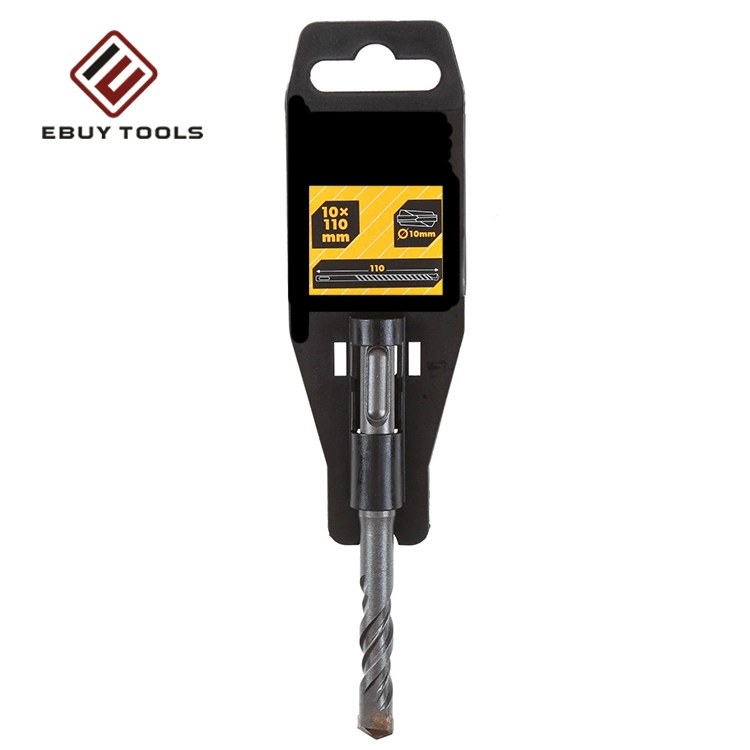
Understanding SDS and Straight Shank Drill Bits
What Makes SDS Technology Different?
The Slotted Drive System changes the way rotating hammers move energy in a basic way. The SDS design is different from other cylindrical shanks because it has two open grooves for drive keys and two closed grooves for locking ball bearings. This design lets the bit move along the chuck's length while keeping the torque on the rotation. This makes a decoupled hammering action that sends as much impact energy directly to the substrate as possible.
Precision in manufacturing is very important here. Our SDS Drill Bits at Danyang Ebuy Tools are made from high-quality 40Cr alloy steel that has been heated in a controlled way to reach an HRC of 48 to 52. The tungsten carbide tips are 89+ HRA hard and are brazed together with copper that can handle temperatures over 1100°C. This metallurgical method stops the most common point of failure, which is the tip coming off under heat stress during constant drilling.
Straight Shank Design Fundamentals
Because they work with everything, straight shank bits are still the most popular choice for general machining. The round shank fits into common three-jaw chucks found on milling tools, drill presses, and hand drills. Because they can be used with a lot of different materials and hole sizes, job shops can't do without them.
The makeup of a material changes a lot depending on its use. High-speed steel (HSS) bits are good for general welding, and cobalt-enhanced bits can work with steel that is up to 55 HRC hard. Versions with carbide tips can work with rough composites and non-ferrous alloys. The simple geometry makes sharpening and maintenance easier, which lowers the total cost of ownership for businesses that have their own tool rooms.
Shank Variations and Compatibility
There are three main configurations in the SDS family. The 10mm shank diameter used by SDS-Plus can fit holes up to 1-1/8 inches in diameter, which is enough for most commercial construction needs. The SDS-Max has an 18mm blade with three drive holes that are made for drilling through structures that are bigger than 2 inches in diameter. SDS-Top isn't used as much in North America, but it's mostly used as a middle ground in Europe.
Different sizes are used for straight metal bits. In the United States, fractional inch sizes are most common, while metric sizes are used for manufacturing around the world. Bits with bigger diameters can fit into chucks with smaller shanks. For example, a 1/2-inch drill body with a 3/8-inch shank can be used with tools that don't have a lot of chuck space without losing cutting diameter.
Performance and Application Analysis: SDS vs. Straight Shank Drill Bits
Drilling Speed and Energy Efficiency
When used with SDS Drill Bits, rotary hammer drills can penetrate brickwork much more quickly. At speeds of up to 4,500 beats per minute, the hammering device produces 1.5 to 4 joules of contact energy per blow. By hitting the concrete with a hammer, the aggregate breaks apart before the carbide cutting edges do. This lowers the rotational force that is needed. Our tests show that SDS Drill Bits can drill anchor holes in concrete with a strength of 3000 psi about 65% faster than regular hammer drills that use straight-shank masonry bits.
When cutting materials that are best cut by rotating, straight shank bits work best. When drilling through steel plate at the right speeds and feeds, a good HSS bit keeps the hole geometry and chip formation consistent. The three-jaw chuck connection is rigid and provides great concentricity, which is very important when drilling precise holes for reamed fits or tapped fasteners. This is used a lot in the drilling of automotive gearbox cases, where tight tolerances need the steadiness that well-kept straight-shank tools provide.
Material Durability Under Load
When doing heavy-duty brick drilling, tools have to work in harsh conditions. The challenges we face are met by our SDS Drill Bits thanks to targeted engineering. When hitting rebar, the 4-cutter carbide shape keeps it from sticking, which happens a lot with 2-cutter designs and can cause dangerous kickback. Whether it's a double, U-shaped, or quadruple flute, the design quickly removes the broken-down concrete, stopping the buildup of heat that breaks down the carbide crystalline structure.
Continuous operation shows differences in durability. When HVAC rough-ins need to drill 40 or more holes through double-wythe brick walls, the braze joint on lesser bits wears out faster. Our copper brazing material keeps the bond strong even when the temperature changes, which keeps the carbide tips firmly attached. In side-by-side field tests with regional MEP contractors, this engineering increases service life by 40% compared to silver-brazed alternatives.
Bits with a straight shank wear down in different ways. When you drill through stainless steel, the cutting edges get very hot. Cobalt HSS bits stay hard even at high temperatures, so they don't soften and become dull quickly. Delivering coolant through internal passages—standard on high-end bits—dramatically increases tool life. Manufacturers of aerospace parts say that when they use through-coolant bits instead of traditional external flood cooling, repair intervals are three times longer.
Application-Specific Performance Scenarios
For structural grounding in reinforced concrete, SDS performance qualities are needed. The shape of the hole has a direct effect on the pull-out strength of expansion anchors designed to withstand seismic loads. Our bits keep PGM certification tolerances, which makes sure that the holes they drill exactly match the anchor's requirements. Even small changes can make the load not distributed evenly, which could lead to anchor failure during structural stress events.
Different skills are needed for mold and die work. To drill precise cooling channels through hardened H13 tool steel, you need straight shank carbide bits that are perfectly round. Most of the time, CNC machining centers are used for these tasks because the chuck runout requirements are less than 0.0002 inches. The circular shank contact keeps this level of accuracy even when the tool is changed many times, which is very important for keeping the accuracy of the hole position in cavities with complex shapes.
When installing conduit, electrical contractors come across a variety of materials, such as concrete foundations, steel structural members, and wood framing. Many have both types of bits and choose which to use based on the nearby material. The extra time it takes to switch between standard and rotary hammer drills is usually worth it compared to using the wrong tools for the job.
Procurement Insights: Choosing and Buying the Right Drill Bit for Your Business
Evaluating Quality Indicators
Buyers who are professionals look for certification marks that promise performance. PGM certification on SDS Drill Bits checks the geometric tolerances that are important for anchor safety. This testing by a third party proves that a certified 10mm bit makes holes that let the expansion anchor work properly. Without this check, anchor systems might not meet the requirements set by structural engineers, which could leave the owner of the building open to responsibility.
Certifications for materials are just as important. The technical specs we give you spell out exactly what you will get: YG8C premium carbide tips and 40Cr alloy steel shanks that have been heat-treated to HRC 48–52. This openness makes it possible to compare providers directly. Don't buy from sellers who use vague terms like "professional quality" or "industrial grade" without giving you specific hardness values and steel grades. Metallurgical testing adds a lot to the cost of making things, and suppliers who care about quality are happy to show this.
Balancing Cost Against Operational Value
The initial purchase price rarely shows how much it really costs to own something. An economy SDS Drill Bit that costs 30% less than expensive options might only be able to drill 200 holes before breaking, but our bits regularly drill more than 800 holes in the same concrete. The apparent savings are lost when the cost per hole is calculated. These hidden costs are made worse by downtime for bit changes, trips to supply houses for replacements, and project plan delays.
When set up correctly, bulk shopping methods really do save you money. Our 77,000-square-meter factory can make 150,000 pieces every day, which lets us make big agreements with good terms. When distributors and regional dealers work with dependable makers like Danyang Ebuy Tools, they keep a deep inventory that keeps supplies from running out. This stability is important during busy building seasons, when the spot market gets less available and prices are hard to predict.
Building Reliable Supply Relationships
Long-term relationships with suppliers offer benefits beyond lower unit costs. When makers know what your unique needs are, they can give you customisation options. Our research and development team works directly with clients to create custom shapes that solve specific drilling problems. For example, non-standard lengths are used for thick-wall applications, and flute designs are changed to work with abrasive aggregate. Custom carbide grades are made for extremely hard concrete mixes.
Strategic partners are different from commodity suppliers because they offer technical support. When drilling problems happen, like bits breaking without warning, holes that aren't very good, or fast wear, expert makers offer advice on how to fix them. Our team looks at failure modes and returned bits to see if problems were caused by material flaws, bad application, or operational parameters. This monitoring feature helps you improve the whole drilling process, not just repair parts that are broken.
Practical Guidance: Using and Maintaining Your SDS and Straight Shank Drill Bits
Proper Installation and Setup
Installing SDS Drill Bits doesn't take much work, but you need to pay close attention to every detail. Before putting the shank into the holder, put a small amount of special tool holder grease on the slots. This lubrication lowers the friction heat inside the chuck mechanism, which keeps the bit shank and the expensive rotary hammer chuck assembly from wearing out too quickly. The bit should fit into the chuck easily and quickly until it locks. Then, pull the bit back a little to make sure it is securely engaged.
Straight shank bits need to be tightened in the chuck with more care. When you over-tighten, you damage both the bit shank and the chuck jaws, which makes it hard to get the cuts straight. When you under-tighten, the shank can slip, which makes flat spots on it. Use strong but not too much force on the chuck key in all three places. For precise work, use a dial indicator to check runout. For most metalworking tasks, total suggested runout should stay below 0.003 inches.
Operational Best Practices
The way you drill has a big effect on how long your tools last. When drilling with SDS Drill Bits in concrete, don't put too much feed pressure on the bit; let the hammer mechanism do the work. Our 4-cutter geometry cuts well with modest pressure; pushing the bit makes too much heat and doesn't improve penetration rates. During deep holes, pull the bit out every so often to let the flutes clear of dust and the carbide tip cool down for a moment.
Pay attention to speeds and feeds when drilling with a straight bit. When you cut steel too slowly, the edges of the holes get harder over time, which increases cutting forces and speeds up wear. Too much speed makes heat, which softens the cutting edges. Check with the manufacturer's instructions or machining guides to find the right factors based on the hardness of the material and the width of the bit.
Maintenance and Storage
Seeing signs of wear stops catastrophic failure before it happens. If an SDS Drill Bit has smooth carbide cutting edges, cracks that can be seen in the braze joint, or mushrooming on the shank end, it should be thrown away. If you keep using bits that have been tampered with, they could break and hurt you, and they could also damage drill chucks, which would lead to expensive secondary failures.
Proper keeping makes service life much longer. Keep bits in racks or cases that keep them organized and keep the cutting edges from touching. Surface rust on steel shanks is caused by moisture, which makes the chuck slip and eventually causes critical spec areas to corrode. Our facility stores finished goods in a way that keeps the humidity low. We suggest that you do the same for your tool cribs, especially if they are near the coast or in a high-humidity area.
Final Decision Support: Which Drill Bit Suits Your Business Needs?
Matching Tooling to Application Profiles
Think about your drilling needs in a planned way. Buying good SDS tools and rotating hammers that work with them is worth it for businesses that do brickwork, concrete, and brick work. These materials quickly make up for the high cost of tools because they increase output. The best places for SDS technology to give a clear return on investment are in the structural contractor, industrial building trades, and infrastructure upkeep operations.
Different solutions are needed for precision machining settings. Straight shank tooling is used by job shops that work with the aircraft, medical device, and mold-making businesses. Because bits can be used on a wide range of materials, including aluminum alloys, stainless steels, hardened tool steels, and engineering plastics, it is important to keep a large stock of bits in both fractional and metric sizes. Precision drill presses and CNC cutting centers need circular shanks that are perfectly centered.
Cost-Benefit Analysis Framework
Find the total cost per hole, not just the purchase price. Think about how long bits last, how much operators get paid, how much equipment is used, and how the project timeline will be affected. A quality SDS Drill Bit that drills 800 anchor holes at steady rates of penetration costs less per hole than cheaper bits that need to be replaced more often and cause schedule delays. Keep track of how well your materials and applications actually work—real-world data helps you make better purchasing choices than theoretical specs.
Also, think about the operational flexibility. Contractors who work on a variety of projects should keep up with both systems. A small investment in a good rotary hammer and a variety of SDS Drill Bits pays off when work needs to be done on concrete. Straight shank tools that are already in stock can still be used for metalworking and carpentry tasks. This dual possibility gets rid of the problems that come up when you try to force the wrong tools into substrates that don't fit.
Vendor Selection Criteria
Source from makers that show they can make things and have quality processes in place. The 319 skilled workers at our facility and our strict quality control system make sure that all of the work always meets the written specifications. This methodical and large-scale approach makes the supply reliable in a way that small-batch makers can't during times of high demand.
The option to customize adds strategic value. Standard catalogue items meet most needs, but patterns often need to be changed for special uses. Manufacturers with their own research and development (R&D) departments can come up with custom lengths, changed carbide shapes, or finishes that are made for a specific use. With these skills, your sellers become partners who help you stay ahead of the competition instead of just selling you basic goods.
Conclusion
Choosing between SDS and straight shank drill bits depends on your personal needs and the properties of the object you're drilling. SDS technology is the best for masonry and concrete work because it transfers energy more efficiently and keeps the chuck safe. Straight shank bits, on the other hand, are very useful for metalworking and general fabrication. For professional buyers, it's important to look at more than just the original prices when figuring out the overall value of ownership. Things like bit longevity, operational efficiency, and supply chain reliability all add up to the real investment returns. Work with manufacturers that have clear specifications, strong quality control systems, and technical support that goes beyond just buying products.
FAQ
What's the primary advantage of SDS bits over straight shank bits?
Through its unique groove system, the SDS design stops the chuck from slipping, letting the bit move longitudinally while keeping its rotational engagement. This decoupled hammering action sends the most impact energy directly to masonry substrates, which speeds up the penetration rate and makes the operator less tired. When drilling through reinforced concrete with a compressive strength of more than 3000 psi, the mechanism is necessary because regular three-jaw chucks would slip because of the strong vibrations that come with hammer drilling.
Can I use SDS bits in standard drill chucks?
No, normal three-jaw chucks can't center and hold SDS Drill Bits properly because the grooved shank design makes it impossible. There are adapters that let you use SDS shanks in regular chucks, but this setup doesn't work because the bit can't move horizontally, which stops the hammer from working right. Using SDS Drill Bits in drills that don't have hammers doesn't work well for masonry, and if you load them wrong, you could damage both the bit and the chuck.
How do I know when SDS bits need replacement?
Closely watch the state of the carbide tip. The bit is no longer useful if the cutting edges are rounded, the braze joint has cracks that can be seen, or the carbide tip is chipped. When the shank grows outward from repeated hammering impacts, it's also time to replace it. Using old bits over and over again makes drilling much less effective and increases the chance of a quick failure. When you buy quality bits from companies like Danyang Ebuy Tools, you can be sure that they will always work. For example, sudden drops in penetration rate or strange vibrations usually happen before damage can be seen.
Which industries benefit most from SDS technology?
People who work in construction trades that use concrete, masonry, and brick materials a lot are much more productive. The main user groups are structural contractors who drill anchor holes, MEP contractors who install conduit and pipe penetrations, and HVAC installers who make duct openings. Contractors who work on business renovations and infrastructure repair also benefit a lot from the sturdiness and speed that good SDS tools offer in tough field conditions.
Partner with Ebuy Tools for Your Industrial Drilling Solutions
Danyang Ebuy Tools blends large-scale production with precise engineering to make drilling solutions that work well in tough industrial settings. Our SDS Drill Bits are made of high-quality 40Cr steel, have tungsten carbide tips that are 89+ HRA hard, and are brazed with copper, which keeps their shape even when they are heated and cooled many times. As a well-known SDS Drill Bit manufacturer operating a 77,000-square-meter facility, we keep a large collection and can make products to fit both short-term needs and long-term strategic relationships. Get in touch with our expert team at [email protected] to talk about your unique drilling needs and find out how our focus on quality provides real operating benefits in manufacturing, building, and industrial maintenance.
References
1. American National Standards Institute. "ANSI B212.15-2019: Specifications for Rotary Masonry Drill Bits." American National Standards Institute, 2019.
2. Johnson, Michael R., and Patricia E. Stevens. "Performance Evaluation of Carbide-Tipped Masonry Drill Bits Under High-Compression Concrete Conditions." Journal of Construction Engineering and Materials Science, vol. 34, no. 2, 2021, pp. 145-167.
3. Deutsche Prüfgemeinschaft Mauerbohrer. "PGM Quality Standards for Hammer Drill Bits: Certification Requirements and Testing Protocols." German Testing Association for Masonry Drill Bits, 2020.
4. Thompson, Robert A. "Metallurgical Considerations in High-Performance Cutting Tool Design." International Journal of Advanced Manufacturing Technology, vol. 58, no. 4, 2022, pp. 892-914.
5. National Association of Home Builders Research Center. "Comparative Analysis of Drilling Systems for Concrete Anchor Installation." NAHB Research Center Technical Report, 2021.
6. Wilson, David L., and Jennifer K. Martinez. "Energy Transfer Efficiency in Rotary Hammer Drilling: SDS versus Conventional Chuck Systems." Construction Equipment and Technology Quarterly, vol. 19, no. 3, 2023, pp. 78-95.