.webp)

It is important to know the safety standards for industrial diamond saw blades when buying cutting tools for precise machining or high-volume production. These very rough cutting tools are made to work with tough materials like ceramics, hardened steel, and titanium alloys, but their strength comes with risks. Following foreign safety standards saves your employees, lowers your risk, and keeps your business running smoothly. This complete guide walks you through the most important safety issues. It helps procurement workers make choices that balance performance with following the rules.


Understanding Safety Challenges in Using Industrial Diamond Saw Blades
Even though industrial diamond saw blades are very good at cutting, they pose serious safety risks that need close attention. Blades breaking during high-speed operation is one of the biggest risks, especially if the blades go faster than their highest RPM rate or have flaws in the way they were made. Kickback happens when the blade gets stuck in the material because of bad feed rates or a misaligned machine. This causes quick, violent movement that can hurt workers.
Being around dust is always bad for your health. Cutting concrete, granite, or pottery releases particles that are high in silica. If you don't have enough air flow or follow wet cutting procedures, these particles can lead to silicosis and other lung diseases. Noise pollution from high-frequency blade action often goes over 85 decibels, so hearing protection is needed to keep ears from getting hurt in the long run.
These risks usually come from things that can be avoided, like not giving operators enough training, using blades for things other than what they were made for, or not doing regular checks. A close call happened in an Ohio metalworking shop when a continuous rim blade was used to dry cut ceramic tiles, which led to quick overheating and segment delamination. After that, the facility put in place tighter rules for choosing blades and required wet cutting processes, which stopped similar accidents from happening again for three years.
International safety standards set the rules for lowering risks. Blades made with ISO 9001 quality control systems are put through a lot of tests to make sure they are structurally sound, and OSHA compliance makes sure that exposure limits at work are followed. Quality controls at the supplier level, such as third-party testing and batch tracking, give buyers even more confidence that the blades will meet the stated specs.
Key Safety Standards and Certifications for Diamond Saw Blades
EN 13236: European Benchmark for Abrasive Tools
The EN 13236 standard sets out strict rules for diamond saw blades that are used in stone cutting and building. For this approval, blades must be tested for burst at 1.5 times their top speed. This makes sure they can handle quick stress without breaking. EN 13236 looks at tolerances for dimensions, standards for flatness, and the strength of section bonds. Buying managers can be sure that blades with this mark are safe because they have been tested by a third-party lab and shown to be compliant.
ANSI B7.1: American National Standards for Safety
ANSI B7.1 is all about how to use power-driven grinding wheels and tools safely at work in North America. The standard outlines the necessary protection, the fastest speeds that can be used, and the mounting methods that keep people from coming into touch with the spinning blades. Compliance isn't just about the blade; it also checks that the machine can work with the blade, making sure that the spindle thread patterns, arbor sizes, and flanges all meet safety standards. Industrial sellers who sell to the U.S. market should focus on ANSI B7.1-certified blades to stay in line with safety rules at work.
OSHA Regulations and Workplace Safety Integration
Standards set by the Occupational Safety and Health Administration have a direct effect on how blades should be used. OSHA's Permissible Exposure Limit for respirable crystalline silica is 50 milligrams per cubic meter over an eight-hour shift. When working with materials that contain silica, you need to use wet cutting methods or dust collection systems. When blade action goes above safe decibel levels, noise exposure guidelines call for engineering controls or personal protective equipment. When making purchasing choices, these practical needs must be taken into account, since non-compliant tools can lead to expensive fines and work stops.
ISO Quality Management and Lifecycle Compliance
When a company has ISO 9001 approval, it means that they have well-thought-out quality control systems that cover everything from getting the raw materials to inspecting the finished product, including the diamond saw blade. This methodical technique lowers differences between batches and makes sure that safety performance is always the same. Lifecycle compliance includes after the product is bought: blades need to be checked regularly for section wear, core bending, and crack formation. Reliable providers give inspection instructions and replacement signs to help keep the tool safe during its entire life.
Safety standards for industrial-grade blades are stricter than those for consumer-grade blades. Blades made for homeowners might meet basic performance standards, but they don't have the strong segment bonding, precise manufacturing tolerances, or well-documented testing procedures needed for high-stakes industrial uses. The difference in safety compliance is reason enough to buy approved industrial tools, especially in fields like aircraft machining where bad materials can have very bad results.
How to Choose Safe and Compliant Diamond Saw Blades: A Buyer's Checklist
Material Compatibility and Application Analysis
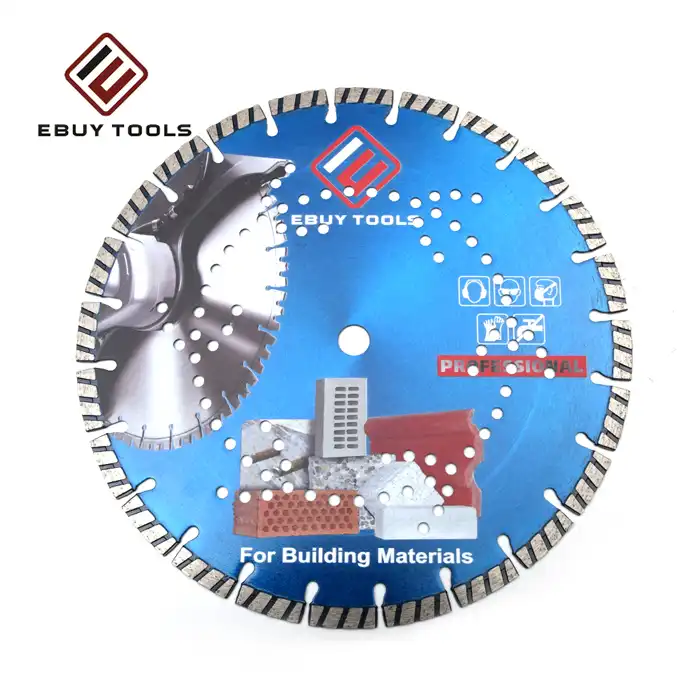
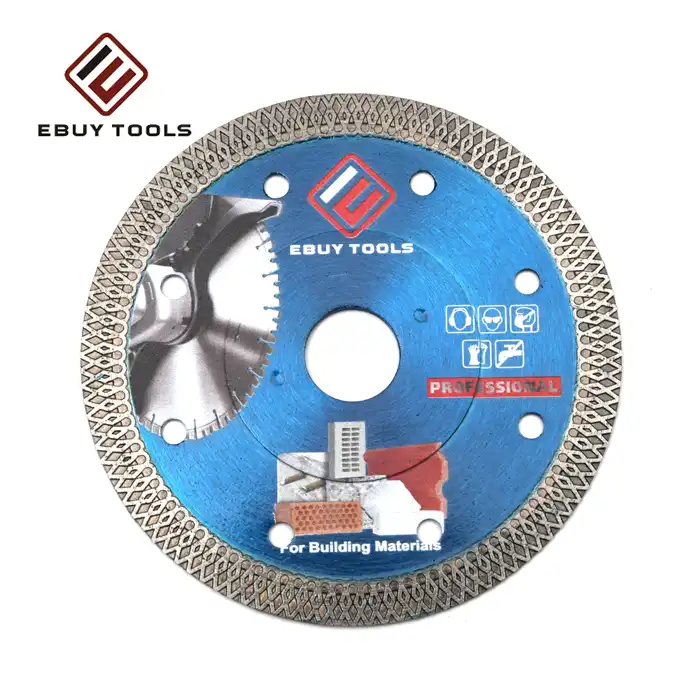
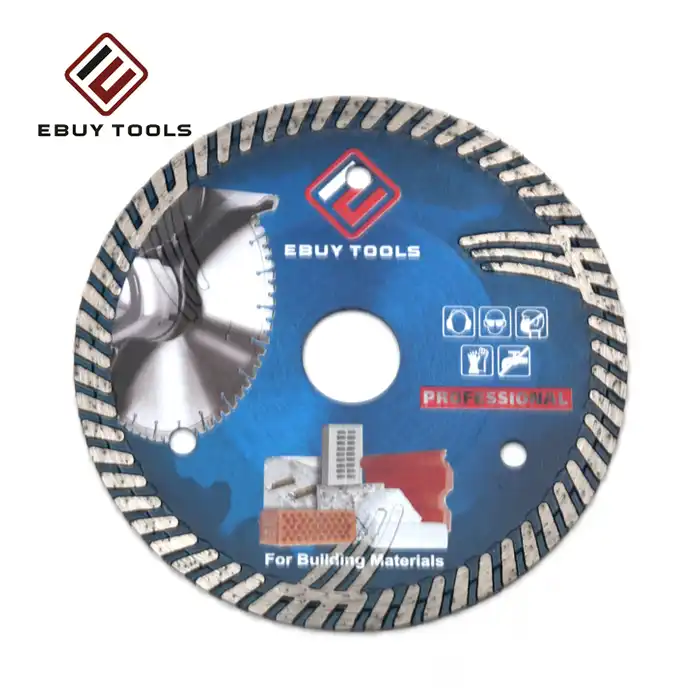
Knowing your material range is the first step in choosing the right diamond saw blade technology. Because their diamond core is continuous, continuous rim blades can cut through fragile materials like porcelain and glass tiles without chipping the edges. Because they have a firm rim, these blades work best in shops with water-fed cutting tables because they need to be cut while they are wet. On the other hand, turbo diamond saw blades have serrated cooling channels that let you cut rock and granite without water. This solves the speed vs. finish problem by letting heat escape through air flow.
Critical Performance and Safety Metrics
Compared to cold-pressed options, hot pressing makes high-density pieces that hold diamonds better, which increases blade life by thirty to fifty percent. When this process is done, blades are made that can handle the heat stress of dry cutting. Another option is to use brazing technology, which creates metallurgical bonds that reveal diamonds at seventy to eighty percent of their particle width. This high exposure ratio stops the glazing problem that happens with regular sintered blades when they are used for low-abrasion cuts. Glazing happens when bond material covers up diamonds.
Balance of the blade has a direct effect on how well it cuts and how safe the person is. Unbalanced blades cause vibrations that wear out bearings faster, make cuts less clean, and make operators tired. Reputable makers balance blades either directly or dynamically before sending them out. This is a quality control step that is written down in compliance certificates. How well the metal mesh holds on to the gems when they are cut is determined by the segment bond strength. Weak ties let diamonds come loose too soon, which shortens the life of the tool and makes projectiles dangerous.
Maximum RPM rates should be looked at very carefully. For cutting pottery while they are still wet, the speed around the edges of each blade is a certain number of meters per second. At about 2,800 to 3,800 RPM, a 250mm blade can reach this goal. When you run the blades faster than their rated speeds, they could fail through rotational failure, which happens when pieces separate from the core at very high speeds. On the other hand, speeds that are too slow lead to glazing because the bond doesn't wear away enough to reveal new diamonds.
Supplier Credentials and Support Infrastructure
Test reports from a third party back up what the maker says about safety, especially for the diamond saw blade. Burst testing, segment pull strength readings, and dimensional verification are all done by independent labs that produce paperwork that can stand up to regulatory checks. If a supplier refuses to give you these papers, that should be a red flag right away. After-sales support services, such as technical advice, application troubleshooting, and user training materials, show that a provider is committed to safe blade usage after the sale is complete.
Technical knowledge is needed to match blade types to operating situations. Hot-pressed segmented blades with sharp diamond concentrations help companies that make parts for transmissions in cars cut tough steel. Mold and die shops that work with graphite electrodes need special bonding mixtures that can handle the rough and soft properties of carbon materials. Instead of pushing general merchandise, procurement professionals should work with sellers who take the time to understand your unique saving problems.
Safety Procurement Checklist:
- Check for EN 13236, ANSI B7.1, or a similar license by looking over the paperwork.
- Make sure that the highest RPM number fits the specs of your tools and includes a safety margin.
- Get section bond strength data and burst test information from a third party.
- Check to see if the seller has at least an ISO 9001 quality management system approval.
- Check the material's silica percentage to see if it needs to be cut wet or dry.
- Check the balance of the blades and the standards for production tolerances.
- Look into the guarantee terms, return policies, and replacement assistance procedures.
Proper Usage and Maintenance Tips to Ensure Safety and Longevity
Machine Setup and Operational Environment
Setting up the machine correctly is the first step to safe diamond saw blade usage. Spindle run-out, or horizontal wobble in the arbor, must not be more than 0.05 mm to keep edges from breaking and segments from failing too soon because of vibrations. For clamping pressure to be spread evenly, mounting flanges need clean, flat areas whose diameters meet one-third of the blade's width. When ring support isn't good enough, stress builds up and can cause radial cracks.
For wet cutting systems to work, there must be a steady flow of water fast enough to remove cutting waste and keep blade temperatures below critical levels. When there isn't enough cooling, thermal shock happens because the steel core goes through rounds of expanding and contracting. Intermittent operation is good for dry cutting because letting the blades spin easily every sixty seconds gets rid of built-up heat and makes the segments last longer.
Safety gear worn by individuals is the last line of defense. Safety glasses with side guards that meet ANSI Z87.1 standards keep you safe from projectile injuries caused by material pieces or segment debris. In dry cutting situations—especially when using a dry diamond disc, which generates significant airborne dust—respirators that are approved by NIOSH and have P100 filtration keep you safe from silica dust. When blade noise goes over 85 decibels, hearing protection is required. Most high-speed cutting processes go over this level.
Routine Maintenance and Inspection Protocols
Scheduled repair keeps things safe and gets the most out of your blade purchase. Blades should be cleaned at the end of each shift to get rid of cutting dust that can hide cracks or damaged segments. When you look at a section, you're looking for chips, cracks, or strange wear patterns that could mean that it's not aligned correctly or that there is too much feed pressure. Core checks look for radial cracks that are spreading from the arbor hole. This is a type of failure that happens before the blade breaks completely.
Glazing shows up as a smooth, shiny piece surface and makes cutting less effective and sparks less likely to happen. This happens when the metal bond matrix is too tough for the material being cut, stopping the diamonds from naturally wearing away and revealing new ones. The glazed layer can be removed by dressing the blade, which means running it several times through a gritty object like an aluminum oxide stick or a concrete block. This brings back the cutting action. This care step makes the blade last longer and stops the use of too much force, which can cause kickback risks.
When diamond contact decreases to the point where cutting efficiency drops significantly, segments need to be replaced. Keeping used blades that are worn out adds to the machine's workload, makes it too hot, and lowers the quality of the cuts. Setting replacement standards based on measured performance decline instead of random time intervals lowers the total cost of ownership while keeping safety margins the same.
Training Programs and Knowledge Transfer
Operator skill has a direct effect on how safe the workplace is. Comprehensive training programs should cover how to choose the right blade, set up the machine, spot dangerous situations, and handle emergencies. New workers benefit from practice lessons led by a mentor that go over the right way to feed the workpiece and place it. Refresher training every so often keeps people from getting too comfortable and brings up to date safety standards or changes to tools.
Documentation techniques help with growth all the time. Keeping logs of blade performance, failure modes, and maintenance actions shows trends that help with choices about what to buy and how to run the business. Through careful recording, a company in the Midwest that makes aerospace parts found that some blade brands regularly lost segments too soon when cutting titanium alloys. They switched suppliers, which cut events involving blades by sixty percent.
Procurement Insights: Where to Buy Safe and Certified Industrial Diamond Saw Blades
Evaluating Manufacturer Credentials and Product Lines
Reputable makers set themselves apart by using clear licensing paperwork and well-established quality control systems. Companies that keep their ISO 9001 license show that they are dedicated to consistent processes and constant growth. Certification groups, such as TÜV, BSI, or UL, make sure that factories meet foreign standards without any interference from the factories themselves. Purchasing teams should ask for up-to-date certificates and check that they are still valid by using records of granting bodies to find industrial diamond saw blades that are safe and trustworthy.
The depth of a manufacturer's product line shows how technically advanced they are. Suppliers who offer customized solutions for a range of uses, such as turbo rim blades for brickwork, continuous rim types for ceramics, and brazing technology for materials with a very high hardness, including the dry diamond disc for efficient no-coolant cutting, show that they are investing in engineering in ways other than just making commodities. This range lets blade properties be precisely matched to practical needs, avoiding the safety problems that come with using a single method for everything.
Custom Orders and Bulk Procurement Considerations
When buyers buy a lot of blades, they often need to be customized to work best with certain materials or tools. Custom diamond mesh sizes, section makeup changes, and non-standard widths can all lead to big improvements in efficiency. These modifications must not make safety less important. Manufacturers with a good reputation test custom blades the same way they test standard products and keep proof that any changes made meet the standards.
Bulk procurement deals should include quality guarantee clauses. Buyers are protected from supply delays by standards for batch testing, performance promises based on measurable cutting metrics, and fast replacement for broken units. Compliance tests are helpful for long-term supply deals because they check that manufacturing facilities are still following quality standards.
Cost-Safety Balance and Risk Management
When companies are tempted to buy uncertified blades because they are cheaper, they are taking on too much risk. If a blade that is 30% less expensive than certified options breaks down early or hurts someone, it will cost a lot more in lost time, workers' compensation claims, fines from the government, and damage to the company's image. When figuring out the total cost of ownership, these risk factors must be added to the buying price and the expected tool life.
Clear connections with suppliers help people make smart decisions. Buyers trust manufacturers who are open about how they check for quality, let people tour their facilities, and keep their expert support teams active. On the other hand, sellers who refuse to share compliance paperwork or who offer prices that seem too low should be closely examined. There are a lot of non-compliant goods on the market for industrial cutting tools, especially in foreign sourcing channels, so it's important to do your research.
Conclusion
Safety standards for industrial diamond saw blades are more than just legal requirements; they are the basis for operational success in settings where precision manufacturing is done. Following the rules set by EN 13236, ANSI B7.1, and OSHA will keep your workers safe and keep your production runs running smoothly. A risk-managed approach to buying cutting tools includes choosing certified blades that are right for your materials, following strict upkeep rules, and working with honest sellers. Buying approved blades that are kept in good shape will pay off in the form of fewer injuries, longer tool life, and steady cutting performance that helps you reach your quality goals.
FAQ
What safety certifications should I verify when procuring diamond saw blades?
For European markets, choose blades that are certified by EN 13236. For North American businesses, choose blades that are certified by ANSI B7.1. These standards require testing for burst, checking for correctness in measurements, and checking the strength of section bonds. Ask for test results from a third party that list the highest RPM scores and check the structure's integrity. If a company has ISO 9001 approval, it means they have strict quality rules in place throughout the whole production process.
How frequently should industrial diamond saw blades be inspected?
Visual checks are done every day before each shift to find damage that is easy to see, like broken pieces or core deformation. Every week, a close look should be given to the section wear patterns, the amount of diamond exposure left, and any small radial cracks that might be near the arbor hole. No matter how often they are inspected, blades that are coating, vibrating in strange ways, or losing their cutting ability need to be dressed or replaced right away.
Can continuous rim blades be used for dry cutting applications?
Not at all. When cutting without water, continuous rim diamond saw blades don't have the expansion holes that let heat escape and waste flow away. When you use these blades without a water coolant, they quickly get too hot, which can cause the core to twist, segments to separate, and even total failure. When cutting something dry, turbo rim or split blades with built-in cooling ducts work well.
Partner with Ebuy Tools for Certified Diamond Saw Blade Solutions
To meet safety standards while keeping cutting efficiency high, you need a factory partner with a lot of technical know-how and tried-and-true quality processes. Within its 77,000-square-meter factory in Danyang City, Ebuy Tools employs 319 skilled workers whose sole job is to make precise cutting tools. Our daily production of about 150,000 diamond saw blades guarantees a steady supply for industries like metalworking, automotive, aircraft, and mold making that need to buy a lot of them.
Our Research and Development team works with customers to create unique blade solutions that solve problems with certain materials without affecting safety standards. For your compliance checks, we make sure that every blade goes through strict quality control tests that are in line with international standards. Ebuy Tools has guaranteed performance whether you need hot-pressed blades for dry cutting titanium parts, continuous rim variants for chip-free ceramic machining, or brazing technology for uses requiring very high hardness.
As a well-known company that sells diamond saw blades and cares about worker safety, we offer clear third-party test results, technical advice tailored to each application, and quick support after the sale. Email our team at [email protected] to talk about your cutting tool needs, get samples to make sure they work, or set up a tour of our plant. Visit ebuy-tools.com to see our full catalog of products and learn how our production skills can help you reach your goals for precision machining while maintaining the highest safety standards.
References
1. International Organization for Standardization. "ISO 9001:2015 Quality Management Systems – Requirements." Geneva: ISO Central Secretariat, 2015.
2. European Committee for Standardization. "EN 13236:2001 Machines for Construction and Maintenance of Roads – Safety Requirements." Brussels: CEN Management Centre, 2001.
3. American National Standards Institute. "ANSI B7.1-2017 Safety Requirements for the Use, Care, and Protection of Abrasive Wheels." Washington: ANSI Publications, 2017.
4. Occupational Safety and Health Administration. "Crystalline Silica Exposure Standard for Construction (29 CFR 1926.1153)." U.S. Department of Labor, 2016.
5. Marinescu, Ioan D., et al. "Handbook of Advanced Ceramics Machining." Boca Raton: CRC Press, 2018.
6. Hitchiner, Michael P. "Diamond Tool Technology for Precision Machining Applications." Journal of Manufacturing Science and Engineering, Vol. 142, No. 4, 2020.