.webp)

To get clean, exact cuts in metal while keeping your workers and tools safe, you must use abrasive cutting wheels in the right way. Metal cutting disc tools work at very high speeds, often over 10,000 RPM, which can be very dangerous if they are not used correctly. Knowing the right way to choose tools, put them, and use them cuts down on mistakes at work, extends the life of tools, and makes cutting more efficient. This guide gives procurement managers, workshop leaders, and CNC operators useful tips based on best practices in the metalworking industry. It will help them keep their workplaces safe and productive.
Understanding Metal Cutting Discs: Basics and Key Differences
What Defines a Quality Abrasive Cutting Wheel?
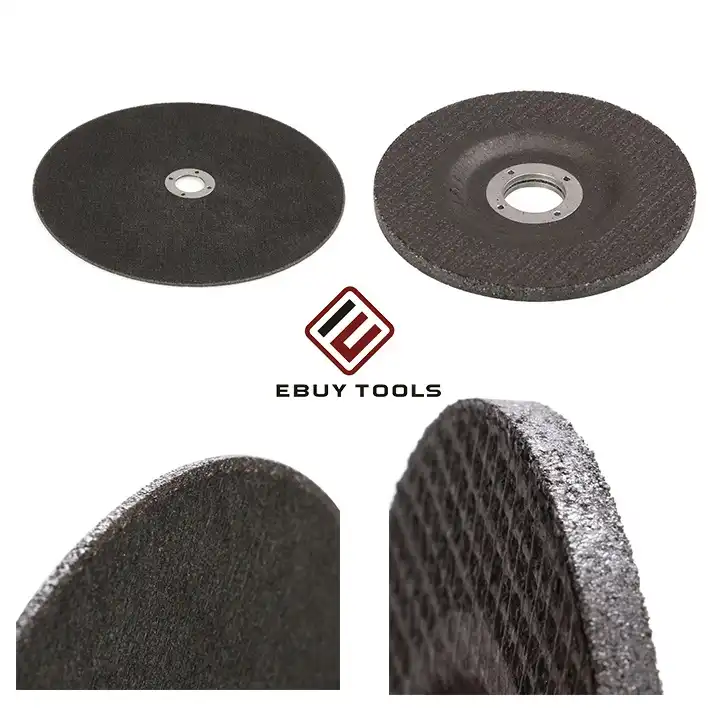
A metal cutting disc is a used bonded abrasive product that is designed to cut through ferrous and non-ferrous metals by controlled friction and material removal. Saw blades cut through material physically, but these discs use abrasive grains (usually silicon carbide, zirconia alumina, or aluminum oxide) that are bound with phenolic resin and strengthened with woven fiberglass mesh. Extreme rotational forces can't hurt this structure, and it cuts structural steel, stainless metals, and other unusual materials with great accuracy.
Professional-grade discs from companies like Danyang Ebuy Tools are reinforced with three layers of fiberglass mesh and can handle speeds of up to 80 meters per second. This engineering keeps catastrophic mistakes from happening during difficult tasks. Each disc is tested at 1.5 times its highest rated RPM to make sure it stays structurally sound when it's under a lot of stress. When buying teams know these specs, they can choose the right tools for different metalworking jobs.
Cutting Discs Versus Grinding Wheels
There are a lot of users who think these tools can be used with each other when they really can't be. Metal cutting discs have very thin surfaces (usually between 0.8mm and 3.2mm) that allow them to cut quickly and with little kerf loss. Their construction for support only handles radial cutting forces. On the other hand, grinding wheels are bigger (usually 6mm or more) and are made to handle side pressure during operations like deburring and surface preparation.
When you try to use a metal cutting disc for side grinding, you remove the protected fiberglass layers, which can cause the disc to break in a dangerous way. In the same way, using grinding wheels to cut things makes too much heat, makes the edges rough, and loses gritty material. Being aware of these basic differences keeps tools from breaking and workers from getting hurt, while also increasing the efficiency of cost-per-cut.
Standard Sizes and RPM Compatibility
Metal cutting discs used in industry usually have a width between 100 mm and 400 mm, and each one is made for a certain range of RPM. Most of the time, a 115mm disc can go as fast as 13,300 RPM, while a 400mm disc needs to be slowed down to about 3,800 RPM. For safe use, you must make sure that the specs of the disc match the powers of your angle grinder or chop saw.
On its metal center ring, each disc shows important details like its width, thickness, top speed, and compatibility with other materials. Before attaching any disc, operators must check this information. If you use a disc with a lower RPM rating than your tool's output speed, you are putting yourself in great danger because the rotational forces can be stronger than the reinforcement, breaking the disc apart at normal speeds.
Essential Safety Tips for Using Metal Cutting Discs
Pre-Operation Inspection Protocols
Before you use any abrasive cutting disc, you should carefully look over the disc. Look over the whole surface for cracks, chips, or places where the fiberglass sections have come apart. Even very small cracks can weaken structures and spread quickly when there is rotational stress. Check the disc's center ring for an expiration date. Phenolic resin ties weaken over time, but they usually stay strong for three years from the date they were made.
Make sure the disc is mounted correctly by making sure it sits flush against the grinder's backing flange with the right space nuts. It's important to tighten the arbor nut but not too much, because too much force can bend the disc or crack the center hole. In a safe area, let newly mounted discs run at full speed for sixty seconds before applying cutting pressure. This will help you check for balance and find any secret problems.
Critical Personal Protective Equipment
People who work with metal need to wear a lot of protective gear to keep them safe from flying objects, sparks, and particles in the air. Wearing safety glasses isn't enough to protect your face. Full-face shields with impact-resistant polycarbonate frames stop injuries from disc pieces moving at hundreds of feet per second. For extra eye protection, wear approved safety glasses under your face protection.
Heavy-duty leather gloves keep hands safe from hot workpieces and sharp metal edges. However, workers should avoid types that are too loose because they could catch on moving parts. Angle grinders often make noises louder than 100 decibels, so hearing protection is necessary during long cutting jobs. Masks with a N95 rating or higher block out metal dust and sharp particles that build up in the workshop air. This keeps metalworkers from developing long-term breathing problems.
Operational Best Practices for Maximum Safety
Accidents are much less likely to happen if you keep the cutting lines right. Set up the grinder so that the disc enters the piece of work at a 90-degree angle. Press down steadily on the disc without pushing the cut. If you apply too much horizontal force, the disc will stick, which could break the wheel or grab the grinder out of your hands. Let the gritty grains do their job. Holding pressure steadily over time works faster and safer than pushing too hard.
Properly hold workpieces in place before cutting. Things you hold in your hand can move around without warning, which can pinch the disc or cause kickback. To keep the stock stable, place cuts so that the disc doesn't get caught as the pieces separate. You can use bench vises, clamps, or magnetic fixtures. Keep firm two-handed control of angle grinders during all operations. As discs wear out and diameter drops, rotating forces will get stronger.
Recognizing and Responding to Hazards
In abrasive cutting processes, disc failure is still the biggest risk. At close range, fragments can go through normal clothes and cut or hurt your eyes badly. If you feel strange vibrations, hear changes in pitch, or see strange cutting patterns, turn off the machine right away and check the disc. Do not keep working with damaged metal cutting discs—the cost of replacement is very small compared to the cost of harm.
Spark patterns give useful feedback on how things are working. When cutting normally, spark streams are always pointing away from the user. Intermittent sparks or strange colors are signs of trouble: glaze from using the wrong abrasives, going too fast, or dirty object surfaces. Building up metal scrap near where you're cutting makes it easier for fires to start, especially when you're working with flammable surfaces or in places where there is flammable dust. Keep work areas clean and make sure the right fire-fighting gear is easy to get to.
Choosing the Right Metal Cutting Disc for Your Business Needs
Material-Specific Selection Criteria
Abrasives in a metal cutting disc need to be made with specific metals in mind in order to work best. For carbon steel and mild steel applications—the workhorse materials in structural construction and general manufacturing—brown fused alumina offers a great mix between cost and performance. The self-fracturing grain behavior of these discs keeps the cutting action sharp by revealing new cutting edges as the top layers wear away.
Stainless steel needs INOX-specification discs that are made to keep things from getting contaminated. Standard cutting wheels have trace iron in them that embeds in steel surfaces while they're being used to cut. This makes rust spots that make the corrosion resistance worse, which is not okay in food processing equipment, pharmaceutical vessels, or naval parts. White fused alumina formulations get rid of ferrous content and make clean, exact cuts in metals that don't rust.
Normal abrasives can't handle exotic metals and materials that have been strengthened. Zirconia alumina discs can handle these tough jobs and keep working well on titanium aircraft parts, heat-treated tool steels, and nickel-based superalloys. Even though they are more expensive, these high-tech abrasives have better G-ratios (the amount of metal removed compared to disc wear), which means they are cost-effective for precise work of high value.
Thickness and Durability Considerations
Metal cutting discs that are very thin, between 0.8 mm and 1.6 mm, are very useful for precise manufacturing. Their narrow kerf width cuts down on waste of expensive stock, and the smaller contact area means less heat is generated, which keeps the part from changing color or metal properties. Ebuy Tools makes super-thin versions with improved grain and bond systems that let them cut faster with less shaking, so they can be used comfortably even during long production runs.
Less abrasive volume means shorter service life per disc, so these thin designs give up lifetime for speed. Strong 2.5mm to 3.0mm discs are best for heavy-duty jobs that use thick structural steel or constant production. The extra thickness makes the material more stable on the sides during rough cuts and increases its useful life, which lowers the number of times it needs to be changed in high-volume settings. The right width is chosen by balancing the need for precision with the amount of work that needs to be done.
Evaluating Supplier Reliability and Quality Assurance
Professional buying is more than just comparing specs; quality control methods and seller stability have a direct effect on the continuation of production. When manufacturers use thorough testing methods, the performance of each production batch is reliable. Look for sellers who do regular burst speed verification, balance inspection, and G-ratio analysis instead of just doing them once in a while.
Danyang Ebuy Tools has a 77,000-square-meter factory that makes more than 150,000 metal cutting discs every day. This huge capacity is paired with strict quality control. Our products are safe and meet the requirements of oSa (Organization for the Safety of Abrasives) and EN 12413 worldwide safety standards. This proves compliance for businesses that are regulated. This scale makes sure that global producers have stable supply lines and keeps the batch-to-batch uniformity that is needed for automated production settings.
Maximizing Lifespan and Performance of Metal Cutting Discs
Proper Storage Conditions
Environmental factors have a big effect on how long discs last and how well they work. Phenolic resin bonds are hygroscopic, which means they take in water from the air over time. This hydroscopic breakdown makes the bonds less strong, which raises the risk of breaking during operation. Metal cutting discs should be kept in climate-controlled spaces with a relative humidity of 40 to 60 percent, away from temperature extremes that speed up the breakdown of resin.
First-in, first-out rotation should be used to organize abrasive cutting disc goods so that old discs don't last longer than they should. Keep discs in their original packaging until you're ready to use them. This will protect the edges from damage caused by impacts that can lead to operating cracks. Vertical storage on an edge keeps the level that is needed for vibration-free cutting and stops bending from long-term pressure. These easy steps protect the disc's security from the warehouse to the computer.
Matching Specifications to Tool Capabilities
Discs that fail too soon are usually caused by equipment pairs that don't work well together, not manufacturing flaws. Variable-speed angle grinders give users the most control because they can change the RPM based on the disc width and stiffness of the material. Running discs below their allowed speed makes them less efficient at cutting but keeps them safe. Going over the maximum RPM creates a huge risk of catastrophic failure due to too much rotational force.
As discs wear down and get smaller, the peripheral speed slows down, even if the RPM stays the same. A 230 mm disc spinning at 6,600 RPM has a speed of 80 meters per second around its edges. When the disc is worn down to 150 mm at the same RPM, the speed drops to 52 meters per second. This connection explains why cutting efficiency goes down with wear. Knowing about this relationship helps workers predict changes in performance and schedule disc replacements before productivity drops significantly.
Maintenance Strategies for Consistent Quality
Metal cutting discs, unlike grinding wheels, can't be reconditioned or dressed because they are too thin and have a reinforced structure that makes that impossible. The best way to extend the useful life of something is through right operation, not through upkeep. Stay away from too much side pressure, which speeds up edge breakdown. Let the weight and movement of the disc do the cutting work, and add some downward force to help.
Cutting painted steel, galvanizing surfaces, or stock that is covered in rust contaminates discs with foreign matter that makes cutting less effective. If you can, clean the sides of the item before you cut them. If pollution is unavoidable, expect the disc to last less long and be very aware of how its performance is dropping. If glazed discs stop cutting and only burn material, they should be changed right away instead of being pushed to make cuts. This is because continued use creates too much heat without removing material.
Purchasing Guide: How to Buy Metal Cutting Discs Efficiently?
Strategic Bulk Procurement
The cost savings from buying metal cutting disc in bulk are enormous, and output stays uninterrupted. Manufacturers usually offer tiered price systems that reward bigger commitments. For example, when you buy more than a few thousand pieces, the cost per unit can go down by a lot compared to when you buy in small batches. This method is especially helpful for job shops and contract makers because it lets them predict how much they will use for different projects.
Negotiating yearly supply deals keeps prices stable when the prices of raw materials change, and they also make sure that supplies will be distributed even when there are problems in the supply chain. Include clear quality standards in contracts, such as the need for burst testing, acceptable dimensional ranges, and performance measures. These written standards give you a way to get your money back if the goods you receive don't work as expected, protecting your buying investment.
Reliable Sourcing Channels
When you deal directly with a manufacturer, you avoid the markups that come from middlemen and get professional help that you can't get from distributors. Companies like Ebuy Tools offer technical advice to help buyers match the specs of a disc to their unique machining needs. This knowledge is very helpful when going into new markets or working with things you don't know much about that need special abrasive formulas.
Online business-to-business (B2B) sites with a good reputation make foreign buying easier, but you still need to do your research. Check the qualifications of the provider by getting third-party approvals, having the facility inspected, and calling past clients for references. Before placing a big order, ask for sample shipments and test the product's performance in real work settings. This process of evaluation finds possible problems before they stop activities.
Supply Chain Optimization
Fast shipping and adjustable delivery times keep stocking costs low while still keeping enough on hand as a safety stock. Just-in-time shipping models reduce the need for storing space for manufacturers with large daily production capacities. For example, Ebuy Tools' 150,000-piece output makes it possible to quickly fill orders. To find the best reorder places for your business, you should weigh wait time against shipping costs.
Multi-pack designs make keeping track of supplies easier and cut down on wasteful packaging. Standardizing on certain disc sizes and types of abrasives across your plant makes it easier to buy supplies and train operators. But keep a small store of specialized versions for specific uses. The production delays caused by waiting for specific discs usually cost more than keeping some low-turnover inventory on hand.
Conclusion
To cut metal safely and efficiently, you need to choose the right tools, follow strict safety rules, and buy them in a smart way. Manufacturing experts can improve worker safety and production efficiency by understanding how the abrasive makeup, reinforcement design, and operating factors all work together. Metal cutting discs of good quality from reputable makers work consistently, last as long as they're supposed to, and meet international safety standards. By using the guide's checking methods, operating tips, and buying strategies, metalworking shops can greatly lower the number of accidents they have while also making cost-per-cut more competitive in a wide range of situations.
FAQ
How do I match cutting discs to my angle grinder specifications?
The label or instructions for your grinder should tell you the highest RPM it can go. Then, choose discs that are rated at or above that speed. Make sure the arbor size fits the spindle diameter of your tool. Common arbor sizes are 16mm and 22.23mm (7/8 inch). Never use nuts or adapters to force bore sizes that don't work together, as this can cause dangerous shaking and runout.
What differentiates abrasive from diamond cutting discs?
Abrasive discs have bound grains that break apart and wear away when they are cut. This makes them cheap for general steel manufacturing. Industrial diamond particles are bound to a steel core in diamond discs, which make them great for working with very hard materials like pottery, concrete, and brickwork. Diamond variations are a lot more expensive, but they last a lot longer on the right materials. They aren't usually used for regular metalworking, though.
When should I replace cutting discs?
When the width of the discs gets too small to allow acceptable peripheral speed drops, usually when they are worn down to about half their original size, they need to be replaced. Throw it away right away if you see cracks, chips, extreme vibration, or burned or glazed cutting surfaces, no matter what width is still there. Discs should never be used after the date written on them.
Partner with Ebuy Tools for Professional Metal Cutting Disc Solutions
Ebuy Tools sells industrial-grade abrasive cutting wheels that are designed to work well in tough welding settings. Our metal cutting discs are made with modern aluminum oxide and zirconia alumina mixtures and are strengthened with three layers of fiberglass mesh that meet international safety standards set by EN 12413. Our wide range of products, from very thin 0.8mm precision discs to heavy-duty 3.0mm options, can help you with any cutting problem, whether you run a precision CNC workshop, a car component facility, or an aerospace machine center.
As a top maker of metal cutting discs, we mix a huge production capacity with strict quality control to make over 150,000 pieces every day while keeping the quality of each batch the same. Our professional team can help you choose the best abrasive specs for your materials and processes by giving you application engineering support. Email us at [email protected] to talk about buying in bulk, getting unique formulas, or getting expert advice that will help you be more productive and safe while metalworking.
References
American National Standards Institute. (2019). "Safety Requirements for the Use, Care, and Protection of Abrasive Wheels." ANSI B7.1-2017 Standard for Abrasive Wheel Safety.
European Committee for Standardization. (2016). "Abrasive Products - Safety Requirements for Bonded Abrasive Products." EN 12413:2016 Safety Standard Documentation.
Occupational Safety and Health Administration. (2021). "Abrasive Wheel Machinery: Safety and Health Regulations for Construction." OSHA Technical Manual, Section III, Chapter 4.
Marinescu, I.D., Hitchiner, M., Uhlmann, E., Rowe, W.B., & Inasaki, I. (2007). "Handbook of Machining with Grinding Wheels." CRC Press, Taylor & Francis Group.
Jackson, M.J. & Davim, J.P. (2011). "Machining with Abrasives." Springer Science & Business Media: Advanced Manufacturing Technologies Series.
National Safety Council. (2020). "Portable Abrasive Wheel Tools: Best Practices for Industrial Safety." NSC Industrial Safety Guidelines, Manufacturing Division Publications.