.webp)

Safe operating speed for diamond cutting discs represents the maximum rotational velocity at which a disc can function without compromising structural integrity or operator safety. Every diamond cutting disc manufactured at our facility displays a clearly marked maximum RPM rating on its steel core, calculated based on disc diameter, bond matrix composition, and intended application. Operating within these parameters ensures optimal cutting performance while preventing catastrophic failures such as segment detachment or disc fracture. Understanding this fundamental specification protects both your workforce and your equipment investment, making it a non-negotiable consideration for procurement managers and workshop supervisors alike.
Understanding Diamond Cutting Discs and Safe Operating Speeds
diamond cutting discs have changed the way people in the building, metalworking, and stone fabrication businesses work with materials. Industrial-grade synthetic diamonds are inserted in a carefully made metal bond matrix in these precision-engineered tools. This makes a cutting edge that works much better than regular abrasives.
The Engineering Behind Diamond Cutting Technology
The way the diamond cutting disc works is very different from how regular grinding wheels work. Instead of wearing away to show new cutting surfaces, the metal bond slowly breaks down while the machine is in use, revealing new diamond bits all the time. The cutting edge of this self-sharpening device stays sharp for the whole life of the disc. Our hot-pressed sintering technology at Danyang Ebuy Tools makes sure that there are equal amounts of diamonds in every section. This makes sure that the tools will wear evenly and last longer. Precision-tensioned steel cores and carefully measured diamond concentrations are used in our manufacturing process to make discs that stay the same size even when they are heated up.
Operating speed and disc efficiency are linked in more ways than just spinning rates. Centrifugal forces put a lot of stress on the steel core and bonding contact when the disc turns. These forces get stronger as the speed goes up, which is why discs with a bigger diameter need to spin at slower speeds to keep the same speeds around the edges. Our engineering team figures out these specs by using well-known mechanical methods that take into account the features of the materials and safety factors that meet global standards.
Why Speed Parameters Matter for Safety and Efficiency?
Three important performance factors are directly affected by operating speed: how well it cuts, how well it handles heat, and how well it keeps the structure together. Running a disc below its ideal speed range causes too much friction, which creates extra heat that speeds up bond wear and makes cutting less effective. On the other hand, going faster than the maximum speed limits puts too much mechanical stress on the disc, which can cause it to fail catastrophically.
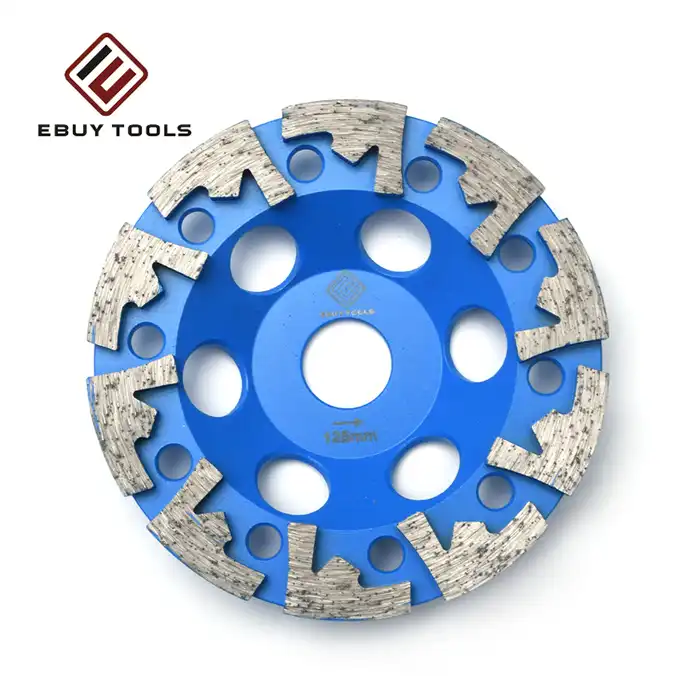
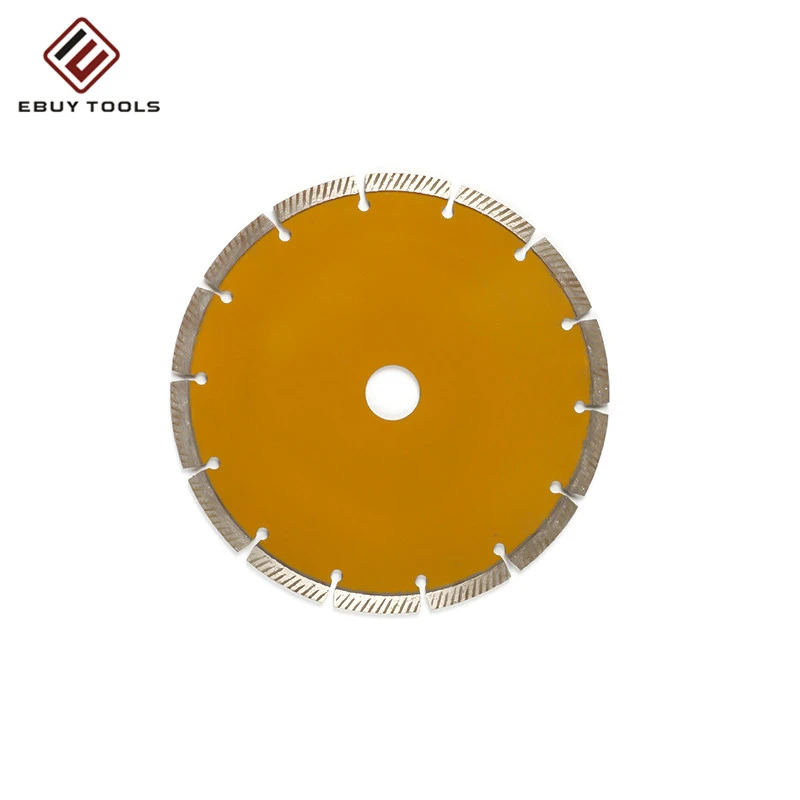
Keeping an eye on the temperature is especially important during long cutting processes. This problem is solved in our Turbo Diamond Cutting Disc design by adding cooling ducts inside the continuous jagged edge. It's like these constellations are little airways that let air flow across the cutting surface and get rid of heat buildup. This new idea lets workers keep up higher feed rates without damaging the discs over time, which boosts productivity while keeping the discs' integrity.
Professional makers know that speed improvement is very different for each type of material. When cutting through reinforced concrete, you need to follow different rules than when working with rock or stone. Because the steel rebar and the surrounding concrete are not all the same hardness and the aggregate levels are not all the same, discs need to be able to change how they cut across this complex grid. Speed selection is a key part of this adaptability because it affects how well the diamond bits stick to the target object.
Key Factors Affecting Safe Operating Speeds of Diamond Cutting Discs
The right cutting speed for a diamond cutting disc is based on a number of factors that are all related to each other. Knowing about these things helps you choose the right tools and make the most of your operating parameters.
Disc Diameter and RPM Correlation
The math link between the diameter of the disc and the safe working speed is based on a simple idea: the peripheral velocity must stay within certain limits no matter what size the diamond cutting disc is. The surface speed of a 4-inch disc spinning at 13,000 RPM is the same as that of a 7-inch disc spinning at about 7,400 RPM. Because of this inverse connection, the speed of the planned mounting tools must be taken into account in the procurement specs.
Our factory makes discs with diameters ranging from 4 inches to 14 inches, and each one has a carefully estimated maximum RPM number. Along with the dimensions and production date codes, these specs are permanently etched on the steel core. One of the most common safety violations seen in industrial settings is disc size not meeting machine speed. This can be avoided.
Material-Specific Speed Requirements
For each type of cutting, a different speed method is needed. Cutting concrete works best at speeds between 6,000 and 10,000 surface feet per minute (SFPM). For granite production, slightly slower speeds between 5,000 and 8,000 SFPM are best to keep chipping to a minimum. Depending on the width of the disc, these numbers correspond to different RPM sets.
The standard for bond hardness is also very important for speed improvement. Diamond particles can be exposed more quickly when the bonds are weaker, which lets them cut harder materials at higher speeds. Our medium-bond formulas can be used in a wide range of situations, while our hard-bond setups work best with rough materials that would quickly wear down softer matrices. Choosing the right bond strength for your range of materials will make both cutting more efficient and discs last longer.
Wet Versus Dry Cutting Speed Considerations
Adding water changes the thermal dynamics of cutting processes in a basic way. When cutting while wet, faster speeds can be maintained because the constant flow of water gets rid of heat that would build up in dry situations. Our Turbo Diamond Cutting Disc design works great in both dry and wet conditions, but when used in wet conditions at the same speeds, it usually lasts 40–60% longer than when used in dry conditions.
When dry cutting, the speed limits are tighter to keep the disc and object from getting damaged by heat. Since there is no cooling, heat builds up in the cutting zone, which could lead to section loss if temperatures rise above the bond melting points. When working dry, operators must lower the feed pressure and use irregular cutting methods. This lets the disc cool down between cuts and keeps it in good shape.
Machine Compatibility and Speed Settings
When it comes to safe speed choices, Angle Grinders, Circular Saws, and tuck pointers all work in different ways. Most of the time, Angle Grinders have higher RPM ranges that work best with discs with smaller diameters, while brick saws have lower speeds that work best with blades with bigger diameters. Comparing machine specs to disc grades is an important safety measure that keeps equipment from breaking and operators from getting hurt.
Tools with variable speeds give you more options for how to do your job than tools with set speeds. Being able to change the RPM values based on the strength of the material and the cutting depth makes performance better in a wide range of situations. But because of this, the user needs to know more and be more disciplined to make sure that the settings stay safe for the fixed disc.
Common Mistakes and Risks When Ignoring Safe Operating Speeds
Understanding the possible risks that come with choosing the wrong speed helps make strong safety rules that protect both people and tools.
Catastrophic Failure Modes and Their Consequences
When speeds are exceeded, diamond cutting discs are subjected to rotational forces that are stronger than their structure design allows. This kind of overstress can cause a disc to suddenly break, sending pieces flying at speeds of more than 200 miles per hour. When using abrasive tools, these kinds of fails are the biggest safety risk because they can kill you even if you wear protection gear.
Segment separation is another important failure mode that usually happens when the bond breaks down because of too much heat or mechanical shock. When pieces come apart during operation, they turn into fast projectiles whose paths are hard to guess. In our production process, we test the segment torque to make sure that the bond strength is much higher than what is needed for operation. This lowers the risk when the discs work within the limits that were set.
Accelerated Wear and Performance Degradation
When you operate outside of the best speed ranges, you speed up wear patterns that make cutting less effective and shorten the service life. Too fast of speeds leads to premature diamond pullout, which happens when particles separate before the bond matrix around them wears away enough. This process creates a covered surface that cuts less effectively and makes too much heat, which leads to a loop of worsening performance.
Not fast enough speeds have opposite but still harmful results. When spinning speeds are low, cutting pressure is not high enough, so diamonds crash through material instead of shearing it cleanly. This pushing action makes too much friction, which overheats the bond matrix and makes the cut quality rough and unacceptable. As a result, heat stress can lead to section cracking and disc retirement before its time.
Misinterpretation of Safety Standards and Labels
Both the ISO 52903 and ANSI B7.1 standards set out strict safety rules for abrasive cutting tools. These rules cover everything from the fastest speeds that the tools can work to how they should be mounted and how they should be tested for performance. But these guidelines use academic language that people who aren't experts in the field might get wrong. The difference between rotational speed (measured in RPM) and peripheral velocity (measured in meters per second) is hard for many users to understand, which leads to wrong speed estimates.
Our industrial stickers show information in a number of different ways to reduce the chance of confusion. Each disc has a picture that tells you how to place it correctly and what safety gear you need to wear. It also shows the maximum RPM and the maximum peripheral velocity. These multi-layered ways of communicating help make sure that workers understand important safety information, even if they aren't professional experts.
Essential Safety Protocols and Maintenance Practices
Setting up thorough safety rules starts with giving operators the right training, which should include ways to figure out speeds, how to check equipment, and what to do in an emergency. Regular training sessions help keep people safe even when they are moving between jobs or when new equipment is put into use.
Before each use, the disc's soundness should be checked during pre-operation checks. A visual inspection shows any cracks, chips, or damage to segments that could get worse while the machine is running. If you hold the disc up and gently tap it, the ring test will reveal a clear ringing tone. Cracked discs, on the other hand, will make a dull thud. This easy testing method finds damaged discs before they become a threat to operations.
Personal protective equipment (PPE) rules cover more than just safety glasses and gloves. Face covers are important for protecting against flying particles, and hearing protection is needed for the loud noises that are made during cutting operations. When dry cutting, where silica dust in the air can cause major long-term health problems, you have to wear a respirator.
Optimizing Performance Without Compromising Safety
To get the most work done while still staying safe, you need to choose speeds and optimize operating parameters in a planned way.
Material Assessment and Speed Selection
Accurately characterizing the material is the first step in speed improvement that works. Knowing the aggregate's hardness, density, and gritty features helps you choose the right diamond cutting disc and set the right speed parameters. Cutting through concrete that has river gravel in it is harder than cutting through concrete that has limestone aggregates in it, so operations need to be changed.
Our Turbo Diamond Cutting Disc works great with all of these different types of materials because its design is so flexible. Because the constant serrated border raises cutting pressure while keeping the edge stable, it works well on a wide range of materials, from soft brick to reinforced concrete. This flexibility makes it easier for distributors and workers to keep track of their goods when different projects call for different materials.
Preventive Maintenance and Disc Longevity
Using organized maintenance procedures to keep performance standards high and discs working longer is a good idea. Cleaning regularly gets rid of built-up dirt and grime that can get in the way of cutting and hide damage that is already happening. Inspections should be done more often in challenging situations where high stress levels speed up the wear process.
Using the right storage methods keeps discs from wearing out too quickly when they're not being used. When discs are hung upright in dry places, they don't absorb water, which can weaken the link. Keeping the dimensions stable by avoiding high temperatures keeps the material from warping, which could lead to shaking problems during use.
Performance Monitoring and Replacement Indicators
Setting objective standards for replacement stops discs from being used past their safe limits. Cutting speed slowing down, vibrations rising, and wear on segments can all be signs that the machine is getting close to its end of life. If you keep running after these warnings, something terrible could happen, and the quality of the cuts might be bad enough that they need to be fixed at a high cost.
The quality of our manufacturing means that wear patterns are predictable, which helps workers figure out when to change parts. Because the diamonds are spread out evenly across each section, the cutting performance stays the same until the segments hit the minimum height requirements. This reliability makes it easier to plan supplies and cuts down on unplanned downtime caused by discs failing too soon.
Case Study: Implementing Speed Guidelines in Production Environments
A company in the Midwest that makes parts for cars came to us because their manufacturing operations were plagued by frequent disc failures and uneven cut quality. An investigation showed that operators chose speeds based on the machine's powers rather than the disc's specs. This led to overspeeding, which caused discs to fail early.
We set up a full training program that covered everything from how to figure out speed to how to use specific materials. Color-coded signs on the equipment showed which disc sizes went with which speed settings, so there was no need to do any math when production was high. These changes cut the number of discs used by 35%, improved cut quality measures, and got rid of safety issues caused by disc failure. Within six weeks, the plant saw a return on its training investment in the form of lower tooling costs and higher output efficiency.
Conclusion
Safe working speed is more than just a technical term; it's where performance improvement, operational safety, and equipment life all come together. Understanding the factors that decide the right speeds, recognizing common mistakes that put safety at risk, and following best practices for choosing speeds are all things that can help you succeed in tough industry settings. Our Turbo Diamond Cutting Disc is the result of advanced engineering and excellent production. It works reliably in a wide range of situations while keeping the safety margins needed for professional work. Your company will get cutting-edge tools that improve both productivity and safety at work if you use strategic purchasing methods that focus on proven diamond cutting disc speed compliance, seller credentials, and total cost of ownership.
FAQ
How do I calculate the correct RPM for my diamond cutting disc?
To find the highest RPM, divide the diamond cutting disc's fastest edge speed (in meters per second) by its diameter (in meters), and then change the result to RPM. The equation is: RPM = (60 x Peripheral Velocity) / (π x Diameter). You could also look at the label from the producer to see what the clearly written maximum RPM is for that disc size.
Can I use the same speed settings for wet and dry cutting?
Wet cutting lets you keep going faster because the water keeps the temperature from building up. To keep the heat under control, dry cutting needs slower speeds or cutting methods that happen in short bursts. Always make sure that the disc is rated for the way you plan to cut, since some discs work best when they are wet and others when they are dry.
What happens if I exceed the maximum rated speed?
When the disc goes faster than its highest speed, it is subjected to rotational forces that are stronger than what was intended, which could lead to a catastrophic failure. When a disc breaks or a section detaches, it can send pieces flying at very high speeds, which can cause serious injuries. Make sure that the machine speeds match or stay below the disc specs at all times.
How often should I inspect my cutting discs?
Before each use, look it over visually to see if there are any cracks, chips, or damaged segments. Do ring tests on a regular basis to find damage inside that can't be seen from the outside. If you notice strange vibrations, less cutting power, or any damage to the structure, you should replace the discs right away.
Partner With Ebuy Tools for Premium Diamond Cutting Disc Solutions
Danyang Ebuy Tools makes cutting tools that are highly precise and meet the strict needs of current industrial processes. Our Turbo Diamond Cutting Disc design works great on concrete, granite, and brick projects while still meeting the high safety standards needed in a business setting. We offer stable supply lines that meet your needs for operating continuity, and our daily production capacity can reach 150,000 pieces. Within our 77,000-square-meter factory, 319 skilled workers are committed to making tools that are both effective at cutting and last a long time. Our engineering team can help you get the most out of your tooling purchases, whether you're looking for diamond cutting discs to sell to distribution networks or to stock your own production sites. Get in touch with our technical sales team at [email protected] to talk about your unique needs and find out how our manufacturing skills can help you reach your business goals through high-quality tooling solutions and helpful customer service.
References
American National Standards Institute. (2021). Safety Requirements for the Use, Care, and Protection of Abrasive Wheels. ANSI B7.1-2021 Standard.
International Organization for Standardization. (2020). Rotating Diamond and CBN Tools – General Requirements. ISO 52903:2020.
Henderson, R. M., & Walsh, K. T. (2019). Diamond Tool Technology: Fabrication, Performance, and Applications in Modern Manufacturing. Industrial Press Publications.
National Institute for Occupational Safety and Health. (2022). Engineering Controls for Crystalline Silica in Construction: Diamond Cutting Operations. NIOSH Publication No. 2022-115.
Machinery Safety Council. (2021). Best Practices for Portable Abrasive Cutting Tools in Industrial Applications. MSC Technical Bulletin 47-2021.
Thompson, J. L., Chen, W., & Rodriguez, M. (2020). "Failure Analysis of Diamond Cutting Discs: Relationship Between Operating Speed and Catastrophic Failure Modes." Journal of Manufacturing Safety Engineering, 142(8), 081-094.