.webp)

When workers have trouble cutting with a diamond cutting disc, it's usually because they chose the wrong blade, set the wrong operating settings, or didn't follow the right maintenance procedures. Some common problems are slow cutting speed, too much shaking, premature section wear, thermal damage, and a bad finish on the surface. These problems with performance not only push back project deadlines, but they also raise routine costs and safety risks. To find and fix cutting problems in metals, concrete casting, and stone processing, it's important to know how blade design, bond matrix composition, and application-specific needs affect each other.


Understanding Common Problems in Diamond Cutting Disc Usage
Industrial centers that make cars, work with space technology, and do precision machining all count on consistent cutting performance. Still, a lot of procurement managers and shop floor engineers have to deal with constant problems that slow down production and make tools costs go up.
Poor Cutting Performance and Reduced Speed
One problem that is often brought up is blades that start out cutting hard but quickly lose their edge. This is called "glazing," and it happens when the metal bond that holds the fake gems in place doesn't wear away at the right rate. The end result is a smooth, dull cutting edge where diamonds get stuck under a layer of worn bond material instead of constantly revealing new sharp particles.
When working with a lot of things, like when making parts for cars, this directly means less work getting done. What starts out as a blade that can cut through reinforced concrete or hardened steel at the best feed rates needs more power and more runs to finish the job. Mismatched bond hardness compared to material abrasiveness is often what's causing the problem. To keep diamonds from wearing away too quickly, harder bonds are needed for softer aggregates. On the other hand, very hard materials like aerospace-grade titanium alloys need softer bonds that wear away fast enough to keep cutting edges sharp.
Uneven Cuts and Surface Quality Issues
Tolerances in cast and die work are measured in microns, so accuracy is very important. When using tool steel or carbide inserts, operators often find that their blades don't produce uniform kerf widths or leave behind rough surfaces that need extra finishing steps.
These quality problems are caused by a number of mechanical factors. Lateral runout, which is when a spinning blade wobbles from side to side, is usually caused by bad fitting or a core that is twisted. When the steel core of a blade isn't flat or when the arbor holes don't exactly match the spindle measurements, centrifugal forces at full speed make cutting tracks that oscillate. When the whole disc is mechanically unstable, the turbo parts that are meant to make cutting smooth can't work properly.
Material differences in the piece of work also play a part. Different types of aggregate in concrete, hybrid materials with steel support in softer matrices, and natural stone with crystalline particles can all have different levels of resistance that can cause blades to shift in the middle of a cut.
Excessive Wear and Shortened Tool Life
Procurement teams that are tight on money keep a close eye on tool life data, and blades that break too soon are a big cost driver. When segments split from cores, diamonds pull out of their bond matrix too soon, or cores crack under heat stress, it means there are problems with the system that need to be figured out.
Thermal control becomes very important in this case. Diamond tools work by abrasion instead of chip creation, which creates a lot of mechanical heat. When this heat energy can't be released properly, a number of failure modes happen faster. The metal links that hold diamonds together can weaken or rust, letting go of rough bits. When steel plates grow unevenly, they put stress on the inside that can cause them to crack or warp. Even though diamonds are very hard, they can start to turn into graphite at temperatures above 700°C in acidic environments.
Diagnosing and Solving Cutting Issues with Diamond Cutting Discs
Problem-solving that is reactive can be turned into proactive process improvement with systematic fixing for diamond saw blade. Using structured troubleshooting methods by engineering teams cuts down on downtime and greatly increases the useful life of equipment.
Systematic Issue Identification Process
Accurate observation is the first step in making a correct evaluation. Instead of just writing down "poor performance," workers should write down specific signs. Does the cutting speed slow down slowly or all of a sudden? Do the amounts of sound rise steadily or do they show up and off? Do all types of materials have the same problem, or does it only happen with certain substrates?
Making a troubleshooting plan helps maintenance teams get the information they need. Keeping track of the blade specs, the material being cut, the machine settings, the cooling method used, and the weather creates a starting point for analysis. When problems happen again and again, these records show patterns that studies of a single event might miss.
A visual review gives you information right away. Check the segments' surfaces for glaze, which looks like a smooth, shiny finish instead of the rough roughness of cutting edges that are actively working. Look for damage to the segments, such as chips, cracks, or split from the core. Check the steel core for discoloration that means it's been overheated, obvious bending when laid flat, or cracks that go out from the arbor hole.
Root Cause Analysis and Corrective Actions
After writing down the symptoms, finding the main reasons needs a methodical look at the operational factors. One of the most important things to think about is how hard the bond is compared to how rough the material is. If the pieces wear out quickly but still cut well, the glue might be too soft for the job. On the other hand, coating with little wear means that the joint is too hard.
A lot of the time, operational factors need to be changed. The speed of rotation affects both how well it cuts and how much heat it makes. Too many RPMs on big blades can make segments boil and lose their bond integrity, while too little speed stops diamonds from effectively striking material. The feed rate, or how fast the blade moves through the material, needs to be a mix between how much it cuts and how much heat it makes. When feeding too quickly, parts wear out too quickly because they are overloaded, but when feeding too slowly, they heat up through friction without removing any material.
A real-life example from a concrete cutting job shows how these ideas work in practice. When cutting reinforced concrete slabs, a worker said that the segments were wearing out quickly. An investigation showed that they were cutting highly reinforced concrete with turbo rim blades that are meant for natural stone. When steel support hit the bond, it wore away too fast because it was too soft for hard granite. When I switched to a harder bond mixture made just for composite materials, the blade life increased by about 40% right away while the cutting speeds stayed fine.
Maintenance Best Practices for Extended Lifespan
Many common problems can be avoided by attaching things the right way. The arbor hole width needs to be exactly the same as the spindle size. Even small differences can cause the blade and machine to shake, which is bad for both. Before installing, operators should clean the spindle flange well to get rid of any buildup of dirt or dust that might make it impossible for the blade to sit flush. Tightening the arbor nut to the pressure values recommended by the maker will keep it attached securely without putting too much stress on the core.
How you cool things has a big effect on how well they work and how long they last. When water runs straight onto the cutting edge during wet cutting, it better gets rid of heat and dust. The cooling effect lets the cutting go on for longer at higher feed rates, and the water clear out waste from the cut to keep it from sticking. Wet cutting, on the other hand, needs the right tools to be set up and makes mud that needs to be managed.
When working in places where water isn't available, dry cutting with a diamond cutting blade is more convenient, but it requires different methods. During long cuts, operators must periodically let pieces cool down. The turbo rim design that Danyang Ebuy Tools uses in its production is designed to solve problems that come up when dry cutting. The continuous serrated edge makes paths that let air flow across the cutting surfaces. This gets rid of heat more efficiently than solid continuous edges while keeping the cutting action smooth. This way of thinking about engineering lets long dry cutting processes happen that would make regular designs boil and break.
Storage methods also affect how long a tool lasts. To keep blades from bending from their own weight, they should be stored upright or hung. Steel plates can rust if they are exposed to water, and bond properties may change in high temperature changes. Keeping your investment safe between uses by storing it properly is important.
Choosing the Right Diamond Cutting Disc for Your Application
A big part of cutting problems is caused by mistakes in the selection process. Most performance problems can be avoided by matching blade specs to the properties of the material and the needs of the activity.
Material-Specific Blade Requirements
Cutting concrete needs a different kind of blade than working with metal or stone. When concrete is dry, it has different-hardness particles mixed in with a mostly soft cement framework. For this combined structure to work well, the bond formulations need to be adjusted so that they can work well with both parts. Blades made for concrete usually have medium-hardness links that wear slowly when they hit hard rock but don't wear away quickly when they hit softer cement.
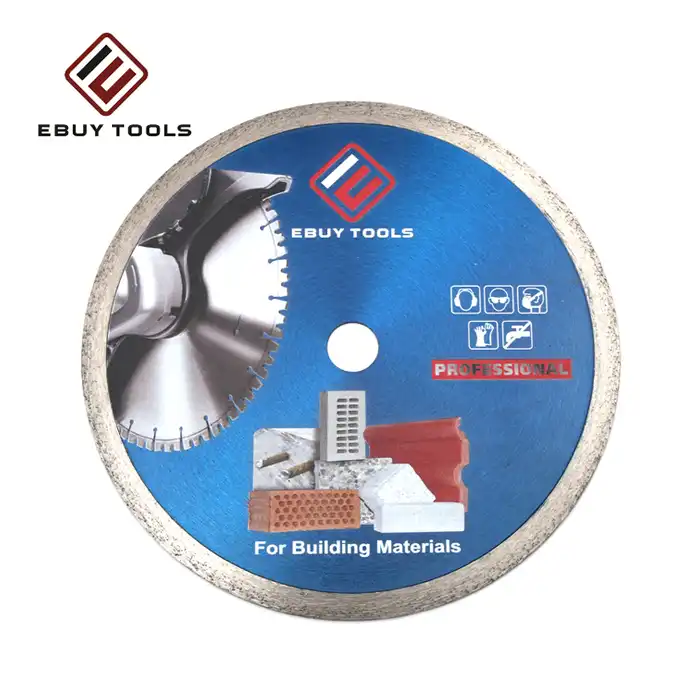
When steel rebar is added to reinforced concrete, a new material is made that makes blade design harder. Our Turbo Diamond Cutting Disc handles this level of complexity with a specially made diamond matrix. The blade cuts cleanly through both the steel support and the surrounding concrete, without any of the glazing or section loss that happens with other designs. This feature is very important for demolition workers and people working on structure changes where the density of the rebar changes throughout the cut.
Diamond tools are only used for a specific purpose when cutting metal. In general, carbide tools are better for welding than diamond blades. Diamond blades work best when cutting very hard metals, sharp alloys, or materials that need to produce as little heat as possible. For cutting metal, the bond mixtures are very different from those used in brickwork. They have extra ingredients that help them handle the different thermal and mechanical stresses that metal surfaces have.
Making things out of natural stone covers a wide range of strength levels. For example, you need to use different methods for soft limestone and marble than for hard granite or quartzite. Professional stone makers need tools that are perfectly matched when they work with Class 4 and 5 natural stones, which are the hardest types. For these uses, blades need to have sides that don't chip, like special continuous rim designs, but they also need to be able to cut quickly enough for thick slab profiling. This balance is achieved by the turbo edge design, which makes it especially useful for cutting high-density stone with clean miters and exact cuts.
Power Tool Compatibility Considerations
The most popular tool for cutting things on the go is an angle grinder. These tools can work with a diamond cutting disc of different sizes, but it's important to make sure that the blade specs match the grinder's powers. The tool's working speed must never be faster than the highest RPM number that is stamped on each blade. If you put a 7-inch blade that is rated for 8,500 RPM on a grinder that is running at 10,000 RPM, it will fail badly because the rotational forces are too strong for the core, and it could explode.
Circular saws are used to cut through concrete and brickwork. They usually have lower RPMs than angle grinders but more power. These tools are great at making straight cuts in flat objects like floors or roads. When made for circle saws, blades often have different core specs that are best for these mounting arrangements and cutting directions.
In repair and repointing work, tuck pointers and specialty tools are used for specific tasks. For these uses, exact depth control and small kerf widths are common, which makes choosing the right diamond saw blade even more important. Our turbo disc's protective teeth keep it from undercutting, which is important for making controlled-depth cuts in brickwork without hurting the material around it.
Impact of Blade Thickness and Overall Quality
Thicker blades make the structure more stiff, which means they don't bend as much when cutting and are better at drawing straight lines. This benefit is especially useful in precision situations where the straightness of the kerf has a direct effect on the quality of the part. But more width means that more material has to be removed per cut, which requires more power and makes more waste.
Total cost of ownership is affected by changes in quality between manufacturer groups in a big way. Some cheaper options don't go through the trouble of making sure that the diamonds are evenly distributed, that the core is properly tensioned, and that the quality is checked thoroughly. At Danyang Ebuy Tools, each batch goes through a lot of tests, such as measuring the side runout, checking the segment torque, and analyzing the diamond concentration. This procedure for multiple inspections makes sure that every disc that leaves our 77,000-square-meter building meets professional performance standards.
The method of making something affects how reliable it is. Our company only uses hot-pressed sintering technology, which makes stronger links between diamonds and base material than cold-press methods. The resulting pieces don't lose diamonds too soon and keep their shape even when heated up, which are both very important for the blade's long-term performance.
Wet Versus Dry Cutting Method Selection
You can choose between wet and dry cutting methods based on your needs and the limitations of your operations. Wet cutting is better at managing heat, which lets you feed materials faster and run the machine continuously for longer. Water also stops dust from forming, which is an important thing to keep in mind for health reasons in confined areas. The action of cooling makes the blade last a lot longer than it would in typical dry cutting situations.
Wet cutting, on the other hand, brings up some practical issues. Systems for managing waste and getting water to them are more complicated and cost more. In some places, like occupied houses or electrical systems, using water safely is not possible. It's also possible that wet cutting can't happen when it's freezing outside.
When it's wet or dry, our Turbo Diamond Cutting Disc works consistently, but the way it works changes depending on the mode. When the blade is wet, steady cutting rates go up while blade wear goes down. The water helps the swarf get rid of itself and keeps the machine running at the right temperature. When the conditions are dry, the turbo design's better airflow is very useful. The serrated edge moves air in a rotating motion that cools the pieces and clears the cut path of dust. This trait lets you cut dry for longer periods of time, which would normally cause regular continuous rim blades to get too hot and break.
Conclusion
If you are having trouble cutting with a diamond cutting disc, you need to know about blade technology, material properties, and operating factors in order to solve the problem in a systematic way. The most common problems are early wear, a rough surface, too much heat, and safety concerns. These are caused by selection mistakes, bad operating methods, or poor care habits. Most performance problems can be avoided by carefully choosing blades whose bond strength and section design are right for the material. By finding the best balance between speed, feed rate, and cooling method, you can make the cutting settings work better and extend the life of the tool. Reliable buying partnerships with companies like Ebuy Tools that have strict quality standards make sure that products always work well, which supports operating excellence.
FAQ
How can I tell if a diamond cutting disc will work with the material I'm working with?
To match blade specs to material properties, you need to look at bond strength, segment design, and maker suggestions. Materials that are rough and hard, like dense basalt or high-strength concrete, need links that are softer and wear off more easily so that new diamonds are always being found. When working with softer, less harsh materials, you need stronger ties that don't wear away quickly. The shape of the turbo rim makes it useful for a variety of materials, including natural stone, high-density brickwork, and reinforced concrete. Looking at the manufacturer's application charts can help you get started, and trying a sample in real-world situations to make sure it works well is a good idea before making large purchases. The choice of blade is affected by how hard the material is, how abrasive it is, and whether it has any supporting parts in the diamond cutting disc.
What are the operational differences between wet and dry cutting discs?
A lot of diamond blades can work in both wet and dry situations, but the way they work is very different in each case. Wet cutting keeps the blade cool all the time, which lets you use it for longer amounts of time and at higher feed rates without damaging it. Water also keeps dust down and helps move dirt out of the cut. Dry cutting is easier to use in places where water systems aren't possible, but it makes more heat, so breaks to cool down and slower feed rates are needed from time to time. Turbo rim designs are designed to solve problems that come up when cutting in dry conditions by improving airflow, which gets rid of heat more efficiently than solid continuous rims. The jagged edge moves air around in a spinning motion across the cutting surfaces, allowing for longer periods of dry operation that are not safe for regular designs.
What risks does improper disc mounting create?
When installation is done wrong, there are several ways that it can go wrong, which affects both speed and safety. When arbor holes don't match spindle diameters precisely, lateral wobble occurs during rotation. This runout creates uneven segment loading, accelerating wear while producing poor surface finish. Insufficient tightening allows blades to slip during operation, generating friction heat that can weld the blade to the spindle. Excessive tightening over-stresses steel cores, creating internal tensions that may cause cracking under operational loads. Mounting blades on flanges with debris or damage prevents proper seating, exacerbating runout problems. Following manufacturer specifications for arbor fit and torque values prevents these issues while ensuring safe operation at rated speeds for any diamond cutting disc.
Partner with Ebuy Tools for Reliable Diamond Cutting Solutions
Overcoming cutting challenges requires more than theoretical knowledge it demands access to precision-engineered tools backed by responsive technical support. Danyang Ebuy Tools manufactures professional grade turbo diamond cutting discs utilizing hot-pressed sintering technology and precision-tensioned steel cores in our 77,000-square-meter facility. Our specialized bond formulations and serrated continuous margin design deliver superior performance across reinforced concrete, natural stone, and high-density masonry applications. With daily production capacity reaching 150,000 pieces, we ensure reliable supply for operations of any scale. Whether your team faces complex aerospace alloy machining or high-volume automotive component production, our technical specialists provide application-specific recommendations that optimize both productivity and tool life. Contact our engineering team at [email protected] to discuss your requirements with an experienced diamond cutting disc manufacturer who understands the operational challenges facing precision machining shops, contract manufacturers, and industrial equipment builders throughout North America.
References
Jenkins, M. (2021). Advanced Diamond Tool Technology: Manufacturing Processes and Performance Optimization. Industrial Cutting Systems Press.
Rodriguez, K. & Thompson, P. (2020). "Bond Matrix Formulation Effects on Diamond Tool Performance in Composite Material Machining." Journal of Manufacturing Science and Engineering, 142(8), 081005.
American National Standards Institute (2019). ANSI B7.1-2019: Safety Requirements for the Use, Care, and Protection of Abrasive Wheels. ANSI Standards Publication.
Chen, L. (2022). Precision Cutting in Aerospace Manufacturing: Materials, Tools, and Processes. Technical Engineering Publishers.
Wagner, D. & Schultz, H. (2018). "Thermal Management in High-Speed Diamond Cutting Operations: Experimental Analysis and Process Optimization." International Journal of Machine Tools and Manufacture, 135, 72-84.
Metalworking Industry Association (2023). Best Practices Guide for Industrial Cutting Tool Selection and Maintenance. MIA Technical Documentation Series.