.webp)

If your production line needs to keep running even in harsh conditions, you have to use a metal cutting disc that is designed to be more resistant to heat. These specialized bonded abrasive tools have advanced grain formulas, stronger resin bonds, and precisely designed porosity to effectively handle the heat that is created by friction. Standard discs break down quickly when exposed to heat, but heat-resistant discs keep their shape and cutting ability even after long periods of use on harder alloys and thick metal sections, directly addressing concerns about downtime that hurts your bottom line.
Understanding Metal Cutting Discs and Heat Resistance Fundamentals
The temperature efficiency of industrial-grade cutting discs is based on what they are made of. At its center are abrasive grains, which are usually aluminum oxide for standard steel or zirconia alumina for tough jobs, mixed in with a phenolic resin matrix. This bond system sticks things together and keeps them from getting too hot, slowly releasing worn grains as it moves heat away from the cutting surface.
The Role of Abrasive Grain Selection in Heat Management
Premium discs are made of brown fused alumina, which breaks down normally when heated or strained mechanically. This ability to sharpen itself stops glazing, which happens when heat makes the bond strengthen too quickly around weakened grains. When working with stainless steel, where heat concentration can change the color of the item, white fused alumina types are better at not breaking apart. The disc's ability to turn mechanical energy into material removal rather than waste heat is directly affected by the structure of the grains.
Bond Systems and Their Thermal Thresholds
Phenolic resin ties are most common in industrial cutting because they can handle temperatures up to about 180°C before breaking down faster. Ceramic fillers added to improved formulas raise this level by 15 to 20 percent, making operating windows longer during continuous cutting cycles. The amount of resin to abrasive sets the hardness of the bond. Looser bonds let go of grains more quickly, making less frictional heat but wearing out faster, while harder bonds work best for cutting in short bursts so that heat can escape between passes.
Reinforcement Architecture and Thermal Stress Distribution
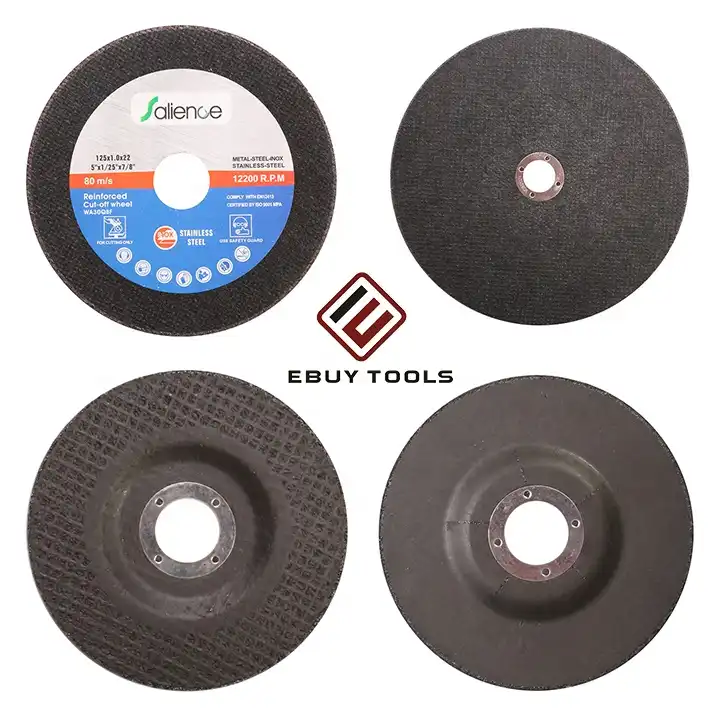
Three layers of fiberglass mesh that are built into the frame of the disc serve two uses. They keep things from breaking apart completely when rotational forces are stronger than 80 meters per second, and they spread heat out across the disc face instead of gathering it at the cutting edge. When working with titanium metals or hardened tool steels that produce high temperatures in certain areas that can weaken single-layer reinforcement, this design issue becomes very important.
When heat builds up during cutting, it sets off a number of failure processes that make the work less safe and less efficient. Too much heat makes the resin bond soften too soon, which lets the grains fall out quickly and shortens its useful life. Also, the metallurgy of the workpiece is affected. For example, steel develops heat-affected zones with changed hardness properties, and aluminum smears instead of cutting cleanly when temperatures go above the limits for each material. Operators are more likely to be hurt when discs are warped and rattle or break because of heat stress cracks in the reinforcement mesh.
Choosing the Right Metal Cutting Disc with Enhanced Heat Resistance
To match the disc specifications to your operational factors, you need to carefully look at the properties of the material, the cutting speed, and the amount of output you expect. How these factors relate to each other decides how much heat is produced and whether standard or improved heat-resistant formulations are best for your purpose.
Material Compatibility and Thermal Load Considerations
Cutting carbon steel makes mild heat, so aluminum oxide metal cutting disc with normal resin bonds are fine for most fabrication work. Stainless steel is more difficult because it tends to work-harden and conduct heat less well, so white alumina grains and mixtures that are free of contamination and labeled as INOX-compliant are needed. Zirconia alumina abrasives that can keep cutting edges sharp even at temperatures that stay above 600°C are needed for aerospace metals like Inconel or titanium. The type of abrasive, bond hardness, and cooling pores you need to effectively handle heat loads depend on the material you choose.
Disc Geometry and Heat Dissipation Efficiency
Ultra-thin versions with a width of 0.8 mm to 1.6 mm have less material contact area, so they produce less frictional heat per cut. These work great for precise tasks where small areas of heat damage protect the structure of the workpiece. Between 2.5 mm and 3.2 mm thick discs have more rough material, which means they last longer, but they need more cutting force, which raises the temperature output. When cutting continuously, depressed center designs (Type 42) give you more room for cutting angles that are too steep. However, this shape combines stress and heat at the hub connection point, which is something to think about.
RPM Rating and Safe Operating Envelopes
Because surface motion and thermal energy are related in a basic way, operating speed has a big effect on how much heat is made. A 230mm disc with a speed rating of 6,600 RPM can hit speeds around its edges of about 80 meters per second, which is the speed at which stronger support is needed. Running discs 10-15% below their highest allowed RPM increases service life by a large amount by lowering heat buildup, but it also lowers output in the same way. By matching the grinder's powers to the disc's ratings, you can be sure to stay within the thermal safety limits set by burst testing methods.
We make discs with diameters from 100mm to 400mm and hole sizes that can be changed from 16mm to 25.4mm to fit a variety of angle grinder and chop saw setups. When it comes to heat efficiency, our advanced grain and bond system is better than traditional formulas. Our discs have a controlled porosity structure that lets air flow through them and cools the cutting zone. This keeps the object from turning colors and increases the life of both the disc and the machine.
Best Practices and Safety Tips for Using Heat-Resistant Metal Cutting Discs
Operational discipline is what separates efficient output from mistakes that could have been avoided. Heat-resistant discs can handle harsh circumstances, but if they are used incorrectly, they lose their safety limits and break down faster.
Correct Mounting and Pre-Operation Verification
Before putting the discs in, check each one for cracks, chips, or damage from water. Under temperature stress and rotational loading, even very small cracks that can't be seen with the naked eye spread very quickly. Place discs with the right flanges so that the binding pressure is spread out across the reinforcing mesh instead of building up stress points. Make sure that the arbor hole fits properly. Forcing discs onto shafts that are too big or using spacers can cause runout, which causes vibration and uneven heating.
RPM Adherence and Cutting Technique
Do not go faster than the RPM number stamped on the disc's metal middle and reinforcing layers. When something is moving too fast, both rotational stress and frictional heat production grow at exponential rates. Instead of pushing the cut, use mild, steady pressure. Too much load slows down the disc, which increases contact time and heat buildup while speeding up bond wear. Instead of using pressure to make heat, let the sharp grains do the cutting work by the way they were meant to: mechanically removing material.
Thermal Management Through Operational Intervals
Cutting without stopping for long amounts of time stops heat from escaping, which damages the resin bond over time. Structure cutting processes to include short times when the disc can spin freely, letting air flow over the rough structure and keeping it cool. This is especially important when dealing with thick pieces or dense metals where each pass takes more than 30 to 45 seconds.
Misapplication of chemicals is a constant safety issue in industry settings. When side grinding or deburring with a metal cutting disc,they are put under horizontal forces that the support mesh can't handle. This often leads to catastrophic disc failure. When side loads are applied, the thin shape that works best for circular cutting forces starts to fail. In the same way, using metal-specific discs to cut brick, concrete, or mixed materials creates stress patterns and wear rates that don't work well together, which weakens the disc.
How the glue is stored has a direct effect on how stable the bond is over time. When phenolic bonds are broken, they lose their ability to fight bursts and work well in hot conditions. Keep discs in climate-controlled spaces that are below 27°C and have a relative humidity of less than 50%. Rotate your stock to make sure that older items are used up within the three-year limit that is usually written on the package. Temperature changes that happen during shipping or storage in a building can cause tiny cracks to form in the bond matrix that are only noticeable when the bond is put under operating thermal stress.
Procurement Strategies for Enhanced Heat-Resistant Metal Cutting Discs
To find the best balance between the cost of purchase and the total cost of ownership, you need to know how disc performance is related to operating value. Heat-resistant versions cost more, but their longer service life and less downtime often make them more cost-effective than standard types that need to be replaced more often.
Supplier Evaluation and Quality Verification
Reliable makers give full technical details, such as burst test results, G-ratio performance data, and safety standard compliance certificates for EN 12413 and oSa. Before you commit to large sales, ask for sample batches to be tested in the field under your unique working conditions. Check not only the cutting performance but also the temperature behavior. See if the discs keep cutting efficiently after long operations or if they start to glaze over and lose their bond. The quality of the partnership you'll have with the supplier during the buying process is shown by how quickly they respond to technical questions and how willing they are to change specs.
Volume Purchasing and Contract Structuring
You can keep your abrasive costs stable and make sure that all of your deliveries meet the same standards by negotiating yearly supply deals with tiered volume savings. Include statistical sampling procedures and performance standards in contracts that say what the quality acceptance criteria are. If these aren't met, the batch should be thrown out. Long-term relationships let makers figure out the best amount of inventory to keep on hand based on how much you use, which cuts down on lead times when demand goes up.
Total Cost Analysis Beyond Unit Pricing
A look at total costs that goes beyond unit pricing. A premium disc with a 40% longer service life is worth the 25% price increase because it saves time and money on waste, work, and changing the disc. To find the real economic value, you should figure out the cost per square meter of cut instead of the cost per disc. Heat-resistant formulas cut down on secondary operations. Less coloring of the object means fewer grinding passes are needed to fix thermal damage, which directly affects the costs of labor and materials used later in the production process.
One precision machining company that works with aerospace clients looked at how much they were spending on abrasives because they were having problems with workpieces getting discolored from heat that needed to be fixed. Standard discs were cheaper at first, but they had to be replaced every 85 linear meters when they were used to cut Inconel 718 metal. When you switch to better heat-resistant versions, the service life goes up to 130 linear meters and 90% of the thermal coloring problems go away. The cost of abrasives went up by 18% a year, but cutting down on repair and scrap material saved more than 35% overall. The extra capacity from cutting cycles that didn't stop increased output by the same amount as a third shift without having to buy any new equipment.
Future Trends and Innovations in Heat-Resistant Metal Cutting Discs
New advances in material science for the metal cutting disc offer huge changes in how heat is managed and how well cuts are made. Knowing these paths helps buying teams guess what features will get better, which might make early usage worth it.
Nanomaterial Integration and Thermal Conductivity
Adding graphene and carbon nanotubes to glue bond systems is being studied because it could make heat transfer much better. These materials are orders of magnitude better at transferring heat than regular fillers, so heat is better able to escape from the cutting surface. Early commercial uses show 25–30% lower cutting zone temperatures compared to standard formulas. However, higher costs currently stop most people from using them outside of aircraft and medical device production, where better thermal control supports the higher prices.
Smart Abrasives and Condition Monitoring
With prototype discs that have temperature-sensitive dyes built in, you can see when temperatures are getting too high. This technology fixes a problem that has been around for a long time with sharp tools: users can't see the temperatures inside the discs while they're cutting. Color-shift signs that can be seen on the disc face allow for proactive action before heat damage makes the disc less safe. Integration with industrial IoT platforms could eventually make it possible to schedule replacements ahead of time based on real temperature records instead of just random time or usage intervals.
Regulatory Evolution and Safety Standardization
International standards groups are still working to improve the ways that abrasive goods are tested, with a focus on making sure that the products work well in hot conditions. Changes that are being considered for EN 12413 would require thermal cycling tests that are more like long-term industrial use than the current ambient-temperature burst tests. As rules about following the rules get stricter, manufacturers who spend money on better testing tools and paperwork will be able to compete better. Environmental laws are looking more closely at phenolic resin formulations because they release toxic organic compounds when they cure and are used. This is leading to the creation of bio-based bond options that work just as well at high temperatures.
Our dedication goes beyond just delivering goods; we also offer full technical help throughout the whole process of buying from us. At our factory, we use high-tech testing tools that mimic real-life heat stress conditions to make sure that every batch meets strict performance standards before it is shipped. Our in-house research team is always improving abrasive formulas and bond chemicals to keep up with new materials and uses that your operations come across.
Conclusion
In conclusion, heat-resistant metal cutting discs are an important investment for all metalworking fields that want to improve safety, speed, and the quality of their work. The level of technical skill that goes into these seemingly simple consumables—from choosing the right abrasive grains to building strong structures—directly affects whether your cutting operations meet production goals or fail because of too much heat. Strategies that only look at unit price rarely work as well as choices that are based on a deep knowledge of material compatibility, thermal load management, and overall cost economics. As the need for manufacturing grows and materials become more difficult, working with suppliers who can give real technical know-how and proven thermal performance skills turns into a strategic asset instead of a transactional relationship.
FAQ
How do I identify whether a disc has enhanced heat resistance?
Specifications from manufacturers should clearly list thermal performance qualities, such as the highest temperature at which the product can operate for an extended period of time and the results of thermal cycling tests. Usually, enhanced discs have ceramic-reinforced links or high-quality abrasive mixes like zirconia alumina. Labels might say things like "high-performance," "extended life," or material-specific names like "INOX" for uses with stainless steel that need better heat control.
Can I use water or cutting fluid to cool discs during operation?
Most rough discs that are resin-bonded are only meant to be used for dry cutting. Adding coolants creates a thermal shock that breaks the bond matrix and divides the reinforcement layers, posing instant safety risks. There are specialized wet-cutting discs for certain uses, but they need to be used with compatible tools and are built very differently from normal dry-cutting discs. Always check the manufacturer's instructions before adding any water.
What causes a disc to produce excessive sparks suddenly?
More sparks usually mean the link has hardened, which stops old abrasive grains from shedding properly. This situation makes more heat and drastically lowers the cutting efficiency. It could be because you chose the wrong disc for the roughness of the material, used too much cutting power, or ran the machine below its optimal RPM, which stops the surface from self-sharpening properly. Change the bond grade to one that is softer or make sure that your working conditions match the disc's requirements.
Partner with Ebuy Tools for Superior Thermal Performance Solutions
Choosing the right metal cutting disc provider affects how reliably your whole business can produce. Ebuy Tools' 77,000-square-meter factory makes precision-engineered abrasive solutions. It has 319 trained workers whose only job is to help you solve your thermal management problems. Our very thin cutting wheels use advanced grain and bond systems that make them very resistant to heat while still letting you remove a lot of metal at the speed your production plans require. Each disc goes through strict burst speed tests at 1.5 times its rated RPM and meets EN 12413 safety standards. This makes sure that the triple fiberglass mesh support keeps your workers safe even in the toughest situations. Low vibration levels keep operators from getting tired, and high steadiness lets them cut comfortably during long jobs. We keep stable inventory levels that support your business stability because we can make more than 150,000 pieces every day. Email our expert team at [email protected] to talk about the needs of your particular program, get performance data, or set up sample tests. As a company that only makes metal cutting discs for precision machining, automotive, aerospace, and industrial equipment across North America, we know the thermal problems your materials cause and can come up with solutions that make tool life, cutting efficiency, and cost per cut better. You can see our full line of cutting tools and get full expert help by going to ebuy-tools.com.
References
Marinescu, I.D., Hitchiner, M.P., Uhlmann, E., Rowe, W.B., and Inasaki, I. (2006). Handbook of Machining with Grinding Wheels. CRC Press.
Malkin, S. and Guo, C. (2008). Grinding Technology: Theory and Application of Machining with Abrasives, Second Edition. Industrial Press Inc.
Jackson, M.J. and Davim, J.P. (2011). Machining with Abrasives. Springer Science & Business Media.
Webster, J.A. and Tricard, M. (2004). "Innovations in Abrasive Products for Precision Grinding." CIRP Annals - Manufacturing Technology, 53(2): 597-617.
Shaw, M.C. (2005). Metal Cutting Principles, Second Edition. Oxford University Press.
Klocke, F. (2009). Manufacturing Processes 2: Grinding, Honing, Lapping. Springer-Verlag Berlin Heidelberg.