.webp)

To get a perfect finish on marble that looks like a mirror, you need to be careful, patient, and use the right tools. Diamond polishing discs are now the standard for cleaning marble because they remove material quickly and smoothly, which is something that regular abrasives can't do. These specialized tools use synthetic diamond particles mixed in with resin or metal to make marble surfaces smoother and smoother until they are as smooth as glass. Understanding the right way to choose a disc, move it through the grit, and apply it has a direct effect on the results of a job. Whether you run a stone fabrication shop or are in charge of big restoration projects, knowing how to use these tools well will help you keep quality high and your business running smoothly.
Understanding Diamond Polishing Discs and Their Role in Marble Polishing
What Makes Diamond Polishing Discs Ideal for Marble?
Marble is hard to shine because it is made of calcium carbonate, which is a relatively soft substance that is easy to scratch. Through the spread of diamond grit, diamond polishing discs can solve these issues. Normal silicon carbide pads wear down quickly on stone, but synthetic diamond crystals keep their cutting edges longer and make less heat while they work.
A very important part is the link matrix that surrounds the diamond particles. Resin bonds are great for marble tables and sinks because they are flexible enough to work with curved edges and smooth surfaces. Metal ties are rigid, which makes them good for removing stock quickly from floors. These uses are connected by ceramic blend bonds, which last a long time without lowering the quality of the finish. Professional stone makers have switched from older polishing products to diamond-based methods because they are more flexible.
Grit Sizes and Their Progressive Role
To get the best results, you need to understand grit development. Grit numbers show the size of the particles. Lower numbers mean harder abrasives that wear away material more quickly but leave deeper scratches. It takes longer to cut with higher numbers, but the results are better.
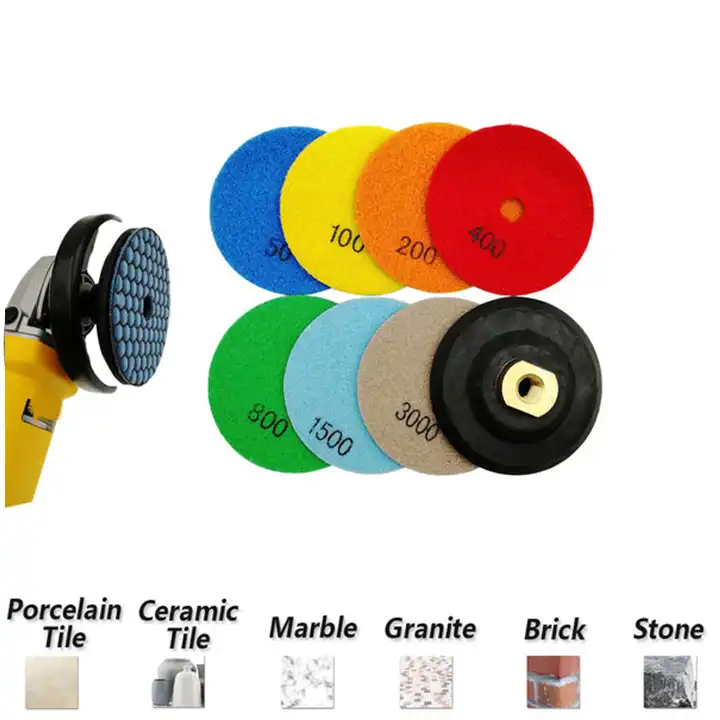
#50, #100, #200, #400, #800, #1500, and #3000 grits are usually used in this order when cleaning marble. Lippage, deep scratches, and etching can be taken care of by starting with #50 or #100. Grits in the middle range (#200 to #400) get rid of the scratch marks that you can see on rougher steps. Fine grits (#800 to #1500) make the first gloss. Very fine grades (#3000 and above) give marble its famous mirror finish.
People often make the mistake of skipping grit steps, which leaves "ghost scratches"—deep marks that smaller grits can't get rid of. As a general rule, you should never jump up more than one grit level. This methodical technique makes sure that each stage gets rid of the previous scratch pattern completely before moving on to the next one.
Comparing Diamond Discs with Traditional Polishing Methods
In the past, cleaning powders like tin oxide or cerium oxide were used on marble and were spread on with felt pads. These mixtures can make great finishes, but it takes a lot of skill and time to use them. The process makes a messy liquid and doesn't give you much control over getting rid of scratches.
Diamond polishing discs make this process a lot easier. With hook and loop backing, you can quickly switch discs between grit steps, which cuts down on downtime. The color-coded backing makes it easy to find the right grits, even in a busy shop. Good discs have structured grooves that help heat escape and slurry flow, so they don't leave burn marks on expensive stone slabs. Diamond systems are worth the money because they are consistent and fast, which is important for high-volume processes.
Step-by-Step Guide: How to Use Diamond Polishing Discs on Marble for Perfect Shine?
Surface Preparation and Inspection
How well you polish depends on how well you prepare. First, clean the marble surface really well to get rid of all the dust, oils, and leftovers. Scratches and uneven finishes are caused by contaminants that get stuck under cleaning brushes. Before you start cleaning, look at the surface under bright lights to find any chips, cracks, or deep etching that may need to be fixed.
If you find lippage, which is when tile joints or slab surfaces aren't level, you'll need to grind them flat before finishing. Trying to polish areas that aren't level costs time and discs and doesn't work well. Before you start the finishing steps, use metal-bond diamond tools for coarse cutting to fix these problems.
Machine Settings and Proper Technique
For tables and upright surfaces, handheld angle grinders or polishers with different speeds work well with diamond polishing pad. For most marble jobs, set the machine to 2000 to 4000 RPM. When you go faster, your discs get too hot, which can damage both the stone and the resin seal. At slower speeds, the cutting movement might not be good enough.
Keep the tool moving in overlapped passes while applying steady, mild pressure. Too much pressure doesn't speed up the process; instead, it makes the disc too hot, encases the diamonds in a layer, and sets the marble on fire. Let the diamonds do the work by making sure they have enough time to touch each other. Keep the pad flat on the surface so that you don't make any rough spots or cuts along the edges of the pad.
Grit Sequence Execution for Optimal Results
If the marble has a lot of damage or lippage, start with #50 or #100 grit. Cover the whole area evenly by working it over in a planned way. Before moving on, give the surface a good rinse and look at it under a light to make sure that all big flaws are gone.
Move on to #200 grit and then #400 grit. At this point, the surface should look flat and matte all over, with no scratch marks from earlier steps showing. A lot of makers check their work by washing it with water. Flaws can be seen when the surface is wet. To bring out the shine, move on to #800 and #1500 grits. The marble will go from being matte to having a soft shine. Finish the job with #3000 grit for a perfect mirror finish. Because it keeps dust and heat under control, wet cleaning usually gives better results on marble, but dry polishing tools are available for some uses.
Safety Protocols and Operator Protection
Silica dust, which is very bad for your lungs, is made when you polish marble. When you can, always use wet cleaning methods to keep dust from being made. When you need to dry shine, use tools that have dust covers built in and are linked to vacuums with HEPA filters. Workers need to put on N95 or P100 respirators that are rated for silica exposure.
Eye protection is required because flying particles and slurry can hurt you very badly. Hearing protection is important for long operations because polishers make noise that doesn't go away. When you have good airflow in a tight area, harmful dust doesn't build up. These safety steps will keep your workers safe and make sure you follow OSHA rules and other safety standards at work.
Maintenance and Troubleshooting Common Issues
To make discs last longer, they need to be properly maintained. Rinse discs well after each use to get rid of water and stone bits that can wear them down too quickly. To keep discs from twisting, store them flat or hang them up. Check the hook and loop backing before each use. If the backing is damaged, the disc could come off at high speeds, sending dangerous objects flying.
If discs gloss over and can't cut as well, the link may be too strong for your type of marble. New diamonds can be found by dressing the disc by running it briefly on a rough grit block. If the wear isn't even, make sure the backing pad is flat and connected correctly. Vibration or noise marks on the marble show that the machine isn't balanced right or that the backing pads are broken and need to be replaced.
Choosing the Right Diamond Polishing Disc for Marble: Procurement Insights
Evaluating Grit, Bond Type, and Disc Construction
Buying choices should be based on the type of marble you need and the project you're working on. Over the whole range of grits, resin-bond discs work well with softer rocks like Carrara. For better cutting performance, ceramic or mixed links in rougher grits may help with harder marbles or marbles that contain more silica.
When it comes to durability, disc width is important. Thicker diamond polishing discs (3.5–4mm) last longer but cost more at first. For shops that process a lot of slabs every day, the longer life makes the investment worth it. Thinner, cheaper options may be better for smaller businesses that do a lot of different kinds of work. Also, think about the diamond concentration. Diamonds with bigger concentrations last longer and work better every time.
Color-coded backing systems make work much easier in places with a lot of people. Visual grit recognition keeps expensive mistakes from happening when multiple techs use the same tools. The quality of hook and loop backing varies a lot. Reinforced backing can handle the rotational forces that are created at high speeds, especially when the glue bonds are wet and weak.
Supplier Reliability and Quality Certifications
Building ties with dependable makers guarantees consistent product quality for diamond polishing disc and a steady supply of goods. Our production plant, which is 77,000 square meters and has 319 trained workers, shows how reliable Danyang Ebuy Tools is. With the ability to make 150,000 cutting tools every day, your projects will never be held up by a lack of supplies. Before a diamond polishing disc is shipped, quality control methods run by skilled teams make sure that it meets performance standards.
Look for providers that can make changes to your order. Standard grit sequences work for most tasks, but for unique projects, you may need special bond formulas or different grit progressions. Our R&D department comes up with unique solutions to meet the needs of each customer, whether they need custom sizes, bonding matrices that work with certain types of marble, or branded products with your name printed on color-coded backing.
Bulk Purchasing and Long-Term Value
Buying in bulk has big benefits for businesses that have been around for a while. Bulk sales lower the cost per unit and make sure that there is enough inventory during times of high production. When you negotiate yearly supply deals with companies like Ebuy Tools, you lock in good terms and make sure that you get first-class treatment during times of high demand.
Look at the total cost of ownership instead of just the amount you paid for something. More expensive diamond polishing discs that last 30% longer and cut 20% faster are a better deal than cheaper ones that need to be replaced more often. Consider the cost of labor, the time the machine needs to be shut down for disc changes, and the quality stability that cuts down on repairs. Based on these practical factors, mid-range to high-end tooling usually gives the best return on investment for professional uses.
Maximizing Efficiency and Safety in Marble Polishing Operations
Optimizing Machine Configuration
Different marble finishes need different methods. Honed finishes stop at smaller grits (#400–#800) to give the surface a satin look instead of going all the way to mirror shine. If you match your grit order to the result you want, you'll avoid taking extra steps and wearing out your tools. With a variable-speed polisher, you can change the RPM based on the grit level and the hardness of the marble.
When you combine diamond polishing discs with other tools that work with them, you get complete finishing systems. Wet polishers with built-in water feed systems keep the work area cool and dust-free all the time. Planetary grinders with multiple disc mounts make it faster to work on big jobs on the floor. Knowing what your equipment can and can't do will help you choose tools that work well with it and get the most work done.
Workplace Safety and Regulatory Compliance
Setting up complete safety protocols saves your whole business, not just your employees' personal protective equipment. Set up wet work areas with floors that won't slip for safety. When cleaning something that is wet, electrical safety is very important. All power tools should have ground fault circuit interrupters. Inspections of tools on a regular basis find worn parts before they cause crashes.
Training programs make sure that all operators know the right way to do things, how to stay safe, and what to do in a situation. During checks, training records that are written down show that the rules were followed. Following right-to-know rules and keeping safety data sheets for all products used in your building is important for workers to understand possible dangers.
Sustainable Practices in Stone Polishing
Environmental responsibility is becoming more and more important in working and purchasing choices for diamond polishing pad. When slurry is managed properly, chemicals and small pieces of stone don't get into sewer systems. Settling tanks or filter press systems collect solids so they can be thrown away properly while letting water be used again. This method cuts down on both the amount of water used and the cost of getting rid of trash.
Your supply chain will be in line with your business responsibility goals if you choose makers that are committed to using sustainable production methods. Modern factories use less energy to make things and have ways to cut down on waste. When used diamond polishing discs reach the end of their useful life, look into recycling programs that can reuse the backing materials and diamond bits instead of throwing them all away.
Case Studies and Success Stories Using Diamond Polishing Discs on Marble
High-Volume Countertop Fabrication
A Texas countertop shop that worked with 40 marble slabs every week had trouble with uneven finishes and high tool costs. They cut the time it took to finish each slab from 45 minutes to 28 minutes by moving to an organized 7-step diamond polishing method with color-coded discs. Because premium diamond polishing discs better control heat, burn lines that needed to be fixed before no longer exist. This cuts down on material waste by about 12%. The shop estimated that even though the discs cost more at first, their total cost of ownership dropped by 18% over six months because they lasted longer and needed less repair.
Commercial Floor Restoration Project
A building repair company in Chicago fixed up a 15,000-square-foot marble hallway. For the job, 20 years of wear and etching from foot traffic and cleaning chemicals had to be removed. Using rotary grinders with semi-rigid diamond polishing pucks and a planned grit increase from #50 to #3000, they got mirror finishes that were better than what the client had hoped for. The worker said that diamond tooling cut the project time by 35% compared to traditional methods. This meant that the work could be finished quickly and with little impact on the building's activities. Three more repair orders came in because the client was happy.
Specialty Stone Supplier Quality Improvement
A company that imports and distributes marble in the southeast of the United States made their three finishing sites all follow the same diamond polishing steps. By teaching all workers the right way to change grits and set up machines, they were able to get the same quality results no matter where the order was handled. Inside of four months, customer comments about the quality of the finish dropped by 67%. Standardization also made it easier to handle supplies because all sites used the same tooling systems. This meant that they could get discounts for buying in bulk, which helped them make more money.
Conclusion
When you learn how to use a diamond polishing disc properly, finishing marble goes from being a tricky art to a reliable, quick process. Using the right machine settings and following safety rules, along with a planned development from coarse to ultra-fine grit, always produces mirror finishes that meet the needs of picky customers. Your business will be successful in the long run if you make purchasing choices that balance disc quality, source reliability, and total cost of ownership. These case studies show that spending money on high-quality diamond tools and training pays off in the form of shorter working times, lower redo rates, and happier customers.
FAQ
Can diamond polishing discs work on all marble types?
Diamond polishing discs work well on most types of marble, but different types of marble need different methods. Resin-bond discs clean soft marbles like Carrara fast, but you may need to use less pressure to keep them from getting too shiny. For good cutting action, ceramic or mixed links in finer grits work best on harder marbles or marbles that contain more silica. Extremely porous rocks might need to be sealed before they are polished to stop the slurry from absorbing it and changing the color. When working with marble types you aren't familiar with, always test your process on small pieces first to make sure you're using the right grit and method.
How do I know when to replace a diamond polishing disc?
When cutting efficiency drops noticeably even with the right method and machine settings, it's time to replace the diamond polishing discs. Some visible signs are rough layer that is significantly thinner, backing material that is showing, or separation between the diamond layer and backing pad. If treating the disc doesn't bring back the cutting action, the diamond percentage is too low to be useful. Keeping use logs can help you figure out how often to replace different grit levels, since larger grits wear out more quickly than smaller ones because they remove material more quickly.
What makes polished marble streaky or gloss levels uneven?
Streaking generally happens when you skip grit steps or don't cover enough at each level of grit. Before moving on to the next grit, make sure you've gone over the whole surface several times, combining your passes. Unevenness is also caused by diamond polishing discs that haven't been cleaned well enough moving residue between grit steps. When the machine position or pressure isn't even, it makes high and low spots with different amounts of gloss. Make sure your backing pad stays flat and is attached correctly. Using a straightedge to check the flatness of a surface helps find places that need more work before moving on.
Partner with Ebuy Tools for Superior Diamond Polishing Disc Solutions
Enterprise-grade diamond polishing discs made to strict standards are available from Ebuy Tools to help you finish your marble projects. As a top seller of diamond polishing discs, our 77,000-square-meter factory makes 150,000 pieces every day, so you can be sure that we have what you need for even the toughest projects. Our synthetic diamond technology cuts better than natural diamonds, and our advanced groove designs keep expensive stone from getting damaged by heat. Email our team at [email protected] to talk about your particular needs. Our R&D group creates custom solutions backed by quality control systems run by 319 skilled professionals, whether you need standard grit sequences or unique formulas. Find out how our hook-and-loop-backed discs with color-coded labels can help you get more done and make your operators more efficient.
References
Marble Institute of America. Natural Stone Fabrication and Installation Standards. Cleveland: MIA Publication Department, 2018.
Smith, Jonathan R., and Maria Chen. Advanced Stone Polishing Techniques: From Theory to Practice. Boston: Industrial Surface Press, 2020.
International Association of Stone Professionals. Diamond Tooling Selection Guide for Natural Stone Applications. Denver: IASP Technical Publications, 2019.
Richardson, David L. Concrete and Stone Floor Finishing: Professional Methods and Materials. New York: Construction Technology Publishers, 2021.
European Diamond Tool Manufacturers Association. Quality Standards for Synthetic Diamond Abrasives in Stone Processing. Frankfurt: EDTMA Standards Committee, 2022.
Williams, Catherine J. Occupational Safety in Stone Fabrication: A Comprehensive Guide to OSHA Compliance. Chicago: Workplace Safety Institute, 2020.