.webp)

If you want to get the most out of your diamond cutting disc, you need to pay attention to how well it works with your other tools, how fast it works, and how you use it. If you choose the right disc and set the RPM correctly, you can avoid overheating and premature wear whether you're working with reinforced concrete or high-density brickwork. Knowing the basics of disc mounting, angle setting, and applying pressure will keep your employees and your investment safe while giving you uniform results across all of your industrial cutting tasks.

Understanding Diamond Cutting Discs: Basics and Functionality
Diamond blades are a big step forward in technology compared to old-fashioned sharp cutting tools. Unlike regular diamond cutting discs, which use silicon carbide or aluminum oxide particles, these specialized tools use industrial-grade manufactured diamonds that are carefully mixed into bond structures. The diamonds don't slice through materials; instead, they wear away tiny bits through contact, which makes them very good at working with hard materials.
Construction and Engineering Principles
A good diamond blade has a steel disc inside that is precisely tensioned and stays structurally sound even when it spins very quickly. Hot-pressed sintering is a method used by industrial companies like Danyang Ebuy Tools to join diamond bits with metal powders, usually cobalt, copper, or iron-based alloys, to make cutting segments. This production method has a direct effect on how well things work. How fast the matrix wears away to reveal new diamond grit depends on how hard the bond is. When it comes to hard materials like marble, softer bonds work better because they wear away faster, leaving behind sharp cutting edges. On the other hand, lighter materials like asphalt or green concrete work best with harder ties.
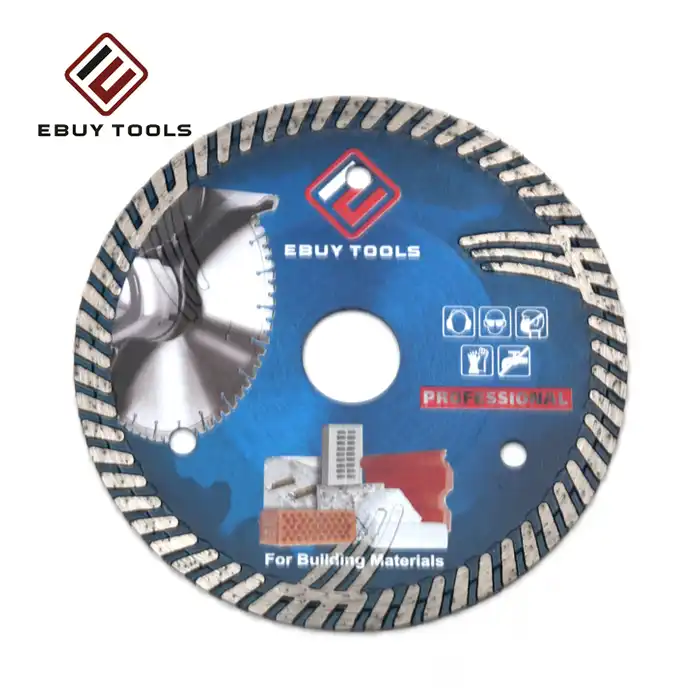
The turbo edge design is a new way to solve a problem that has been around for a long time: how to balance cutting speed with finish quality. Traditional segmented blades cut quickly but leave rough edges. Continuous rim blades, on the other hand, make smooth cuts but release a lot of heat. The serrated continuous edge of turbo designs raises cutting pressure by reducing surface contact, and the built-in channels improve airflow and waste removal. This way of building stops the thermal expansion that causes normal discs' cores to warp and the glazing effects that happen when they get hot.
Wet Versus Dry Cutting Applications
Depending on how the material is processed, wet or dry cutting will give you the best results. Adding water to the cutting zone during wet cutting greatly lowers friction heat and increases blade life. This method works best in controlled settings, like stone cutting shops, where slurry management systems take care of the waste. The cooling action keeps the diamond from wearing down and lets it keep cutting at faster speeds for longer. Wet cutting is the only way that many skilled stone countertop makers can profile complicated edges or make precise miter cuts on Class 4 and 5 natural stones.
Dry cutting is very useful in the field when getting water is hard or when cleaning up with slurry makes it harder to get things done. Specifically, the castellations on modern turbo diamond blades made for dry use work as tiny fans to improve airflow across the cutting surface. This makes the blades cooler. This idea is well shown by the Turbo Diamond Cutting Disc from Ebuy Tools, which is made to work well in both dry and wet conditions. The continuous serrated edges let air move naturally, removing heat while the machine is in use. This lets the blades be used for longer amounts of time without the heat stress that shortens their life.
Material-Specific Performance Characteristics
For best results, different types of substrates need different diamond saw blade designs. When standard blades come into contact with metal, they often get stuck or lose pieces. This makes reinforced concrete with steel rebar buried in it very difficult to work with. This problem is fixed in more advanced turbo designs by exposing the diamonds in a way that keeps them cutting through both the concrete core and the steel support without getting too hot.
To work with granite and other natural stones, you need blades that can keep up with the speed needed for thick slab shaping and keep the edges from chipping. Professional-grade turbo blades have a special diamond matrix and metal link that work together to make sure they work the same way on stones of different hardness levels, without glazing or section loss. When cut, high-density building materials like firebricks or clay blocks create a lot of pressure. The grooved form of turbo blades makes it easy to quickly throw away dust, which stops the sticking problems that happen with regular continuous rim blades when cutting deeply.
Step-by-Step Guide on How to Use a Diamond Cutting Disc Correctly
Using the right method will greatly increase the life of the blade and make sure that cutting is done safely and effectively. By following set processes, from inspecting before use to maintaining after operation, you can protect your investment and keep the same level of performance across production cycles.
Pre-Use Inspection and Equipment Compatibility
Before putting any diamond cutting disc on the machine, look it over carefully for cracks, chips, or damaged segments. Under working stress, even very small cracks can spread and cause a catastrophic failure. Check the arbor hole for any damage or flaws that could make fitting difficult. Make sure that the disc diameter and arbor size exactly match the specs for your equipment. Parts that don't fit right can cause dangerous vibrations and wear out quickly.
Equipment compatibility is more than just how big or small something is. Make sure that the disc's rated speed range is being met by your angle grinder, circle saw, or tuck pointer. The Turbo Diamond Cutting Disc from Ebuy Tools can safely work at speeds of up to 80 meters per second. However, going faster than what the maker recommends can cause the blade to break due to too much heat and rotational stress. The case of most professional-grade tools shows the highest RPM number. Use this method to find the surface speed: 100 times the width times the RPM times 0.262, then divide by 1000. This calculation makes sure that your setup stays within the safe limits for function.
Optimal RPM and Cutting Conditions
For best results, different surfaces need to be worked on at different speeds. Higher RPMs are best for cutting asphalt or brick, which are soft materials, because the higher speed makes up for the lower cutting resistance. When working with harder materials like granite or finished concrete, you need to go slower so the diamond doesn't get too hot and wear out too quickly. The turbo edge design can handle a wider range of speeds than regular blades, but following the rules for each material gives you better results.
Keep steady forward pressure on the blade without pushing it when cutting reinforced concrete. Let the diamonds do the work. Too much pressure creates friction heat that coats the bond matrix and dulls the cutting edge. The method for self-sharpening uses controlled bond breakdown to keep exposing new diamond grit. Forcing cuts speeds up uneven bond wear, which leads to performance problems and shorter blade life. Professional operators know the sound of good cutting: a steady, middling pitch without the high-frequency screaming that means the blade is stuck or the deep grinding that means the operator is applying too much pressure.
Cutting Angle and Pressure Application
As much as possible, keep the diamond cutting blade straight out from the work area. Angled cuts put stress on the blade segments along their length, which raises the risk of segments coming off or the disc bending. If you need to make angle cuts, lower the forward pressure by the same amount as the section contact area. Undercutting is when blades grab and kick back when cutting angles are too high. Protective teeth built into good turbo designs help stop this risky behavior.
To use the right amount of pressure, the operator needs to become more sensitive to cutting input. Watch out for visual clues: too much sparking means there is too much pressure or not enough speed, and not enough material removal means the diamonds are sliding over or are worn. The color and amount of dust also give medical information. Fine, constant dust means the cutting action is right, while chunky debris or coloring means the machine is getting too hot. When working in wet conditions, check the consistency of the sludge. If it's thick and paste-like, it means that water isn't getting to the cutting zone fast enough.
Post-Use Maintenance and Storage
After cutting, proper care increases the life of the blade and makes sure it is ready for the next job. When cutting with water, flush the blade well with clean water to get rid of the rough slurry bits that can damage the metal. Check the wear patterns on the pieces; uneven wear can mean that there are problems with how they're working, like mismatch or incorrect pressure application, that need to be fixed. Keep blades safe by putting them in boxes or hanging racks that keep them from touching other metal tools. The environment is important. For example, high humidity can cause the steel core to oxidize, and extreme temperatures can make the bond matrix less stable.
The curved shape of turbo blades makes them easier to clean because the grooves keep debris from building up between the segments. Some operators use cleaning stones, which are rough blocks that are rubbed against the blade's surface to get rid of the glaze and reveal new diamonds. This method works especially well when cutting things that leave behind sticky leftovers. Quality companies like Ebuy Tools make blades with the same amount of diamonds all along the cutting edge. This means that the blades can be dressed multiple times without losing their effectiveness. By getting the most use out of each blade before it needs to be replaced, these upkeep practices improve the return on investment.
Choosing the Right Diamond Cutting Disc for Your Business Needs
When choosing the right diamond cutting disc, you have to balance the need for performance with the cost, and you also have to make sure that the seller is reliable so that you can keep running your business. There are many decisions that procurement workers have to make that affect how efficiently they run their business and how much it costs to own everything.
Critical Selection Criteria for Industrial Applications
The performing qualities of a blade are largely determined by the materials that make it up. Cutting speed and life are directly affected by the diamond concentration, which is shown in percentages or carats per section. Higher amounts make things last longer, but they cost more at first. The glue matrix recipe needs to be the same hardness as the materials you usually work with. To cut through rock, you need a weaker bond that wears away quickly, revealing sharp diamonds all the time. For harder bonds that don't wear out too quickly and keep cutting efficiency, you need softer materials like asphalt.
The cutting capacity and operating lifetime are both affected by the segment's width and height. More diamond material is available in thicker pieces, which means they can handle higher operating temperatures and last longer when cutting. The segment height tells you how much material you can work before you need to change it. Comparing things more meaningfully is possible when you figure out the cost per square foot of cutting instead of just buying something. When cutting a lot of things, a blade that costs more at first but can cut twice as much is the best deal.
Core quality for a diamond saw blade is easy to forget, but it has a big effect on safety and function. Steel cores that are precisely tensioned stay flat even when they are under a lot of stress, which lowers sound and improves cut accuracy. The way the parts are made is important. Laser-cut cores with precise arbor holes make sure they fit correctly and are balanced. Ebuy Tools uses precise tensioning methods that keep the diamond content the same across the cutting edge. This ensures stable performance from the first cut to the blade's retirement.
Evaluating Manufacturers and Supply Chain Reliability
A brand's image is strongly linked to solid quality and performance. Companies that have been around for a while put money into research and development, which leads to new ideas that solve real practical problems. Premium blades have turbo edge technology, improved bond formulas, and better cooling features that show this dedication to always getting better. For decades, companies like DeWalt, Bosch, and Hilti have built their names by making professional-grade tools that can handle tough conditions on the job site.
The ability to manufacture things has a direct effect on the dependability of the supply chain. This is especially important for procurement managers who are in charge of big projects or just-in-time stocking systems. The building that Ebuy Tools runs is 77,000 square meters and has 319 trained workers. Each day, the company can make about 150,000 diamond saw blades. This large industrial infrastructure makes sure that there is a steady supply even when demand is high. Modern production technology is used along with strict quality control methods at the plant. These include full batch testing with side run-out measurements, segment torque testing, and hardness verification.
Customer support system is what sets great providers apart from average ones. Offering technical consulting services helps match blade specs to specific uses, avoiding mistakes that cost a lot of money and hurt performance. The length of the warranty shows how confident the maker is in the product; longer warranties mean better quality control and more durable building. Respondent customer service teams quickly fix problems, which keeps operations running as smoothly as possible. Check with potential suppliers to see what kind of technical help they offer, such as having application engineers on hand who know how complicated industrial cutting processes can be.
Procurement Strategies for Bulk Purchasing
Volume buying can save you a lot of money, but you need to carefully evaluate your suppliers to make sure that the quality of all of your big orders is the same. To get better price terms, you need to show that you're committed to a long-term relationship, not just one-time deals. When you work with a favorite provider, you can often get bulk savings, better technical help, and priority scheduling for production. If providers know how much they expect to produce each year, they can plan their production more efficiently, which could save buyers even more money.
When buying in bulk, quality uniformity is the most important thing. Ask for proof that the product meets the necessary standards, such as EN 13236 for abrasive goods or OSA safety rules for rotating cutting tools. The Research and Development department at Ebuy Tools and their strict quality control systems make sure that every disc meets professional standards. However, independent proof gives you even more peace of mind. By making sure that performance meets specifications in real-world operational situations, trying samples before committing to big orders lowers risk.
Logistics issues affect the total cost in addition to the unit price. See how well the goods are packaged to make sure they arrive unhurt even if they are being shipped over long distances. For project-based businesses, where delays can affect production plans, lead time dependability is very important. These risks are lessened by suppliers who have a lot of goods and can ship in a variety of ways. Logistics networks today make shipping costs and lead times less important than source trust and product quality. However, being close to manufacturing facilities can lower shipping costs and lead times.
Conclusion
When you learn the right way to do things with a diamond cutting disc, cutting goes from being possibly dangerous and useless to being safe, productive, and high-quality every time. To be successful, you need to understand basic ideas, like how blades are made and what materials work with them, as well as operational factors and upkeep needs. Choosing good tools from reputable makers is the first step. Then, following organized working methods and thorough safety rules will keep people safe and improve the performance of the tools. The rapid edge technology is a real innovation that solves real problems in the workplace by letting you cut things faster without lowering the quality of the finish. When procurement professionals use these guidelines, they can make smart choices that improve working efficiency, keep costs low, and help their companies stay ahead of the competition in tough business environments.
FAQ
How long does a diamond blade typically last under normal cutting conditions?
How long a blade lasts depends a lot on the material's toughness, how it's used, and the quality of the diamond cutting disc. When things are going well, professional-grade turbo blades that cut concrete usually move 50 to 100 linear feet per inch of segment height. This number goes down for harder materials like marble and up for lighter ones. When compared to improper usage, proper technique (keeping the right speeds, avoiding too much pressure, and using the right wet or dry ways) can double operating lifespan. Quality blades have a self-sharpening system that constantly reveals new diamond grit. This keeps the cutting speed constant over the disc's lifetime instead of slowly losing its effectiveness.
Can turbo diamond blades be used for both wet and dry cutting applications?
Good turbo designs work well with both types of cutting, though speed varies depending on the purpose. Cutting while wet makes blades last a lot longer because it lowers contact heat and flushes away dirt that would otherwise speed up wear. Thermal stress that can bend steel cores or break bond matrices is stopped by the constant flow of water. Dry cutting is more useful in the field where getting water is hard or where managing slurry makes things more difficult. The turbo edge design improves airflow for dry conditions by using castellations as cooling fans to get rid of heat that would otherwise shorten the life of the blades. Always check the manufacturer's instructions before using a specialized blade. Some are only good for wet or dry use and may not work well or break early if they are used incorrectly.
What causes excessive vibration during cutting operations and how can it be corrected?
Vibrations usually have more than one cause, which needs to be systematically diagnosed. The most frequent problem is that the blade is not mounted correctly; loose arbor nuts let the blade shake while it is turning. Make sure that the flanges fit snugly against the blade core and that the arbor nuts are tightened to the manufacturer's specs. Damaged or twisted blades move too much and should be taken out of service right away to keep them from breaking. Uneven wear on segments causes an unbalance that gets worse over time. Harmonic waves can damage both the blade and the tool when the operating speed is higher than the blade's value. Bearings in cutting tools wear out over time, letting play happen that shows up as shaking. By regularly checking for installation security, blade condition, operating speeds, and proper equipment maintenance, you can get rid of most vibration issues and get back to smooth, controlled cutting performance.
Partner with Ebuy Tools for Premium Diamond Cutting Disc Solutions
Ebuy Tools sells industrial-grade Turbo Diamond Cutting Discs that are made for tough professional uses in the automobile, aircraft, metalworking, and mold production industries. Our 77,000-square-meter factory makes 150,000 pieces every day, so you can count on a steady supply for your large orders. You can email our technical team at [email protected] to get application-specific advice, performance samples, or to talk about ways to work together as a seller of diamond cutting discs for your network of distributors. Precision building and thorough testing can make a big difference in the quality of your processes.
References
Anderson, K. (2021). Advanced Abrasive Technologies in Industrial Cutting Applications. Manufacturing Engineering Press.
Chen, L. & Roberts, M. (2020). Diamond Tool Performance Optimization: Materials Science and Engineering Principles. Industrial Tooling International.
Mitchell, R. (2022). Safety Standards and Best Practices for Abrasive Cutting Operations. Occupational Safety Publishing.
Peterson, J. (2019). Procurement Strategies for Industrial Cutting Tools: Cost Analysis and Supplier Evaluation. B2B Manufacturing Review.
Thompson, D. & Williams, S. (2023). Heat Management in Diamond Blade Applications: Engineering Solutions for Extended Tool Life. Journal of Manufacturing Technology.
United Abrasives Manufacturers Association. (2022). Technical Guidelines for Diamond Cutting Disc Selection and Application. Industry Standards Publication.