.webp)

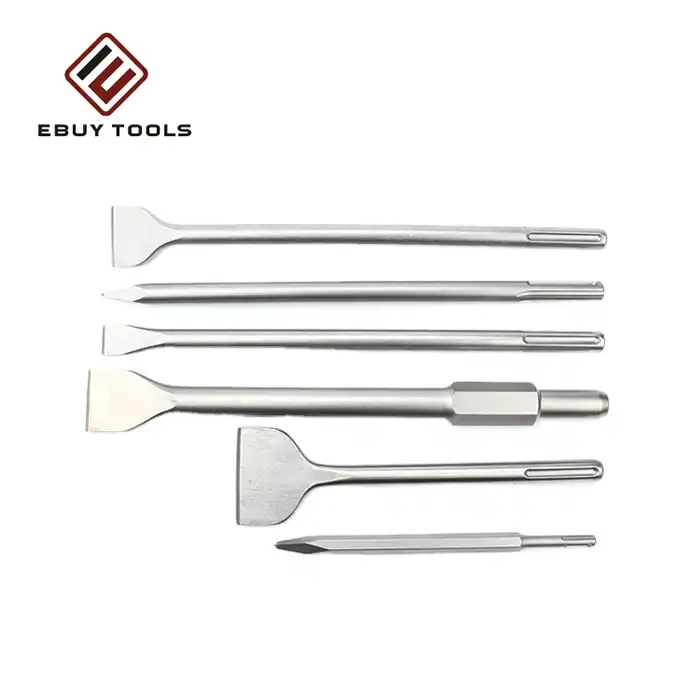
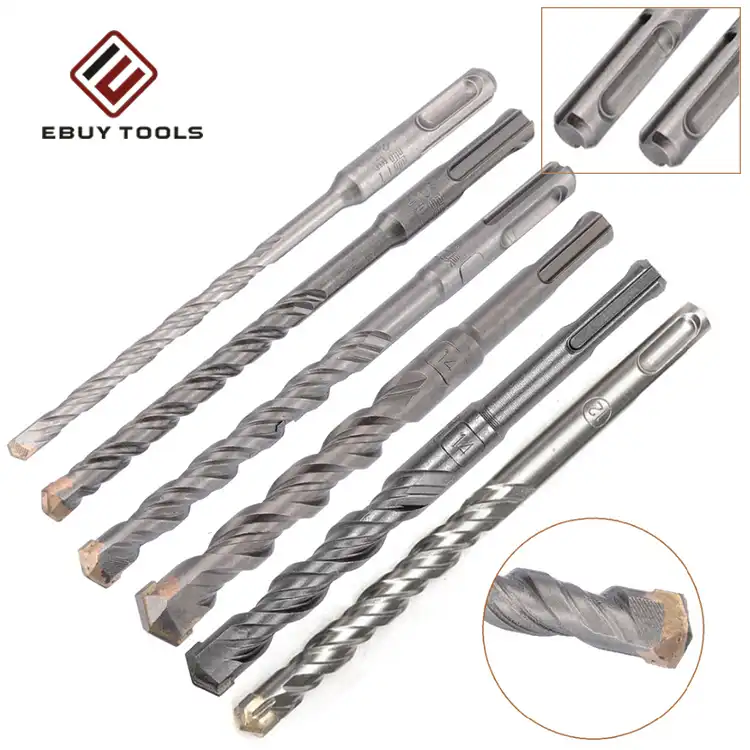
To figure out how good an SDS drill bit is, you have to look at a few important things that have a direct effect on how well it works and how long it lasts. The bodies of premium bits are made of hardened 40Cr alloy steel that has been properly heat treated (HRC 48-52), and the tips are made of tungsten carbide that is harder than 89 HRA. The shape of the shank must have precisely machined grooves that prevent any sliding during high-torque activities.
Good bits have flute designs that let dust escape quickly and keep heat from building up, which would otherwise cause them to break early. The standards for manufacturing should meet ANSI B212.15 and PGM certification needs. This will ensure the accuracy of measurements that are needed for structural anchoring uses. How well the carbide and steel body braze together affects how well the tip stays in place at very high temperatures.
Understanding SDS Drill Bits: Basics and Key Characteristics
Engineers came up with the Slotted Drive System when they realized that regular chuck systems couldn't handle the strong forces that come from hammer drills. This unique link removes rotational force from percussive impact, which gives this bit of equipment a mechanical edge that regular SDS drill bits can't match.
The SDS Shank Design Advantage
Engineers who worked on SDS shanks solved a basic problem that procurement workers have: tools breaking down when they're under a lot of stress. Two grooves that are open accept drive keys to transfer power, and two grooves that are closed accept locking ball bearings to keep the bit in place along its length. This design lets the bit move along its length by about 10 to 15 mm, which lets it "float" during the pressing action. This stops energy loss through chuck flex, which happens a lot with regular three-jaw chucks when drilling reinforced concrete with a compression strength of more than 3000 psi. Manufacturers of rotary hammers across the industry use this standard interface. This makes sure that buying teams handling a wide range of equipment fleets can work together easily.
SDS-Plus Versus SDS-Max Systems
Which of these two configurations you choose relies on the needs of your application and the properties of the material. The 10mm shank width on the SDS-Plus makes it perfect for drilling holes up to 1-1/8 inches wide. This makes it great for installing electrical wiring, anchoring lights, and general concrete penetrations. The system is lighter and can handle less impact energy, usually between 1.5 and 4 joules.
With an 18mm shank that can fit bits bigger than 2 inches in diameter, SDS-Max can be used for heavy construction purposes. This strong system is needed by commercial HVAC workers who are putting in large-diameter pipes through double-wythe brick walls. The extra weight and impact energy (often 5 to 12 joules) make it possible to drill continuously in tough materials without losing effectiveness. When it comes to buying choices, SDS-Max is a big capital investment that lasts a long time in high-volume production settings.
Carbide-Tipped Construction Fundamentals
The bit's cutting tip controls how fast it drills, how well the holes turn out, and how long it lasts overall. Premium makers use YG8C grade tungsten carbide, which has a micro-grain structure that strikes a good mix between hardness and resistance to breaking. When drilling through rough rocks like quartzite or basalt, which are popular in high-strength concrete mixes, this grade of carbide keeps its sharp cutting edges longer than other grades. The shape of the tip depends on the job. Two-cutter designs are good for general-purpose work, while four-cutter designs keep the bit from getting stuck when it hits buried rebar. To make sure that the bits you buy meet your needs, the procurement specs should clearly state the carbide grade and cutter shape.
Core Criteria to Judge the Quality of SDS Drill Bits
To rate the quality of a bit, you need to carefully look at it from a number of scientific angles. Precision in manufacturing is closely related to performance in the field. This means that objective factors are necessary for making decisions about procurement for SDS drill bits.
Material Composition and Heat Treatment Integrity
The steel body is the base of the structure and can handle bending and impact loads while it's in use. Manufacturers of high-quality tools use 40Cr alloy steel for SDS-Plus bits and 42CrMo for SDS-Max versions. Both are heat-treated to make the shank area HRC 48-52 hard. This targeted process makes the surface resistant to wear while keeping the core tough enough to avoid catastrophic breakage. Bad bits usually use unnamed carbon steel that hasn't been heat treated properly, which causes the shank to expand inside tool cases and the chuck to wear out too quickly.
Visual study and review of the documents make the metallurgical quality clear. Reliable sellers give you records of the materials' approvals and heat treatments to show that they follow manufacturing standards. The structure of the steel grains should look even, with no casting flaws or surface decarburization that can be seen. When judging samples, check the shank surface for uniform hardness—differences in hardness mean that the heat processing wasn't done right, which makes the dimensions less stable at working temperatures.
Carbide Tip Hardness and Retention Methods
Professional-grade bits are different from market goods because of how well their carbide tips work. To make sure the material can handle the rough wear from silica pebbles, it should pass a hardness test with a score of at least 89 on the Rockwell A scale. Even after making hundreds of holes in reinforced concrete, the tip shape has to keep the cutting edges sharp. Procurement teams should ask for proof of hardness and think about field testing methods that check the number of holes made before performance starts to drop.
How the carbide is brazed to the steel body affects how well the tip stays in place under heat stress. Using copper-based alloys for high-frequency induction brazing makes metal links that can withstand temperatures above 1100°C that are created during constant drilling. Silver soldering is better at withstanding heat, but it costs more to make. Bad bits use torch brazing with unpredictable heating patterns, which makes the joints weak and prone to tip separation. Quality can be seen by looking at the braze fillet. Fillets that are smooth, uniform, and free of holes show that the metal was processed correctly, while joints that aren't smooth or aren't full show that production shortcuts were used.
Flute Design and Dust Evacuation Efficiency
Getting rid of waste quickly stops heat buildup, which speeds up the breakdown of carbides and slows down drilling. Chip flow is based on the flute design, which can be a double, U-shaped, or quad-flute arrangement. Deep, wide flutes with the right helix angles quickly remove brick dust, keeping cutting tracks clear even in holes that are more than 12 inches deep. If the blades are too shallow or not well thought out, they pack around the carbide tip, which causes friction that creates damaging heat.
This is a straight problem for MEP workers who have to drill pass-throughs in thick concrete walls. When bits don't have enough flute capacity, they have to be taken out often to clear trash by hand, which lowers productivity and raises labor costs. Practical drilling tests should be done in typical materials to check the quality. Penetration rates should be measured and dust exit patterns should be watched. When bits keep drilling at the same speed even after going deep, that's a sign of good flute engineering.
Manufacturing Tolerances and Dimensional Accuracy
Precision cutting makes sure that the parts fit correctly in rotating hammer chucks and that the holes are always the same size, which is important for installing anchors. The groove sizes on SDS shanks have to be very precise—usually within 0.02mm—so that there isn't too much play, which leads to vibration and faster wear. When tested in a precision fixture, the shank runout of an SDS drill bit shouldn't be more than 0.05 mm. This makes sure that the bit turns in a straight line while it's being used.
The ANSI B212.15 standards, which list the geometric needs for concrete anchors, should be used in the procurement specs. Bits that make holes that are too big weaken the anchor's hold, which raises safety issues in structural uses. Standardized drilling tests set performance standards for PGM certification, which was created by European tooling makers. Bits that have these certificates show that they were made in a consistent way, so procurement workers can trust them across production batches.
Comparing SDS Drill Bit Brands and Market Solutions
The market has a lot of choices at a range of price points and levels of ability. Understanding how a brand is positioned helps buying teams make purchases that meet business needs and stay within budget for SDS drill bits.
Established Brand Performance Characteristics
For decades, big tool companies have worked on improving cutting methods and quality control systems. Brands like Bosch were the first to use SDS technology and stay ahead of the competition by constantly improving carbide formulas and tip shapes. Their product lines usually come with longer warranties, which shows that they are confident in the quality of their making. However, the prices are higher because they are positioned as expensive products in distribution channels.
Milwaukee focuses on high-impact applications, like engineering bits that can work in harsh situations like those found in heavy construction and tearing down buildings. Their metallurgical requirements put more emphasis on toughness than pure hardness. This makes it less likely that bits will break when they hit unexpected objects like rebar or gravel. DeWalt designs its products to be as productive as possible, and their sharp tip shapes make drilling faster and better for large-scale anchor installation jobs.
Hilti stands out because it offers full technical support and application engineering services that are valued by big companies in charge of difficult projects. Their bit standards often go beyond the bare minimums set by the industry, but the higher cost of buying reflects this. By learning about these brand traits, you can match goods to specific operational patterns instead of choosing the cheapest options that might not work well in tough situations.
Evaluating Asian Manufacturing Alternatives
Over the past ten years, quality standards at Chinese makers have gotten a lot better, making them a great choice for buyers who want to save money. Danyang Ebuy Tools is a good example of this change; it has a 77,000-square-meter factory that can make more than 150,000 pieces every day. Our factory has automatic heat treatment lines and CNC cutting systems that make sure that the sizes of our products stay the same from one production run to the next.
The difference in quality between well-known Western names and top Asian producers has shrunk a lot. We use YG8C premium carbide that is the same as what global names use and comes from approved sources that can track the material back to its source. Our 40Cr alloy steel goes through controlled rounds of heat treatment that are watched over by electronic process controls. This makes sure that the HRC 48-52 hardness goals are always met for every SDS drill bit. Our bits meet the ANSI B212.15 physical requirements and PGM certification standards, as confirmed by independent tests.
There are more benefits to procurement than just lower unit prices. Our customization options include private labels, custom geometries for specific uses, and package layouts that work best for delivery processes. Our facility has 319 trained workers, including special R&D engineers who work directly with clients to create solutions that are perfect for their needs. This versatility is helpful for wholesalers that work with niche markets or for contractors who have unique drilling problems that normal catalog goods can't solve well.
Application-Specific Selection Strategies
The best bit designs are determined by the properties of the material. For example, drilling through finished concrete with a compressive strength below 3000 psi needs different rules than drilling through high-performance mixes with a compressive strength above 6000 psi that are often used in modern building projects. When drilling into lower-strength materials, two-cutter tips and middling carbide grades can be used to go faster. But when drilling into harder substrates, four-cutter geometries with superior YG8C carbide are needed to keep the drilling speed without tip wear getting too high.
For structural engineers to describe anchor placements in seismic zones, bits that make holes with very tight limits on size are needed. Anchors don't work as well when holes are too big, and structures are less stable during earthquakes. Premium bit investments are worth it for these uses, even though they cost more, because the performance dependability ensures code compliance and safety gaps. On the other hand, wider tolerance ranges may be okay for temporary setups or non-structural uses, which lets you save money by choosing mid-grade bits.
Conclusion
When buying masonry drilling equipment, procurement workers have to find a balance between performance needs and price constraints. A quality review looks at things like the specs of the materials, how precisely they are made, the engineering of the carbide tip, and the brand's image, which is built through consistent performance in the field. By knowing the basic differences between SDS-Plus and SDS-Max systems, you can make sure that the right tools are used for the job.
Asian makers now make strong options to well-known Western names, especially when buying in bulk makes it worth the cost of customization. Systematic repair routines make SDS drill bits last a lot longer, which lowers the total cost of ownership while keeping operating output high. These review models help buyers make smart choices that meet the needs of both short-term projects and long-term asset management plans.
FAQ
What distinguishes SDS-Plus from SDS-Max drill bits?
The SDS-Plus has a 10mm shank width that can fit holes up to 1-1/8 inches in diameter and can handle impact energies of 1.5 to 4 joules. This method can be used for general building work, electricity connections, and anchoring lights. SDS-Max can be scaled up to an 18mm shank that can hold bits with a width of more than 2 inches. It has an impact energy of 5 to 12 joules, which is enough for heavy structure drilling in reinforced concrete. The methods can't be switched between; rotary hammers can only use one type of shank because of how the chuck is made for SDS drill bits.
How can procurement teams verify carbide tip quality?
Ask for proof that the hardness is at least 89 HRA, and make sure that the purchase papers list YG8C grade tungsten carbide. Visually check the quality of the brazing—smooth, full fillets show that the metal was made correctly, while holes or uneven joints show that the metal was not processed properly. Field testing in typical materials confirms the performance by measuring the number of holes that can be made before the speed starts to slow down.
Do premium brands justify higher procurement costs?
Premium brands have benefits like longer contracts, full expert support, and performance that has been proven in tough environments. This stability is good for projects that need to stick to very tight standards for size or last a very long time. For uses that need good performance at a low cost, quality Asian makers with similar specs may be able to meet those needs. Instead of relying only on name recognition, decisions about what to buy should be based on how well the product meets specific operating needs.
Partner with Ebuy Tools: Your Trusted SDS Drill Bit Manufacturer
Ebuy Tools makes enterprise-level drilling solutions for demanding B2B customers around the world by combining large-scale production with technical know-how. Our Danyang City facility, which is 77,000 square meters, provides 150,000 pieces every day, making sure that distributors and big contractors have stable supply lines. Each SDS drill bit is made of high-quality 40Cr alloy steel that has been controlled heated to an HRC 48-52 level, and the tips are made of YG8C tungsten carbide that is harder than 89 HRA.
These specs meet global brand standards, and the discount prices are competitive. Every production batch meets the standards for ANSI B212.15 and PGM certification thanks to the hard work of our 319 skilled workers who follow strict quality control protocols. Get in touch with our technical team at [email protected] to talk about private labeling and other custom shapes that can be made to fit your unique drilling needs. As a dedicated provider, we offer full help, from creating specifications to figuring out how to deliver them.
References
1. American National Standards Institute. (2019). ANSI B212.15: Specification for Rotary Masonry Drill Bits. American National Standards Institute Press.
2. Friedrich, K. & Weber, H. (2021). Advanced Carbide Metallurgy for Industrial Drilling Applications. Journal of Materials Engineering and Performance, 30(4), 2847-2861.
3. Industrial Fasteners Institute. (2020). Anchor Installation Standards for Structural Applications. IFI Technical Manual Series.
4. Mitchell, R. (2018). Heat Treatment Processes for High-Performance Tool Steels. ASM International Handbook Committee.
5. Prüfgemeinschaft Mauerbohrer. (2022). PGM Certification Standards for Masonry Drill Bits. European Tooling Manufacturers Association.
6. Sullivan, J. & Chen, M. (2023). Comparative Analysis of Global Cutting Tool Manufacturing Quality Standards. International Journal of Production Research, 61(8), 2634-2649.