.webp)

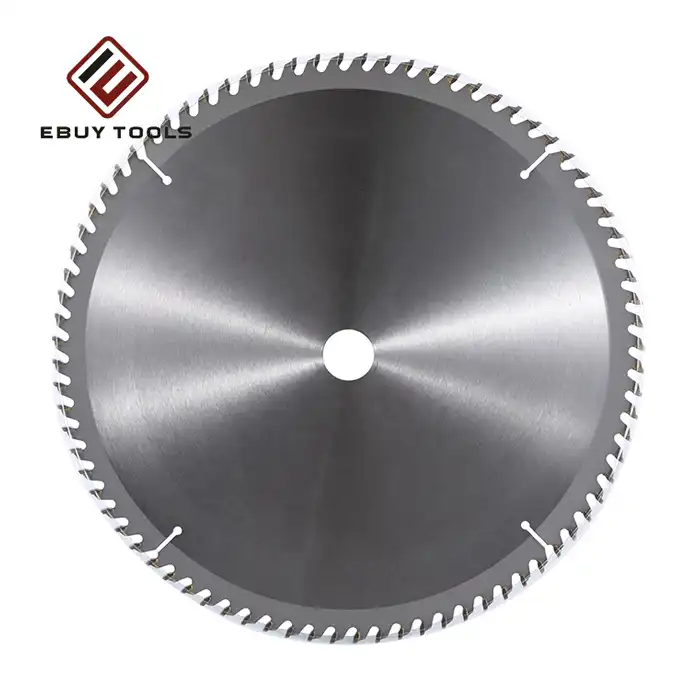
To make sure you get straight cuts with a TCT saw blade, you need to know that accuracy depends on three things that work together: choosing the right blade, setting up the machine correctly, and following the maintenance instructions. A TCT saw blade has very sharp, very hard cutting edges that are brazed onto a body made of solid steel. This is done so that the geometry stays stable even when the temperature rises. To get straightness, you need to make sure that the tooth design is right for the material, like Triple Chip Grind for aluminum profiles or Alternate Top Bevel for hardwood, and that the blade tension and arbor alignment are kept to very close limits. For industrial uses, accurate cuts depend on controlled feed rates that keep the blade from twisting and regular checks for radial runout greater than 0.05 mm.

Understanding the Challenges in Achieving Straight Cuts with TCT Saw Blades
Common Technical Issues That Compromise Cut Precision
One of the most common reasons for variation in industrial cutting processes is blade wobble. Rather than rotating in a single plane, this effect happens when the blade moves side to side as it turns. At the cutting edge, even small wobbles (as little as 0.2 mm) get bigger, making kerf width differences and slanted surfaces. Usually, the problems start with arbor bearings that are broken, blades that aren't mounted correctly, or dirt building up on the flange surfaces.
Vibration adds another level of difficulty. When cutting forces raise the blade body's natural resonant frequency, harmonic oscillations happen that make it impossible to consistently engage the material. This is a big problem with thin-kerf blades and when cutting thick materials like stainless steel. As a result, the surface has unique wave patterns and differences in size that make the parts useless for precise assembling.
Inconsistent material feed makes it hard to predict how the cutting teeth will be loaded. Different feed rates make the blade bend in different ways during the cut, and when the clamps aren't tight enough, the workpiece can move, which makes the problem worse. Working with companies that make aerospace parts, we've seen that even properly spec'd blades can't make straight cuts when the feed systems aren't rigid enough or when workers use uneven manual pressure.
The Impact of Blade Wear and Machine Alignment
Wear on the carbide tip can be predicted, but it's not always clear how this affects the straightness of the cut. As the teeth wear down, cutting forces rise unevenly, which makes the blade body bend more. When coolant is delivered intermittently or materials aren't consistent, the tooth set wears unevenly. This leads to an uneven cutting action that pulls the blade off-line. Regular checks show if wear patterns point to practical problems that need to be fixed before precision falls too far below what is accepted.
Machine balance is just as important. The blade, fence, and workpiece support surfaces on table saws, miter saws, and CNC cutting centers all need to be perfectly lined up geometrically. Even a small misalignment of 0.5 degrees can cause a big change in angle over a 300mm cut length. These relationships can change because of thermal growth during production runs. This is why regular checks are required and not just voluntary.
Key Factors Affecting the Straightness of Cuts: Technical and Operational Insights
Tooth Design and Blade Geometry Considerations
The tooth design you choose has a big impact on how the blade cuts through the material of your project. Flat-top grind teeth have a squared-off cutting edge that works great for ripping through solid wood, removing material quickly and well while clearing away chips. However, the surface finish from this shape is usually rougher than those from other designs.
Teeth in alternate top bevel designs of a TCT saw blade are ground at different angles, usually 15 to 20 degrees from vertical. This design makes a slicing motion that lowers the cutting force and makes cross-grain cuts with better lines. By balancing lateral forces, the rotating angles help keep the blades moving straight. This makes ATB blades great for general-purpose woodworking where accuracy is important. Our factory makes ATB blades with carefully controlled bevel angles that stay the same across the whole set of teeth. This makes sure that the cutting action is balanced.
Cutting rough materials like metal, composites, and layered panels can be hard. Triple Chip Grind geometry solves those problems. There are two types of teeth: a trapezoidal "roughing" tooth that cleans the sides and a flat "finishing" tooth that takes the middle of the kerf. This set-up stops chip welding and edge chipping, which happen a lot when cutting non-ferrous metals. The rotating design also keeps the track straight because it evenly distributes force.
Material-Specific Blade Selection Strategies
To cut wood goods, you need to know the difference between solid wood, made composites, and laminated materials. Higher tooth counts—usually 60 to 80 teeth on a 250mm blade—work well with solid hardwoods because they cut down on tear-out and make surfaces smooth. Softwoods can handle 40 to 50 teeth that are more harsh, putting cutting speed over surface finish.
Because they have a lot of glue and rough plastic binders, engineered wood goods like MDF and particleboard are hard to work with. Because these materials quickly dull regular steel blades, TCT saw blade are necessary to keep production running smoothly. Danyang Ebuy Tools' way of making tools is specifically designed for this use. Our blades are made with micro-grain carbide grades that are chosen to be very resistant to wear. Tests done in factories that make furniture have shown that our blades keep their cutting accuracy over 10–20 times more straight cutting distance than other options.
When cutting aluminum and other non-ferrous metals, you need to pay extra attention to the rake angles and tooth gaps. Negative rake angles of -5 to -10 degrees keep the blade from grabbing the workpiece, which is important for safety and accuracy. More space between the gullets makes it easier for chips to escape, which keeps the metal from welding to the tooth sides. When architectural makers cut thin-walled extrusions for window systems, the choice of blade has a direct effect on whether the profile walls stay stable in size or change shape because of the cutting forces.
Optimizing Cutting Parameters for Stability
Cutting speed and feed rate are two factors that need to be carefully balanced because they are linked. Too high of a blade RPM creates extra heat that makes both the blade body and the TCT saw blade expand, which makes the dimensions unstable. If the speed isn't fast enough, chips don't form properly, which increases cutting forces and blade displacement. The best speed varies on the type of material, the number of teeth, and the diameter of the blade. It is usually within the ranges given by the maker.
Controlling the feed rate is also very important. Aggressive feed rates put too much stress on each tooth, which causes them to bend and vibrate too much. When feed rates are too low, the blade can rub against the workpiece instead of cutting, creating heat without removing material effectively. This can lower the quality of the surface. Our expert team suggests setting feed rates that make chips continuously without blade deformation that can be seen. Then, fine-tuning should be done based on the surface finish needs and measurements.
Step-by-Step Best Practices to Ensure Straight Cuts with TCT Saw Blades
Proper Installation and Machine Calibration Procedures
Before installation can begin, all fixing surfaces must be thoroughly cleaned. Even tiny bits of dirt between the blade and the lip cause runout, which gets worse at the cutting edge. You can clean the arbor and blade hole with a clean, lint-free cloth soaked in denatured alcohol. This will get rid of any oil, sawdust, or rust. Check the arbor threads for damage and make sure the flanges don't show any signs of being worn down or distorted.
When you adjust blades of a TCT saw blade, you need to pay attention to the blade tensioning. If you don't fix the blade enough, it can slip while you're cutting, which can cause strange behavior and could be dangerous. When the blade is thin, over-tightening can damage the frame or bend the blade body. Manufacturers tell you the right torque values, which are usually between 30 and 50 Nm for normal mounting systems. You should use a measured torque wrench to confirm these values instead of guessing them.
Calibration of the machine sets the level of physical accuracy needed for straight cuts. Use a number indicator to measure the blade at different rotational angles to make sure it is straight across the table. Use a precision straightedge to check the fence's line and make sure it is aligned to the blade all the way along its length. CNC machine workers should make sure that the designed tool paths take into account the real blade dimensions instead of the nominal specs. This is because manufacturing tolerances can cause differences.
Maintenance Protocols That Preserve Cutting Accuracy
Cleaning the blade gets rid of the pitch, glue, and rust that build up during normal use. These crystals change the shape of the teeth and make the pressure conditions uneven. Warm water mixed with an alkaline cleaner breaks down organic buildup well without hurting TCT saw blade or blade coats. Scrubbing too hard could damage the tips. Instead, let chemicals loosen the layers and then gently brush them off with a brass-bristle brush.
Instead of picking random times, sharpening plans should be based on watching the quality of the cuts. To tell if your teeth are getting dull, look for signs like more cutting force, a rough surface, or burning marks. Professional sharpening services with CNC grinding systems can return teeth to their original shape while keeping the right clearance angles and tip curves. The way Danyang Ebuy Tools makes blades means that they can be sharpened 5–10 times, which extends the life of the tool and helps with cost-effective operations.
Problems that are starting to show up are caught early on by regular review. Look for TCT saw blade that are missing or broken, cracks in the blade body that come from the expansion holes, and any signs that the heat has caused it to change shape. Use a number indicator to measure runout at the blade rim while the blade is placed on the arbor. Readings greater than 0.1mm mean there are problems that need to be fixed right away.
Operational Techniques for Consistent Results
Clamping the workpiece stops it from moving during cutting, which has a direct effect on the quality of the cut. Vibrations can move materials around if there isn't enough clamping force, and too much force can bend thin-walled parts. Place clamps so that they hold the material close to the cut line without getting in the way of the blade's clearance. Use more than one contact point to spread the pressure evenly.
Feed method is important whether you're using a CNC system or a piece of manual tools. Keep the feed pressure steady and smooth, but don't force the cut. Don't try to speed up the process; instead, let the blade teeth remove material at the rate they were meant to do so. Listen to the sound of the cut. If the tone is smooth and constant, everything is working right. If the pitch changes, you need to change the feed rate.
Safety rules keep both people using the equipment and the equipment itself safe, and they help achieve accurate results. Before touching the cloth, the blade should always be at full speed. Never take off blade guards or break safety interlocks; these systems stop the machine from being precisely positioned, which is needed for accurate cuts. Clear the work area of anything that could get in the way of supporting materials or letting workers see.
Conclusion
To get straight cuts with TCT saw blade, you need to make sure the machine is set up correctly and follow good care habits. The technical information in this guide gives procurement professionals and plant engineers methods they can use to improve cutting processes. Each part of precision is important, from knowing how tooth geometry affects material contact to putting in place calibration methods that keep machines accurate.
Metalworking, automotive, aircraft, and woodworking all have manufacturing settings that have to deal with the same problems: keeping cut quality high while keeping costs low. To be successful, you need to match the right blade technology to the right application, set up maintenance plans that keep performance high, and work with suppliers who can support your operations with both quality goods and technical know-how.
FAQ
Do TCT blades maintain equal straightness when cutting metals compared to wood?
How straight the cut is based more on the right blade specifications than the type of material. When cutting metal, the blades need to have negative rake angles and bigger gullet spacing than when cutting wood. However, both types of blades can be very precise if they are properly matched to the job. Aluminum and other non-ferrous metals can be cut very straight because their constant density gets rid of the variations in grain direction that happen in wood. The most important difference is choosing the right cutting settings and tooth shape for each type of material.
How frequently should TCT blades be sharpened to maintain cutting accuracy?
Sharpening intervals are not set in stone; they depend on the abrasiveness of the material, the production volume, and the accepted ranges of deviation. Keep an eye on signs of poor cut quality, such as higher feed pressure, surface burning, or rough edges, to know when to sharpen. In production settings, performance metrics are usually set as a standard, and sharpening is planned for when quality drops below accepted levels. Professional businesses often have blade rotation systems where multiple blades are used, cleaned, inspected, and sharpened all at the same time. This makes sure that they always have access to sharp TCT saw blade.
What safety practices prevent cutting deviations during operation?
Safety rules help with cutting accuracy directly by keeping working conditions fixed. Always let the TCT saw blade hit full speed before they touch the material. Speeding up while under load makes the forces uneven, which makes it harder to keep the blades straight. Securing the workpieces with the right clamps stops them from moving while they're being cut, and using the right blade guards keeps the user in the right position to support steady feed rates. Do not go around safety interlocks; they keep machine parts in the right geometric relationships so that cuts are accurate.
Partner With Ebuy Tools for Precision Cutting Solutions
TCT saw blade from Danyang Ebuy Tools give you the accuracy and sturdiness you need for your work. Cutting tools that meet strict industrial standards are made in our 77,000-square-meter plant, which uses cutting-edge production technology and 15 years of development experience. We know the technical needs that drive your buying choices because we are a TCT saw blade seller that works with metalworking shops, automakers, and precision engineering firms all over North America.
Our product line includes both standard configurations and unique configurations that are made to fit your machine and materials. We offer quick service that keeps your production lines running because we keep a lot of merchandise on hand for quick shipping and can make custom orders that are usually ready in 15 days. You can email our team at [email protected] to talk about your cutting problems, get technical specs, or set up blade samples for testing in your plant.
References
Machinery's Handbook, 31st Edition, Industrial Press, 2020. Section on circular saw blade specifications and cutting parameters for metalworking applications.
American National Standards Institute (ANSI) B7.1-2017, Safety Requirements for Woodworking Machinery, including specifications for saw blade mounting and guarding systems.
German Institute for Standardization, DIN 8083:2003, Circular saw blades - Technical delivery conditions, specifications for blade flatness and tensioning standards.
Society of Manufacturing Engineers, Fundamentals of Tool Design, Sixth Edition, 2014. Chapter 12 covering cutting tool materials and geometry optimization.
Wood Machinery Manufacturers of America Technical Bulletin, Saw Blade Selection and Maintenance for Production Woodworking, 2019.
ASM International Handbook, Volume 16: Machining, 1995. Section covering high-speed cutting of aluminum alloys and non-ferrous metals with carbide-tipped tools.
_1775721785360.webp)