.webp)

TCT saw blades are still very important in modern manufacturing, but pitch and resin buildup is a problem that keeps happening in precision machining, making cars, and crafts. When sticky leftovers build up on cutting surfaces, they hurt the performance of blades, make it harder to get accurate measurements, and shorten the life of tools, all of which have a direct effect on your bottom line. This guide gives procurement workers, repair engineers, and tooling sellers methods they can use to keep blades clean and ready to use. You can get the most out of your tungsten carbide tooling purchases by following proven cleaning methods and smart maintenance procedures. This will help them last longer and cut more efficiently.
Understanding Pitch and Resin Buildup on TCT Saw Blades
What Causes Pitch and Resin to Stick?
To clean pitch and resin off of a TCT saw blade, you need to know how chemicals stick together. When you cut something, heat and pressure melt and bond biological materials to metal surfaces. This includes sap from softwoods, adhesives in engineered wood products, and synthetic binders in composite materials. These leftovers quickly cool and stick to the carbide tips and steel body, making layers that are hard to remove with a cloth. Spikes in temperature above 200°C speed up this process by a huge amount. The fact that raw materials contain moisture makes things even more complicated by creating steam pockets that spread contamination across expansion slots and gullets.
Performance Impact of Contaminated Blades
Besides being unsightly, deposits that build up cause major operating problems. As pitch builds up, friction rates go up. This makes motors work harder and use more energy. Heat builds up against carbide tips because thick layers of resin act as insulation. This speeds up thermal stress and micro-cracking. Cutting accuracy is lost when random layers change the shape of the blade, which makes finished parts wobble and vary in size. We've seen output drops of more than 30% in places where blade maintenance isn't done regularly, and replacement rates are doubled compared to places where tools are properly kept.
Material-Specific Challenges
Different types of project materials pose different problems. Plywood and medium-density fiberboard both have phenolic resins in them that turn into carbon dioxide when heated, leaving behind very tough black marks. When aluminum is extruded, it leaves behind metal transfer and oxidation products instead of organic waste. Plastics like PVC make chlorinated chemicals that can rust steel bodies that aren't covered. Buying teams can choose the right blade coatings and cleaning products for their manufacturing setting when they know how these materials behave in certain ways.
Causes Behind Pitch and Resin Accumulation on TCT Saw Blades
Operational Parameters That Accelerate Buildup
Cutting speed and feed rate for a TCT circular saw blade have a big effect on how much waste is made. Too many revolutions per minute (RPMs) create extra heat that melts natural resins, and not enough feed rates make the cutting action more like rubbing than cutting. Geometry of the blade teeth is very important. For example, strong positive hook angles that are meant to rip quickly cause more friction and heat building than neutral or negative geometries. Another problem is that dull carbide tips make the job harder because they need more force and heat to make the same cut.
Equipment Configuration Issues
Confection rates are directly affected by how the machine is set up. When cooling supply systems aren't good enough, they can't flush out particles and keep temperatures under control. When blade guards are missing or broken, dust builds up and mixes with heat-softened resins to make a gritty paste. When axle bearings are worn, they cause vibrations that make friction and heat production go up. These mechanical factors work with the qualities of the material to speed up the formation of deposits. This makes equipment upkeep just as important as cleaning the TCT saw blade.
Common Mistakes in Blade Selection
A lot of operational problems happen because buying choices aren't in line with what the program needs. Using general-purpose tooth counts for specific jobs, like a 40-tooth blade for resin-rich board that needs 60 teeth, makes heat and buildup worse. Modern surface processes that make blades non-stick are lost when you use bare blades on high-resin materials. If you don't pay attention to the quality of the blade body and the heat treatment instructions, the blade will bend too soon under thermal stress. Knowing these selection factors helps people who work in buying choose tools that are naturally resistant to contamination.
Proven Techniques to Clean Pitch and Resin from TCT Saw Blades
Chemical Cleaning Methods
Specialized cleaning solutions for blades get rid of organic buildups without hurting the brazing joints between carbide and steel or the protection coats. First, loose debris is brushed off. Next, the blade is put in cleaner for 10 to 15 minutes, depending on how dirty it is. Alkaline surfactants and citrus-based liquids are used in good recipes to break down resin polymers while still being safe for tungsten carbide tips. A nylon brush can be used to remove loosened deposits from the front and back of teeth after washing. Rinsing with water removes any chemical remains, and letting the item dry in the air stops rusting. This method works with most repair plans and doesn't require a lot of expensive tools.
Ultrasonic Cleaning Technology
Ultrasonic tanks are high-tech ways to clean TCT saw blade large areas quickly and easily. Ultrasonic sensors create cavitation bubbles in the cleaning solution. These bubbles explode against the blade surfaces, releasing tiny particles that were stuck in the tight spaces around the carbide tips. This method cleans more thoroughly than cleaning by hand complex tooth shapes like Triple Chip Grinds and High-Alternate Top Bevels. The best operating frequencies for cleaning blades are between 35 and 40 kHz. The automated method cuts down on the need for workers while maintaining uniform results across big blade inventories. Ultrasonic cleaning often gives facilities that process dozens of blades a week a quick return on their investment by cutting down on labor costs and making the TCT saw blade last longer.
Mechanical Cleaning Options
Bench grinders with rotary brass brushes make it easy to clean small areas quickly between shifts. The soft brass brushes remove surface layers without scratching carbide or steel. However, skilled use is needed to keep precision-ground tooth faces from getting damaged. This is done automatically by machines that clean blades by spinning them past fixed brush stations while applying controlled pressure. Before chemical washing, these systems do a good job of getting rid of heavy buildups. However, mechanical methods rarely get things as clean as they need to be for optimal cutting performance. This means that they work best as the first steps in a full cleaning procedure.
Preventive Maintenance Practices
Regular care keeps buildup from getting so bad that it needs to be cleaned aggressively. Every day checks find early signs of contamination, when quick wipes with cloths wet with liquid are enough. Using dry lubricant sprays after cleaning makes partial shields that keep things from sticking for later cutting sessions. When things are stored correctly in climate-controlled areas, moisture condensation that leads to rusting and residue bonding is avoided. Keeping detailed blade service logs helps find trends that connect certain materials or working conditions to faster contamination. This lets you make changes ahead of time that lower the frequency of cleaning.
Choosing the Right TCT Saw Blade for Easier Maintenance
Advanced Blade Design Features
Modern engineering for TCT saw blades includes anti-stick technologies that make upkeep less necessary. Polytetrafluoroethylene (PTFE) and other non-stick coats lower friction coefficients by 40 to 60%, which stops hot resins from sticking at first. Titanium nitride (TiN) layers offer similar advantages and make the surface harder so it doesn't break down easily. Smooth surfaces that shed dirt better than open slots that catch it are made of expansion slots filled with vibration-damping polymers. Tooth shapes that are best for certain materials, like TCG shapes for rough alloys, make less heat, which means they don't form as many deposits.
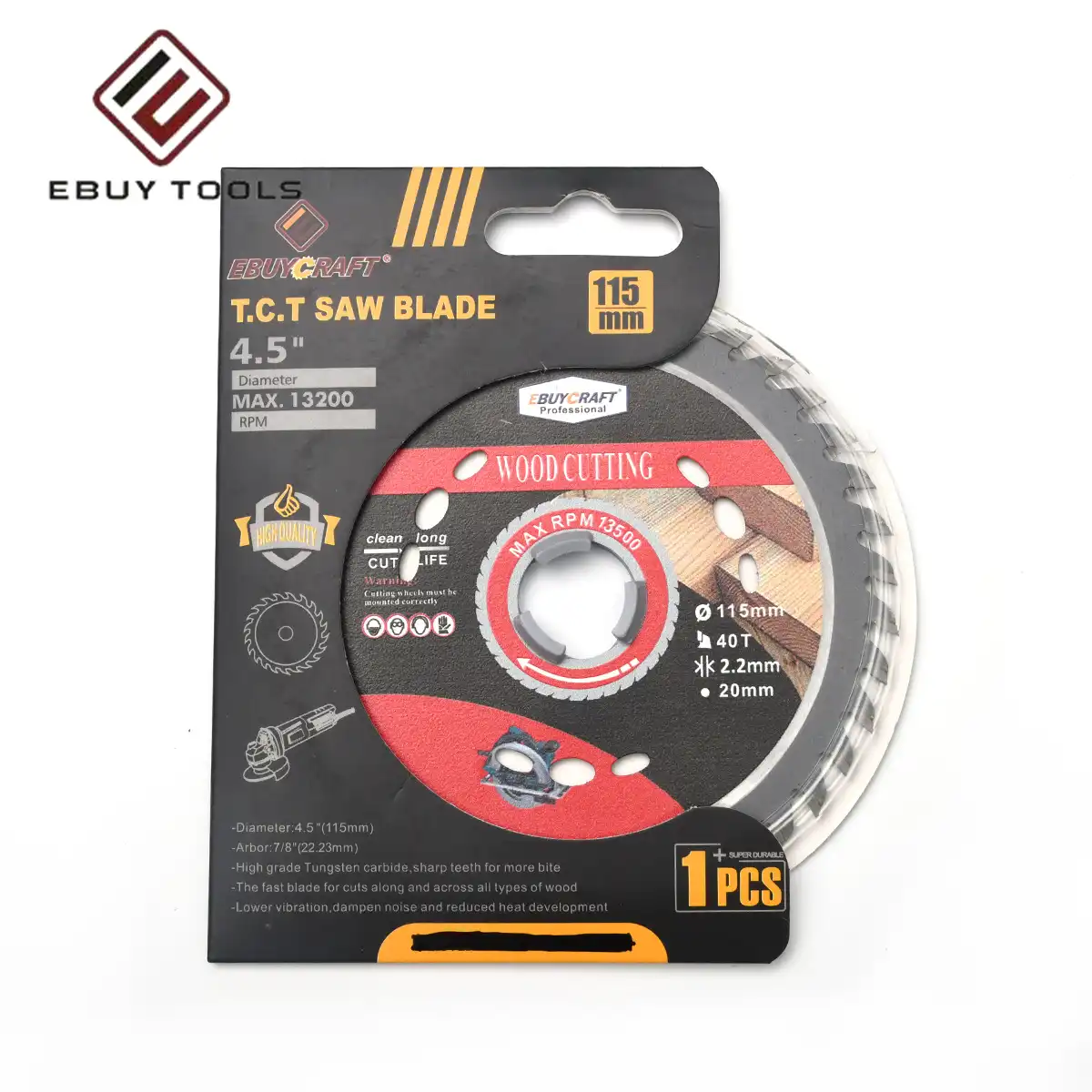
These high-tech features are built into the TCT circular saw blade that Danyang Ebuy Tools makes with the help of precise engineering and 15 years of development experience. Each blade has a body made of strengthened tool steel from 75Cr1 or SKS51 alloys and a tip made of ultra-hard tungsten carbide that stays sharp at temperatures up to 600°C. Our strict tensioning methods, which are based on DIN 8083 standards, keep radial and axial runout within 0.05-0.1mm limits. This gives you glue-line quality cuts that don't let micro-vibrations cause heat buildup. The end has a 10–20 times longer service life than normal carbon steel options and doesn't get contaminated like lower-quality tools do.
Comparing Material Options
Choosing between carbide and high-speed steel (HSS) for purchase has a big impact on the amount of work that needs to be done on upkeep. HSS blades are cheaper at first, but they get dull quickly in rough situations and need to be sharpened often, which adds to the upkeep cycle. The softer material also picks up deposits more easily because the duller cutting edges cause more contact. Carbide blades keep their factory-sharp edges for a much longer time, and they cut cleanly with little heat and friction. Even though carbide requires a bigger initial investment, the longer time between sharpening and cleaning it lowers the total cost of ownership by a large amount in production settings that use rough materials every day.
Application-Specific Selection Criteria
Maintenance problems are kept to a minimum by making sure that the blade specs match your exact cutting needs. When working with MDF, particleboard, and plywood that has a lot of glue, our TCG design keeps the edges from wearing down quickly in rough conditions. Alternate Top Bevel designs help construction projects that use job-site miter saws by balancing cutting speed with surface finish quality on hardwoods and frame lumber. When making furniture and panels with great accuracy, High-Alternate Top Bevel shapes work best because they keep double-sided laminates from breaking. For cutting non-ferrous metals, you need special designs with negative hook angles of around -5°. These control feed rates when cutting aluminum shapes without grabbing the material.
Procurement teams can find the best options by understanding these application-specific details. We have finishing choices for both carbide and HSS materials that can be used to work with aluminum alloys, stainless steel, and other materials. For our blade specs, we need to know the outside diameter, the inside diameter, the thickness, and the number of teeth. If we have the blades in stock, we can send them quickly, but custom designs usually take 15 days. Our modern 77,000-square-meter factory, which is run by 319 skilled professionals, makes high-quality cutting solutions every day. It can make more than 150,000 pieces, so it can meet the needs of large orders.
Conclusion
Managing pitch and resin well on a TCT saw blade will protect your tungsten carbide tooling purchases and keep the cutting precision you need to stay competitive in the industrial world. The cleaning techniques and safety tips in this article get rid of the causes of contamination instead of just fixing the symptoms. Choosing blades that are properly designed and made to strict quality standards makes them naturally resistant to deposit formation, which makes upkeep a lot easier. As the need for making grows, it becomes more useful to work with sources who know a lot about both metallurgy and application needs. Using these tried-and-true upkeep methods will pay off in the form of longer blade life, better cut quality, lower energy use, and fewer interruptions in production.
FAQ
How Often Should I Clean TCT Saw Blades?
How often you clean something relies on its properties and how much you're making it. Cutting resin-rich softwoods or adhesive-heavy composites usually needs to be cleaned every 8 to 12 hours. Intervals may be extended to 16 to 24 hours for harder materials like metal or hardwoods. The best way to tell if something needs to be cleaned is to look at it. Clean whenever you see deposits on the tooth faces or when cutting performance starts to get worse. Setting regular plans for your materials and keeping an eye on performance trends can help you get the most out of the timing of your repairs for TCT saw blades.
Can Improper Cleaning Damage Carbide Tips?
Abrasive cleaning methods could damage the shape of precision-ground teeth. Wire brushes made of steel or other materials that are harder than brass can scratch carbide surfaces, making them microscopically rough, which speeds up the buildup of new material. Too much mechanical force could damage the soldering joints that connect steel bodies to carbide tips. Acidic cleaners that are too harsh can damage protective layers or brazing metals. Using the right cleaning products made for carbide tools and gentle mechanical motion will protect your blade investment and get the job done well.
Are Eco-Friendly Cleaning Solutions Effective?
Modern organic blade cleaners work just as well as traditional agents based on petroleum while also being safe for the earth. Using d-limonene in citrus-based formulas breaks down organic resins effectively without releasing harmful fumes or making dumping difficult. When mixed with enough sitting time, water-based alkaline cleaners work well for most tasks. These choices are good for the environment and help companies reach their sustainability goals without lowering the quality of upkeep or putting workers in danger.
Partner with Ebuy Tools for Superior TCT Saw Blade Solutions
Precision TCT saw blades made by Danyang Ebuy Tools are designed to keep pitch and resin from building up by using advanced materials and tried-and-true shapes. Our 15 years of experience in research and development, along with foreign manufacturing tools, allow us to offer top-notch performance at a price that is hard to beat. Our wide selection of Triple Chip Grind blades can be used for abrasive composites, special shapes for making metal parts, or high-tooth-count setups for fine finishing. It can meet all of your manufacturing needs. Our technical team creates special solutions for unique uses, and we keep a large inventory of items that meet common requirements so that we can serve quickly. Get in touch with our purchasing experts at [email protected] to talk about your specific cutting problems and find out how working with a dependable TCT saw blade provider can make managing your tools easier and improve operating results.
References
Machinery's Handbook (31st Edition). Industrial Press Inc., 2020. "Cutting Tools and Machining Practices."
Society of Manufacturing Engineers. "Carbide Tool Technology: Physical Metallurgy and Applications in Manufacturing." SME Technical Paper Series, 2019.
Wood Machining Institute. "Maintenance Best Practices for Carbide-Tipped Saw Blades in Industrial Woodworking." Technical Bulletin WMI-2021-03.
American National Standards Institute. "ANSI B7.1-2017: Safety Requirements for the Use, Care, and Protection of Abrasive Wheels." ANSI Standards Publication.
German Institute for Standardization. "DIN 8083: Circular Saw Blades - Technical Delivery Conditions and Testing." Beuth Verlag, 2018.
Journal of Materials Processing Technology. "Thermal Effects and Coating Performance in Carbide Cutting Tool Applications." Volume 287, January 2021, Article 116437.