.webp)

When picking the right metal cutting disc for stainless steel, you need to pay close attention to the abrasive material, disc thickness, and structure of the reinforcements. When dealing with corrosion-resistant alloys in industrial settings, the best disc strikes a mix between clean cutting and long-lasting use. To avoid touch rust, professionals should look for INOX-specification discs that have low amounts of iron, sulfur, and chlorine. Knowing how disc geometry, grain type, and RPM rates affect the special qualities of stainless steel is important for keeping operators safe and getting the best results in precision machining, making cars, and aircraft.


Understanding Metal Cutting Discs and Their Role in Stainless Steel Processing
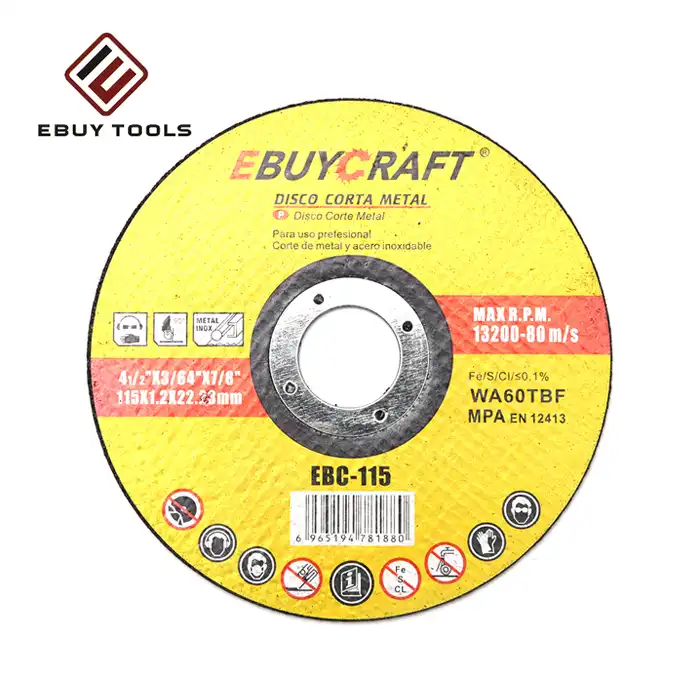
Metal cutting disc are specialized abrasive tools that are made to cut through ferrous and non-ferrous metals by controlled friction and material removal. Unlike diamond blades for masonry work or grinding wheels for smoothing surfaces, these bonded abrasive consumables are meant to make clean, exact cuts through tough materials. Abrasive grains, usually aluminum oxide, silicon carbide, or zirconia alumina, are joined together with phenolic resin and strengthened with woven fiberglass mesh so that they can handle the high rotational forces that happen during use.
Because of the way stainless steel is made, the choosing process is even more important when dealing with it. Stainless steel has higher tensile strength and work-hardening properties than mild steel. Because of this, discs must be designed to keep cutting efficiently without coating or wearing out too quickly. Using the right disc keeps heat from building up, which can damage the mechanical integrity of stainless steel parts. This is especially important in uses like food, medicine, and space travel where material purity is very important.
Why Stainless Steel Demands Specialized Cutting Solutions
The chromium in stainless steel makes an inactive oxide layer that stops rust but makes it harder to cut. Standard grinding discs made for carbon steel often have iron fillers that get on stainless surfaces and cause rust spots and less corrosion protection. Because of this chance of contamination, INOX-specification discs are needed to keep the material's structure while it's being cut.
Cutting discs that reduce the Heat Affected Zone (HAZ) are needed in professional settings like precision machining shops, car parts factories, and aerospace engineering firms. When cutting, too much heat can turn metal blue, weaken the structure, and change the dimensions in ways that make precise parts useless. These problems can be solved by using advanced disc formulations with special grain structures and link systems that get rid of heat quickly while still cutting aggressively.
Safety Considerations in Industrial Cutting Operations
To safely use abrasive cutting discs, you must stick to the RPM limits that are written on the metal ring of each disc. Going beyond these limits creates too much rotational force that can break through the fiberglass support and cause the disc to fail catastrophically. At Danyang Ebuy Tools, every disc is tested at 1.5 times its stated RPM to make sure it stays structurally sound under operational stress. This way, operators can work with confidence in tough production settings.
When working with cutting discs, safety gear must always be worn. Wearing safety glasses with side covers, hearing protection, and gloves that won't tear is the bare minimum to protect yourself from sparks, metal pieces, and noise. When machine guards and workpieces are properly installed and secured, impact accidents that often lead to injuries at work can be avoided. When cutting stainless steel, these safety rules are even more important because the strength of the metal makes sparks and sounds that are stronger than when cutting softer metals.
Core Criteria to Evaluate When Choosing a Metal Cutting Disc for Stainless Steel
To choose the best grit abrasive cutting disc for cutting stainless steel, you have to look at a number of scientific factors that have an effect on performance, safety, and cost-effectiveness. When procurement workers understand these factors, they can make choices that meet their operational needs and quality standards. This ensures the selected metal cutting disc provides the necessary longevity and precision for industrial applications.
Abrasive Composition and Type of Grain
It is the rough material that makes the cutting disc work. Brown fused alumina is a great choice for general steel uses because it has a good cost-to-performance ratio and cuts well at a reasonable price. But white fused alumina formulations are very helpful for handling stainless steel because they keep the cutting edges sharp for a long time and don't let contamination get on them. This special grain structure stops iron from moving to the workpiece. This keeps the corrosion-resistant qualities of stainless steel that make it useful in tough situations.
Zirconia alumina is the best choice for high-alloy stainless steels and other unusual materials used in aircraft manufacturing. When put under pressure, these self-sharpening grains break apart to reveal new cutting edges. This keeps the cutting rate constant even when working with sharpened stainless steels or titanium alloys. Because zirconia alumina is more durable, discs last longer and need to be changed less often. This makes up for the higher starting costs by increasing efficiency and lowering the total cost of ownership.
At Danyang Ebuy Tools, we make our discs with quality phenolic glue that holds carefully chosen abrasive grains together. This mix guarantees the best rates of material removal while reducing the number of heat-affected areas on your workpieces. This keeps the mechanical qualities that make stainless steel work at their best.
Disc Geometry: Thickness, Diameter, and Center Design
Disc width has a big effect on how well it cuts and what kinds of jobs it can do. Ultra-thin options running from 0.8mm to 1.6mm are great for precise work where less material loss and a smaller kerf width are very important. These thin shapes cut thinner stainless steel sheets more quickly and with less heat, which makes them perfect for manufacturing projects that need little finishing work after cutting. But because they don't have as much grit, they wear down faster than bigger options.
Standard width discs that are between 2.5 mm and 3.0 mm are better at keeping the machine stable on its side and last longer, so they can be used for heavy-duty cutting on thick stainless steel plates and structure parts. The bigger amount of grit means that there are more cuts per disc, which lowers the cost per cut in high-volume production settings. Because we know how to make things, our 77,000-square-meter factory can make discs of all thicknesses. Every day, we make more than 150,000 pieces, which helps global producers keep their supply chains running smoothly.
When choosing a diameter, you need to make sure it fits the needs of your power tool and the amount of cut you need. Smaller discs (100mm to 125mm) fit portable angle grinders for work in the field and tight spaces. Larger discs (300mm to 400mm) fit fixed chop saws used in construction shops to work with big structural sections and large stainless steel pipes. The bore size must exactly match the arbor size of your grinder to keep it from wobbling and to make sure that the spin is steady while it's running.
RPM Rating and Speed Compatibility
Each cutting disc has a highest RPM number that is based on its diameter and how well it is built. When you go over this limit, you create too much spinning stress, which can damage the disc and pose major safety risks. It is still very important to match the speed ratings of the discs to the specs of your grinder. For example, a 125mm disc rated for 13,300 RPM is not safe to use on a grinder capable of 15,000 RPM, no matter how quickly you use it.
Our metal cutting disc are reinforced with three layers of fiberglass mesh that can withstand speeds of up to 80 meters per second. This gives them strong safety gaps even in harsh industrial settings. To keep this support structure from dangerously vibrating and wearing out too quickly, it is put through a lot of tests, such as a static and dynamic balance inspection. Each disc meets the standards set by EN 12413 and the oSa (Organization for the Safety of Abrasives). This gives procurement workers who are in charge of making sure workplace safety rules are followed a written guarantee of quality.
Matching Metal Cutting Discs to Specific Stainless Steel Applications
When cutting stainless steel, different situations call for metal cutting disc specs that are customized to get the best results while keeping costs low. Procurement professionals can better choose the right goods for their operations when they understand these application-specific standards.
Precision Cutting of Thin Stainless Sheet Metal
When working with stainless steel sheet metal that is between 0.5 mm and 3.0 mm thick, fabricators need discs that give them clean lines with few burrs. Ultra-thin discs that are between 0.8 mm and 1.2 mm work best for these tasks because they remove less material and make less heat than bigger discs. The smaller kerf width keeps the material yield on expensive stainless steel, and the lower heat input keeps exposed parts from bending and discoloring, which can make them look bad.
Our advanced grain and bond system keeps cutting efficiently without needing too much power, which is good for these precise uses. Low vibration levels make it easy to use for long cutting sessions, which keeps operators from getting tired in high-volume work settings. The form of the super thin cut-off wheel reduces material loss, noise, and dust, all of which are important when working in manufacturing facilities or shops with strict cleaning rules.
Food processing equipment makers and pharmacy facility builders like cutting stainless steel that doesn't get contaminated and keeps its corrosion resistance. Our INOX-specification discs have less than 0.1% iron, sulfur, and chlorine, which is very low and meets the high purity standards of these regulated businesses. This recipe keeps the surface from getting dirty, which can break health and safety rules and cause expensive rework or component refusal.
Heavy-Duty Cutting of Thick Stainless Plate and Structural Components
Shops that work with structural steel and companies that make industrial tools that use stainless plates that are thicker than 6 mm need strong discs that can keep cutting even when they are under a lot of force. Standard thickness discs between 2.5mm and 3.0mm have the horizontal stability and abrasive volume needed for these tough jobs. They keep their sharp cutting edge through thick cross-sections without glazing over or breaking the edges too soon.
When cutting large-diameter stainless steel pipe, heavy I-beams, or thick pressure tank parts, it is very important to have high metal removal rates for abrasive cutting disc. Even when working with work-hardening stainless steels like 304 and 316 series alloys, our discs keep their strong cutting performance and high stability, making them easy and comfortable to use. The self-sharpening rough grains keep exposing new cutting edges, so the product doesn't lose its effectiveness when cutting harder materials like cheaper ones do.
Coated surfaces, exposure to the elements, and limited field work make things harder for pipeline workers and offshore repair operations. Our goods don't absorb water and keep their bond even when the temperature changes, so they can be used reliably on coated pipe metals even in marine settings. This makes the discs last longer, so they don't break too soon, which would cause expensive downtime when working in rural areas where new supplies might not be easy to find.
Specialized Applications: Rebar, Tube, and Exotic Alloy Cutting
Cutting reinforcing bars for concrete building includes making many cuts on relatively soft stainless reinforcement. Disc life and cost-per-cut determine which bars to buy. Standard thickness discs made of brown fused alumina are a great value for these uses because they can be used for hundreds of cuts before they need to be replaced. Fast cutting speeds up production, and long-life reliability keeps costs down on large-scale projects that use a lot of consumables.
When making tubes and pipes, you need discs that can make straight cuts without leaving burrs or edge rolls that can get in the way of welding or fitting assembly. For precise perpendicular cuts on round stock, Type 42 depressed center designs offer more rigidity, and the strengthened hub area stops the side loading that happens when cutting tube sections. These shape benefits cut down on extra finishing steps, which speeds up work in production settings where every second counts.
Companies that make aerospace parts and high-precision engineering work with rare stainless metals, titanium, and superalloys need high-quality zirconia alumina discs that can keep tight standards and a smooth surface. These high-tech materials produce a lot of heat and don't easily cut, so discs that are very tough and stable at high temperatures are needed. Our high-quality abrasive formulations can work with these tough materials while keeping the surface quality and accuracy that are important for aircraft uses.
Conclusion
To choose the correct metal cutting disc for stainless steel, you need to know how the abrasive material, disc shape, application needs, and buying strategies all work together. INOX-specification discs with white fused alumina or zirconia alumina grains allow for clean cutting while keeping the rust resistance that makes stainless steel useful in many fields. Finding the right disc thickness and width for the job saves money and improves performance. Working with dependable makers guarantees stable quality and the supply chain. By looking at the total cost of ownership instead of just the purchase price, procurement professionals can choose goods that are more safe and efficient for metalworking, automobile, aerospace, and other industry manufacturing settings.
FAQ
Why are INOX discs not the same as other metal cutting discs?
INOX-specification discs have less than 0.1% iron, sulfur, and chlorine mixed. This keeps stainless steel surfaces from contacting rust, which happens when normal disc fillers get on them. This formulation doesn't contain any contaminants, so it keeps the corrosion protection that is important for food-grade, medicinal, and marine uses where rust would make parts less useful and break rules.
Can I side-grind or deburr with a metal cutting disc?
Metal cutting disc units are only made to handle circular cutting forces, so they should never be used for side grinding. Lateral pressure tears the fiberglass mesh support, which increases the chance of a catastrophic failure. Grinding discs with a Type 27 geometry and a width of 6mm are made to be used for side grinding and deburring tasks. They have the structural strength to safely handle these horizontal loads.
How do I figure out what RPM number I need for my job?
The highest RPM written on the metal ring of the disc should match the speed number on your grinder. When you run discs faster than their stated RPM, they create too much centrifugal force, which can break through internal reinforcement and cause the disc to fail in a dangerous way. When using variable-speed grinders, make sure the highest speed setting doesn't go over the disc's maximum rating, even if you usually work at slower speeds.
Get Professional Help from a Reputable Metal Cutting Disc Supplier
Danyang Ebuy Tools has professional-grade abrasive solutions for metal cutting disc ready to help you cut stainless steel. These solutions are made for tough industrial uses. Our wide range of products includes ultra-thin precision discs, heavy-duty cutting wheels, and contamination-free INOX-specification standards. At our 77,000-square-meter manufacturing site, we put all of our products through strict quality control tests. Our expert team can help procurement managers, production engineers, and distributors with application-specific suggestions, bulk price quotes, and sample evaluation packs.You can email them at [email protected]. You can look through our full cutting disc catalog at ebuy-tools.com. There you'll find out how our triple fiberglass mesh support, advanced grain formulas, and EN 12413 compliance give your operations the performance, safety, and value they need.
References
American National Standards Institute. "Safety Requirements for the Use, Care, and Protection of Abrasive Wheels." ANSI B7.1-2017 Standard for Abrasive Tools Manufacturing and Industrial Safety Compliance.
Society of Manufacturing Engineers. "Abrasive Machining Processes: Principles and Applications for Metalworking Operations." SME Technical Paper Series on Advanced Manufacturing Methods, 2021.
International Organization for Standardization. "Abrasive Products - Bonded Abrasives - Requirements and Test Methods for Safety." ISO 16057:2016 Standards for Industrial Cutting and Grinding Applications.
Machinery's Handbook, 31st Edition. "Metal Cutting and Grinding: Tool Selection, Operating Parameters, and Safety Practices for Industrial Workshops." Industrial Press Inc., 2020.
Stainless Steel Industry of North America. "Fabrication Practices for Stainless Steel: Cutting, Welding, and Surface Finishing Guidelines." Technical Manual for Manufacturing Excellence, 2019.
European Federation of Producers of Abrasives. "Best Practices for Selection and Application of Bonded Abrasive Cutting Discs in Professional Metalworking." FEPA Technical Standards and Industry Guidelines, 2022.