.webp)

To choose the right diamond cutting disc, you need to know what kind of tile you're working with, make sure the disc shape fits your machine, and put safety ahead of performance. For professional tile cutting, you need precise tools with smooth edges that won't chip. For ceramic, porcelain, granite, and thick brick work, diamond-embedded discs are the best choice. By looking at things like rim design, bond type, RPM compatibility, and operating environment, you can make sure that the cutting is as efficient as possible while also increasing tool life and lowering downtime.
Understanding Diamond Cutting Discs for Tile Cutting
Because of how they are made, diamond cutting disc units are different from regular grinding wheels. Industrial-grade manmade diamonds are joined into a metal matrix to make these tools. The cutting edges are better than silicon carbide or aluminum oxide options by large amounts. The diamonds don't cut through friction like sandpaper does. Instead, they break up the molecular structure of the tile material at high-pressure points, which makes better cuts with less stress on the base.
How Diamond Discs Differ from Conventional Blades
The cutting device is what makes the difference. Traditional grit discs use friable bits that break apart and fall off while they're being used, making them less effective over time. In a controlled-wear grid, diamond discs use the hardest native material. As the machine works, the metal link slowly breaks down, letting new diamond crystals keep touching the cutting surface. This self-sharpening feature keeps the disc's cutting performance stable over its entire operating life, making it a better choice for professional settings where downtime directly affects productivity.
Types of Diamond Disc Configurations
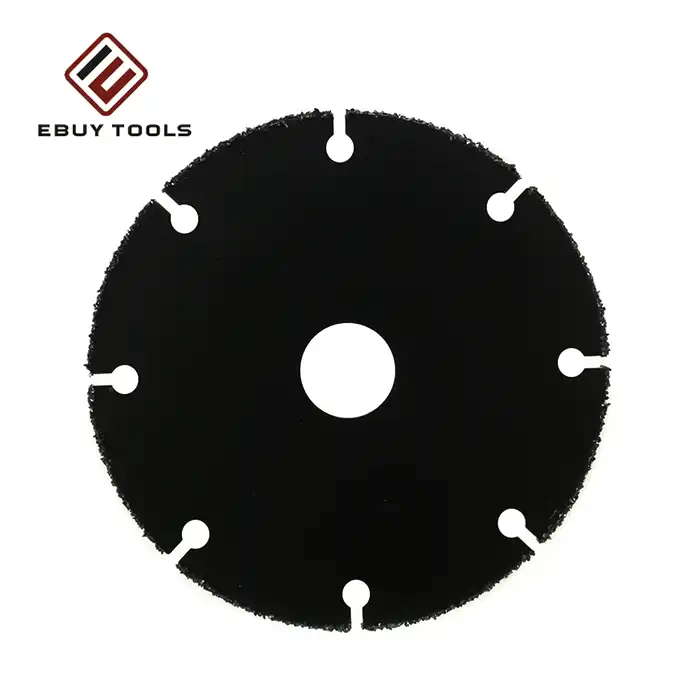
Professional tile cutting uses three main types of rim patterns. Segmented discs have clear gaps between the diamond-filled segments, which makes it easier to remove material aggressively and better get rid of heat during dry cutting. Continuous rim discs have a cutting edge that doesn't break. They make very smooth finishes on sensitive materials like polished porcelain or glass tiles, but they need to be cooled down with water to keep them from getting too hot.
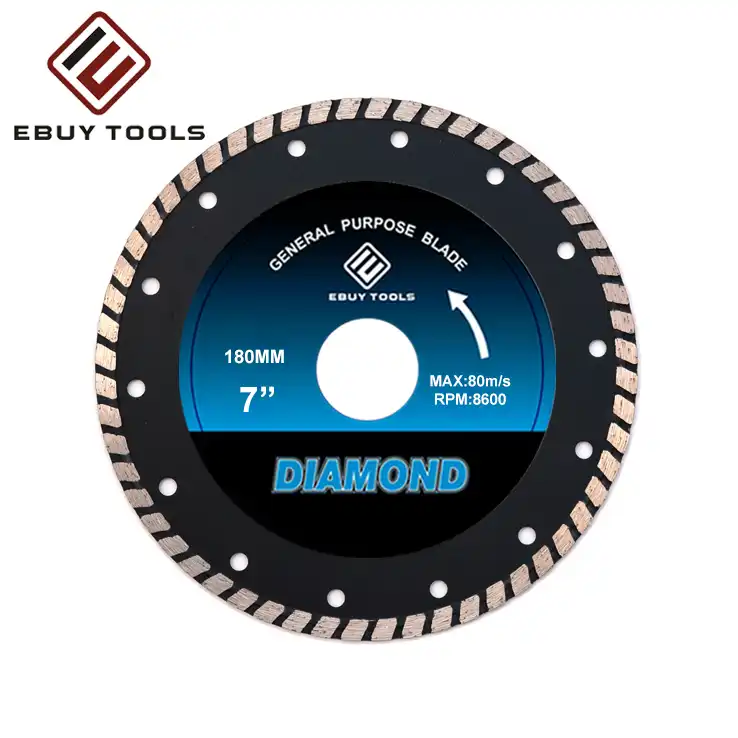
Turbo rim combinations are a big step forward in engineering that closes the speed gap between these old designs. The continuous serrated edge makes small openings that improve airflow and waste removal while keeping the smooth cutting action of continuous rims. Our Turbo Diamond Cutting Discs at Danyang Ebuy Tools use this advanced shape along with hot-pressed sintering technology to make them safe to use at speeds of up to 80m/s. The built-in safety teeth stop the blade from undercutting, and the turbo segments improve dust removal for better performance in both wet and dry situations.
Wet Cutting Versus Dry Cutting Capabilities
The operational setting has a big effect on disc selection. When you use wet cutting, water is added to the cutting zone. This greatly reduces friction heat and flushes away any trash that might get in the way of cutting. This method makes discs last longer and creates almost dust-free work areas, which makes it perfect for small spaces or projects that need to follow lung protection rules.
Dry cutting doesn't need any water infrastructure, which makes it easier to move around in the field and in settings where managing slurry would be difficult. Modern turbo rim designs specifically deal with the heat problems that come with dry cutting by adding more airflow ducts that let cool air move through them naturally. When choosing discs for dry uses, make sure the maker rates the product specifically for this purpose. Continuous rim discs that are only meant to be used for wet cutting will quickly break down when used in dry conditions.
Core Criteria to Consider When Choosing a Diamond Cutting Disc
To choose the right diamond cutting disc, you need to carefully look at their material qualities, how well they work with other tools, and their working parameters. Using an organized method will help you buy tools that will work well and not break down too soon or pose a safety risk.
Matching Disc Specifications to Tile Characteristics
The needed diamond concentration and bond strength are largely based on how hard the tile is. Standard ceramic tiles are soft, so harder metal bonds work best to cut them. Dense porcelain or real stone, on the other hand, needs softer bonds that show off new diamonds more quickly. The Mohs scale is helpful for comparison: ceramic tiles usually rate between 5 and 7, porcelain up to 7-8, and granite above 6-7, based on the minerals that make it up.
The thickness of the material adds more things to think about. Tiles that are thicker than 12 mm produce a lot more friction heat and need higher section heights to keep cutting effectively over the disc's lifetime. Professional discs made for working with thick materials have segment heights of 8–10 mm, while the standard for home tile work is 5-7 mm.
Equipment Compatibility and Operating Parameters
Cutting wheels need to be made in a certain way for angle grinders, tile saws, and circle saws. When using 4-5-inch discs, angle grinders usually run at 10,000 to 13,000 RPM, so the discs need to be specially made for these high speeds. Tile saws have lower RPMs (3,000 to 5,000), but they can handle disc sizes up to 10 inches. For controlled, precise cuts, power is more important than speed.
Do not go faster than the highest RPM number written on the disc rim. When you go beyond these limits, you create rotational forces that can destroy a disc catastrophically, putting you at great risk of serious harm. The relationship between the width of the disc and the safe working speed is inverse proportional, which means that bigger discs need to spin more slowly to keep the same rim speeds. Every disc goes through precise balancing and run-out testing at our 77,000-square-meter production center to make sure it works without vibrations within certain limits.
Critical Safety Specifications and Personal Protection
Compliance with RPM standards is only one part of strict safety rules. Make sure that the width of the disc fits the guard gaps and arbor requirements of your equipment. When things don't fit right, they wobble and vibrate, which speeds up wear and raises the risk of breaking. Standard arbor sizes include 7/8-inch, 5/8-inch, and metric versions; make sure they will work together before you buy them.
Personal protective equipment (PPE) rules cover more than just safety glasses. Crystalline silica dust is made when professionals cut tiles. This is a known lung danger that needs NIOSH-approved respirators rated N95 or higher for dry cutting tasks. When using angle grinders, which often make noise levels above 100 decibels, you have to wear hearing protection. Cut-resistant gloves, long arms, and full-face covers protect against projectiles of debris even more when cutting is being done.
Comparing Diamond Cutting Discs: Making Informed Decisions
By knowing what makes different diamond cutting disc types and makers perform better, you can make choices about what to buy that improve both the cutting performance right away and the long-term costs of running the business.
Diamond Discs Versus Alternative Cutting Technologies
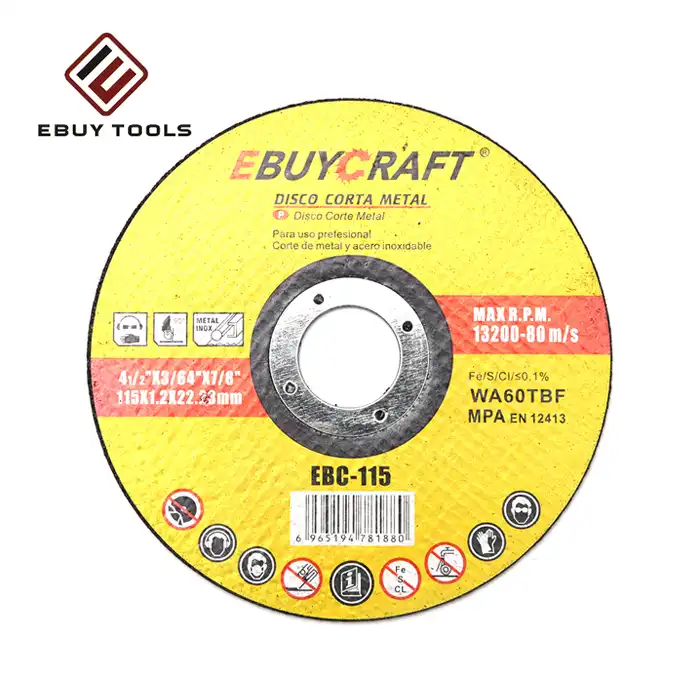
Cutting plates made of bonded silicon carbide or aluminum oxide particles are much cheaper at first, but they wear out quickly when cutting hard brick materials. A regular abrasive disc could cut about 10 to 15 linear feet of porcelain before it needs to be replaced. A good diamond disc, on the other hand, can cut 200 to 300 linear feet or more of porcelain without losing its cutting power. This 15-20 times longer lifespan directly translates to less downtime for blade changes and lower running costs per cut, even though the initial investment is higher.
Carbide-tipped blades are in the middle. They last longer than abrasives but aren't as precise or long-lasting as diamond cutting disc technology. Their curved design focuses wear on parts that can be replaced, but the carbide material isn't as hard or stable at high temperatures as diamond. Diamond discs have a lower total cost of ownership than other types of discs when used in business settings that need uniform quality over long production runs.
Evaluating Professional-Grade Versus Consumer Products
Several important features set professional-grade diamond discs apart from others. The amount of diamonds in professional goods is usually 25–30% higher than in consumer products. This is measured in carats per cubic centimeter. This higher diamond density keeps cutting force even as the bond matrix wears down. This stops the glazing effect that happens when worn discs polish the material instead of cutting it.
Another important difference is the quality of the manufacturing. Professional discs go through precise tensioning processes that put stress on the steel core ahead of time. This stops the disc from expanding when it's used at high speeds. This engineering keeps the products from twisting and wobbling, which happen with lower-quality goods. Danyang Ebuy Tools' manufacturing process includes multiple quality checks, such as section torque testing and sharpness checks, to make sure that every disc meets strict performance standards before it is shipped.
The way bonds are made also changes a lot. Professional goods use carefully measured cobalt or copper-based matrices that are best for certain types of material hardness, while consumer discs usually use general bond formulas that don't work as well in a variety of situations. Because they specialize, professional makers keep a stock of different types of discs instead of depending on one-size-fits-all solutions.
Maintenance and Safety Best Practices for Diamond Cutting Discs
Handling, storing, and operating diamond cutting disc units in the right way can greatly extend their useful life while still meeting safety standards at work.
Storage and Handling Protocols
Diamond plates need to be kept safe from being hit or exposed to the elements. Keep discs flat or hang them straight on pegboards. Never lean them against walls at an angle that could cause them to bend. Exposure to moisture weakens the steel core and can damage segment links, especially in discs that use brazed connection methods. Climate-controlled storage places with relative humidity below 60% keep the stability of discs for long periods of time.
If you don't want to drop the disc or hit the cutting edge on something hard, hold it by its middle. Even small chips or cracks in diamond segments can cause stress concentration places that can spread during operation and cause the segment to break or the disc to crack. Before each use, you should do a visual review of the pieces to make sure they are securely attached, look for cracks, and make sure the arbor hole doesn't show any damage or deformation.
Pre-Operation and In-Use Maintenance
Before installing any disc, make sure the arbor fits by sliding the disc onto the shaft without pushing. If the fit is right, the fitting will go smoothly with little play. Tighten the arbor nut according to the manufacturer's instructions using the right tools. If you tighten it too much, the disc core can crack from the stress, and if you tighten it too little, it can slip and cause dangerous vibrations.
Keep the feed pressure steady while the machine is running, but don't force the tool through the material. Too much pressure creates heat that speeds up bond wear and can separate segments. Controlled touch with the diamonds is what will do the cutting. Instead of trying to make full-depth cuts, which cause too much friction and heat buildup, make multiple passes when making cuts deeper than half the disc's diameter.
For wet cutting, the water flow rates should make the coolant visible at the cutting edge without drowning the work area. Not enough water can cause heat damage, and too much flow only causes cleanup problems and doesn't improve performance. Keep an eye on the cutting sounds. A smooth, steady noise means the machine is working right, while screaming or grinding sounds mean that the disc needs to be rotated or replaced because the segments are worn down.
Recognizing Replacement Indicators
Several things that can be seen indicate that the disc needs to be replaced. When the height of a section drops to about 2 to 3 mm, it means that the diamond is getting too shallow to keep cutting effectively. Glazing shows up as shiny, smooth segment surfaces that reflect light instead of having the matte look of new diamond exposure. This means that the bond hardness isn't matched up right or there isn't enough feed pressure to allow the diamond to properly self-sharpen.
Increasing cutting resistance, burning on the sides of the tiles, or strange vibrations during operation are all signs that the diamond cutting disc isn't working right and needs to be replaced right away. Using old discs past their useful life loses time because they are less efficient at cutting and make more heat, which can damage both the tile and your equipment.
Procurement Guide: How to Buy Diamond Cutting Discs for Tiles?
To make operations run as smoothly as possible, strategic sourcing choices for diamond cutting disc supplies weigh the quality of the goods, the dependability of the suppliers, and the total cost of buying them.
Evaluating Supplier Credentials and Product Compliance
Manufacturers with a good reputation make their quality processes and product certifications easy to see. Check for ISO 9001 certification, which means the company has a quality control system in place, and EN 13236 or ANSI B7.1 compliance, which means the product meets known safety standards for abrasive goods. These certifications show that the company is committed to using uniform testing methods and production processes.
Manufacturing capacity shows how reliable a supply chain is for ongoing activities. When suppliers can make 150,000 pieces every day, like our plant at Danyang Ebuy Tools, they have the infrastructure and skilled workers to handle big orders while keeping quality high. Our 319 skilled workers and committed Research & Development department make sure that we can offer both standard goods and products that are made to order to meet the special needs of each application.
Ask for scientific data sheets that give detailed information on the diamond content, bond type, fastest speeds, and best uses. Products that make vague marketing promises without giving specific technical details are usually of lower quality. Well-known makers easily give you this information, along with application tips to help you choose the right product.
Understanding Pricing Structures and Value Propositions
Prices for diamond discs are based on a number of cost factors, such as the quality and quantity of the diamonds, the type of bond used, the production process, and the level of quality control. It makes sense for buying teams to look for prices that are competitive, but in professional settings, the cheapest choice rarely offers the best value. Instead of just looking at the cost of the disc itself, figure out how much it costs per linear foot of cutting. A disc that costs 40% more but lasts three times longer is a much better investment.
Bulk purchasing typically unlocks volume discounts that improve unit economics while ensuring consistent inventory availability. Establish relationships with manufacturers offering flexible minimum order quantities aligned to your consumption patterns. This approach avoids excessive inventory carrying costs while maintaining supply chain reliability for production scheduling.
A lot of skilled sellers offer extra services that make their products more valuable, like technical advice, application testing, and help after the sale. Specification mistakes that lead to product returns, production delays, or safety issues are less likely to happen when these services are used. When you compare providers, you should look at both the direct costs of the products and these benefits that can't be seen or touched.
Sourcing Channels and Supply Chain Considerations
Direct connections with manufacturers get rid of the markups that distributors add, and they give you access to technical knowledge and the ability to make changes. This method works well for businesses that know they will be using a lot of goods and need to build ties with only a few suppliers.
Online B2B sites bring together many sellers, making it easier to compare prices and look over product details. These platforms are good for finding out about available choices and price ranges in the market. But make sure that the buyers are actually makers and not just middlemen. The length of the supply chain has a direct effect on both prices and who is responsible for quality problems with the products.
When equipment breaks down and time is of the essence, local dealers come in handy because they can get things to you quickly and make the business process easier. When you need to replace something quickly, the extra cost of ease is often worth it. On the other hand, direct manufacturer buying makes planned purchases more cost-effective when you buy in bulk.
Conclusion
To choose the best diamond cutting disc for tile uses, you need to carefully look at how well they work with the tiles, the tools you have, and how you want to use them. Professional buying strikes a mix between how well tools cut, how long they last, how safe they are, and how much they cost overall. Knowing the detailed differences between rim configurations, bond types, and production quality lets you make smart choices that raise efficiency and lower operational risk. When you work with well-known companies that offer strong quality systems, technical support, and dependable supply, you can be sure that you'll have the high-performance tools you need to cut tiles consistently and professionally, no matter what the project requirements are.
FAQ
What tile materials can I safely cut with diamond discs?
Diamond cutting discs handles virtually all tile materials including ceramic, porcelain, granite, marble, travertine, glass, and almost any other type of tile. Turbo rim setups like those made by Ebuy Tools are flexible across this whole range, but different bond hardnesses work best with different material densities. Always make sure that the application specs for the disc you want to use clearly list the material you want to play.
How frequently should professional operations replace cutting discs?
The right time to replace something is not set in stone, but relies on the type of material, the amount that needs to be cut, and how the business works. As main signs, keep an eye on segment height loss and cutting performance decrease. When installing dense porcelain tiles, professional tile fitters might need to change the discs every 250 to 300 linear feet. For softer ceramic tiles, this could last up to 400 to 500 feet. Keeping detailed usage logs helps set up repair plans that are reliable and avoid unplanned downtime.
What safety precautions are most critical during tile cutting?
Always make sure that the RPM settings on your diamond cutting disc and tools are compatible before you use them. When dry cutting, make sure you wear the right lung protection to avoid breathing in silica dust. The disc should be properly mounted with the right arbor fit and the right amount of tightening force. Keep equipment guards in the right place and never take safety features off. Let the discs reach their full working speed before they touch the material, and never use broken or damaged discs, no matter how high the section is that is still there.
Partner with Ebuy Tools for Professional Diamond Cutting Solutions
When it comes to making high-performance turbo diamond cutting disc products for tough expert uses, Danyang Ebuy Tools is the best. Our 77,000-square-meter factory makes 150,000 pieces every day, so you can count on a steady supply for your business. To make sure that it meets EN 13236 safety standards, every disc goes through strict quality checks, such as being precisely balanced and having its segment torque checked. Our expert research and development (R&D) team comes up with custom solutions for cutting problems that are unique to each job, and our technical support staff helps you get the most out of your tile cutting. Get in touch with us at [email protected] to talk about your needs with a company that makes diamond cutting discs and is dedicated to accuracy, longevity, and customer satisfaction.
References
Stone World Magazine, "Diamond Tool Technology for Natural Stone Fabrication," Professional Trade Publication, 2022.
American National Standards Institute, "ANSI B7.1: Safety Requirements for the Use, Care, and Protection of Abrasive Wheels," Standards Documentation, 2021.
Tile Council of North America, "Professional Guide to Ceramic Tile Installation," Technical Manual, 2023.
National Institute for Occupational Safety and Health, "Crystalline Silica Exposure Health Hazards in Construction," Safety Guidelines, 2022.
International Organization for Standardization, "ISO 9001 Quality Management Systems Requirements," Certification Standards, 2021.
Construction Equipment Magazine, "Comparative Analysis of Diamond Cutting Tool Performance in Masonry Applications," Industry Research Report, 2023.