.webp)

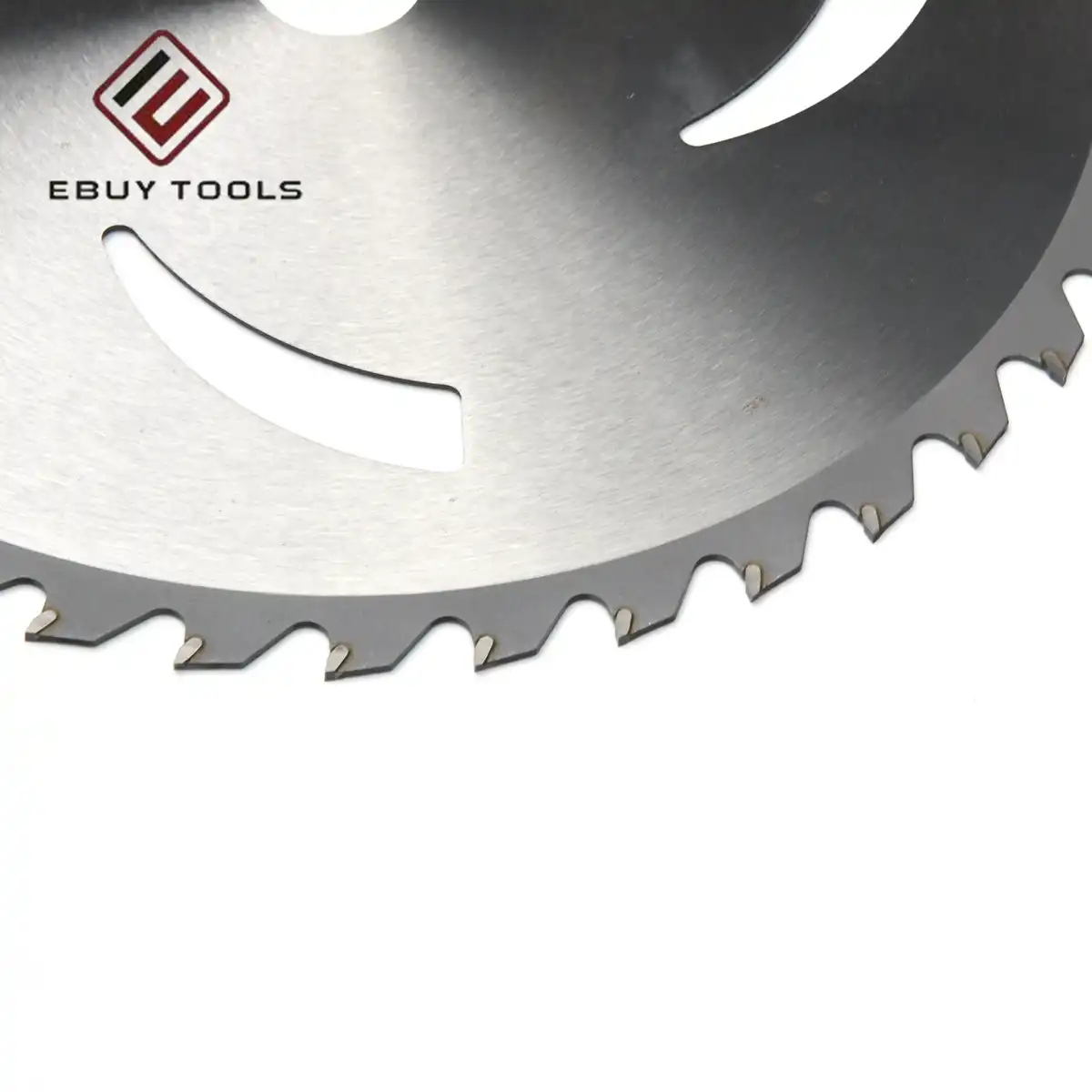
A TCT saw blade works by using the very hard tungsten carbide teeth that are brazed onto a bendable steel body. This lets the blade cut through metal with little friction and heat building. When the blade is turning quickly (usually between 3,000 and 5,000 RPM), the carbide tips cut through the metal's surface while the specially designed expansion holes let go of heat energy and keep the blade from warping. Because the carbide can keep its sharp cutting edge at temperatures above 600°C, it can cut through aluminum alloys, stainless steel, and other tough materials with constant, accurate cuts. This mix of material science and physical design gives metalworkers the performance they need in settings with a lot of production.
Understanding TCT Saw Blades: What They Are and How They Work?
Cutting tools are always making noise when you walk into a precision machine shop or a car manufacturing plant. TCT saw blades stand out as workhorses that keep production lines running smoothly. But what is it about these cutting tools that makes them so good at cutting through tough metals day after day?
The Composite Structure Behind Superior Performance
The secret is in the creation of the different types of materials. A good TCT saw blade has a body made of sharpened tool steel, usually 75Cr1 or SKS51 grade, which has been heated to a hardness of 42 to 44 HRC. This heart gives the structure the freedom it needs to handle vibrations and keep it from breaking down completely while it's working. Ultra-hard tungsten carbide tips are brazed onto this body. These tips are made of powdered tungsten carbide and cobalt binder (WC-Co), which makes them harder than HRC 88.
These composite blades are made at Danyang Ebuy Tools in a 77,000-square-meter factory where 319 skilled workers watch every step of the process. The fact that we can make more than 150,000 diamond saw blades every day shows how big and efficient current production processes are. Following DIN 8083 standards, each blade is tightly tensioned to keep radial and axial runout within a 0.05-0.1mm range. This is important for getting glue-line quality cuts in tough situations.
How Carbide Tips Cut Through Metal
The cutting mechanism uses slicing action to remove material in a controlled way. Each carbide tooth strikes the object as the blade turns, creating localized stress that is higher than the material's shear strength. In contrast to rough cutting, which wears away material, this slicing method creates well-defined chips with little heat production. For metal work, the types of carbide we use (K10 to K20) stay hard and sharp even when the cutting edge temperature reaches 600°C.
The shape of the teeth is very important for how well they cut. We often use Triple Chip Grind (TCG) setups for metal work. In these, a flat-top tooth cuts the center of the kerf, and then a chamfered tooth cleans the sides. This alternate design cuts chips more efficiently and with less force. Negative hook angles (usually -5°) in metal cutting blades control the feed rate and keep the blade from grabbing the workpiece. This is especially important when cutting aluminum or other soft metals that can weld to the cutting edge at high temperatures.
Material Selection and Performance Impact
Picking the correct carbide grade has a big effect on how long the blade lasts and how well it cuts. Coarser carbide grain structures are tougher for cuts that need to be broken up and jobs that are likely to vibrate, while finer grains give you better cutting edges for precise work. With 15 years of experience in the field, our research and development staff has made carbide formulas work better for different types of metal. When aerospace shops machine titanium structure parts vs. auto shops that cut aluminum engine parts, they need different tooth shapes and carbide grades.
The steel base for a TCT circular saw blade is just as important as the carbide tips. Premium metal steels keep their shape even when heated and cooled many times. This stops the blade from wobbling, which leads to a bad finish and faster wear. Our precise engineering makes sure that every blade stays in the right tension, which is a controlled state of stress distribution within the blade body that keeps it from breaking at working speeds. Because of this care in body design, professional-grade blades always work better in industrial settings than cheaper ones.
Optimizing TCT Saw Blade Performance for Metal Cutting
To get the most out of your cutting tools, you need to pay attention to how they are used and how they are maintained. Even the best TCT saw blade won't work as well if it's not used properly or kept in good shape.
Maintenance Practices That Extend Service Life
Professional resharpening can bring back cutting ability 5–10 times over the life of a blade, which lowers the cost of each cut by a large amount. But grinding can only be done by trained professionals with the right tools. Diamond grinding wheels are needed for the carbide teeth, and it's important to keep the tooth shape correct. Tooth heights that aren't even or sharpening angles that are too small or too large can cause more shaking and faster wear. We work with a network of approved resharpening services that know how to work with the blade shapes we use.
Regular cleaning keeps performance from dropping in between sharpening sessions. Metal chips, cutting fluid residue, and oxidation products build up on the blades' sides and in the expansion holes, which changes how heat is managed and how the machine is balanced. Most contaminants can be removed with a mixture of warm water and industrial cleaner. However, for stubborn deposits, you may need to use special blade cleaning products. After cleaning, the blade should be dried completely and a light covering that stops rust should be put on it to protect the steel body while it is stored.
Conditions of storage are more important than many places think. Blades that are hung upright on separate pegs keep the stress even and keep the blades from warping. Don't store blades in damp places or stack them flat, as this can cause rust on the steel body. The carbide tips don't rust, but rust on the blade body makes it unbalanced and can make fitting it correctly difficult.
Operational Adjustments for Enhanced Efficiency
How cutting speed, feed rate, and blade tooth count work together affects the quality of the cut and the life of the tool. Our precise engineering makes sure that the product works at its best within certain limits. When you run blades faster than their stated speeds, they get too hot and can damage the carbide braze joints. On the other hand, when you run them too slowly, they rub against each other instead of cutting, which speeds up wear. Most metal-cutting tasks work best at speeds between 3,000 and 5,000 RPM, but exact settings depend on the type of metal and the width of the blade.
By changing the feed rate, operators can find a good mix between output speed and the quality of the surface. Aggressive feed rates remove the most material, but they may make the edges rougher and make the vibrations worse. Our blade designs have noise-reducing and designed expansion holes that help heat escape while keeping the blade stable. This lets them handle a little higher feed rates than regular designs. Cutting sounds should be heard by operators. Squealing sounds mean the machine is going too fast or not feeding enough, while grinding sounds mean the blades are not tight enough or there are problems with the fitting.
Troubleshooting Common Performance Issues
Too high of cutting speeds or not enough grease can cause teeth on a TCT saw blade to wear out too quickly. When the carbide tips of all the teeth show the same amount of wear, the blade is no longer useful and needs to be filed down again. Uneven wear patterns mean that there are issues with the mounting, the spindle, or the shaking of the object that need to be fixed before putting in a new, sharp blade.
Chipped or broken carbide tips are usually caused by impact loading, which means hitting hard parts in the material, not holding the workpiece properly, or making cuts too quickly. Even though our advanced carbide technology makes tools very resistant to impact, any cutting tool can be damaged by very hard spots in casts or welded joints. Most chipping fails can be avoided by lowering the original feed pressure when cuts are made and checking the workpieces for flaws.
If the blade gets too hot, it will change color or the carbide tips will turn blue. This could mean that the machine isn't cool enough, the run rate is too high, or the teeth are dull and are rubbing together instead of cutting. Our blades' thermal management design, which includes carefully placed expansion holes, lets more heat escape than solid-body designs. Thermal damage that shortens blade life can be avoided by making sure coolant flows properly and keeping an eye on cutting parameters.
Purchasing Guide: How to Choose and Procure TCT Saw Blades for Metal
When making a purchase choice, you have to weigh the short-term costs against the long-term benefits. The right way to choose a TCT saw blade takes into account more than just the price.
Critical Specifications for Application Matching
The basic specs that must match your tools and purpose are the blade's diameter, bore size, thickness, and tooth count. Outside diameters range from 110mm to 500mm, so they can fit a wide range of saws, from small circle saws to industrial cold saws. The width of the hole must exactly match the arbor of your equipment. Even small differences can cause dangerous runout and vibration.
Both the cut width (kerf) and the security of the blade are affected by how thick it is. When cutting thick materials, thicker blades don't bend as easily, but they take more material with each cut. Our precise engineering makes sure that the thickness is just right for each width, following industry standards and using design improvements we've made through years of research and development. The choice of tooth count relies on the thickness of the material and the quality of finish that you want. Higher tooth counts make cuts smoother, but they also use more power and release more heat.
Material suitability approvals let you know that blades meet performance standards for certain uses. Every blade that leaves our 77,000-square-meter building is checked to make sure it meets foreign standards, such as DIN 8083 for tensioning and ISO 9001 for quality management in general. Documentation showing where materials came from and performance tests are necessary for quality checks in aerospace and high-precision engineering uses.
Supplier Evaluation and Selection Criteria
Bosch, Makita, and Dewalt are well-known names that are known for making reliable TCT circular saw blade. They also have large distribution networks and expert help to back them up. These companies put a lot of money into research and development, which helps them come up with new ideas that work better than ever. When it comes to regular uses and replacement tools, these names are safe options that reduce the risk of buying something.
Buyers who need customization or want to save money without losing quality can benefit from buying from specialized makers like Danyang Ebuy Tools. The modern factory we use blends foreign machinery with skilled craftsmanship to make products that perform as well as high-end names but cost less. Our team has 15 years of experience in research and development, which lets us make solutions that are exactly what our clients need. This is especially helpful for OEMs and big makers who have unique cutting challenges.
When looking at providers, you should think about how much they can produce and how reliable their supply line is. Our daily production of more than 150,000 diamond saw blades shows that we can make things on a big enough scale to serve large industrial users. Lead times are only days for things we keep in stock. For special orders, it usually takes about 15 days from the time the order is confirmed until it is delivered. This speed helps producers keep track of their stock well and keep production going without stopping for lack of tools.
Logistics and After-Sales Considerations
Wholesale price systems encourage buying in bulk, which is why wholesalers and big facilities can save money by combining orders. Procurement managers can get the best deals on goods by knowing about minimum order amounts, bulk discount levels, and payment terms. We offer affordable pricing structures to support their selling operations while keeping product margins that allow them to invest in customer service. We work with regional wholesalers and trade companies around the world.
When shipping cutting tools, they need to be carefully packed to keep them from getting damaged in transit. If blades hit each other or come into touch with something hard, the carbide tips can break. This is why good packaging is so important. Our experience exporting makes sure that goods get to their destination safely, whether they are sent in full containers to big sellers or in smaller amounts by air freight to meet urgent repair needs.
Support after the sale is what sets great providers apart from average ones. Technical support helps customers find the best cutting settings for their needs, fix problems with performance, and set up maintenance routines. Our team offers quick support through a variety of methods, which helps customers get the most out of the money they spend on tools. Being able to buy unique specs months or years after the first purchase gives facilities that use the same blade configurations consistency.
Conclusion
When metalworkers know how TCT saw blades work, they can make smart choices about their tools that affect quality, cost, and productivity. When you mix sharpened steel bodies with ultra-hard carbide tips, you get cutting tools that can keep working well after millions of cuts through a wide range of metals. The best results are achieved by making the right choice based on the properties of the material, the shape of the teeth, and the operational factors. Good repair practices and operational discipline also extend the life of the tool. As production technology changes, procurement workers can take advantage of new features that give them a competitive edge by staying up to date on new materials and technologies.
FAQ
What makes tungsten carbide suitable for metal cutting applications?
While TCT saw blades are very hard (HRC 88+), they are also tough enough to handle being hit while cutting. The substance stays hard at temperatures above 600°C, which stops the thermal melting that makes High-Speed Steel less useful. Because they are stable at high temperatures, carbide-tipped blades can work at faster speeds and feed rates, which boosts productivity while keeping the quality of the surface finish and accuracy of the dimensions.
How do I determine the correct tooth count for my application?
Chip clearance, surface finish, and cutting speed are all affected by the number of teeth. Thicker materials need fewer teeth (40 to 60 teeth) to make sure there is enough room for chips to escape and keep the gullet from getting clogged, which leads to burning. Higher tooth numbers (60–80 teeth) make smaller cuts, which is good for thin materials and jobs that need smooth edges. The number of teeth should match the width of the material. As a general rule, at least three teeth should contact the workpiece at the same time while it is being cut.
Can tungsten carbide-tipped blades cut stainless steel effectively?
TCT saw blades that are properly made can cut stainless steel easily, even though it has some tough properties. When you cut stainless steel, it gets harder because it doesn't transfer heat as well as carbon steel does, so the heat stays at the cutting edge. For cutting stainless steel, blades have special carbide grades that don't wear down easily, a modest number of teeth to clear chips, and shapes that lower the cutting forces. Using the right cutting speeds and mist lubrication stops wear before it happens and gets great results.
Partner with Ebuy Tools for Your Metal Cutting Solutions
Work with Ebuy Tools for all of your TCT saw blade needs. Danyang Ebuy Tools sells circle saw blades with tungsten carbide tips that are designed to handle tough metalworking tasks in the aerospace, automobile, and precision machine industries. Our facility is 77,000 square meters and uses cutting-edge manufacturing technology along with 15 years of specialized research and development knowledge to make cutting-edge solutions that balance efficiency with cost-effectiveness. We make coatings out of carbide and HSS, which can be used on aluminum alloy, stainless steel, and other metals. Our team has the technical know-how and manufacturing capacity to support your operations, whether you need standard configurations from our large collection that can be delivered quickly or unique specs that take about 15 days to make. As a reliable maker of TCT saw blades for wholesalers, original equipment manufacturers, and metalworking shops around the world, we keep a close eye on quality to make sure that every blade meets the strict DIN 8083 tensioning standards and ISO 9001 quality standards. Email our team at [email protected] to talk about your unique metal-cutting needs and find out how our precision-engineered blades can help you get more done.
References
Trent, Edward M. and Wright, Paul K. "Metal Cutting (Fourth Edition)." Butterworth-Heinemann, 2000.
Shaw, Milton C. "Metal Cutting Principles (Second Edition)." Oxford University Press, 2005.
Stephenson, David A. and Agapiou, John S. "Metal Cutting Theory and Practice (Third Edition)." CRC Press, 2016.
Klocke, Fritz. "Manufacturing Processes 1: Cutting." Springer-Verlag Berlin Heidelberg, 2011.
Astakhov, Viktor P. "Geometry of Single-Point Turning Tools and Drills: Fundamentals and Practical Applications." Springer-Verlag London, 2010.
Boothroyd, Geoffrey and Knight, Winston A. "Fundamentals of Machining and Machine Tools (Third Edition)." CRC Press, 2006.