.webp)

Getting the right cutting tool can change both the time it takes to make something and the amount of money you make. Before painting, stainless steel tanks and structural steel can be cleaned and the stock removed using flap discs, a tried-and-true technique. It might be tough to discover the best grit type, size, and backing set-up for the task at hand. Strong carbon steel is good for making things out of zirconia alumina, and heat-sensitive metals are good for making things out of ceramic grains that don't change colour. Once you know these differences, you can change grinding routines that aren't working well into ones that are, which will save time and keep workers from getting too tired.
Understanding Flap Discs: What They Are and How They Work?
The Structure Behind Consistent Performance
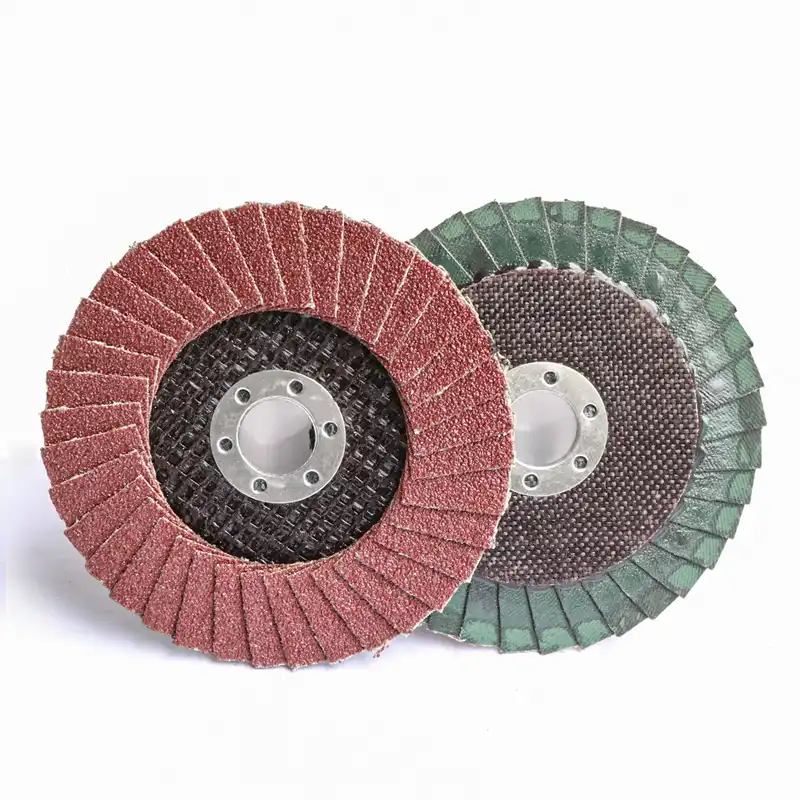
Flaps of rough cloth are placed in a circle around a backing plate that is stronger. This makes a stacked structure that gets new cutting edges as the material on the outside goes away. Hard-bonded wheels stay in place until they wear out, but this shape is very different from that. Each flap covers the one below it, which keeps the movable part in touch with the item while it is being made. Fibreglass backing plates take in shocks, which makes it easier for the user to grind for long periods of time.
How Controlled Wear Maintains Cut Rate
A regular grinding wheel loses its edge when its surface gets dull. It then needs to be cleaned or changed more often. The operation of flap discs varies. The top layer is rough, and the flaps of cloth below have the same rough grains ready to hit the item. The managed wear technique keeps the cutting rate the same over the life of the disc, so performance doesn't go down like it does with other methods. On a very small scale, the rough grains separate, creating fresh, sharp edges that keep cutting well.
Safety Protocols for Industrial Applications
When using angle grinders with sharp tools, you need to follow certain safety rules. Safety glasses with side screens, hearing protection rated at 85 decibels or higher, and gloves that won't cut must all be worn by everyone. Before putting in an abrasive disc, hang it up and hit it softly. A clear tone means the disc is structurally sound, while a dull sound means there are cracks inside. Do not go over the RPM limit written on the backing plate. The speed of spinning affects centrifugal forces directly, which can lead to a catastrophic failure.
Choosing the Right Flap Disc to Solve Efficiency Problems
Identifying Your Workflow Bottlenecks
Sharp tools that aren't used by people with the right skills most of the time slow down production. It may be quick to remove material from stainless steel welds with a rough 36-grit disc, but it leaves deep scratches that need more work to be fixed. However, grinding heavy carbon steel growth with an 80-grit wheel is a waste of time that makes the process take longer than it needs to. By looking at your current process, you can find out if the failure is caused by the choice of grit, the makeup of the abrasive, or the shape of the flap discs.
Grit Size Selection Framework
Abrasive grit numbers show how many bits are in one square inch. Lower numbers mean larger grains that remove material more quickly, while higher numbers mean finer finishes. To match grit to job, do the following:
Fine Grits (36–40) of flap discs: These rough options are good for getting rid of heavy weld cracks, rust on structural steel, and chamfering the edges of thick plates. The big rough bits cut through the substance deeply and take a lot of it with each pass. Fabrication shops that make I-beams and pipeline parts out of carbon steel do best with coarse grit because it gets rid of stock quickly and doesn't care about the finish.
Between 60 and 80 grits: Balanced recipes are used for general grinding, mixing sheet metal welds, and getting the surface ready for finishing. Sizes in the middle take away material at a steady rate while leaving a surface rough enough for paint to stick to. Auto body shops and factories that make machines depend on this range because it can work with a wide range of materials.
Fine Grits (120): For finishing jobs, you need fine abrasives that can make surfaces smooth without leaving clear scratch marks. To make TIG welds smooth, manufacturers of stainless steel tanks use 120-grit ceramic mixes. This keeps the corrosion-resistance qualities that are important for uses in the food and medicine industries. When physical limits have to stay the same, fine grits work best.
Each of these grit groups meets a different set of production needs. This lets buying teams be very clear about what their operations need without having to buy extra inventory.
Abrasive Composition and Material Compatibility
The minerals in the disc determine how well it cuts some metals. Because it is soft, aluminium oxide is the best grit for general maintenance work and for working with brass and aluminium. Because it is friable, the grains can break apart and sharpen themselves at a slow rate.
Zirconia alumina compounds are strong enough to handle high grinding pressure because they contain both aluminium oxide and zirconium oxide. This mix works well for working with carbon steel because it doesn't produce much heat when it stays in touch for a long time. The grains keep the disc from breaking too soon, which increases its life in tough situations.
Ceramic alumina is a new type of grain technology that uses micro-crystalline structures that break down into sharp points. Ceramic powders are needed to cut titanium and stainless steel, which are sensitive to heat, because they work well at lower temperatures and stop heat-induced oxidation zones that make the material less resistant to rust.
Real-World Efficiency Improvements
For the 120 weld joints they did every day, a structural steel company in the Midwest switched from aluminium oxide flap discs for stainless steel stair systems to ceramic flap discs. With the old method, two tool changes were needed for each joint. First, a grinding wheel was used to remove material, and then a fibre disc was used to mix the materials together. With ceramic discs, both processes could be done in one step, cutting the average time it took to finish a joint from 8.5 minutes to 4.2 minutes. This change cut the use of sharp tools by 41% and saved 172 hours of work over the course of a month. The investment in high-quality clay recipes paid for itself in six weeks, thanks to less downtime and lower material costs.
Flap Disc vs Other Abrasive Tools: Which One Fits Your Needs?
Comparing Abrasive Tool Categories
For different tasks, different tools need different qualities than what flap discs offer. Getting to know these options helps procurement pros make full, rough lists.
Grinding wheels have rough flakes that are bound together in hard plastic structures. This gives them the most aggressive cutting action for heavy stock removal. Their stiffness makes them great for grinding flat surfaces and removing large amounts of material, but it makes them more likely to gouge workpieces with curves. Vibration levels are higher than with flexible options, which can make operators tired after long sessions.
Resin fibre discs are attached to rubber backing pads, which make the discs flexible enough to cut aggressively on curved surfaces. They are great at quickly removing material, but they break down faster than flap discs. Fibre discs need to be changed often, which makes the cost of supplies go up in places with a lot of them.
Sanding belts can be used with special belt sanders to quickly and easily smooth out big, flat areas. Even though their continuous loop design keeps touch, it's harder to get to corners, nooks, and other odd shapes. This is where angle grinders with flap discs really shine.
Wire brushes get rid of rust, paint, and other surface dirt without wearing down the base metal too much. They clean surfaces instead of shaping them, and they work with rough tools to prepare surfaces.
Configuration Types and Applications
Type 27 flat discs keep their angles close to the workpiece, making large touch areas that can be used to smooth and finish flat surfaces. The flaps are almost straight across from the backing plate, which makes the pressure even across the work area. When getting panels ready to paint or coat, sheet metal manufacturers and auto body shops like Type 27 designs.
Type 29 cylindrical discs have flaps that are tilted 15 to 25 degrees away from the backing plate. This puts more pressure on the contact edge. This shape makes it easier to shape, remove welds from curvy surfaces, and round off edges. Type 29 designs allow structural steel makers who work with pipe and tank parts to follow uneven forms without having to move their tools around a lot.
Procurement Guide: Where and How to Buy Flap Discs for B2B Efficiency?
Evaluating Supplier Reliability
If a cutting tool breaks and slows down work, it's more important to keep the quality high than to save money at first. Reliable sources keep their ISO 9001 certification, which shows that they are dedicated to quality control systems that keep things stable from one batch to the next. Ask for letters of approval that show the goods meet the safety standards set by ANSI B7.1 for grit wheels and similar items.
Sample testing programs let you see how well they work before you place a big order. Ask for examples of the grit range and abrasive makeup you want, and then compare them to the tools you already have. Keeping track of ending time, disc life, and surface finish quality will help you get a good idea of how different performances are.
Balancing Cost Against Longevity
Premium ceramic versions cost more per unit than aluminium oxide options, but they often cost less per job finished because they last longer. In the same conditions, a ceramic disc that costs 40% more than zirconia may last 70% longer, making the overall value offer better. Instead of just looking at the buying price, figure out how much it costs per weld joint or per square foot of ground.
By making bulk purchases with well-known sellers, you can get savings for buying in bulk and be sure that you always have goods on hand. When compared to small-lot purchases, minimum order amounts usually cut unit costs by 15% to 25%. Talk about payment terms that work with your cash flow. Net 30 or net 60 terms will help you keep your working capital so you can grow your business.
Negotiation Tactics for Volume Orders
Wholesalers in the industrial sector hope to deal on large orders. To get the most out of your buying, ask for tiered price systems that reward longer-term agreements. Annual supply deals lock in good prices and make sure that flap discs are available during times of high production.
Clauses about quality uniformity for flap discs protect against differences between batches that hurt performance. Set the accepted ranges for the accuracy of the dimensions, the spread of the coarse grains, and the strength of the backing plate. Include plans for replacing the product if samples from given lots don't meet the performance standards that were set during the original testing.
Flap Disc Safety and Maintenance Tips to Maximize Service Life
Essential Operating Practices
If you place the disc correctly, it won't vibrate and could last longer. Threaded discs need backing flanges that touch the whole width of the supporting plate and spread the gripping force out evenly. It's important to use the right amount of torque when tightening connecting nuts. Too much force can crack fibreglass backings, and not enough torque lets them slip during use.
For best results, keep the grinding angle between 15 and 25 degrees. Flatter angles make cutting less effective and build up more heat, while higher angles put more pressure on the flap edges, which speeds up wear. Controlling the angle consistently makes the surface finish better and extends the life of the flap discs.
Before putting them on the surface, let the new discs reach their working speed. Under load, sudden contact puts stress on the link points between the backing plate and flap, which could lead to failure before its time. As soon as the tool stops moving at full RPM, slowly raise the pressure.
Storage and Handling Guidelines
When sharp tools are stored, the environment can affect how well they work. Keep the temperature in the warehouse between 60 and 80 degrees Fahrenheit and the humidity below 60%. When temperatures change a lot, plastic ties become weak, which makes it harder for flaps to stick to backing plates.
To keep discs from shifting, keep them flat in their original package. Putting heavy things on top of disc boxes bends the backing plates, which can cause shaking and balance problems while the discs are being used. Rotate your inventory using the first-in, first-out rule to keep it from being stored for longer than the maker recommends, which for resin-bonded goods is usually three years.
Recognizing Wear Indicators
It's time to get new discs when the flap cloth goes down to within a quarter inch of the backing plate. If you keep grinding with worn discs, the backing plate and object could come into touch with each other, which could cause the discs to break. Cracks, missing flaps, or other damage that needs to be replaced right away can be seen visually before each use.
When sharp grains wear down without breaking, new edges show through. This is called glazing. The disc's surface looks shiny, and cutting speed drops significantly. This happens when the grinding pressure is too low or the grain type isn't right for the object material. Adding more pressure might make the cutting work again, but glazing that won't go away means you need a rougher grit or a different type of abrasive.
Premium Solutions from Danyang Ebuy Tools
Danyang Ebuy Tools makes high-performance grinding products, including flap discs, that help metalworkers deal with the problems they face every day when they try to be more efficient. Our factory in Danyang City is 77,000 square meters big, and every day 319 skilled workers make about 150,000 cutting tools. This large manufacturing capacity makes sure that you always have enough inventory to keep up with your production plans without having to worry about supply gaps.
Advanced Engineering for Demanding Applications
Our product development team comes up with three different grain formulas so that they can meet all of your machining needs. Because the ceramic alumina grains are micro-fractured, the disc's sides will keep getting sharper on their own over time. This better mixture keeps cutting stainless steel, titanium, and other alloys that are sensitive to heat very well without changing the colour of the metals, which weakens their resistance to rust.
Zirconia alumina mixtures are used to make heavy-duty carbon steel parts that are both tough and easy to cut. The structure of the grains can handle the high grinding pressure that is used to remove weld seams from structural parts, piping systems, and manufactured assemblies. Longer flap discs last longer in tough conditions, which lowers the cost of replacement parts and the number of times a tool needs to be changed.
Compositions of aluminium oxide are inexpensive ways to grind for general upkeep, work with soft metals, and do other tasks where speed of removal of material is more important than surface finish. Controlled grain breakage in these formulas keeps the cutting edges sharp, giving uniform performance on a wide range of surfaces.
Configuration Options for Every Application
The diameters of the backings we make run from 4 inches to 7 inches and are either Type 27 flat or Type 29 cylindrical. Fibreglass backing plates effectively absorb vibration, keeping the structure strong even at high spinning speeds and lowering operator tiredness during long grinding sessions. Our quality control methods make sure that every disc meets the highest RPM ratings, which are 13,300 RPM for 4-inch widths and 8,600 RPM for 7-inch sizes. This makes sure that the discs can be safely used on normal angle grinders.
From the rough 36-grit for getting rid of a lot of stock to the fine 120-grit for precise finishing work, there are a lot of grits to choose from. Standard American threading (5/8-inch-11) and metric threading (M14) are both thread types that can be used on mills in North American and world manufacturing facilities.
Customization Capabilities
Our clients who need custom mixtures for specific uses work with our Research and Development staff. When production rates are high enough to support investing in tools, custom grain mixes, unique backing materials, and grit distributions that are best for a certain purpose become possible. We can also do private labelling, which means that we can put your name on goods that are made to our high standards.
Standard goods are shipped 10 to 15 business days after the order is confirmed. Customised solutions take longer depending on how complicated they are and how much tooling preparation is needed. Through efficient schedules and "just-in-time" delivery plans, our logistics team works with freight companies to make sure that your goods arrive on time at your facility. This keeps the cost of keeping merchandise to a minimum.
Conclusion
For welding to be efficient, sharp tools need to be designed for specific jobs instead of being made to work with a lot of different materials. Matching the ceramic, zirconia, or aluminium oxide formulas to the properties of your base improves the rate of material removal and increases the flap discs' useful life. Knowing how Type 27 and Type 29 setups work differently can help you avoid problems with surface finish and early tool wear. Buying tactics that focus on the total cost of ownership instead of the original purchase price are more valuable because they lead to less downtime and lower product use. Using the right safety rules and upkeep methods will keep your employees safe and help you get the most out of your investments in abrasive tools for use in metalworking, automotive, aerospace, and manufacturing.
FAQ
How do I mix a stainless steel weld with the best grit size?
For work with stainless steel, you usually need 60- to 80-grit ceramic alumina formulas. Larger sizes remove material more quickly, but they leave deep cuts that need more steps to be finished. Ceramic grains cut well at lower temperatures, which stops the rusting caused by heat that weakens corrosion protection in the making of equipment used in food processing and pharmaceuticals.
For getting rid of heavy stock, should I use flap discs or cutting wheels?
Grinding wheels remove material more quickly from flat surfaces because their hard design keeps them in contact with the surface all the time. When working with curved surfaces, mixing processes, or tasks that call for less operator tiredness, flap discs have benefits. To keep their tool inventory as low as possible, many manufacturing shops start by removing heavy materials with grinding wheels and then switch to flap discs for mixing and finishing.
Where can I find good sharpening tools at reasonable market prices?
Build partnerships with makers that have ISO 9001 approval and a history of serving commercial markets. Before committing to large orders, ask for samples of the product to try, and talk about tiered price systems that reward bigger commitments. Annual supply deals lock in good terms and make sure that products are available when production is at its highest.
Partner with Ebuy Tools for Reliable Abrasive Solutions
Precision-engineered flap discs from Danyang Ebuy Tools are backed by decades of manufacturing experience and strict quality control. Our production ability makes sure that businesses of all sizes, from small precise machine shops to large car providers, always have what they need. We encourage purchasing managers, production engineers, and industrial marketers to learn more about how our ceramic, zirconia, and aluminium oxide products can help you with your unique grinding needs. Email our expert team at [email protected] to talk about your needs and get personalised suggestions that will improve speed while keeping costs low. As a company that only makes flap discs, we offer reasonable bulk price that rewards partnerships while giving your operations the dependability they need. You can look at our whole line of products at ebuy-tools.com and ask for samples that show how committed we are to quality.
References
American National Standards Institute. "Safety Requirements for the Use, Care, and Protection of Abrasive Wheels." ANSI B7.1-2017.
Machinery's Handbook, 31st Edition. "Grinding and Other Abrasive Processes." Industrial Press Inc., 2020.
Salmon, Stuart. "Modern Grinding Process Technology." McGraw-Hill Professional, 2018.
The Fabricator Magazine. "Selecting the Right Abrasive for Metal Fabrication." June 2022 Industrial Applications Issue.
Kalpakjian, Serope and Schmid, Steven. "Manufacturing Engineering and Technology." Pearson Education, 7th Edition, 2019.
International Organization for Standardization. "Bonded Abrasive Products - General Requirements." ISO 525:2013.