.webp)

Choosing the right diamond cutting disc is very important for projects that use reinforced concrete. If you don't, you could have costly downtime. These precision-engineered tools use special metal links to hold industrial-grade synthetic diamonds in place. This makes superabrasive edges that can cut through concrete and steel rebar that is buried in it. Unlike regular grinding wheels, which wear out quickly and make too much heat, diamond cutting discs keep working well even after long cutting sessions. The turbo-edge versions work especially well in tough situations because they remove material quickly while still having the smooth edges that are usually associated with continuous-rim designs. When purchase managers and site engineers know these basics, they can make better decisions that have a direct effect on project timelines and running costs.
Understanding Diamond Cutting Discs and Their Application in Reinforced Concrete
The design of diamond cutting discs handles a basic problem in building and demolition work: how to quickly cut through composite materials without endangering the tool or the operator.
How Diamond Cutting Discs Work
Controlled corrosion is what makes the cutting device work. The disc spins very fast, about 60 to 80 meters per second. The metal bond matrix wears away slowly, revealing new diamond particles all the time. These diamonds are stronger than any other naturally occurring substance except for diamonds. They can break up concrete particles and wear down steel reinforcements at the same time. The hardness of the bond needs to fit the job. Softer bonds work better on hard materials like cured concrete because they let the diamond cut through more quickly. Harder bonds work better on softer surfaces because they wear down more slowly, which makes the blade last longer.
Types of Diamond Cutting Discs for Reinforced Concrete
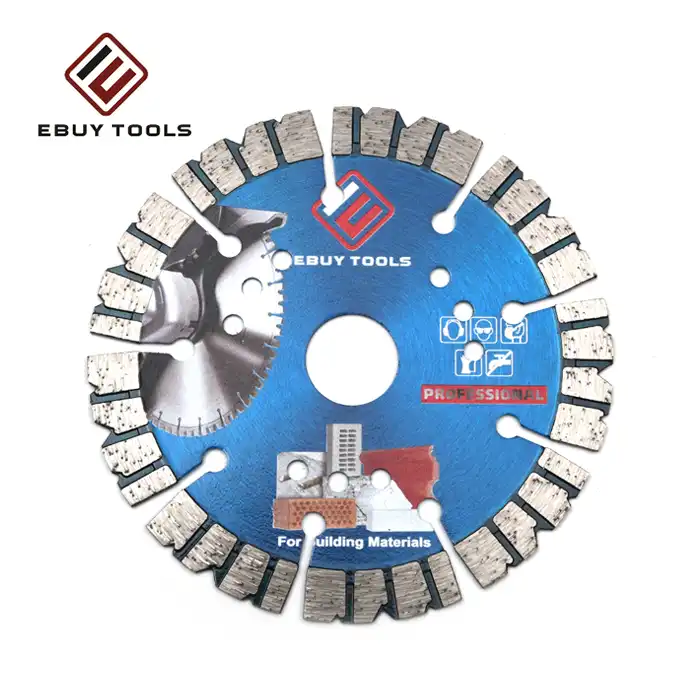
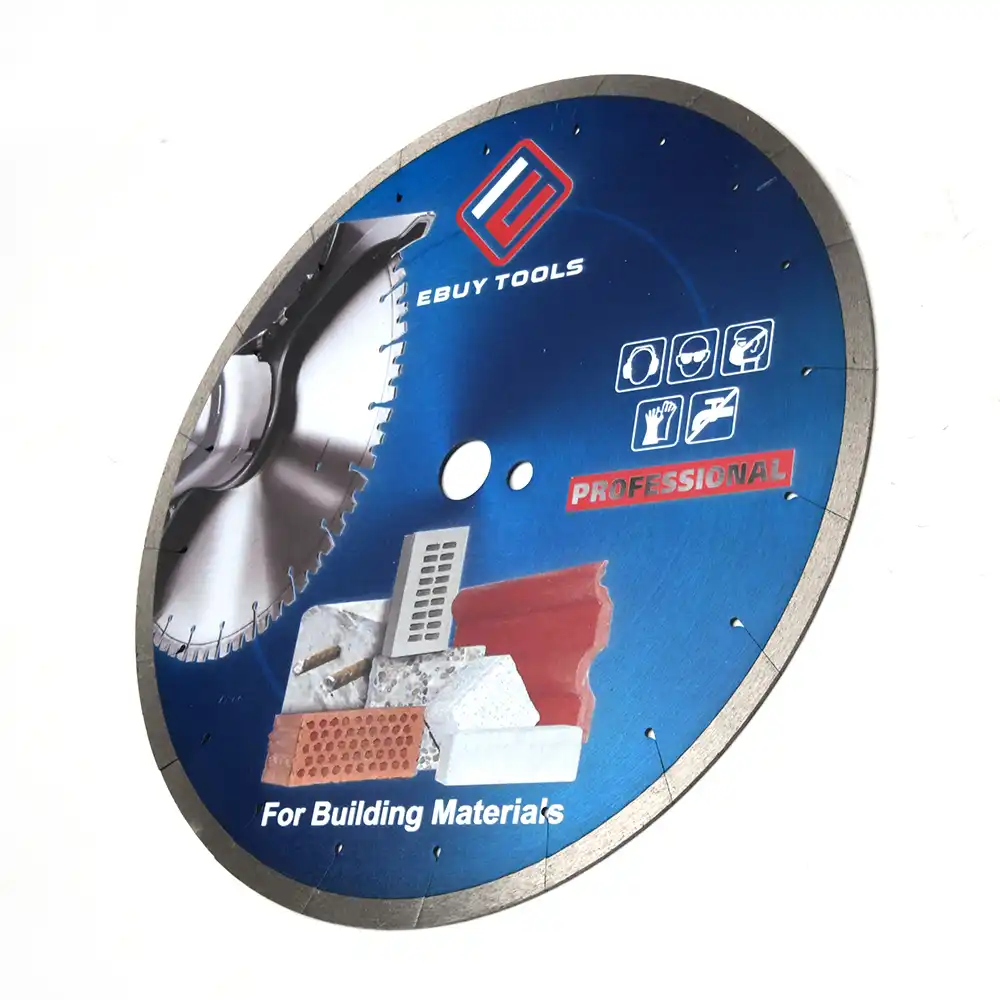
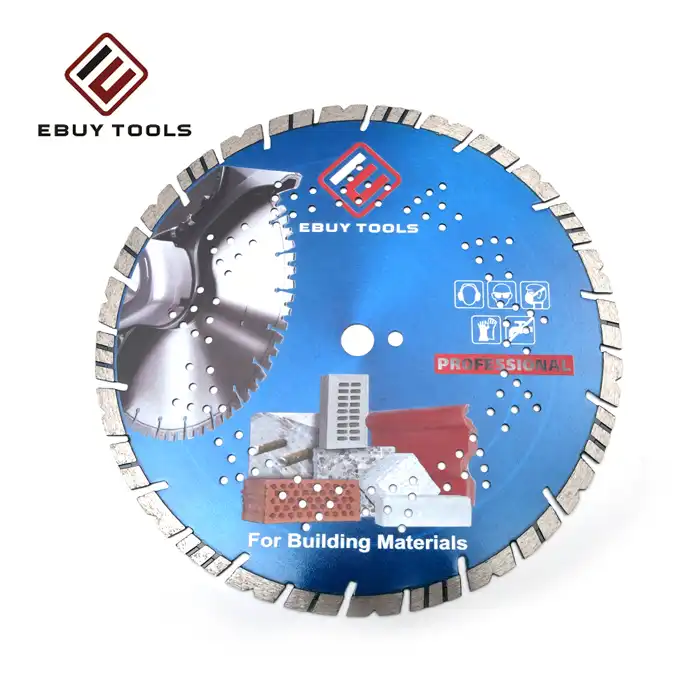
Three main rim designs are used for different tasks. Segmented discs have clear gaps between the diamond sections, which makes them great for deep cuts in structures that are highly reinforced and needs to keep cool and clear of waste. Continuous rim blades make the nicest cuts with the least amount of chipping. They are best when the quality of the cut is more important than how fast it is done. The turbo diamond cutting disc is an engineering solution that takes the best parts of both designs and uses them in a way that works best. Its continuous toothed edge makes more cutting spots, which speeds up the removal of material, and built-in channels improve airflow and swarf evacuation. This mixed method stops the heat expansion that makes standard continuous-rim blades' cores bend when cutting dry for a long time.
Advantages Over Traditional Cutting Methods
For decades, abrasive cutting wheels and carbide-tipped blades were the norm on building sites. However, when the job calls for more power, these tools show their weaknesses. When they come into contact with steel, traditional abrasive discs wear out quickly and need to be replaced many times during a single job. Carbide blades last longer, but they aren't precise enough to make clean cuts in solid concrete. These problems can be fixed in a number of ways by diamond cutting technology. When compared to abrasive options, the greater hardness cuts cutting time by about 40%. This has a direct effect on labor costs for big projects. The ability to get rid of heat stops the changes in the metal that weaken blades after a while of use. Safety profiles also get a lot better—diamond cutting discs produce less energy and keep their shape over time, which means that operators and tools don't have to work as hard.
Key Factors to Consider When Choosing a Diamond Cutting Disc for Reinforced Concrete
When making procurement choices for items such as the diamond cutting disc, you have to weigh a lot of technical requirements against cash and practical needs. Making the wrong choice can cause the blade to break too soon, cause too much downtime, or lower the quality of the cuts.
Physical Specifications and Compatibility
The highest cutting depth is based on the width of the blade. Common blade diameters range from 4 inches for handheld angle grinders to 14 inches for walk-behind concrete saws. It's important that the arbor size fits your tools perfectly. For example, an adapter ring won't help a 7/8-inch arbor fit a 1-inch spindle. The kerf width and blade steadiness are both affected by the disc thickness. Thinner disks take less material per cut, which means less waste and power use, but they are more likely to bend when making deep cuts or hitting rebar. Precision-tensioned steel cores in our Turbo Diamond Cutting Disc keep the disc flat even when it's under a lot of horizontal load, and it can work safely at speeds of up to 80 meters per second.
Bond Hardness and Diamond Concentration
Performance is built on the metal matrix that holds the diamonds. This matrix is usually made from cobalt, copper, or iron-based powders. Material hardness and bond hardness are directly related, but in the opposite direction. When cutting high-PSI concrete (5,000 PSI or more), softer links wear away faster, leaving sharp diamonds to cut more aggressively. On the other hand, old concrete or brickwork that isn't as strong needs stronger ties that don't wear away too quickly. The number of carats per cubic centimeter of diamond affects both how fast it cuts and how long it lasts. More cutting points are available at higher densities, but the cost of making them goes up. Our turbo diamond cutting discs have a special diamond structure that keeps the concentration the same throughout the section depth. This makes sure that the discs work the same way even as the blade wears down.
Material Quality and Manufacturing Standards
When it comes to cutting, industrial-grade synthetic diamonds work better than real ones because their structure is more regular and their fracture patterns are easier to predict. The manufacturing method has a big effect on how reliable blades are. In our 77,000-square-meter building, we use hot-pressed sintering technology, which makes the ties between diamonds and matrix material stronger than cold-press ways. As a result, there will be less section loss during operation. Our daily production capacity of 150,000 diamond saw blades shows how efficient our manufacturing process is, which is based on strict quality control standards. Before being shipped, every batch goes through side run-out measurements, segment torque tests, and hardness checks.
Performance Metrics That Matter
Cutting speed measurements give you an idea of what to expect from the machine's performance, but reliability measurements show you how much it really costs to run. The number of linear meters cut per blade shows that the real-world lifespan is longer than the expected lifespan. How resistant a disc is to heat determines how long it can work without being cooled by water. This is an important thing to think about for indoor projects where managing slurry is hard. Cut quality accuracy is affected by how regular the wear rate is. When diamond cutting discs wear unevenly, they make crowned profiles that either bind in kerfs or make cuts at an angle that need more finishing work.
Best Practices for Using, Maintaining, and Ensuring Safety with Diamond Cutting Discs
Following the right procedures will make blades last longer and keep people and tools from getting hurt when it's not necessary to.
Essential Safety Equipment and Handling Procedures
Personal protective equipment (PPE) rules cover more than just safety glasses. If the blade fails, which is very rare, the face shields protect you from disc shards. Hearing protection that is rated for impact noise, not just continuous sound, stops damage from building up from cutting processes that happen at different times. Even though diamond cutting disc makes less dust, it's still important to wear respirators, especially when cutting concrete that contains crystalline silica. The guards on cutting tools must be properly installed and cover at least 180 degrees of the blade's diameter. Our discs are safe and meet EN 13236 and OSHA standards. They are carefully tuned to reduce vibrations and stress on equipment while still cutting reliably and consistently.
Proper Mounting and Operating Techniques
When installing a blade, it's important to pay attention to the lines that are stamped on the disc and make sure that the arbor and spindle sizes match up. When the arbor nut is tightened enough, the flanges must sit flat against the blade. If the nut is too tight, stress builds up and can crack the steel core. When the machine is running, wait for the blade to reach full speed before touching any material. Feed pressure should stay steady and reasonable. Forcing the cut creates too much heat without increasing the rate at which material is removed proportionally. If you're dealing with reinforced concrete, the resistance will change slightly as the blade moves from concrete to rebar. By keeping the blade moving forward steadily, it keeps it from staying in one place, which would cause it to overheat.
Maintenance Protocols for Extended Blade Life
Regular cleaning gets rid of the concrete dust and metal bits that get stuck in the diamond segments and make cutting less effective. After each use, a wire brush should be run along the sides and rim of the blade to remove any buildup. As part of regular inspections, segments should be tapped on each other with a metal tool to hear for changes in sound that mean the bond is breaking down. Cracks in the steel core or uneven wear patterns that can be seen with the naked eye are signs of bad use or equipment issues. The Turbo Diamond Cutting Disc has a self-sharpening feature that works best when cutting pressure and speed stay within the recommended ranges. This is achieved through controlled erosion of the metal bond.
Troubleshooting Common Issues
Discoloration of the steel core and a shiny look on diamond pieces where the metal bond has melted instead of wearing away are signs of overheating. This usually happens when the feed pressure is too high or the cooling isn't good enough. If the blade wobbles, it means that the fitting is wrong, the flanges are broken, or the core is twisting from heat stress. If some parts of the rim wear down faster than others, it means that the equipment is broken, like if the wheels are bent or the flanges are not round. Taking care of these problems right away stops both premature blade failure and possible safety risks.
Procurement Guidance: How to Buy the Right Diamond Cutting Discs for Reinforced Concrete?
When making strategic buying choices, you have to weigh the short-term costs against the long-term benefits of operating efficiency and supplier reliability.
Evaluating Supplier Credibility and Capabilities
Scales used in manufacturing show how consistent and reliable a source is. Statistical process control helps operations that make thousands of blades every day, like our 150,000-piece daily capacity, keep quality control tighter than operations that make fewer blades. Size of the workforce and the size of the building are important. The fact that our 319 trained workers work across 77,000 square meters shows that our infrastructure is stable, unlike contract manufacturing arrangements that cause quality to vary. Research and development skills are what set makers who come up with new ideas apart from those who just copy existing designs. Suppliers with their own research and development teams can come up with custom solutions for different uses, like changing the bonding ingredients for local concrete mixes or making rims that fit specific diamond cutting discs.
Cost-Quality Analysis and Return on Investment
The price per blade only gives part of the story. Cutting speed and linear meters cut show the real costs of running a business. Premium blades that cost more at first often have lower per-meter cutting costs because they last longer and remove material faster. On business projects, downtime costs often go over usage costs. For example, a blade that lasts twice as long but costs 50% more saves money in the long run because it cuts down on how often it needs to be changed. When cutting reinforced concrete, being able to keep performing through both the concrete and the rebar without losing performance or segments gets rid of the hidden costs of having to stop work. Our unique diamond matrix and metal bond combo makes sure that the performance is the same across all materials, without the coating or segment loss that happens with cheaper options.
Compatibility and After-Sales Support
Procurement is more than just making the original purchase. Make sure that the diamond cutting disc diameter, arbor size, and highest RPM values are all the same as the ones on your cutting tools. Equipment compatibility tells you if you can use the same blade on more than one machine or if you need different blades for each machine. For ongoing activities, having replacement parts on hand is important. Suppliers who keep a lot of stock on hand can ship right away instead of needing long lead times that keep machines running. Technical support helps fix problems with speed and find the best cutting settings. Companies that offer application-specific advice can help you get the most out of your blade investment by showing you the right way to use it.
Conclusion
When choosing diamond cutting discs for use with reinforced concrete, you have to weigh the technical requirements against the needs of the job and your budget. The turbo-edge design is a big step forward because it allows for faster cutting speeds without losing the smooth finishes that pros expect. By knowing about bond hardness, diamond concentration, and rim shapes, you can make smart choices that have a direct effect on the speed of the project and the costs of running it. Following the right steps for installing, operating, and maintaining a blade will make it last longer and keep people and equipment safe. When you buy in bulk from makers with proven production capacity and quality control methods, you can be sure that the performance will be the same every time. When you combine advanced manufacturing technology, strict quality standards, and application-specific engineering at Danyang Ebuy Tools, you get reliable solutions for tough concrete cutting jobs.
FAQ
How long does a diamond cutting disc last when cutting reinforced concrete?
How long a blade lasts relies on how hard the concrete is, how dense the rebar is, how it is cut, and the quality of the disc. Most professional-grade turbo discs can cut through 40 to 80 linear meters of highly strengthened structural concrete. Proper feed pressure, enough cooling, and matching the bond hardness to the material specs are all things that can help increase life. Our precisely-tensioned steel cores and constant diamond concentration make sure that the blade wears evenly over its entire life.
Can diamond cutting discs work on materials besides reinforced concrete?
Of course. Diamond cutting works great on a wide range of surfaces, such as granite, marble, asphalt, brick, block, and tile. The key is to fit the bond strength to the properties of the material. The Turbo Diamond Cutting Disc works really well on natural stones in Classes 4 and 5, high-density brickwork, and composite materials. The flexible design works with a wide range of tools, such as angle grinders, circle saws, tuck points, and can handle both wet and dry cutting tasks.
Which manufacturers produce reliable industrial-grade diamond cutting discs?
Established producers mix the ability to make a lot of things with the ability to keep an eye on quality. Danyang Ebuy Tools has one of the biggest factories in the region that makes diamond cutting tools. Every day, they can make up to 150,000 pieces. Our hot-pressed sintering technology and strict testing methods, such as section torque verification and hardness analysis, make sure that the performance is always the same. When deciding which suppliers to work with, you shouldn't just look at how well-known their name is; you should also look at their manufacturing skills, workforce knowledge, and research and development resources.
Partner with a Trusted Diamond Cutting Disc Manufacturer
Advanced engineering, a large production capacity, and strict quality control are all things that Danyang Ebuy Tools uses to make cutting solutions that meet the most exacting needs of industries. Our Turbo Diamond Cutting Disc technology solves the unique problems of working with reinforced concrete by using a new rim design and a better diamond matrix mix. We have 319 skilled workers, modern buildings that cover 77,000 square meters, and the ability to make up to 150,000 pieces every day. This gives big businesses the supply reliability and product consistency they need. Our expert team can help you find the best cutting disc specifications for your needs, whether you're setting up a precision machining shop, helping to make auto parts, or providing regional distribution networks. Email our salespeople at [email protected] to talk about buying in bulk, get technical specs, or set up sample testing that verifies performance claims against your own materials and equipment.
References
Konstanty, J. (2005). Powder Metallurgy Diamond Tools. Oxford: Elsevier Science.
Liang, Y. and Xu, X. (2013). "Diamond Tools and Their Application in Concrete Cutting." Journal of Materials Processing Technology, 213(6), 894-901.
Sümer, M. and Karaoğlan, M. (2019). "Investigation of Cutting Performance of Diamond Segmented Blades." Construction and Building Materials, 224, 1058-1069.
Webb, S.W. (2007). Diamond Tool Technology for Construction Applications. New York: Industrial Press.
Xu, X., Li, Y., and Malkin, S. (2001). "Forces and Energy in Circular Sawing and Grinding of Granite." Journal of Manufacturing Science and Engineering, 123(1), 13-22.
Zhang, Q.H., Feng, X.B., and Wang, Y. (2018). "Thermal Behavior and Wear Mechanism of Diamond Cutting Disc in Dry Cutting Concrete." Wear, 396-397, 123-131.
_1732239824901.webp)