.webp)

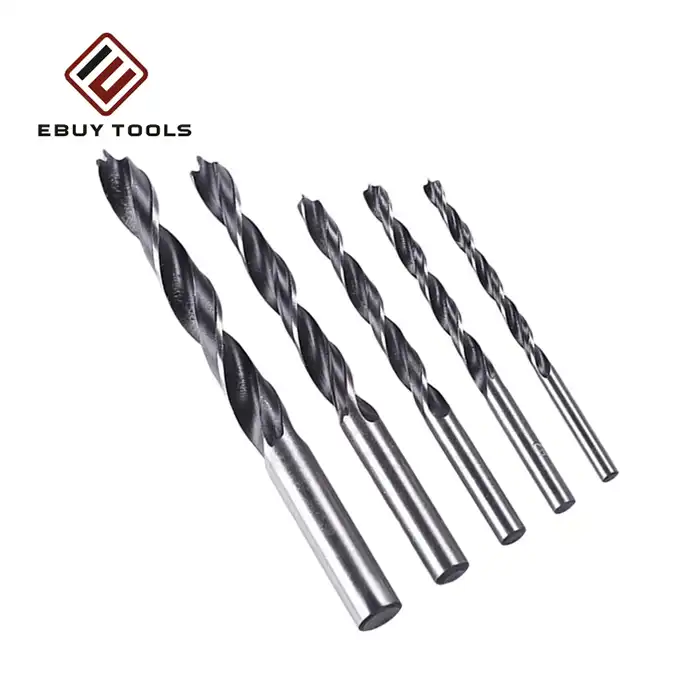
Professionals can't get better results than flat wood drill bits when they need to make clean, quick holes in wood, frames, or building materials. These tools have a flattened cutting blade with a center pilot point and sharpened side edges that are meant to remove material quickly. They are also called paddle bits or spade bits. When it comes to rough-in building, electrical installations, and pipe pass-throughs, where flow is more important than internal finish quality, flat wood drill bits are faster and less expensive than helical twist bits or precision Forstner designs.
Understanding Flat Wood Drill Bits – Types, Sizes, and Benefits
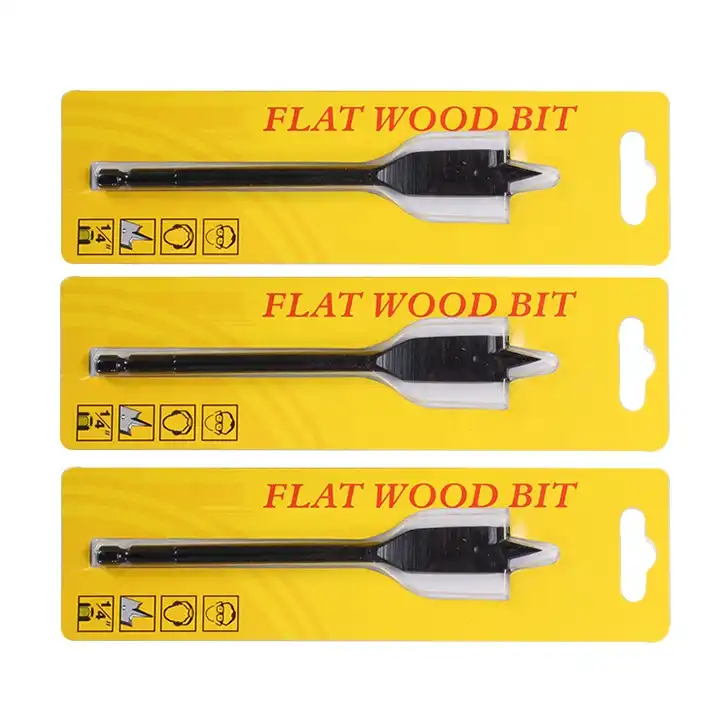
These tools are built around the ideas of ease and speed. Each flat wood drill bit has a hex shank that changes into a wide, flat blade with a sharp point in the middle to help with placement. This shape makes a different cutting action than spiral-fluted options, focused on aggressively removing material instead of chip clearance through flutes.
Size Ranges and Diameter Options
Most professional-grade paddle bits have a cutting width between 6mm and 40mm. In business building, this range can fit everything from small holes for routing cables to bigger conduit pass-throughs. The width can be easily chosen when matching fastener clearances or pipe specs because the size is directly related to the end hole size. Standard sets come in a range of sizes, usually 10mm, 12mm, 16mm, 19mm, 22mm, 25mm, 32mm, and 38mm. This lets users choose exact sizes without making holes too big.
Material Composition and Coatings
Bits that last a long time are made from high carbon steel, and their hardness grades, which range from 45 to 52 HRC, balance edge retention with shock resistance. This metal's "sweet spot" keeps it from breaking easily when it hits secret nails or tight knots, and it keeps its cutting edge during repeated boring operations. Advanced surface treatments, such as titanium nitride (TiN) covering, greatly lower friction coefficients. This makes abrasive manufactured woods and laminates last three to ten times longer. The golden finish also lets you see when the steel underneath is wearing away—when it does, you need to sharpen it.
Primary Benefits for Industrial Applications
It's speed that gives you the biggest edge. The open blade design cuts through material faster than regular twist bits, which greatly speeds up setups with a lot of material to be cut. This level of speed directly leads to lower labor costs and faster project finish. When using a battery-powered tool, the force needs are lower, the runtime per charge is longer, and there are fewer breaks in the middle of the shift for changing batteries. The simple shape also makes it easy to sharpen in the field with standard diamond files, so repair workers can fix cutting edges without needing special tools. These things work together to make a cost-per-hole measure that always does better in rough building situations than other options.
Flat Wood Drill Bit vs Other Wood Drill Bits – Making the Right Choice
Knowing when to use flat wood drill bits versus other technologies will help you get the best results in a wide range of situations. Each type of bit tackles a different speed priority, and matching the characteristics of the tool to the needs of the project avoids both quality problems and expensive mistakes.
Comparison with Forstner Bits
Forstner bits make holes that are very clean, have flat bottoms, and have very little tear-out. This makes them perfect for cabinets, joinery, and obvious woodworking. But because they are sealed, they produce a lot of heat and need to be retracted often to clear chips. Paddle bits give up some end quality but have much faster boring speeds and better heat absorption, which makes them better for structural jobs where looks don't matter. In addition, the difference in prices also favors paddle bits by large amounts when buying in bulk.
Auger Bits and Deep Boring
Auger bits have spiral blades that move chips away from the cutting zone automatically. This lets you make deep holes without having to pump the bit manually. Because they feed themselves, they are better for drilling deeper than four times the width. Flat wood drill bits, by contrast, are a type of paddle bit without that constant evacuation system, so chips have to be cleared out every so often. There are limits on depth, but for most frame jobs involving 38mm to 140mm thick wood, paddle bits—including flat wood drill bits—finish jobs faster, even though they need to be chip-cleared every so often.
Twist Bits and Brad Point Alternatives
Standard twist drills and brad point bits are better at making holes with a width of less than 12 mm and more accurate positioning. Their circular shape keeps you from walking on smooth surfaces better than paddle bits. But once the width goes beyond 16mm, twist bits become too expensive and take too long to drill with. When drilling medium- to large holes, paddle bits are the most popular choice because they are easier to build and save time and money without sacrificing structural integrity.
Making decisions is all about finding the right balance between the need for accuracy and the need to be productive. Forstner quality is needed for visible crafts and fine furniture. For deep installs that go through multiple bolts, you need an auger. The speed-cost relationship of the paddle bit works well for everything else, like electrical boxes, pipe runs, and wire routing.
How to Use and Maintain Flat Wood Drill Bits for Longevity and Performance
The right way to operate flat wood drill bits directly affects both the quality of the hole and the bit's life. Common problems that raise the total cost of ownership, like tear-out, warming, and premature dulling, can be kept to a minimum by following organized steps.
Drilling Technique Best Practices
To begin, make a small indentation in the middle of the hole with a punch or an awl. This keeps the pilot point from moving around during the first impact. Place the bit so that it is straight across from the work area. Entering at an angle makes holes that aren't round and speeds up edge wear. Instead of pushing the tool, apply steady, gentle pressure. Too much downward force makes heat that isn't needed and doesn't speed up the cutting process. If you keep them in good shape, the sharp edges should be able to pull through the material on their own. Most of the time, operators push too hard, which damages the cutting lips with contact burns and softens the steel below its ideal hardness.
Preventing Exit Splintering
The most common quality issue is exit-side blowout. Two methods for reducing the risk work well. By clamping a "sacrificial backing board" under the object, the bit can cut through waste material instead of supporting wood fibers. You could also drill until the starting point just comes out on the other side, then finish the hole going the other way. This method needs to be able to reach both sides, but it makes clean entry and exit areas with no waste.
Maintenance and Sharpening Protocols
Use a wire brush to clean bits after each work session to get rid of pitch and resin buildup. Sticky growth makes friction worse and wear go faster. Flat drill bit For wood, in particular, benefits greatly from this routine, as resin from timber can quickly dull its cutting edges. Bits should be kept in safe boxes or racks that keep the edges from touching each other. Even small cuts on the cutting lips cause vibrations when the machine is in use. When drilling needs more force or leaves burn marks, cleaning the drill bits on a regular basis can fix the problem.
To make the cutting edges smoother, only work on the leading ones with a diamond file or fine whetstone. Leave the bevel angle at 15 to 20 degrees. Do not file the outer vertical spurs because taking away material here lowers the cutting circle and makes holes that are too small. If you take good care of your bit, it should be able to cut through wood without burning or changing color.
All of these practices add up to a big increase in operating life. Industrial users who keep track of cost-per-hole numbers say that bits last three to five times longer when they are maintained on a regular basis compared to when they are run until they break.
The Best Flat Wood Drill Bits and Brands for Professional Use in 2026
Choosing dependable suppliers guarantees uniform performance for flat wood drill bits over a large number of purchases. The business market is dominated by a few well-known brands, each with its own unique features that fit with different operational goals.
Leading Brand Characteristics
Impact-rated designs from DeWalt make the company's products last longer. These designs are aimed at workers who use high-torque impact tools on the job. Milwaukee works on improving battery economy by making bits that use the fewest amps possible when they're cordless. Bosch offers a wide range of sizes with tight limits on the dimensions, making it a good choice for uses that need exact clearance requirements. Makita has choices that are competitive on price without lowering quality standards, which is useful for situations where price is important. Irwin offers cutting shapes that are aggressive and focus on speed, letting holes be a little rougher in return for shorter cycle times.
Some things that all of these brands have in common are that they are made of solid steel, work with hex shanks, and come with warranties that last for more than one year. Independent lab tests on the product back up what they say about the number of holes it can hold and the types of materials it can work with.
OEM and Custom Manufacturing Solutions
Original equipment makers (OEMs) offer custom solutions for B2B clients with specific needs in addition to retail names. Custom bit development includes making bits with specific diameters, coatings, and bulk packing that works best for delivery networks. This method works especially well for companies that sell tools and other manufacturing equipment and keep a lot of stock in different regions.
At Danyang Ebuy Tools, we make enterprise-grade paddle bits that are designed to work well in high-volume building settings. Our 77,000-square-meter factory has 319 skilled workers who make 150,000 pieces of cutting tools every day. Each bit is made of 45–52 HRC hardened high carbon steel and has a 1/4-inch hex base that meets DIN 3126 standards. Precise scoring spurs greatly reduce tear-out, and improved chip-breaking lines keep the material from getting stuck in deep holes.
Our focused research and development department is always making changes to the shape of the blades based on feedback from users. This improves battery life in cordless uses and makes the cutting edge last longer. When drilling through rough materials like reinforced lumber and laminated composites, titanium coating choices give the tool three to ten times longer life. The universal hex shank works with all major drill brands and quick-change chucks, so it can be used with a wide range of tools.
As part of quality control, the roundness of the sides and the shank are checked for sharpness and concentricity to make sure run-out errors are less than 0.3 mm. Dimensional accuracy is checked to within +/- 0.1 mm. Flat drill bit For wood is also subject to these same rigorous checks, ensuring that its cutting edges and shank are perfectly aligned. This makes sure that everything is perfectly lined up, which stops vibrations, and that the fasteners and pipes work correctly.
Where and How to Buy Flat Wood Drill Bits – A B2B Procurement Guide
Decisions about strategic sourcing for flat wood drill bits have a big effect on both unit prices and the dependability of the supply chain. Professional buying requires evaluation standards that go beyond just comparing prices and include factors that affect the total cost of ownership.
Supplier Selection Criteria
Certifications are a good way to start the screening process. Verification of ISO 9001 quality management means that factory rules are set up in a systematic way. Product testing records from approved labs back up boasts of accurate measurements and hardness ratings. The length of the warranty shows how confident the maker is in the product; longer service periods are usually a sign of better metalworking and heat treatment techniques. Instead of believing what marketing says, ask for proof.
Production capacity is important for keeping supply steady when demand changes. Large sales are handled by manufacturers who make a lot of things every day without lowering quality or wait times. It may be easier for smaller businesses to customize their services, but it can be hard for them to handle more customers. Think about these things while keeping your buying schedule and order size in mind.
Distribution Channel Analysis
When you buy in bulk, you don't have to pay markups to distributors when you deal directly with manufacturers. This method works well for big contractors and companies that sell industrial tools whose yearly sales trends are known. Usually, you have to buy a certain number of items in order to keep your stockpile. This requires warehouse space and working cash. For high-volume users, the cost savings often make these organizational needs worth it.
Regional wholesalers offer smaller lot sizes and faster delivery for urgent needs. They are willing to charge more per unit in exchange for ease of use and lower stocking costs. This plan works well for job shops and smaller producers whose demand changes often. Carefully look at shipping costs and transit times—expedited freight fees can cancel out price benefits that seem to be there.
Sample Testing and Qualification Processes
Before placing a big order, ask for example samples to be tested in the field. Check how well it works with the materials you usually work with by measuring the quality of the holes, the speed of the drilling, and the heating properties. To get objective performance data, compare several providers using the same testing methods. Record the state of the cutting edge after set hole counts to figure out how long service intervals will be and what the true cost-per-hole is. This investment in training keeps mistakes from happening that cost a lot when the production volume is increased.
Conclusion
In conclusion, for professional jobs that need to be done quickly and cheaply in structure boring, paddle bits are still the best option. Knowing the technical details, like the hardness grades, coating choices, and geometric features—including those specific to a flat wood drill bit—helps you make smart buying decisions that meet practical needs. When you use the right method and do regular repair, the service life is greatly increased, which lowers the total cost of ownership.
Long-term relationships with providers that are reliable are built on factors like licenses, production capacity, and willingness to provide test samples. Strategic sourcing finds the best mix between unit pricing and supply chain issues. It does this by matching distribution routes to how things are used and how much inventory is available.
FAQ
What makes a paddle bit good for professional use versus do-it-yourself use?
Professional-grade bits are made of sharpened steel with HRC scores between 45 and 52, which is the right amount of toughness for both edge retention and impact resistance. This toughness is needed for industrial users who drill through pressure-treated lumber, engineered wood products, and secret screws. TiN coats make things last a lot longer in situations with a lot of bits that need to be replaced often, which slows down work. Consumer-grade options are made of softer steels that wear down quickly when used over and over again.
How often should bits be sharpened in a business setting?
How often you sharpen depends on how rough the material is and how many holes you find every day. When drilling needs a lot more power or leaves burn marks, doing repair right away stops the damage from getting worse. Predictive maintenance plans are made by keeping track of performance measures like holes-per-sharpening. Professionals usually sharpen their tools every 200 to 500 holes in softwoods and every 100 to 200 holes in hardwoods and treated boards.
Can these bits drill through things other than wood?
Paddle bits made of high-carbon steel work well with soft materials like PVC, fiberglass, and aluminum. Plastics can't pack chips together because they don't have spiral openings. On the other hand, ferrous metals are too hard for normal wood bits, so you need carbide tools instead. Always check the specs for material suitability to avoid problems or safety risks early on.
Partner with Ebuy Tools as Your Trusted Flat Wood Drill Bit Supplier
Ebuy Tools sells professional-grade paddle bits that are made to work in tough industry settings like metalworking, building, and manufacturing. Our titanium-coated carbon steel construction lasts up to ten times longer than untreated options, which lowers your total tooling costs by a large amount. The precisely ground scoring spurs reduce tear-out on the exit side, and the optimized chip drainage holes keep the chips from getting stuck during deep bore operations. Universal 1/4-inch hex shanks make sure that all major types of power tools can work with each other.
We promise uniform performance across bulk orders because we can make more than 150,000 cutting tools every day and have strict quality control that keeps run-out below 0.3 mm. For bulk price, technical specs, and sample requests that are tailored to your unique application needs, please email our procurement team at [email protected].
References
1. Woodworking Institute of America. (2023). "Comparative Analysis of Wood Boring Tool Geometries and Performance Characteristics." Journal of Professional Woodworking Technology, Volume 47, Issue 3.
2. Manufacturing Technology Research Council. (2024). "Heat Treatment Optimization for High Carbon Steel Cutting Tools: Balancing Hardness and Toughness." Industrial Tooling Quarterly, Spring Edition.
3. American National Standards Institute. (2023). "ANSI B212.15-2023: Dimensional and Performance Standards for Hex Shank Wood Boring Bits." ANSI Standards Publication.
4. Construction Tools Performance Laboratory. (2024). "Field Testing Report: Titanium Nitride Coating Durability in Abrasive Wood Applications." Professional Contractor Equipment Review, February 2024.
5. International Association of Cutting Tool Manufacturers. (2023). "Best Practices for Industrial Tool Maintenance and Sharpening Protocols." IACTM Technical Bulletin 2023-08.
6. Building Trades Research Foundation. (2024). "Cost-Per-Hole Analysis: Comparing Wood Boring Tool Technologies in Commercial Construction." Construction Efficiency Studies, Volume 12, Number 1.