.webp)

For professional-level results when you're looking for reliable ways to finish stones, you need to know how diamond polishing discs work. For better surface quality on granite, marble, concrete, and engineered stone, these specialized abrasive tools use fake diamond particles set in engineered structures made of resin, metal, or ceramic. Instead of old-fashioned abrasives that wear out quickly and make too much heat, modern cleaning pads consistently remove material while keeping your valuable surfaces from getting burn marks and discoloration. This complete guide explains how to choose the right stone, how to use it, and how to buy it for workers who work with industrial stone.
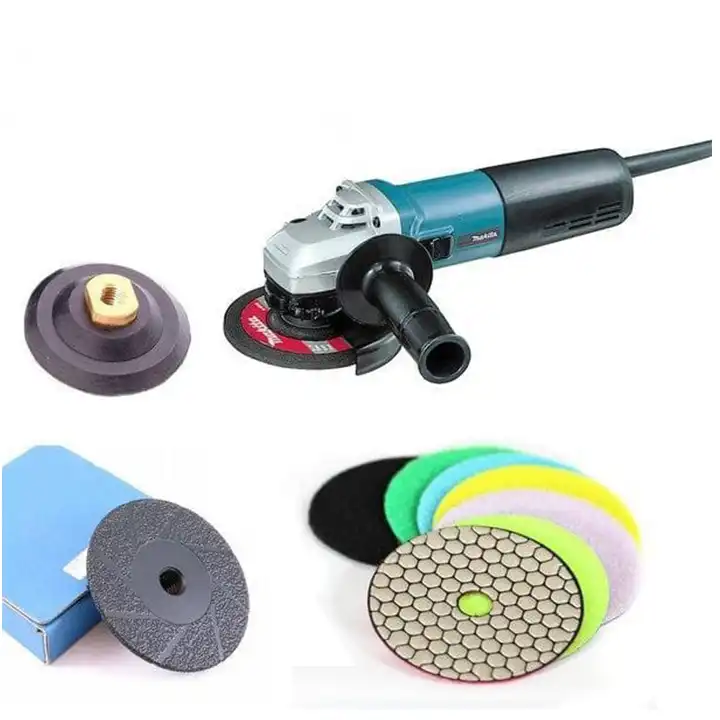
Understanding Diamond Polishing Discs: Types, Grits, and Applications
How Diamond Polishing Technology Works?
Synthetic diamond powder made for commercial use that is bound in special matrices is what makes these tools work. Controlled grinding is how each disc works. Diamond particles wear away surface flaws slowly, while the connecting material wears away at a set rate. This system makes sure that the cutting edges stay sharp for as long as the tool is used.
Managing heat is an important part of planning. Badly made pads keep heat from escaping from stone surfaces, which results in unsightly burn lines and resin transfer. Quality discs with advanced groove designs help heat escape and slurry flow properly, which keeps expensive material damage from happening during finishing operations.
Bond Types and Their Applications
If you know about bond chemistry, you can choose the right tools for different materials and steps of finishing. Different types that are resin-bonded work really well for fine grinding from #400 to #3000 grit. Because they are flexible, they work well for bent edge curves and delicate surfaces, but they can only handle heat up to 180°C.
When grinding the first few layers, usually #30 to #200 grits, metal and copper-bonded choices give you strong performance. When cleaning deep scratches or lippage from hard materials like quartzite, these rigid formulas can handle higher temperatures and last longer.
Hybrid ceramic links are in the middle of fine finishing and rough grinding. They work well as a change from metal-bond scratch designs and get areas ready for the final resin-bond finishing steps.
Grit Progression and Surface Quality
Professional stone finishers use a set order of grits to get results that look like mirrors. Coarse grinds (#50 to #100) get rid of a lot of material and even out areas that aren't level. Medium grits, numbered 200 to 400, smooth out the scratch pattern and get rid of the dust. Fine grits (#800–#1500) make the initial gloss, and ultra-fine grits (#3000 and higher) give clients the reflective clarity they expect from high-end installations.
"Ghost scratches" are deep lines that smaller abrasives can't get rid of that are made by skipping grit steps. The standard in the industry says that you shouldn't jump up or down more than one grit level at a time, and that each stage should properly prepare the surface for the next stage of polishing.
Selecting the Best Diamond Polishing Disc: A Decision Support Guide
Material Compatibility Considerations
Different types of stone need different types of adhesives. For marble and other soft materials, you need stronger ties that wear down slowly so that too much material isn't removed. Hard granite and engineered quartz, on the other hand, need ties that are weaker and break down easily, letting new diamond bits show up all the time.
When you clean concrete, you add more complication. When floors are handled with a densifier, they need special glue mixtures that don't break down easily in chemicals and keep cutting efficiency high. When planetary mills are used for grinding, which turns matte finishes into high-gloss salt-and-pepper looks, semi-rigid diamond polishing disc designs work especially well.
Attachment Systems and Operational Flexibility
Hook-and-loop (Velcro) backing methods for diamond polishing pad are most common in professional settings where tools need to be changed quickly. When used in wet settings, high-quality attachment surfaces must be able to keep bonds strong even when centrifugal forces hit 4000 RPM. Danyang Ebuy Tools experts make backing systems that are stronger so that they don't delaminate during difficult edge measuring tasks.
In busy production shops, color-coded backing systems make it easier to find the right grit. This visual order cuts down on mistakes during finishing processes with more than one step. Distributors who serve area markets can also use custom logo printing to meet their branding needs.
Wet Versus Dry Operation Requirements
The coolant approach is based on the application setting. Wet cleaning is the main method used in stone shops that have equipment for managing water slurry. Water cooling is the best way to work with granite and marble countertops because it protects tools from damage and makes them last longer.
During terrazzo repair or concrete floor refinishing in a business place that is already occupied, dry-use formulas are necessary because water can be dangerous. High-temperature-resistant resin structures can handle the heat of dry work without melting or moving color to light-colored surfaces.
Customization Options for Large-Scale Operations
Customization features are helpful for procurement managers who are in charge of large projects. The research and development staff at Danyang Ebuy Tools comes up with custom solutions like different grit sequences, bonding patterns for different types of stone, and non-standard diameter choices. These changes improve speed for specific uses while keeping the dependability of tried-and-true production methods.
Distributors and big manufacturing companies can save money by signing bulk purchasing agreements. Our 77,000-square-meter plant can make 150,000 pieces every day, so we can guarantee a steady supply without lowering the quality standards that are upheld by 319 skilled professionals.
Using Diamond Polishing Discs Effectively: Best Practices and Maintenance
Material-Specific Polishing Techniques
Due to its hardness, granite needs to be ground very rough at first, usually starting at #50 or #100 grit. To keep patterns from being random, keep the pressure steady and cross your passes. When edge trimming, handheld polishers that run between 2000 and 4000 RPM give the best results without making too much heat.
Because it is soft and porous, marble needs to be handled with more care. Start with #100 or #200 grit to keep from digging too deeply. Light-colored types need white or neutral resin bonds to keep the color from bleeding into the stone pores, which is a common flaw that lowers the quality's appearance.
There are specific steps to take when redoing a concrete floor. After the densifier is used, planetary mills with semi-rigid pads make the scratch patterns smoother. Do not skip any steps in the grit order because scratches show up more clearly on concrete's varied aggregate makeup than on uniform stone materials.
Preventing Common Operational Problems
When the bonding matrix gets too smooth, diamond bits get trapped below the surface. This is called glazing. This happens when the bond hardness is different from the material hardness. Putting the diamond polishing disc on rough grit blocks brings out the new diamonds and makes it cut again.
Tools and surfaces are both hurt by being too hot. Too much RPM causes too much heat stress and doesn't help remove material faster. Maintaining the speed limits suggested by the manufacturer—usually between 2000 and 6000 RPM, based on the width of the disc—keeps the resin from breaking down and increases the service life.
Uneven wear patterns show that the method was wrong. Too much pressure speeds up wear in the middle, while not enough touch causes wear only on the edges. A balanced spread of pressure and smooth, overlapping moves make the disc's surface wear down evenly.
Maintenance Protocols for Extended Tool Life
When you clean a diamond polishing disc properly, you get rid of the embedded stone bits that make cutting less effective. Rinse discs well after each use and let them dry completely before putting them away. This simple action keeps things running smoothly and stops them from wearing out too quickly.
How tools are stored affects how long they last. Keep discs in places with controlled temperatures and humidity, out of direct sunlight. When resin links are exposed to UV light or changes in temperature that are too big or too small for their design, they break down.
Quality problems can be avoided by replacing things on time. When cutting effectiveness starts to drop visibly, using worn discs for longer loses time and raises the risk of surface defects. Setting replacement plans based on the needs of the project keeps work going and ensures a consistent end.
Top Diamond Polishing Discs for 2026: Ratings and Brand Insights
Evaluating Manufacturing Quality Standards
Leading brands set themselves apart by having strict quality control rules. Peel strength tests show that hook-and-loop connectors stay attached even when they are under a lot of stress. Even spread of diamonds stops "dead spots" where discs stop cutting in the middle of their useful life.
Dynamic balance testing gets rid of the wobble that makes workers tired and leaves chatter marks on final surfaces. High-end makers use tiny cross-section research to make sure that the diamond concentration stays the same across the whole disc thickness.
Before sending out goods, Danyang Ebuy Tools goes through a thorough checking process. Every disc is tested to make sure it meets performance standards. This guarantees dependability that helps your image with picky customers.
Brand Comparison Insights
Well-known names like Bosch, DeWalt, and Makita have a lot of products and are able to get them to a lot of people. Their guarantee programs and customer service systems give buyers peace of mind when they make big purchases. These companies are great at standard applications where performance is more important than making specific changes.
Specialty companies like Husqvarna and 3M focus on certain markets, such as cleaning concrete or finishing surfaces for aircraft use. Their efforts in research lead to new bonding technologies and improved diamond formulations that can be used in tough situations.
Direct ties with manufacturers have clear benefits. Danyang Ebuy Tools combines large-scale production with the ability to customize, so they can give you solutions that are perfect for your needs while still being cheap enough for large orders and long-term supply deals.
Application-Specific Recommendations
Complete grit sets (#50 to #3000) with resin-bonded discs made for wet wrist polisher use are useful for shops that make countertops. Look for Velcro backing that is strengthened so that it can handle the tough work of edge profiling on sink cutouts and artistic profiles that are very complicated.
For the first grinding step, concrete floor builders need long-lasting metal-bonded choices. Next, they need ceramic hybrids, and finally, they need resin pads to finish. When preparing floors in more than one step, semi-rigid forms that work with rotating grinders give the best results.
Specialists in restoring terrazzo need dry-use formulas with materials that can handle high temperatures. These specific diamond polishing discs stop the smearing problems that ruin the look of business spaces that are already filled and can't use wet methods.
Procuring Diamond Polishing Discs: Tips for B2B Buyers
Supplier Evaluation Criteria
Authenticity verification for diamond polishing pad keeps you safe from selling low-quality goods that hurt your image. Ask for certificates for making, records of quality control, and performance test results. Genuine sellers give clear details about the amount of diamonds, the materials used for joining, and the requirements for operation.
Production potential shows how reliable a source is. Operations that make thousands of pieces every day keep enough supplies on hand to keep projects on schedule. The daily production of 150,000 pieces by Danyang Ebuy Tools makes sure that wholesalers serving multiple regional markets and big fabricators working on multiple projects at the same time can always get what they need.
Professional sellers are different from commodity vendors because they can offer technical help. Having access to application experts who know how to solve problems with specific materials adds value to the product itself. This knowledge helps choose the best tools and fix speed problems that happen in a variety of operating systems.
Bulk Purchasing and Customization Benefits
Volume agreements get better terms and make sure there is a steady flow of goods. By negotiating yearly deals based on expected consumption, you can plan your budget more accurately and make sure that production runs smoothly during times of high demand.
There are more customization choices than just what's in the store. Different operating needs can be met with color-coded backing systems, private labels, specialized grit sequences, and custom bonding formulations. These changes will make your products stand out in competitive markets while keeping the quality of the making the same.
Building Long-Term Manufacturer Relationships
Strategic relationships with manufacturers give you benefits that you can't get from wholesalers. Direct contact with tech teams makes it easier to work together on fixing problems and making new products quickly. This relationship structure helps efforts to keep getting better, which makes you more competitive.
When working problems happen, after-sales help is very important. Long-term ties with manufacturers mean that they can provide quick technical support, insurance coverage, and replacement inventory, all of which keep downtime to a minimum during key project stages.
Building partnerships with skilled wholesalers and high-volume fabricators is important to Danyang Ebuy Tools. Our research and development (R&D) team works with clients to create unique solutions, and our strict quality control system makes sure that every package meets the performance standards that your business needs.
Conclusion
To choose the best diamond polishing disc option, you need to know about bond chemistry, grit progression, and material compatibility. You should also look at the skills of the suppliers that meet your operational needs. When you use good tools, you get consistent results that protect your image, and when you work with a reliable manufacturer, you can keep getting supplies even when project plans are tight. This guide gives you the technical information you need to make buying choices that meet performance needs and save money at the same time. Whether you're working on granite countertops, refinishing concrete floors, or repairing terrazzo installations, the success of the job and the happiness of the client depend on how well you choose your tools and how you use them.
FAQ
What lifespan should I expect from professional-grade polishing pads?
Service life depends a lot on how hard the material is, how it is used, and the quality of the diamond polishing disc. When used correctly, resin-bonded pads can finish between 50 and 150 square feet of granite per disc. During intense grinding stages, metal-bonded choices can handle a lot more material. Proper care, like cleaning after each use and not putting too much pressure on it, makes it last a lot longer. Premium production makes sure that the diamonds are spread out evenly, which keeps them from breaking too soon.
Can I use the same discs for both granite and concrete applications?
In order to get the best results, you need tools that are made for that specific material. Due to its mass, granite needs different bonding formulas than concrete, which has a more varied mix of aggregates. Densifier chemicals break down some types of glue while cleaning concrete. Using diamond polishing discs that are made for a certain purpose increases efficiency and finish quality while avoiding premature wear that drives up costs.
What maintenance actions prevent premature disc failure?
Rinsing well after each use gets rid of trapped particles that make cutting less effective. Complete drying before storing stops damage caused by wetness. Staying within the manufacturer's recommended RPM ranges keeps the engine from making too much heat. Rotating the plates often makes sure that the wear patterns are even. Resin bonds stay strong when they are stored in a climate-controlled space away from UV light. These simple steps greatly increase the life of the tool and keep its performance stable throughout the disc's service term.
Partner with Ebuy Tools for Superior Diamond Polishing Disc Solutions
Enterprise-level cleaning solutions made by Danyang Ebuy Tools are designed for tough stone and concrete jobs. When you mix our cutting-edge synthetic diamond technology with carefully designed bonded matrices, you get better material removal rates without the buildup of heat that damages expensive surfaces. As a company that only makes diamond polishing discs, we can make 150,000 pieces every day in our 77,000-square-meter factory, which is staffed by 319 skilled workers and an R&D department that works hard.
We know that the quality and dependability of your supply lines are important for your projects. Our hook-and-loop backing systems, color-coded organization choices, and ability to add a unique logo help with both efficiency and branding. Our engineering team comes up with custom solutions that make your finishing processes run more smoothly, whether you need standard grit routines or special formulas for different materials.
Contact our procurement specialists at [email protected] to discuss your specific requirements. We provide detailed technical specifications, performance documentation, and customization options that align with your project timelines and quality standards. Discover how our manufacturing excellence and partnership approach deliver the competitive advantages your operations deserve.
References
Smith, J.R. (2023). Advanced Abrasive Technologies in Stone Fabrication. Industrial Surface Finishing Press.
Chen, M. & Rodriguez, A. (2023). "Diamond Tool Performance in Concrete Polishing Applications," Journal of Construction Materials, Vol. 47, pp. 213-228.
Williams, K.T. (2024). Professional Stone Finishing: Techniques and Technologies. Architectural Materials Publishing.
International Diamond Tool Manufacturers Association (2024). Quality Standards for Synthetic Diamond Abrasives. Industry Technical Report Series.
Thompson, L.D. (2023). "Thermal Management in High-Speed Abrasive Operations," Materials Processing Quarterly, Vol. 18, No. 3, pp. 45-62.
Anderson, P.S. & Liu, H. (2024). Procurement Strategies for Industrial Cutting Tools. Global Manufacturing Review Press.