.webp)

Choosing the right grit flap discs can make a huge difference in how fast and well you finish woodworking projects. With these flexible tools, you can aggressively remove stock and precisely finish in one step, so you don't have to stop work to switch between different types of abrasives. Understanding flap disc specifications, such as grain type and grit selection, as well as backing plate geometry, is important for procurement professionals who run CNC machining workshops, auto assembly lines, or aerospace component production. These specifications have a direct effect on operational costs, tool longevity, and production throughput. In this guide, we'll talk about the technical issues and useful tips that will help you make smart buying choices and build relationships with sellers who know how to meet the strict needs of metalworking settings.
Understanding Flap Discs – Types, Uses, and Benefits
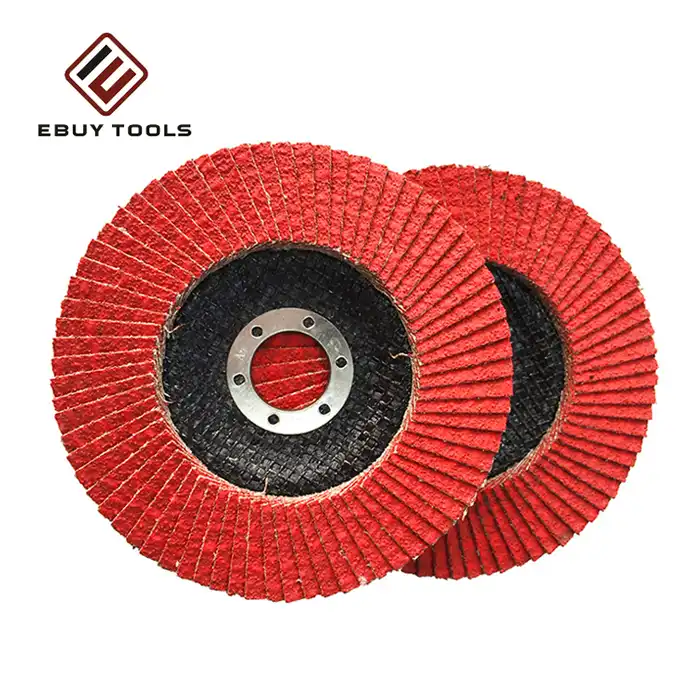
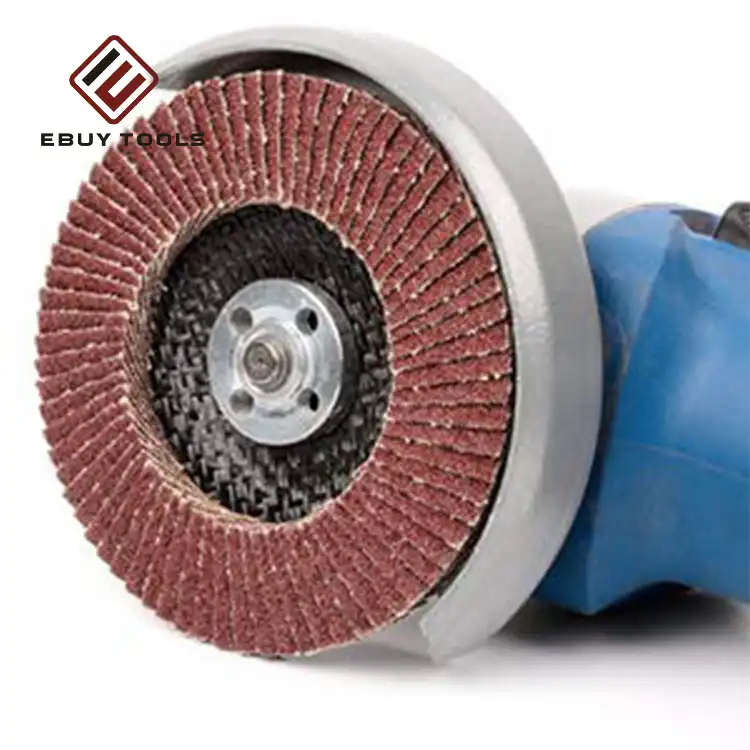
Abrasive flap discs are designed tools that have coated abrasive flaps that overlap and are placed radially around a reinforced backing plate. The backing plate is usually made of fiberglass or reinforced plastic. This stacked design has a special benefit: as the upper flaps wear down during grinding, new, sharp grains below are always being shown. This keeps the disc's cutting performance constant over its lifetime. These tools are different from stiff grinding wheels that can damage workpieces or resin fiber discs that wear out quickly. They have a controlled, cushioned contact that responds to uneven surfaces and lowers vibrations and operator tiredness.
Primary Abrasive Grain Types and Their Applications
Knowing about the science of grains can help you choose the right disc for your material and level of use. Ceramic alumina grains use micro-fracturing technology, in which small crystals break apart when they are ground, revealing always-sharp cutting edges. Because ceramics can sharpen themselves, they are perfect for use with heat-sensitive materials like titanium and stainless steel, where too much heat can change their qualities or darken them. Ceramic grain's cool-cutting ability is very helpful for factories that work with food-grade stainless steel tanks or pharmacy equipment because it keeps the steel's corrosion resistance without causing heat-affected zones.
Zirconia alumina is the best material for heavy-duty carbon steel production. Because they contain zirconia, these discs are very tough and don't wear down easily. This makes them great for shipping, making structural steel, and welding pipelines where strong stock removal under high pressure is needed. Because the material is durable, it has a longer service life, which means less changeovers and lower costs per cut in high-volume production settings.
Formulations with aluminum oxide work great for general repair tasks and working with aluminum and brass, which are both soft metals. Even though these discs don't last as long as ceramic or zirconia ones, they are still a good option for job shops that work with a lot of different materials or have jobs that need to change the grit often. Because they can be used in many ways, they are useful inventory things for places that don't focus on a specific type of object.
Type 27 vs. Type 29 Backing Plate Configurations
The shape of the backing plate has a big effect on how the grinding works and how the finish looks. Type 27 flat discs keep flaps at shallow angles of 0 to 15 degrees to the backing plate. This makes the contact patch wider and flatter. This setup works well for blending, closing weld seams on flat surfaces, and tasks that need areas with the same shape. The flat design reduces the chance of cutting and makes swirl patterns that are constant, which is great for getting paint ready or coatings to stick.
The flaps on Type 29 conical discs are angled between 15 and 25 degrees, putting rougher material at the leading edge for tough shaping work. This shape works great for removing heavy welds, chamfering edges, and working on curved or rounded areas where fast stock removal is important. Because the slanted flaps make better touch with rounded parts, Type 29 configurations are the best choice for making body panels for cars, vessels, and cleaning up complex castings.
Distinguishing Flap Discs from Alternative Abrasive Tools
Bonded grinding wheels remove material quickly, but they are not flexible, so if you use too much pressure or the wrong angle, you could damage the subject. Resin fiber discs need backing pads and wear out quickly, so they need to be changed often, which slows down work. Wire brushes are good at getting rid of scale and rust, but they can't get the surface smooth enough for painting or welding preparation. Flap discs get around these problems by combining rough grinding with fine finishing in one tool. This makes inventory simpler and operator training easier while still providing better surface quality metrics than sequential multi-tool processes.
How to Choose the Right Flap Disc for Your Industrial Needs?
When making a procurement choice, you need to carefully look at a lot of technical and practical factors. We came up with what we call the F-1 Criteria Screening Approach, which is a way to make sure that disc specifications are in line with material properties, production needs, and quality standards so that performance and value are at their best.
Material Type and Hardness Considerations
Based on how well they conduct heat, how hard they are, and how easily chips form, different metals react differently to rough touch. Stainless steel metals, especially austenitic types used in chemical and food processing equipment, need ceramic alumina discs that don't make a lot of heat. Because the material tends to work-harden at high temperatures, it is important to be able to cut it while keeping its shape and avoiding surface contamination that weakens its rust resistance.
When making things out of carbon steel, they usually use zirconia alumina mixtures that can handle the high grinding pressures that are common in structure welding and making heavy machinery. Because the material can handle more heat, it can remove stock more quickly without the heat sensitivity issues that come with steel types. Facilities that work with heavy plates, mild steel I-beams, or pipe sections can benefit from zirconia's long service life in tough circumstances.
When working with aluminum and other non-ferrous metals, it's important to choose the right grain to avoid loading, which happens when soft metal bits clog up the rough surface and make it look glazed, which stops cutting. Coarser grit aluminum oxide discs with open coating designs keep space for chips to escape, which keeps the disc's cutting efficiency high over its entire life. Manufacturers of aerospace parts made from aluminum alloys usually ask for these formulas to be used for deburring and surface preparation before finishing or anodizing is applied.
Grit Size Selection and Surface Finish Requirements
The naming system for grit works backwards: lower numbers mean rougher grains that remove material quickly but leave deeper scratches, while higher numbers mean smaller grains that make finishes smoother while removing less stock. Procurement teams have to find a mix between meeting efficiency goals and meeting quality standards for the surface.
Between 36 and 40 coarse grits are used to remove heavy welds, deep surface flaws, and quickly reduce the stock on thick-section parts. These rough discs work well for the first steps of multi-step finishing processes or when the surface will be fine-tuned by later grinding operations. Medium grits, ranging from 60 to 80, can be used for a variety of tasks, such as blending welds, mild surface preparation, and general manufacturing jobs where the balance between material removal and finish quality meets standard industry standards.
Fine grits between 80 and 120 give smooth surfaces that can be used to prepare paint, mix materials with little stock removal needed, and finish smoothing the surface before covering or plating. These types are often used by auto body shops, gadget factories, and architectural metalwork shops when quality standards are based on how the metal looks and how well the coating sticks to it.
Diameter and Thickness Impact on Performance
The disc's width needs to be the right size for your grinder, taking into account both its coverage area and its ease of use. For flap discs, four-inch models work best for fine details, tight areas, and tasks that need exact control. They can go as fast as 13,300 RPM at their fastest. Seven-inch models are better for covering bigger areas quickly, so they are good for large flat surfaces or long weld seams. However, their lower maximum speed of about 8,600 RPM means that operators need to be more aware of overspeeding risks.
Differences in thickness affect both how long a disc lasts and how flexible it is. Standard density discs are a good compromise between conformability and service life. They can easily adapt to surfaces with some minor imperfections. Higher-density or "jumbo" versions have twenty to forty percent more rough cloth, which makes them last longer but makes them less flexible. These thicker structures work great on flat surfaces with steady grinding pressure, but they might be too stiff for complex shaped work where the surface needs to be able to bend.
Evaluating Supplier Quality and Reliability Standards
A brand's image is based on how consistently good the products are, how quickly technical help responds, and how well the warranties are honored. Well-known companies spend money on quality control systems that check the strength of the grain's binding, the stability of the backing plate, and the balance requirements before the goods are shipped. Strict inspection methods are used in places like our 77,000-square-meter production center to make sure that every disc meets international standards for safety and performance.
The certification paperwork shows that the product meets local safety standards, like ANSI B7.1 in North America or EN 13743 in European countries. Professionals in charge of buying things should ask for test reports that prove the highest working speed ratings, the results of burst tests, and the material makeup. Suppliers who provide detailed technical datasheets show that they are serious about engineering and quality, which lowers operational risk.
Where and How to Purchase Flap Discs for Industrial Use?
Strategic choices about where to buy things affect both the short-term costs of the project and the long-term dependability of the business. Finding sellers who offer competitive prices, consistent quality, quick support, and reliable operations creates procurement value that lasts beyond the purchase transaction.
Evaluating Supplier Capabilities and Credentials
Scale in manufacturing refers to the ability to consistently meet volume needs. For example, the fact that our facility makes about 150,000 cutting tools every day shows that it has the infrastructure to support large-scale industrial operations without allocation delays or quality compromises during times of high demand. Suppliers with large production facilities usually keep a deeper inventory and can handle rush orders or sudden demand spikes better than smaller businesses that rely on outside manufacturing partnerships.
Quality management systems make sure that products are always the same. Suppliers who follow formal quality control protocols, such as inspecting incoming materials, checking work in progress, and testing finished products, deliver more consistent performance than operations that rely on spot checks or sampling after production. When looking at new suppliers, ask for proof of quality certifications, testing procedures, and defect rate statistics.
Transactional vendors are different from strategic partners when it comes to their technical support for products like flap discs. Suppliers who hire applications engineers who know your specific materials, processes, and quality requirements can help you choose the best product specifications and fix performance problems. Having access to knowledgeable support staff cuts down on the cost of trial and error and speeds up problem resolution when application problems arise.
Direct Manufacturer Relationships vs. Distributor Networks
Buying directly from manufacturers usually has better prices, especially for large orders, and gives you access to the full range of products, including special formulations or custom configurations. It's also easier to talk to them about technical details, quality issues, or new product development. On the other hand, you may have to place larger minimum orders and be less flexible with your delivery schedules than with distributor inventory models.
Through local inventory, smaller order sizes, and consolidated purchasing across multiple product categories, distributor networks make things easier for customers. Established distributors often keep relationships with multiple manufacturers, which lets them offer a wider range of products at lower prices through their buying power. Regional distributors who know the local market conditions can give you useful information about product preferences, application trends, and competitive benchmarking.
Bulk Purchasing Strategies and Volume Considerations
When you make a volume commitment, you can get better pricing tiers that lower the cost per unit of standard products by a large amount. To negotiate a volume, you need to figure out how much you use of a product on a regular basis, like every three months or once a year. You should also think about the costs of storing the product, the possibility that it will become obsolete, and the effects on your cash flow.
Understanding these minimum order quantities helps you set up purchase orders efficiently. Suppliers may be flexible on minimums for long-term customers or when combining multiple product specifications into one order. Our team works with clients to set up purchasing agreements that meet both their needs for pricing efficiency and inventory management.
International Logistics and Lead Time Planning
When you buy something across borders, you have to plan for shipping times, customs clearance, and paperwork needs. Standard ocean freight from Asian manufacturing hubs to North American destinations usually takes four to six weeks. Air freight speeds up delivery to one to two weeks at a much higher cost. European deliveries follow similar patterns that are adjusted for geographic routing. Planning for these lead times in your procurement planning keeps production from stopping because of running out of inventory.
The speed at which customs clearance goes directly depends on how accurate and complete the paperwork is. Reliable international suppliers provide detailed commercial invoices, packing lists, and certificates of origin that make customs processing go smoothly. Make sure you know if the price quoted includes shipping costs and customs duties, or if these are the buyer's responsibility. Knowing the total landed cost keeps your budget from being surprised and lets you compare costs accurately between domestic and international suppliers.
Conclusion
Selecting appropriate flap discs specifications requires balancing material compatibility, performance requirements, and cost considerations within your specific operational context. Understanding the distinctions between ceramic, zirconia, and aluminum oxide formulations, recognizing how backing plate geometry affects grinding behavior, and matching grit selections to your finish quality standards empowers informed procurement decisions that optimize both productivity and value. Establishing relationships with manufacturers offering consistent quality, technical support, and reliable logistics creates supply chain stability that supports your production objectives. At Danyang Ebuy Tools, our 319 skilled employees combine manufacturing excellence with customer-focused service to deliver abrasive solutions that meet the demanding requirements of precision metalworking environments. Whether your operation focuses on stainless steel fabrication, automotive component production, or general industrial manufacturing, investing time in proper disc selection and supplier evaluation yields measurable returns through extended tool life, improved surface quality, and reduced operational costs.
FAQ
How long do flap discs typically last compared to grinding wheels?
Material hardness, grinding pressure, and disc quality can all affect how long a disc lasts, but in general, flap discs last longer than grinding wheels of the same diameter. This is because the layered flap design constantly exposes new abrasive as the outer layers wear, keeping the disc's cutting efficiency throughout its life. Grinding wheels, on the other hand, lose performance over time, which means they need more pressure, which speeds up the final stages of wear. In moderate-duty applications, a good flap disc may last longer than two or three grinding wheels while still giving a better finish.
Can the same flap disc work on both stainless steel and carbon steel?
While it is technically possible, the best performance comes from matching the grain type to the properties of the material. For example, ceramic alumina discs made for heat-sensitive stainless steel will work on carbon steel, but they may wear out faster than needed, which will raise the cost-per-cut. On the other hand, zirconia discs made for carbon steel can overheat stainless steel, which can cause discoloration and possibly weaken its corrosion resistance. Facilities that work with both materials on a regular basis should keep separate stocks of the right disc types instead of trying to use them universally.
Why does my disc stop cutting and develop a shiny glazed surface?
Glazing happens when abrasive grains become dull without breaking to reveal new cutting edges. This is usually because the grinding pressure is too low or the grain type isn't right for the hardness of the material. Soft materials can fill the disc surface with metal particles that fill the spaces between the grains, making a smooth, non-cutting surface. Raise the grinding pressure a little to encourage grain fracture, make sure you're using the right grain type for your material, or switch to a coarser grit that keeps better chip clearance.
What's the proper angle for holding the grinder during flap disc operations?
When compared to the workpiece surface, Type 27 flat discs work best at shallow angles of five to fifteen degrees, maximizing the contact patch for smooth finishing and blending. Type 29 conical discs work best at steeper angles of twenty-five to thirty-five degrees, positioning the angled flaps for aggressive stock removal. Keeping the angles constant during the grinding motion creates uniform surface profiles and stops gouging caused by sudden changes in angle.
Partner with Ebuy Tools for Superior Flap Disc Solutions
Danyang Ebuy Tools makes precision-engineered flap discs that work very well in a wide range of demanding metalworking applications. Our advanced grain formulations, which include ceramic alumina, zirconia alumina, and aluminum oxide variants, are designed to improve cutting efficiency, extend service life, and produce superior surface finishes that meet strict industrial quality standards. Our 77,000-square-meter production facility can make about 150,000 cutting tools every day, so we are a reliable supplier of flap discs that can meet high-volume needs without sacrificing delivery times or product quality.
Our technical team works directly with procurement professionals to find the best specifications for your materials, processes, and quality goals. We offer customization options like private labeling and specialized formulations when your application needs more than what's in our catalog. Standard products ship within ten to fifteen days, keeping your production schedules on track. Email our team at [email protected] to talk about your grinding problems and get expert advice that fits your needs. We're dedicated to building long-term partnerships that deliver measurable value through high-quality products and quick customer service.
References
Machining Fundamentals: From Basic to Advanced Techniques, by John R. Walker, Goodheart-Willcox Publisher, 2020.
Abrasive Technology and Testing Standards, American National Standards Institute (ANSI), Technical Report B7.1-2021.
Modern Metal Cutting: A Practical Handbook, by Viktor P. Astakhov, Society of Manufacturing Engineers, 2019.
Industrial Grinding and Finishing Processes: Engineering and Applications, by Thomas M. Schmidt, Hanser Publications, 2021.
Surface Engineering for Enhanced Performance Against Wear, edited by David A. Rigney, Materials Research Society Symposium Proceedings, 2018.
Safety Guidelines for Portable Abrasive Wheels and Tools, Occupational Safety and Health Administration (OSHA), Publication 3308-2020.