When choosing between High-Speed Steel and carbide drill bits, understanding material composition and performance characteristics directly impacts your operational efficiency and cost management. HSS Step Drill Bit solutions, particularly those with specialized stepped geometries, offer compelling advantages in multi-diameter drilling applications across steel, stainless steel, and non-ferrous metals. This guide examines the technical distinctions between HSS and carbide options, helping procurement managers and engineers select cutting tools that align with production demands, material specifications, and total cost of ownership considerations in industrial environments.
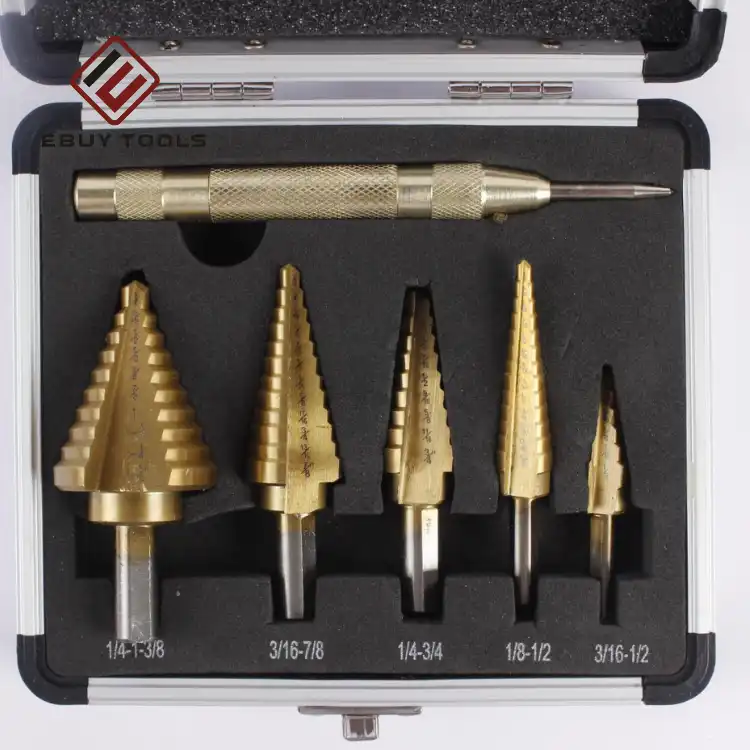
Understanding HSS and Carbide Drill Bits
The makeup of the material has a big impact on how well it drills. High-Speed Steel bits are made of alloyed steel, which usually has tungsten, molybdenum, chromium, and vanadium in it. This type of steel is designed to be tough and resistant to heat during high-speed operations. The hardness of our HSS 4241 tool steel is between 62 and 64 HRC, so it works well in a wide range of metalworking tasks. Advanced grades, such as M2 (6542) and cobalt-enhanced M35 variants, raise the hardness to 63–67 HRC. This lets them cut through stainless steel and hardened alloys without the edges breaking too soon.
Carbide drill bits use tungsten carbide particles that are bound with cobalt to make cutting edges that are very hard. The superior wear resistance of this composition means that it stays sharp at temperatures above 800°C. Powder metallurgy and precision grinding are used in the manufacturing process to make cutting tools that can work at high speeds for long periods of time in rough materials.
Performance Characteristics Across Industries
Depending on the needs of the production, both materials are used to make cars. When making engine parts at modest speeds and with a wide range of materials, HSS bits are the way to go. Cobalt-alloyed HSS types can cut through gearbox housing materials without getting hard, so the dimensions stay the same from one production run to the next.
For cutting titanium and superalloys, aerospace uses need precise tools. Carbide works best in environments with continuous production, while HSS Step Drill Bits are better for making prototypes and doing maintenance work where flexibility is more important than speed.
Metal fabrication shops like how versatile HSS is because it can be used with a wide range of materials every day. One HSS Step Drill Bit can handle sheet metal needs with different diameters, so you don't have to change tools as often, which slows down work and makes you less productive.
Key Performance Comparison Between HSS and Carbide Drill Bits
How well a drill works depends on how fast it can go, how fast it can remove material, and how well it can handle heat. Carbide bits can cut successfully at speeds two to three times faster than HSS bits, which means that cycle times are shorter in high-volume production. Because they are so hard, their cutting edges stay sharp longer when digging through rough materials like cast iron or fiberglass-reinforced plastics.
Depending on the strength of the object, HSS cutting tools work reliably at speeds between 500 and 2000 RPM. Because steel is tough, it can handle shock loads better than carbide. This makes it less likely that the steel will break when cutting interrupted surfaces or dealing with the changing feed pressures that come up with manual work. This toughness is especially useful in job shops where workers have to deal with a wide range of materials and specifications.
Durability and Maintenance Considerations
For tool life estimates to work, both edge retention and general structure integrity must be taken into account. Carbide bits keep cutting well over long production runs, and they can often drill 10–20 times more holes than uncoated HSS before they need to be replaced. But they are flimsy, and horizontal forces or bad handling can chip them or cause them to break completely.
HSS drill bits can handle more damage. Using bench grinders or other specialized tools, operators can resharpen cutting edges more than once, which greatly increases the tool's useful life. Our HSS Step Drill Bits have straight or spiral flutes that make it easier for chips to fall out while keeping the structure strong. When compared to straight flutes, the spiral shape lowers cutting torque by 15 to 20 percent, making holes that are cleaner while producing less heat.
Cost-Effectiveness Analysis
The total cost of ownership includes more than just the price of the tool itself. While carbide bits cost more up front, they are cheaper per hole in dedicated production situations. When you need freedom, HSS choices can save you money because single bits can handle multiple diameters, so you don't have to keep track of and maintain full twist drill sets.
Maintenance costs favor HSS in places where sharpening is possible. A good HSS bit goes through three to five resharpening cycles before it is retired, which increases the value of the initial investment. This isn't an advantage of carbide tools; once they get dull, they need to be replaced.
Specific Use Cases of HSS Step Drill Bits in B2B Procurement
HSS Step Drill Bits have changed the way holes are made in sheet metal production. Our 15-step process can handle hole sizes from 4 mm to 32 mm without the need for test holes or extra deburring steps. The conical shape and self-centering 118° split-point keep the tool from "walking" on working surfaces, so it stays in the right place even on bent or angled materials.
Application-Specific Selection Criteria
For making HVAC ducts, you need galvanized steel that is between 0.5 and 2 mm thick and has clean, round holes. Most of the time, traditional twist drills make triangle-shaped distortions or tear the edges of sheet metal. HSS Step Drill Bits get rid of these flaws by gradually increasing their diameter. This spreads the cutting forces evenly and keeps the material from deforming. The triangular shank design keeps the chuck from moving when it's under side loads, so it stays centered during the drilling process.
To put together an electrical panel, steel junction boxes and plastic cases need to have precise cable gland knockouts. Our HSS Step Drill Bits make holes that are free of burrs, which is necessary for a watertight seal to work. Each step gives exact control over the diameter, so electricians can match conduit specifications without making holes that are too big, which would lower the environmental protection ratings.
Because it tends to work-harden, stainless steel presents its own set of problems. When used correctly with the right cutting fluid and speeds (usually less than 500 RPM), M35 cobalt-alloyed HSS keeps its cutting edge integrity. The red toughness of the material keeps it from softening when heated, so it can be penetrated without too much heat building up and speeding up wear.
Maintenance and Longevity Strategies
Cutting edges stay sharp as long as they are stored properly. We suggest special tool cases that keep bits from touching each other so that edges don't get damaged from bad storing. Inspections done on a regular basis find wear patterns before they affect the quality of the holes. Dull bits produce too much heat and burrs, which means they need to be replaced or resharpened.
The use of cutting fluid greatly increases the service life when machining metallic metals. Even a small amount of oil mist lowers friction coefficients, which brings down operating temperatures by 40 to 50°C. This thermal management keeps HSS from losing its temper, so the hardness stays the same over the life of the tool.
Decision Factors: Choosing Between HSS, Carbide, and Other Drill Bit Types
Material compatibility guides the first choice. Within the right speed ranges, HSS variants work well with steel, stainless steel, aluminum, brass, and plastics. Carbide works best with rough materials like carbon fiber composites, cast iron, and steel that has been hardened above HRC 50. Its wear resistance makes it worth spending more on.
Tool selection is heavily affected by the amount of production that needs to be done. Carbide's long edge life and high speed make it useful for operations that drill thousands of identical holes every day. Job shops that work on a variety of projects like HSS because they can be used in a lot of different ways and cost less per unit.
Coating Technologies and Performance Enhancement
Surface processes improve the performance of the base material. Titanium Nitride (TiN) treatments are used to make surfaces harder than 2500 Vickers and have lower friction ratios of less than 0.4. Our TiN-coated HSS Step Drill Bits have a 3–6 times longer service life than uncoated ones when drilling dry, and the distinctive gold color shows that they have been used correctly.
Titanium Aluminum Nitride (TiAlN) coatings are very good at resisting heat; they stay intact at temperatures over 900°C. This high-tech process works well for fast tasks where controlling temperature is important. The aluminum oxide layer in the covering adds extra lubrication, which keeps the cutting edge from building up when drilling hard materials like austenitic stainless steel.
Procurement Considerations Beyond Technical Specifications
Production consistency depends on how reliable the suppliers are. Manufacturing sites that cover 77,000 square meters and make more than 150,000 pieces every day make sure that high-volume needs are always met. Our 319-person staff combines the ability to make things with the ability to keep an eye on quality, making sure that every batch of products meets very strict standards.
Certification of a product shows that it meets foreign standards. ISO/ANSI concentricity standards make sure that rotary accuracy is within 0.05 mm. This stops chatter and vibrations that lower the quality of holes and speed up machine shaft wear. Compliance with DIN 1412 C shows that the split-point shape meets well-known industry standards.
Professional suppliers are different from commodity vendors in terms of warranty terms and technical support. Full after-sales service includes application advice, troubleshooting help, and replacement planning that keeps production running as smoothly as possible. Well-known brands like Bosch, DeWalt, and Makita set the standard for customer service infrastructure. However, smaller manufacturers that specialize in certain types of products often offer more in-depth technical support.
Procurement Guide for HSS and Carbide Drill Bits
Manufacturing skills are the first thing that suppliers are looked at. When compared to trading companies, direct manufacturers offer more customization options, better technical support, and more price flexibility. Research and Development departments show a dedication to always getting better—facilities that invest in new design ideas are better able to adapt to changing needs in the industry.
Verification and Authentication Strategies
Chemical research proves that the types of materials meet the requirements. Spectrographic testing checks the tungsten-molybdenum content in M2 steel and the cobalt percentages in M35 versions, making sure that the performance claims match the actual composition. Testing the hardness of the base and cutting edges to make sure the heat treatment was done evenly usually aims for 63–66 HRC for industrial-grade HSS.
Using optical comparators for concentration inspection finds out how precise the manufacturing was. If the run-out measurement is more than 0.05 mm, it means that the quality control isn't good, which shows up as shaking, chatter, and failure before its time during operation. A visual check confirms the split-point's sharpness and the precision of the step transition. Steps that are rounded or uneven create holes that are too big and too much heat.
Volume Purchasing and Negotiation
When you buy in bulk, you can save a lot of money and make sure you always have enough inventory for your business. Structured buying agreements set up supply lines that can be predicted. This gets rid of rush order fees and production delays. Not only should unit prices be talked about in negotiations, but so should access to technical support, the ability to make changes, and a flexible delivery schedule that works with the planning cycles for production.
Payment terms show how confident the supplier is in the quality of the goods. Longer warranties and satisfaction guarantees show that the product is well made and that the company cares about its customers. The rules in this section lower the risk of buying things, especially when working with new providers or looking at other options. Logistics of shipping have a big effect on total landed costs. Delivery times and shipping costs are affected by things like optimizing container loads, combining goods, and being able to distribute goods across regions. Our global shipping system makes sure that deliveries happen on time, which supports just-in-time inventory management without the need for too much safety stock.
Conclusion
When choosing between HSS and carbide drill bits, you have to weigh the technical performance against the practicalities of the job. HSS Step Drill Bits are very flexible and can be used in a wide range of settings, such as metalworking shops, auto body shops, and electrical assembly jobs that need to work with a variety of materials and drill sizes. Cobalt-enhanced versions improve performance in stainless steel and harder metals while keeping the benefits of High-Speed Steel construction, like being tough and easy to sharpen. Carbide options are used in specific production settings where high speeds and longer tool life in rough materials make up for the higher initial cost. For procurement to go well, technical needs must be matched with the supplier's abilities, quality control methods, and a total cost of ownership study that takes into account things like inventory, upkeep, and how efficiently the business runs. This is what determines the long-term value.
FAQ
What distinguishes HSS from carbide drill bits in core functionality?
Alloyed steel is used to make HSS bits, which are tough, can be resharpened, and are cost-effective for general metalworking tasks. Carbide uses tungsten carbide particles that are very hard, don't melt in hot conditions, and keep their shape well for fast production in rough materials. HSS can handle shock loading and interrupted cuts better than carbide, which stays sharp longer but breaks when lateral forces are too high or when it is handled incorrectly.
How often should HSS bits be resharpened in demanding environments?
How often you need to resharpen depends on how hard the material is, how fast you cut, and how much fluid you use. When drilling mild steel with the right coolant, HSS bits usually need to be sharpened again every 200 to 500 holes. Because of how work-hardening works, this is cut down to 100 to 200 holes for stainless steel processes. More burrs, higher drilling temperatures, and slower penetration rates are all visual signs that the edges are dull and need to be fixed.
Can HSS step drill bits effectively machine stainless steel?
When used at low speeds (less than 500 RPM) and with consistent cutting fluid application, cobalt-alloyed M35 HSS can drill both austenitic and ferritic stainless steel. The red hardness of the material keeps the edges straight even when temperatures are high. Work-hardening can be avoided by using the right method. For example, constant feed pressure without dwelling can stop material strain-hardening, which greatly speeds up tool wear.
Contact Ebuy Tools for Premium HSS Step Drill Bit Solutions
Danyang Ebuy Tools offers cutting tool options for industries and has a wide range of manufacturing skills and scientific know-how to back them up. With 15-step configurations, 62–67 HRC hardness, and TiN coating options, our HSS Step Drill Bit range meets a wide range of metalworking needs in the aerospace, automotive, and fabrication industries. We can supply operations of any size with confidence because our 77,000 square meters of production space makes more than 150,000 units every day. Our focused research and development (R&D) team comes up with custom solutions that meet the needs of each application. Strict quality control makes sure that the precise tolerances your operations require are always met. Please email our team at [email protected] to talk about your needs with HSS Step Drill Bit providers who know how hard it is to buy things in the industrial sector and can help you find solutions that boost output while keeping costs low.
References
1. Roberts, G.A., Krauss, G., and Kennedy, R. (1998). Tool Steels, 5th Edition. Materials Park, OH: ASM International.
2. Trent, E.M. and Wright, P.K. (2000). Metal Cutting, 4th Edition. Boston: Butterworth-Heinemann.
3. Stephenson, D.A. and Agapiou, J.S. (2016). Metal Cutting Theory and Practice, 3rd Edition. Boca Raton: CRC Press.
4. Shaw, M.C. (2005). Metal Cutting Principles, 2nd Edition. New York: Oxford University Press.
5. Kalpakjian, S. and Schmid, S.R. (2014). Manufacturing Engineering and Technology, 7th Edition. Upper Saddle River: Pearson Education.
6. Astakhov, V.P. (2006). Tribology of Metal Cutting. Amsterdam: Elsevier Science.