.webp)

Choosing the right diamond polishing disc has a direct effect on how quickly and well stones and concrete are made, as well as on the costs of running the business. These special abrasive tools have fake diamond bits mixed in with engineering matrices made of resin, ceramic, or metal. They are made to smooth surfaces from rough-cut to mirror-finish. By knowing how bond types, grit progressions, and material hardness are connected, procurement managers can match tool specifications with real project needs. This cuts down on the cost of trial and error and speeds up consistency in workflow across production operations.
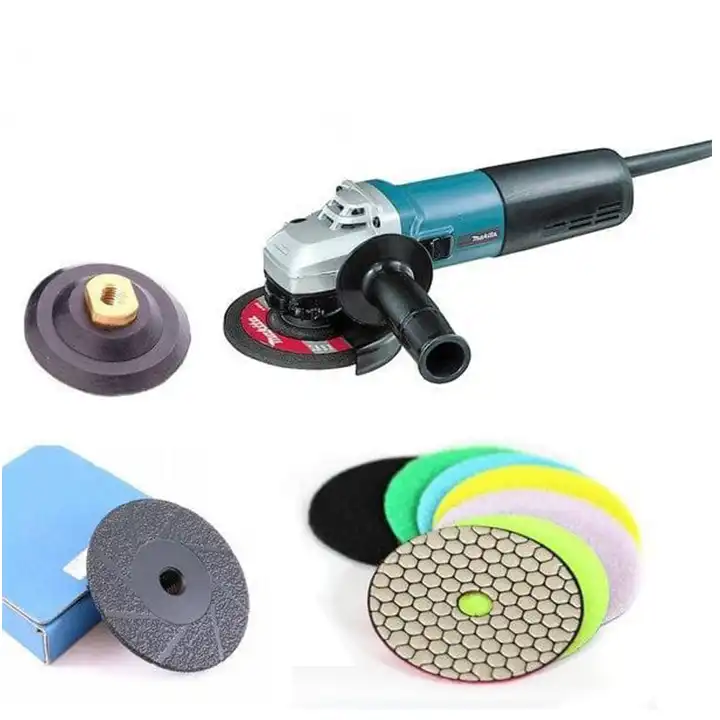
Understanding Diamond Polishing Discs
What Defines a Professional-Grade Polishing Disc
A professional diamond polishing disc is made up of precisely graded fake monocrystalline diamonds that are spread out evenly in a matrix for bonding. Unlike regular silicon carbide abrasives that lose their effectiveness quickly on hard materials, these tools keep working well on surfaces harder than Mohs hardness 7, like granite and quartz. The diamond exposure rates are controlled by the matrix makeup. For strong material removal, softer bonds let diamonds go faster, while for fine finishing, harder bonds hold on to particles for longer. This planned pattern of wear stops the glazing effect that makes tools stop cutting in the middle of their useful life.
Core Components That Determine Performance
For effective function, the backing system is the most important part. When making a lot of things, hook-and-loop connection methods are very useful because they let you change discs quickly and without stopping work. Technicians can quickly tell the difference between grit sequences thanks to color-coded backings. This keeps them from making costly mistakes like using coarse grits on surfaces that are almost finished. Thickness ranges from 2.5 mm to 4 mm, which is the right amount of stiffness for flat surface cleaning and flexibility for shaped work. Structured groove patterns made into disc sides do two things: they keep heat-generating slurry from leaving burn marks on light-colored stone, and they stop discs from sticking together when they're moving across wet surfaces.
Grit Size Classification and Applications
The FEPA grit standard lists the particle sizes that work with different steps of cleaning. Fine grits, numbered #50 to #100, get rid of lippage, which is when two neighboring stone tiles are not the same height, and saw blade marks from the first cutting steps. Between #200 and #400, the intermediate sizes smooth out the scratches that the rougher steps made, getting the surface ready for the final polishing. Fine grits from #800 to #3000 gradually smooth out the surface to get gloss levels above 90 GU, as tested by certified gloss meters. When buffer pads are used after #3000 grit, they use chemical-mechanical processes instead of pure abrasion to fill in tiny surface holes and make finishes that reflect light.
How to Choose the Right Diamond Polishing Disc for Different Materials
Material Hardness and Bond Selection Criteria
There is a negative link between material hardness and bond selection that makes a lot of first-time buyers confused. For example, granite and engineered quartz are hard materials that need lighter bonding matrices. The rough action of the hard stone on the soft bond wears away the matrix in a controlled way, revealing new diamond particles that keep the cutting efficiency high. On the other hand, lighter materials like marble and limestone need stronger bonds that don't break down too quickly. It's easy to see what will go wrong when you use the wrong combinations: hard bonds on hard materials glaze over because diamonds get stuck under the matrix surface, and soft bonds on soft materials wear away too quickly, losing expensive diamond content before they reach the right finish development.
Wet Versus Dry Operation Requirements
The working setting determines what coolant compatibility means and can't be changed. Wet-use discs are made with water-resistant resins that are meant to get rid of heat through constant water flow. These discs work at lower temperatures, which makes the tools last longer but makes slurry that needs to be collected by systems. For dry-use versions, high-temperature-resistant plastics are used that can handle friction heat without melting or leaving behind dust on work surfaces.
Diamond polishing disc performance, however, depends on this wet/dry choice: wet versions rely on water to cool the diamond grit and prolong bond life, while dry types depend on heat-resistant binders to maintain cutting action without liquid. Commercial areas that are already occupied and where water could cause slips and falls need dry systems. However, workers must accept that the tools will not last as long and they will have to deal with more dust than with wet methods.
Application-Specific Performance Factors
Stone production shops that make granite slabs put edge profiling at the top of their list of skills. Handheld polishers that work at 2000 to 4000 RPM need discs that can keep their shape under rotational forces and fit into complex ogee and bullnose designs. Diamond concentrations between 30% and 45% allow for good cutting action without too much tool wear when finishing the edge for style. Companies that restore concrete floors use semi-rigid disc forms that work with planetary grinding machines.
These uses happen after densifier chemical processes that make concrete surfaces harder. They need special bonding matrices that don't break down easily and can smooth out scratch patterns from matte to high-gloss salt-and-pepper finishes over big areas. When restoring terrazzo in business buildings, you need tools that can work in dry conditions so that the pigment doesn't bleed when dark resin bonds touch light-colored aggregate matrices that are set in epoxy or cementitious bases.
Benefits and Maintenance Best Practices for Diamond Polishing Discs
Operational Advantages in Production Environments
It is much easier to remove material with synthetic diamond technology than with regular abrasives when working on hard surfaces. This speed directly leads to lower labor costs—a seven-step grit process that used to take eight hours can often be finished in five hours with the right diamond polishing disc sets. Quality diamond tools last longer, which means they don't need to be changed out as often. This keeps production going smoothly on time-sensitive projects. Engineered groove designs and advanced heat management stop thermal damage that leads to expensive repair situations. Burn marks on expensive foreign stones can't be fixed without cutting back to the original, unharmed stone, which wastes both time and money.
Extending Tool Life Through Proper Care
The way discs are stored has a big effect on how long they last and how consistently they work. When tools are stored in damp places, they may come apart because water can get into the glue layer between the grit layer and the hook-and-loop backing. This degradation can be stopped by storing things in climate-controlled spaces that keep the relative humidity below 60%. After wet polishing, techs should take discs off of backing pads and let both dry completely before putting them away. This keeps mold from growing, which can damage adhesive ties. As part of the cleaning process, slurry waste that has built up can harden in groove designs, making cooling less effective when used again.
Recognizing Wear Indicators and Replacement Timing
Operators should keep an eye on a number of performance factors that show when an item is getting close to the end of its useful life. When diamond particles get stuck under glazed matrix surfaces, cutting speed slows down. This can sometimes be fixed by dressing the blocks with rough abrasive materials. Diamond polishing disc wear patterns, in particular, reveal glazing and bond fatigue earlier than standard blades, so monitoring edge condition is critical. Unusual vibrations during operation could mean that the disc is wearing unevenly or starting to delaminate at the edges.
When cooling channels become less effective because of clogged grooves or disc bodies that are getting thinner, more heat is produced. Some high-quality discs have wear markers that are molded into them, which make it easy to know when to replace them. However, experienced users can often tell when performance is dropping by feeling it and hearing changes in the frequency of operation.
Procuring Diamond Polishing Discs: What B2B Buyers Need to Know
Evaluating Manufacturer Capabilities
During high-volume projects, the size of the production line has a direct effect on how reliable the supply chain is. Manufacturers with facilities that are bigger than 70,000 square meters and that can make about 150,000 pieces per day keep enough material on hand to meet the needs of ongoing projects without having to wait for backorders. Size of the workforce is important.
Businesses with more than 300 trained workers have the technical depth needed for consistent quality control and quick customer service. Manufacturers that can create unique solutions are different from simple contract assemblers because they have their own research and development teams. When projects need specific grit patterns, custom diamond concentrations, or unique bonding formulas, the ability to do engineering in-house becomes an important factor in the buying process.
Quality Certification and Testing Protocols
Professional-grade tools are different from consumer-market goods because they have to go through strict inspection processes. Peel strength testing shows that the adhesive layer between the abrasive layer and the backing can handle practical stresses at highest RPM rates. This is an important safety feature that keeps the disc from coming off in a dangerous way.
Microscopic cross-section analysis shows that the diamonds are evenly spread across the entire disc width. This means that the diamond polishing disc will work the same way from the first use until it is thrown away. Dynamic balance testing finds flaws in the manufacturing process that cause vibrations, which wear out operators and leave marks on the surface called chatter marks. Verification of a standard gloss meter on black granite test pieces gives objective performance data; good tools get values above 90 GU through all grit levels.
Bulk Purchasing Strategies and Customization Options
Besides lowering unit costs, volume purchasing deals have other big benefits for procurement managers. For known bulk customers, manufacturers often offer customization services such as branded backing patterns, custom color coding systems, and the creation of unique grit sequences. These changes help marketers set their brands apart and make it easier for fabrication shops to organize their work when they have a lot of projects going at once.
Diamond polishing pad suppliers, for example, may extend these custom options to match specific surface finish requirements, further differentiating product lines. Negotiating minimum order amounts based on expected yearly consumption stops both emergency shortages and the costs of keeping too much inventory on hand. Setting up main seller relationships with backup source choices strikes a balance between lowering costs and managing supply chain risk.
Step-by-Step Guide: Using Diamond Polishing Discs for Optimal Results
Pre-Operation Safety and Equipment Preparation
Safety glasses approved by ANSI Z87.1 that block out airborne particles, hearing protection rated for long periods of exposure to tool noise, and breathing protection suitable for both wet and dry operation modes are all examples of the right personal protective equipment. It is important to check variable speed polishers for wheel wear that causes them to wobble, since even small errors can make the surface look rough.
Backing pads must be the right size for the disc diameter. Pads that are too big put extra pressure on the sides of the disc, which speeds up wear, while pads that are too small leave disc areas that aren't supported and are more likely to tear. To prepare a surface, you have to get rid of all the things that can get in the way of abrasive touch, such as curing chemicals, sealers, and old coatings. When using a diamond polishing pad, these preparation steps become even more critical, because any residual contaminants can reduce its cutting efficiency and shorten its service life.
Executing the Grit Progression Sequence
Starting to remove material starts with the roughest grit needed to get rid of surface flaws without making scratches that are too deep. As a general rule, you should move from #50 to #100 to #200 by doubling each grit size instead of skipping steps that leave "ghost scratches" that are too deep for smaller grits to clear. You should work with each grit level until the scratch pattern looks the same on the whole surface when you look at it with a scanning light. Moving on to finer grits too quickly can lead to misleading results where surfaces look shiny but still have scratches that can be seen in certain lighting.
Speed and Pressure Optimization Techniques
For most uses, the best mix between material removal rates and heat production is found between 2000 and 4000 RPM. Going faster than 5000 RPM doesn't usually make things more productive and speeds up the heat breakdown of bonding materials. When pressure is applied, it needs to be calibrated. Too much force speeds up disc wear without improving cutting, and not enough pressure leads to poor material removal and longer working times. Operators with a lot of experience let the weight of the tool provide standard pressure, adding only a small amount of downward force during the forceful removal stages. By keeping the same motion patterns, you can avoid overworking certain areas, which can lead to curved areas on flat surfaces or uneven profiles on edges.
Conclusion
To choose the right diamond polishing disc solutions, you have to weigh the features of the material, the desired finish, the limitations of the operation, and the available tools. To be successful, you need to know how bond hardness affects the qualities of the material, use the right grit progressions, and keep your tools in good shape by following informed care practices.
When making a purchase choice, it's helpful to look at what the company can do, such as the size of their production, their customization services, and their quality control systems. When you choose the right tools, you can cut down on working costs by extending their useful life, reducing the amount of work that needs to be done, and avoiding unnecessary redoing caused by heat damage or poor finish quality.
FAQ
Can the same disc polish both granite and marble effectively?
Because different materials aren't all the same strength, universal discs can't give you the best results. Because granite is so hard, it needs softer bond matrices that would wear away too fast on marble. On the other hand, marble-specific bonds would smooth over when used on granite. Purchasing managers should keep different stocks for the main types of materials that are processed in their plants.
What factors influence replacement intervals for polishing discs?
Service life depends on how hard the material is, how it is used, and how well it is maintained. When compared to proper weight-balanced operation, aggressive pressure application greatly shortens lifespan. When the bond choice fits the needs of the application, hard materials use up discs faster than soft materials. When working granite, most facilities plan to change every 400 to 600 square feet of surface area per disc set.
How do bulk order volumes affect procurement costs?
When you buy a lot of something, the company can offer you better prices because they can lower their production costs per unit and make transportation more efficient. When you order more, it becomes more cost-effective to do custom logos and special formulas. Cost savings and the cost of keeping inventory in check can be balanced by negotiating yearly supply deals with staggered delivery plans.
Partner With a Trusted Diamond Polishing Disc Manufacturer
Danyang Ebuy Tools has a factory that is 77,000 square meters and makes 150,000 cutting tools every day. This makes sure that there is a steady supply of tools for hard industrial uses. Our focused research and development (R&D) team comes up with custom diamond polishing disc solutions that meet the needs of specific materials and finish standards. Hook-and-loop backs and color-coded labeling methods make it easier to change tools in places with a lot of work going on.
Before it is shipped, each disc goes through a strict quality check that includes a peel strength test and a diamond distribution study. Email our technical team at [email protected] to talk about your surface finishing needs and get full specs that fit your business's needs. Visit ebuy-tools.com to see our full selection of professional abrasives made for cutting stone, polishing concrete, and making precise surface preparations.
References
1. Miller, R.J. (2021). Advanced Abrasive Technologies in Stone Fabrication. Industrial Surface Finishing Press.
2. Chen, L. & Rodriguez, M. (2020). "Diamond Tool Performance in Concrete Polishing Applications." Journal of Construction Materials Engineering, 15(3), 234-251.
3. Thompson, K.A. (2022). Precision Grinding and Polishing: Methods and Materials. Manufacturing Technology Institute.
4. European Federation of Producers of Abrasives (2019). FEPA Grit Size Classification Standards for Diamond Abrasives. Technical Publication 43-GB-2019.
5. Anderson, P.L. & Wu, X. (2021). "Heat Management in High-Speed Polishing Operations." International Tooling Review, 28(4), 112-127.
6. National Stone Council (2020). Best Practices for Diamond Tool Selection and Application in Natural Stone Processing. Industry Guidelines and Standards Manual.